
Ro Water Filter System

Author name: Admin

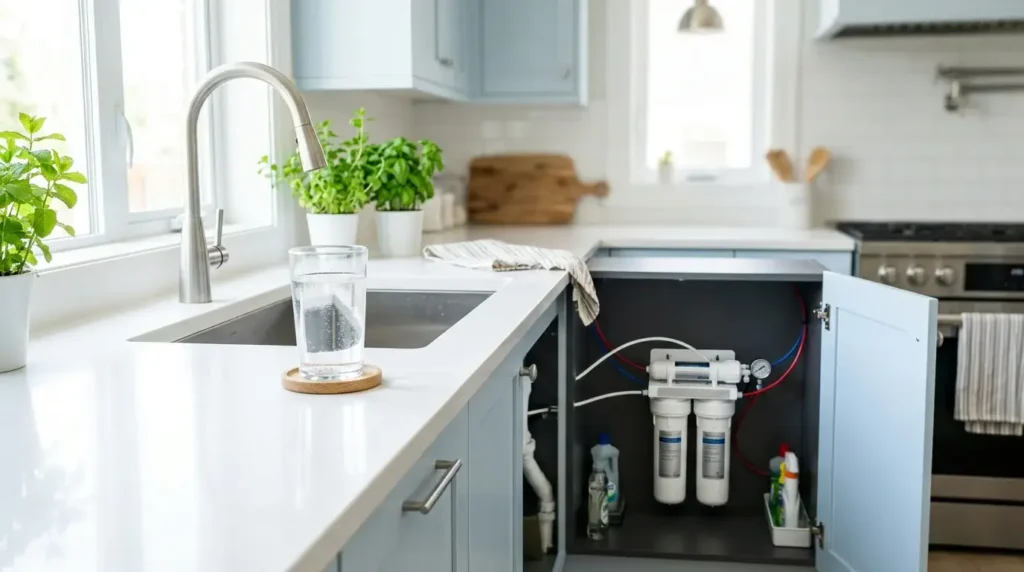
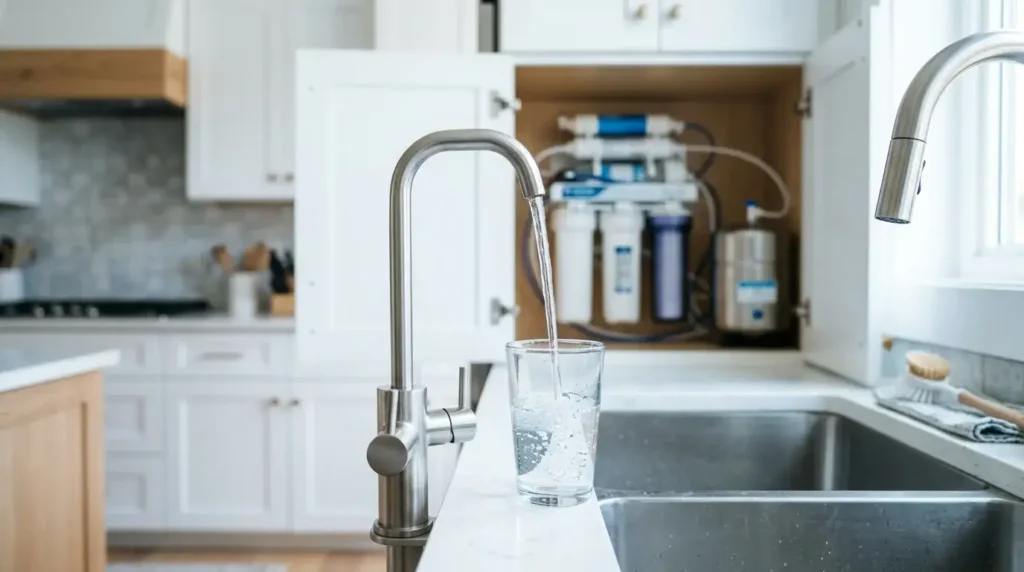
A high-efficiency under-sink reverse osmosis water filter for microplastics installed in a kitchen with a clear glass of purified water in the foreground.
Blog

What No One Tells You About Using a Reverse Osmosis Water Filter for Microplastics

You’ve probably heard that microplastics are showing up in tap water. What nobody tells you is that they’re also found in bottled water often at higher levels than what comes out of your faucet. If you’re in Tracy or the surrounding areas and you’ve been buying cases of bottled water to “stay safe,” you may actually be drinking more microplastics, not fewer. A good reverse osmosis water filter for microplastics is one of the most effective solutions available today. But the details matter. The membrane size, the number of filtration stages, and the quality of the installation all determine how well your system actually performs. At RO Water Filter System, we’ve seen plenty of homeowners buy a system and assume the job is done. It rarely is that simple. What Are Microplastics? Microplastics are plastic fragments smaller than 5 millimeters. Most are invisible to the naked eye. They come from two main sources: Primary microplastics: Manufactured small intentionally, found in cosmetics, synthetic textiles, and industrial processes Secondary microplastics: Larger plastic items (bottles, packaging, bags) that break into smaller fragments over time These water sources pick up microplastics from agricultural runoff, urban storm water, and industrial discharge long before the water ever reaches a treatment plant. Here’s the honest problem: conventional municipal treatment is not designed to remove microplastics. Chlorination kills bacteria. Sedimentation removes large particles. But a 1-micron plastic fragment? It passes right through. Does Reverse Osmosis Remove Microplastics? Yes. This is where RO technology earns its place. The reverse osmosis water filter for microplastics remove it from the water. An RO membrane has pores between 0.0001 and 0.001 microns in diameter. Microplastics range from 1 micron to 5,000 microns. That size difference is the entire reason reverse osmosis systems are so effective, the membrane physically cannot allow microplastics to pass through to your drinking water. Independent lab testing and NSF/ANSI Standard 401 certification confirm that properly functioning RO systems remove over 99% of microplastics from drinking water. But there are conditions. The membrane must be intact. The system must be properly installed with no bypass leaks. And the pre-filters need to be doing their job so the membrane doesn’t get overloaded and degrade early. What the Membrane Actually Does The RO membrane is a thin-film composite layer that works through pressure-driven separation. Water is pushed through under pressure, and dissolved solids, particles, and contaminants are rejected and flushed to drain. The water that passes through, called permeate, is what you drink. Most quality RO systems combine this membrane with: A sediment pre-filter (removes large particles before they reach the membrane) A carbon block pre-filter (handles chlorine and chloramines that can damage the membrane) A post-carbon filter (polishes the taste before water reaches your glass) In a properly staged system, the membrane does not work alone. That’s why a quality multi-stage setup, like a 7-Stage Water Filtration System gives you layers of protection that a basic 3-stage unit simply cannot match. Does RO Filter Out Microplastics From All Water Sources? Largely yes. But the source water conditions in your area determine how hard your system has to work to get there. What Your RO Membrane Actually Handles The RO membrane itself is what blocks microplastics. But it doesn’t work in isolation. Before water ever reaches the membrane, your pre-filters are doing critical work: High sediment loads clog pre-filters faster, starving the membrane of adequate flow pressure Elevated TDS levels increase the mineral concentration the membrane has to reject with every gallon Chloramine disinfection, standard in Tracy’s municipal supply, breaks down carbon pre-filters more aggressively than regular chlorine When pre-filters underperform, the membrane compensates, ages faster, and eventually filters less effectively What Tracy’s Water Conditions Mean for Your System This is where local knowledge matters. Tracy’s tap water isn’t the same as water in San Francisco or Sacramento. The San Joaquin Delta source blend creates specific challenges: Water hardness typically runs between 200 and 400 mg/L depending on the season That hardness means calcium and magnesium deposits build up on the RO membrane surface over time A scale-coated membrane looks completely normal from the outside But internally, those mineral layers reduce both water pressure through the membrane and filtration efficiency, including microplastic rejection The Part Most Homeowners Never Check Here’s what we see constantly in the field. A homeowner installs a quality RO system, changes filters once a year like the manual says, and assumes everything is fine. But nobody checks the membrane performance directly. A quick TDS reading on your output water tells you more than any visual inspection: Healthy RO output: 90% or more reduction from your input TDS reading Warning zone: Output TDS is more than 15% of your input reading At that point, microplastic filtration performance has also dropped, even if the water still tastes clean Does RO Remove Microplastics; Or Just Reduce Them? Both terms get used, and the difference matters. Reduction means the system brings the level down significantly, typically 95% or more, but does not guarantee zero microplastics in the output water. Removal, in the context of RO, refers to removal to levels below detection thresholds in independent lab testing. When an RO system is functioning correctly with an intact membrane and properly staged pre-filters, the performance is effectively removal rather than just reduction. The key phrase is “functioning correctly.” A system with a pinhole in the membrane, a degraded carbon pre-filter, or an improperly sealed housing connection will underperform and you will not know by looking at the water. This is exactly why professional RO System Installation is worth the investment, not just for convenience but for the actual filtration results you get. What Most Homeowners Get Wrong About Microplastic Filtration We’ve done a lot of installations across Tracy and the surrounding areas. Here’s what we see repeatedly: Buying a System Without Checking the Certification Not every RO system on the market is tested for microplastics specifically. NSF/ANSI Standard 58 covers general RO performance. NSF/ANSI Standard 401 is the one that specifically

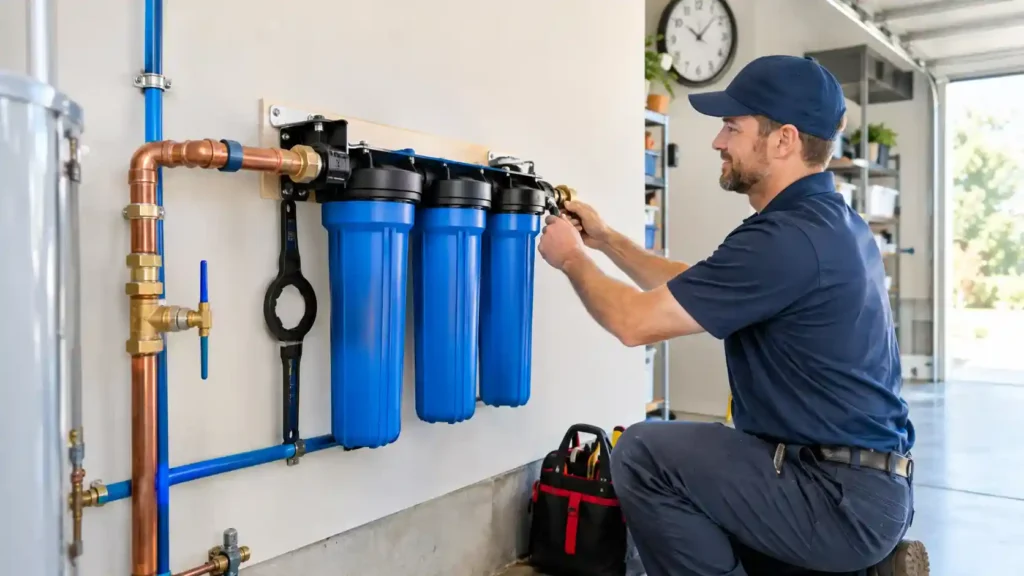
Professional technician installing a high-quality reverse osmosis system for homes under a kitchen sink to provide clean drinking water.
Water Filter System

Reverse Osmosis System for Homes Explained: Benefits, Process & What to Expect

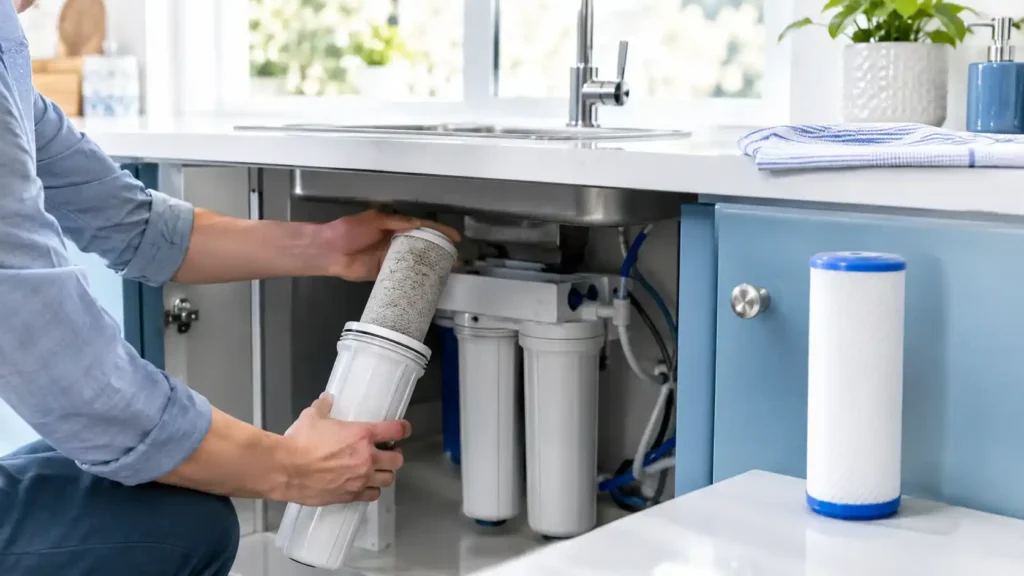
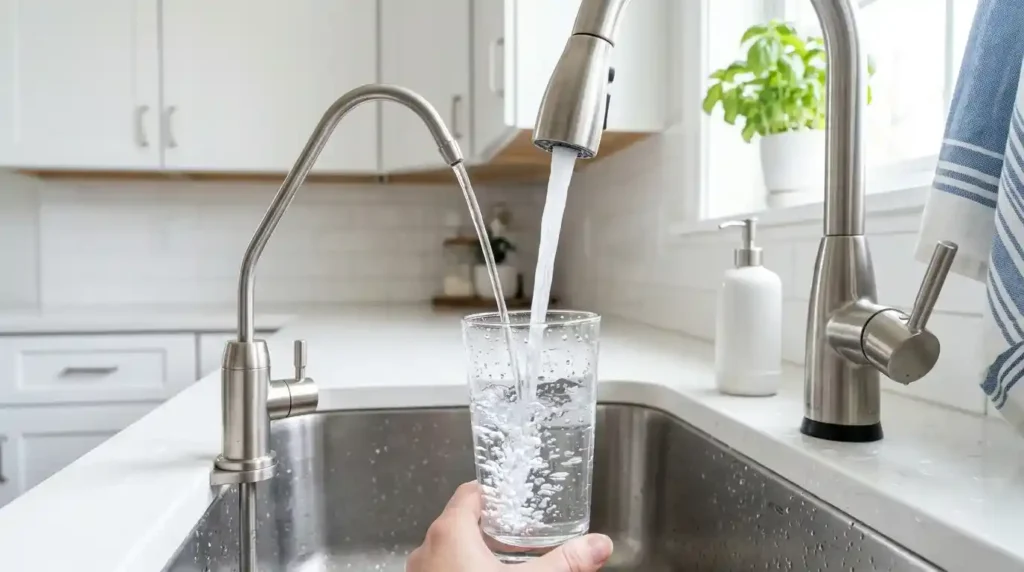
Your tap water might look perfectly fine. But if you’ve ever noticed a faint chlorine smell first thing in the morning, or your coffee tastes oddly flat, something is off. Tracy’s municipal water comes from the San Joaquin Delta and while it meets safety standards, it can carry chloramines, sediment, and dissolved minerals that standard filters just don’t handle well. That’s where a reverse osmosis system for homes comes in. RO Water Filter System has helped hundreds of Tracy homeowners understand what’s really in their water and what to do about it. This guide covers exactly how RO works, what it removes, and whether it’s the right fit for your home. What Is a Reverse Osmosis System for Homes?   Reverse Osmosis systems for homes provide multi-stage water filtration through pressure on a semipermeable membrane with pores as small as 0.0001 microns to physically block out contaminants that have made their way through, leaving water that has been stripped of most impurities on one end and purified on the other side. But it’s more than just the membrane doing the hard work; an optimal RO system includes pre-filters, the membrane itself and post-filters working together as one system. How the Filtration Process Actually Works Here’s what happens inside a typical 5-stage RO system, in order: Stage 1: Sediment Pre-Filter: Catches rust, sand, and larger particles before they damage the membrane Stage 2: Carbon Block Filter: Removes chlorine and chloramines, which would otherwise degrade the RO membrane quickly Stage 3: Second Carbon Stage: Takes care of volatile organic compounds (VOCs) and any remaining taste issues Stage 4: RO Membrane: The core stage. Forces water through at pressure, blocking up to 99% of dissolved contaminants Stage 5: Post-Carbon Polish Filter: A final pass to improve taste and clarity before water reaches your tap Some systems include an additional stage called the Remineralization or Alkaline Filter stage after their membrane filter, to replace lost minerals like calcium and magnesium that were lost due to filtering processes, useful if you prefer drinking water with more of an earthy flavor! What Does a Home RO System Actually Remove? This is the question most homeowners ask first. And honestly, it’s the right question. A quality RO system removes: Total Dissolved Solids (TDS): minerals, salts, and metals dissolved in water Heavy metals: lead, arsenic, chromium, mercury Chlorine and chloramines: common in Tracy’s municipal supply Nitrates and nitrites: particularly relevant for households on well water Fluoride: reduced significantly by the RO membrane Bacteria and cysts: the membrane blocks most microbiological contaminants Organic compounds: pesticides, herbicides, and pharmaceutical residues Tracy’s water TDS often runs between 300 and 600 parts per million depending on the season and source blend. A good RO system can bring that down to 20 to 50 ppm. You’ll feel the difference in how the water tastes, how your ice looks, and even how your skin feels after showering if you go the whole house route. Under-Sink vs. Whole House Reverse Osmosis: Which One Do You Need? Honestly, most homeowners in Tracy don’t need a whole house reverse osmosis system, at least not right away. Here’s a practical way to think about it: Situation Better Fit You want better drinking and cooking water Under-sink RO system You have hard water damaging appliances and fixtures Whole house RO system or water softener + under-sink combo You’re on well water with high contamination Full house reverse osmosis system You have a large household with high water demand Whole house RO system (high GPD rating needed) You’re a renter or want a budget option Under-sink RO system A whole house RO system or whole house ro system treats every water outlet in your home, showers, laundry, dishwasher, everything. That level of filtration makes sense when you’re dealing with well water, very high TDS levels, or documented contamination. It’s a bigger investment, and it comes with a higher water waste ratio, so it’s not the automatic answer for every home. For most Tracy families using city water, a quality under-sink RO system tied to your drinking tap and refrigerator line covers the bases well. What to Expect During and After Installation Before Installation A few things worth checking before you schedule: Water pressure matters. Most RO systems need at least 40–60 PSI to work properly. If your home runs lower than that, a permeate pump or booster pump may be needed. Cabinet space under the sink. A standard 5-stage system with a storage tank needs about 15–18 inches of clearance. Tankless RO systems are slimmer and work for tighter spaces. Your existing plumbing. Older homes with lead or galvanized pipes may need a line assessment first. After Installation Expect a short adjustment period. The first tank or two of water may have a slightly off taste, that’s normal. It’s residual carbon from new filters and clears up quickly. You’ll also notice: A dedicated faucet on your sink (usually brushed nickel or chrome) A small storage tank under the sink (or none, if you opted for tankless) Slightly slower flow from the RO tap vs. your standard faucet, this is normal given the filtration process If you used a Reverse Osmosis Water Filter from a reputable installer, production rate (GPD: gallons per day) should be noted at setup. A typical household system produces 50 to 100 GPD, which fills a storage tank between uses. Maintenance: What Most People Underestimate RO systems are low maintenance, not zero maintenance. Here’s a realistic schedule: Every 6–12 months: Replace sediment and carbon pre-filters Every 2–3 years: Replace the RO membrane (can last longer with good pre-filtration) Every 12 months: Replace the post-carbon polishing filter As needed: Sanitize the storage tank (typically once a year) Skipping filter changes is the most common mistake we see. A clogged sediment filter makes the membrane work harder, shortens its life, and drops your water pressure. It’s a $15 fix that people delay until it becomes a $150 membrane replacement. A good 5-Stage Water Filtration System will often include

A comparison showing the environmental impact of water filters versus a massive pile of plastic bottles in a polluted landscape to highlight sustainability.
Blog

Environmental Impact of Water Filters vs Bottled Water: Which Is Greener?

Most people already know that single-use plastic bottles are bad for the environment. What they don’t always know is how much worse it actually is, or whether a home filter system is really the better answer in every situation. RO Water Filter System works with homeowners across Tracy and the surrounding area, and this question comes up constantly: “Is a water filter actually better for the planet?” The honest answer is yes, but with important details worth understanding. The environmental impact of water filters varies depending on the type of system, how you use it, and what you’re replacing. Let’s break it down clearly. The Environmental Impact of Water Filters Compared to Bottled Water The scale of bottled water waste is hard to wrap your head around. The U.S. alone produces around 50 billion plastic water bottles every year. Less than 30 percent of those get recycled. The rest end up in landfills, waterways, and eventually break down into microplastics that contaminate drinking water sources, soil, and marine ecosystems. A single plastic bottle takes roughly 450 years to decompose. And producing each bottle requires oil, energy, and more water than the bottle actually holds. That last part surprises people: it takes nearly 3 liters of water to produce 1 liter of bottled water. So bottled water doesn’t just create plastic waste. It burns through the water supply itself. By contrast, a good home filtration unit can replace thousands of single-use plastic bottles every year. A family of four drinking 2 liters each per day would go through nearly 3,000 bottles annually. One under-sink filter system handles all of that. And most filter cartridges are small enough that their waste footprint is a fraction of what the bottles would have left behind. What Makes Water Treatment Sustainable: The Filter Side of the Story Filters aren’t perfect. That’s worth saying plainly. But understanding what makes water treatment sustainable means looking at the full picture, not just one part of it. Filter cartridge waste: Every filter has a lifespan. A standard sediment or carbon filter might need replacing every 6 to 12 months. That’s one small cartridge per stage, per year. Compare that to 3,000 bottles per family per year, and the math isn’t close. Some manufacturers now offer recyclable cartridges or take-back programs, which helps reduce that waste even further. Energy use: Point-of-use filters (the kind that sit under your sink) use almost no energy. Gravity filters use none at all. Even electrically assisted systems like those with permeate pumps draw very little power compared to the energy burned in plastic bottle manufacturing, refrigeration, and transportation logistics. Carbon footprint of delivery: Bottled water doesn’t teleport to your fridge. It gets trucked from bottling plants, often hundreds of miles away. That distribution chain adds significant carbon emissions per gallon delivered. A home filter has essentially zero ongoing carbon footprint once it’s installed. Reverse Osmosis Systems: The Wastewater Question Here’s where people get stuck. Reverse osmosis systems are incredibly effective at removing contaminants, but they do produce wastewater during the filtration process. A standard RO unit might send 3 to 4 gallons of water down the drain for every gallon of filtered water it produces. That ratio has improved a lot. Modern efficient RO systems, including the type used in a 6-Stage Water Filtration System, can get much closer to a 1:1 ratio with the right configuration. A permeate pump helps push the filtered water through with less pressure, which improves efficiency and reduces how much water gets wasted in the process. But here’s the real comparison: the water sent down the drain in an RO system is still municipal water that gets treated and re-enters the local supply chain. The bottles you throw away don’t come back. They’re gone. Even accounting for RO wastewater, the net environmental impact is still far better than a household relying on bottled water long-term. How Does Water Use Affect the Environment in Tracy Specifically? Tracy’s tap water isn’t bad. But it does carry a higher mineral content than many California cities. The total dissolved solids (TDS) in local water can make a noticeable difference in taste and appliance longevity. That’s part of why so many residents turn to bottled water for drinking, without realizing that they’re trading a manageable water quality issue for a much larger environmental problem. A properly installed Water Purification System treats the water coming in, removes contaminants at the source, and delivers clean water without any ongoing plastic waste. For homeowners in Tracy concerned about both water quality and environmental sustainability, that’s a much more practical solution than buying cases of plastic bottles every week. It’s also worth noting that bottled water companies often source from municipal systems anyway. Many popular brands are filtered tap water. You’re paying a massive premium for something that, in many cases, starts from the same source as what’s already flowing to your home. Ecological Water Filter Options: What to Look For Not every filter is equally green. Some products market themselves as sustainable without much to back it up. When evaluating an ecological water filter, there are a few practical things to consider. Filter lifespan matters. A filter that lasts 12 months creates half the cartridge waste of one that needs replacing every 6 months. Look at cost-per-year comparisons, not just upfront price. Certifications are worth checking. NSF/ANSI certifications confirm that a system removes what it claims to remove. This matters because a filter that doesn’t work properly doesn’t reduce bottled water purchases. It just adds cost without solving the problem. Avoid over-engineering. Honestly, most homeowners in Tracy don’t need a 10-stage system. A well-configured reverse osmosis unit with a quality pre-filter and post-carbon stage handles 99 percent of typical household concerns. Bigger isn’t always greener, and it isn’t always better. Consider a sustainable water filtration setup that fits your actual usage. A system sized correctly for your household runs more efficiently, wastes less water during the RO process, and requires fewer filter changes relative to

A man sitting at a kitchen table using a calculator to review bills and receipts, looking for answers to "why is my water bill so high" while managing household expenses.
Blog

Why Is My Water Bill So High? The Hidden Water Waste Problems a Home Filtration System Can Solve

Your water bill arrived. It’s higher than last month. Maybe a lot higher. And you’re standing there thinking, “Why is my water bill so high when I haven’t done anything differently?” Homeowners in Tracy, California who experience water issues call us for solutions regularly, sometimes the source is obvious while other times its source remains hidden, there may simply be too much going into some obscure area and disappearing with it! Water could also simply be disappearing somewhere and not showing itself anywhere apparent to the naked eye. RO Water Filter System helps Tracy homeowners diagnose water waste issues and install the right filtration solutions to stop the bleeding, both in quality and in cost. This guide walks through every real cause of a high water bill, how to spot each one at home, and what actually fixes it. Why Is My Water Bill So High? Start Here Before Assuming Anything Before you call the water company or assume a pipe burst, do one simple thing. Go outside and find your water meter. Turn off every fixture inside the house, including the dishwasher, washing machine, and ice maker. Then watch the meter for 15 minutes. This single test tells you whether you have a hidden water leak or a usage issue. Both will show up on your bill the same way. But the fix is completely different. The Most Common Causes of High Water Bills A Running Toilet You Can’t Hear This is the number one cause of unexplained high water bills. A toilet with a worn flapper valve can leak 200 gallons or more per day silently into the drain.  Put food coloring drops in the tank of the toilet without flushing, wait 10 minutes, and see if any color shows up in the bowl, this indicates the flapper needs replacing; you can find one at any hardware store for under $10 and installing takes 20 minutes total. Hidden Water Leaks in Walls or Underground These are harder to detect. You might notice: Damp flooring Slight musty smell Water meter moving even when everything is off Even a pinhole leak can raise your bill significantly over time. Irrigation System Malfunction In Tracy, homeowners with yards run their irrigation systems hard, especially from late spring through September when temperatures push past 95 degrees. Review your irrigation controller settings regularly. Ensure the schedule reflects the season you are currently experiencing rather than running summer programs in spring, and walk each zone when running to observe whether any heads are misdirected, water is pooling near valves, or misting instead of direct spray. An irrigation malfunction is one of the most overlooked causes of high water bills, and also one of the easiest to fix if you catch it early. Water Softener Regeneration Cycles Running Too Often This one surprises homeowners. Tracy sits in San Joaquin County and pulls a significant portion of its water supply from the Delta. Local water hardness typically runs between 15 and 20 grains per gallon, which is considered very hard. Most households need a water softener, and that’s fine. But a softener that’s misconfigured or malfunctioning can regenerate far more often than needed. Each regeneration cycle uses 50 to 100 gallons of water. If your softener is cycling every day instead of every 3 to 5 days, that adds up to several thousand extra gallons a month. Leaking Outdoor Faucets and Hose Bibs It’s easy to forget the hose bib on the side of the house. But a faucet that drips even slowly, say 10 drips per minute, wastes over 500 gallons a year. If the drip is faster, that number climbs quickly. Turn each outdoor faucet fully off and watch the tip. Even slow dripping on an outdoor faucet should be repaired. Washers and packing nuts are cheap. Ignoring the leak is not. Household Usage Habits That Add Up Without Notice Not every increase in water bills is caused by leakage; sometimes high bills result from legitimate changes to household behavior whether that’s having your teenager home for summer break, welcoming a newborn into the mix, having house guests staying for multiple months at once or switching showers and baths can all impact on your bill. Compare your current bill to the same month last year. Water usage naturally rises in summer due to irrigation, more frequent laundry, and outdoor activities. If the increase matches a prior summer, it may simply be seasonal. If the spike is new compared to last year too, then something else is happening. Where Reverse Osmosis Systems Factor In Here’s something most articles about high water bills miss entirely. If you already have an older reverse osmosis system under your kitchen sink, it could be contributing to the problem. Traditional RO membranes produce clean water slowly. Older systems may waste three or four gallons per gallon filtered out; this ratio is known as waste-to-permeate ratio and could easily add six to twelve additional gallons to drain daily without anyone even being aware. If your household consumes two to three gallons daily of RO water from their system, they could potentially be losing up to 12 extra gallons each day without ever realizing. Modern systems are significantly more efficient. High-quality units now use permeate pumps and zero-waste or near-zero-waste membranes that dramatically reduce drain water. Getting a proper RO System Installation with a current-generation membrane is not just about water quality. It’s about stopping quiet, daily waste that shows up on your bill every single month. How a Water Filtration System Helps Control Waste This isn’t just a sales point. It’s a practical plumbing reality. A well-installed water filtration system reduces the need to run your tap waiting for water to “taste better.” Homeowners in Tracy who rely on unfiltered tap water often let the faucet run longer before filling a glass, cooking pot, or water bottle. That habit wastes more water than most people realize. It also reduces bottled water consumption, which means fewer delivery services, fewer plastic bottles, and

How do you know if you have hard water? Limescale buildup on faucet and cloudy drinking glass in kitchen
Blog

How Do You Know If You Have Hard Water? These 7 Signs Say It All

Your dishes come out of the dishwasher covered in white spots. Your shower door has that pesky chalky film which refuses to go away no matter what lotions or potions you try. And your skin feels dry no matter which lotions or potions are applied. If any of that sounds familiar, there’s a good chance you already know the answer, you probably have hard water. The team at RO Water Filter System hears this from homeowners in Tracy and the surrounding San Joaquin Valley all the time. Hard water is one of those problems that sneaks up on you. You don’t taste it. You can’t always smell it. But it’s quietly working against your appliances, your plumbing, and your skin every single day. This guide breaks down exactly how do you know if you have hard water using seven clear, practical signs you can spot right now without any equipment. What Is Hard Water, Really? Before jumping to the signs, it helps to understand where hard water comes from. As water travels through soil and rock, before it ever reaches your tap, it picks up dissolved minerals, primarily calcium and magnesium. The more of these minerals it collects, the “harder” the water becomes. Water hardness is measured in grains per gallon (GPG). Here’s a simple reference: Hardness Level GPG Range Soft 0–3 GPG Moderately Hard 4–7 GPG Hard 8–10 GPG Very Hard 11+ GPG Tracy’s municipal water comes largely from the Sacramento-San Joaquin Delta and local groundwater wells. That blend regularly produces hardness levels in the 8 to 14 GPG range, solidly in the “hard” to “very hard” category. So if you’re a homeowner here and you haven’t thought much about your water quality, this is worth paying attention to. How Do You Know If You Have Hard Water? 7 Signs to Check Right Now 1. White Spots on Dishes and Glassware   This is usually the first sign homeowners notice. If your glasses come out of the dishwasher looking cloudy or spotted, mineral residue is likely drying on the surface. It often looks like: White chalky marks Cloudy film Stubborn residue left after washing And no, better dish soap usually won’t fix it. Hard water minerals stay behind even after the rinse cycle. 2. Soap Doesn’t Lather Well Here’s what most people don’t realize. Soap reacts with calcium and magnesium. Instead of making rich foam, it creates sticky residue called soap scum. You may notice: Shampoo feels harder to rinse Body wash leaves skin feeling coated Hand soap barely lathers If you constantly feel like you’re using too much soap, that’s one of the classic signs of hard water. 3. Dry Skin and Dull Hair After Showering Hard water can be rough on skin and hair. Minerals make it harder to rinse away soap completely, leaving a thin film behind. That often leads to: Itchy skin Tightness after showering Flaky scalp Hair that feels heavy or dull Families with kids often notice this first during winter, when skin is already dry. If your moisturizer isn’t helping much, your home’s water might be part of the problem. 4. Scale Buildup Around Faucets and Fixtures Look closely at your faucets. See white crust around the base? That’s mineral buildup. Hard water leaves scale around: Sink faucets Showerheads Bathtub drains Refrigerator dispensers Over time, scale buildup gets thicker and harder to remove. It can also reduce water flow from fixtures. 5. Low Water Pressure in Showers or Faucets This one gets expensive. Hard water minerals slowly build up inside pipes, fixtures, and aerators. Eventually, they start to: Restrict flow Reduce pressure Create uneven spray patterns A clogged showerhead is annoying. But the scale inside pipes is worse. Left untreated, mineral deposits can slowly clog pipes and shorten plumbing life. 6. Appliances Wear Out Faster Your appliances feel the effects too. Hard water forces appliances to work harder because mineral scale acts like insulation around heating elements. Common victims include: Water heater Dishwasher Washing machine Ice maker Coffee maker You may notice: Longer heating times Higher utility bills Frequent maintenance Shorter appliance lifespan Water heaters are especially vulnerable. Even a small layer of scale can lower efficiency significantly. 7. Stiff Laundry and Faded Clothes Clothes washed in hard water often feel rough. Minerals stay trapped in fabric fibers, making laundry feel: Crunchy Less absorbent Faded faster White towels turning gray? Very common. Hard water can also make detergent less effective, so clothes may not feel fully clean. How to Confirm It: Simple Home Tests Spotting these signs gives you good reason to suspect hard water. But if you want a number, there are a few easy ways to confirm. The soap test. Fill a clear bottle halfway with tap water. Add a few drops of pure liquid castile soap. Cap it and shake for 10 seconds. Soft water produces thick, white, fluffy suds. Hard water produces very little lather and leaves a milky or cloudy film in the water below. A water hardness test kit. These inexpensive (usually between $10-20 at hardware stores) water testing strips offer instant GPG or ppm readings in minutes. Once dipped into tap water, match its color result against its chart for quick results indicating whether you have soft, moderate hard, hard or very hard water conditions. Your local water quality report. Tracy’s municipal utility publishes an annual water quality report (also called a Consumer Confidence Report). This document shows the measured hardness of your water supply. If you’re on well water, you won’t find your specific reading there a test kit or professional test is more useful. What to Do If You Have Hard Water in Tracy, CA Once you’ve confirmed the signs, the next question is: what do you actually do about it? The answer depends on what’s bothering you most. Here’s a practical breakdown. For hard water that affects your whole home; scale in pipes, reduced water heater efficiency, spotty dishes, soap scum throughout a Whole House Water Softener for Hard Water is the

7-stage water filtration system showing how does reverse osmosis remove fluoride from home drinking water
Blog

Does Reverse Osmosis Remove Fluoride? The Complete Science-Backed Answer (2026)

Does reverse osmosis remove fluoride? The answer is yes. It does, and it’s among the best at-home techniques. People usually rely on carbon filters beneath their sinks, but professional RO systems with TFC membranes can reduce fluoride contamination up to 98% of drinking water sources.  Why carbon filters cannot handle fluoride at all, how water pressure and membrane age affect what percentage is actually removed, and what the water situation in Tracy looks like specifically. At RO Water Filter System, we have answered this question for hundreds of local households, and the details below reflect practical, real-world knowledge, not just a quick internet summary. How Reverse Osmosis Actually Removes Fluoride Your home’s water pressure pushes tap water through a semi-permeable RO membrane. The pores in a standard thin-film composite (TFC) membrane measure roughly 0.0001 microns, far smaller than a dissolved fluoride ion. But size is only part of it. Fluoride carries a negative ionic charge, and the polyamide layer inside the membrane repels it through monovalent ion selectivity, a charge-based rejection process that works alongside the physical barrier. So when reverse osmosis removes fluoride, it is doing two things at once: blocking it by size and repelling it by charge. Carbon filters work through adsorption, pulling molecules like chlorine onto the surface of the filter media. Fluoride does not bind to carbon, so it passes straight through without being captured. The RO membrane does not rely on adsorption at all, does reverse osmosis remove fluoride so effectively when a carbon filter simply cannot. What Percentage of Fluoride Does an RO System Remove? Most homeowners searching this topic want one clear number. A certified RO system tested to NSF/ANSI Standard 58 removes between 85% and 98% of fluoride from drinking water. Where you land in that range depends on membrane quality, your home’s incoming water pressure, how old the membrane is, and how much fluoride was in the water to begin with. Tracy’s municipal water sits at roughly 0.7 mg/L of fluoride, which is the level California requires. A well-maintained RO system brings that down to somewhere between 0.01 and 0.1 mg/L at your tap. If you are formula-feeding an infant or managing a specific health concern, that difference is real and it matters. These numbers reflect systems that are properly installed and well maintained. A membrane past its service life or one running under low water pressure will not reach those rates. That is one reason professional RO system installation makes a real difference. The way a system is set up directly affects the results you actually get from it long term. Does RO Remove Fluoride Better Than Carbon Filters? Yes, and the difference is significant enough that it is worth being direct about. Standard activated carbon filters, the kind found in pitcher filters, fridge filters, and basic under-sink systems, are not built to reduce fluoride. They handle chlorine, chloramines, and taste issues well enough, but fluoride is a small dissolved ion with a negative charge and it moves straight through carbon media without being captured. Activated alumina can reduce fluoride under specific pH conditions, but it is rarely found in residential systems and is not a reliable everyday solution for most households. If you are using a carbon-only filter and counting on it to remove fluoride, it is not doing that job. A reverse osmosis system is a different tool entirely. Does RO remove fluoride consistently across real California tap water conditions? Yes, a RO membrane does not depend on adsorption; rather it physically blocks and charge-repels dissolved ions instead. Therefore it handles fluoride along with arsenic, nitrates, lead, and other pollutants without needing pH adjustments or special conditions, making RO the practical choice when fluoride reduction is a serious consideration for Tracy residents. Do Water Filters Remove Fluoride? A Practical Comparison Not all filtration systems handle fluoride the same way. This table shows how common home filter types compare on fluoride removal. Filter Type Removes Fluoride? Notes Activated carbon (pitcher, fridge) No Not effective for fluoride; good for chlorine and taste Carbon block under-sink No Same limitation as pitcher filters Activated alumina Partially pH-sensitive, not commonly used in residential settings Reverse osmosis (RO) Yes, 85 to 98% Most reliable and consistent method for home use Distillation Yes, around 99% Slow and energy-intensive; not practical for daily household use Ion exchange (water softener) No Addresses hard minerals, not fluoride Reverse osmosis is the option that gives homeowners real, measurable fluoride reduction without requiring specialized conditions or constant monitoring. What Tracy, CA Homeowners Should Know About Their Water If you live in Tracy, Mountain House, Lathrop or Manteca, your tap water comes from both surface water and groundwater sources in the San Joaquin Valley. California law mandates utilities serving large populations fluoridate their supply when state funding allows, with Tracy adhering to this mandate. According to CDC data, Tracy’s fluoridation levels meet or surpass state guidelines of 0.7 mg/L fluoride content in its water source. Fluoridated tap water should generally be safe for adults to drink; however, those feeding formula mixed with fluoridated tap water receive significantly more fluoride exposure than breastfed babies, according to pediatric organizations that recommend lower fluoride exposure during the first months of life. Tracy’s water also shows detectable levels of total trihalomethanes, measurable arsenic, and PFAS-related compounds that have raised concerns across San Joaquin Valley systems in recent years. This is where reverse osmosis water filtration makes practical sense beyond just fluoride. Does RO remove fluoride and other contaminants at the same time? Yes, through the same membrane process, which means one properly installed system addresses the full picture rather than forcing you to layer multiple filters for multiple problems. How Many Stages Does an RO System Need? A 5-stage RO system is the standard starting point for most households and handles fluoride effectively at stage three, where the RO membrane does the actual rejection work. The first two stages, a sediment filter and a carbon pre-filter, remove particles and chlorine before water reaches

A multi-stage custom water treatment system installed under a kitchen sink with a glass of purified water on a granite countertop.
Blog

Why a Custom Water Treatment System Is the Smartest Investment for Your Home or Business

Most homeowners in Tracy, CA and the surrounding San Joaquin Valley do not have just one water problem. They have two or three stacked on top of each other. Hard water that scales the pipes. A faint sulfur smell from the well. Iron that stains the fixtures. Chloramines left over from municipal treatment. Each one of those problems needs a specific solution, and a generic off-the-shelf filter handles maybe one of them on a good day. That is where a custom water treatment system changes the equation entirely. Instead of buying a product and hoping it fits, you start with a water test, identify exactly what is in your water, and build a system designed around those results. RO Water Filter System helps homeowners and business owners in Tracy do exactly that, and this guide walks through why this approach works, when you actually need it, and what to expect from the process. What Makes a Custom Water Treatment System The word custom gets used loosely in the water industry. Some companies call a pre-configured bundle “custom” because it comes with a few options. That is not what this means. A water quality assessment is the first step towards a really customized filtering system. The particular pollutants found, their concentrations, and their interrelationships are all listed in that study. The system is then constructed in phases, each of which targets a particular issue in the proper sequence.  For example, iron has to be addressed before carbon filtration, or the carbon becomes fouled quickly. Hardness is often treated before a reverse osmosis system to extend the membrane’s service life. PFAS removal requires a specific media type that a standard sediment filter will not touch. The order matters. The media choice matters. The flow rate matters. Custom engineered systems account for all of this. Off-the-shelf systems do not. Who Actually Needs a Custom Water Treatment System Not everyone does. A household on city water with good overall quality and only a taste concern might do fine with a basic under-sink unit. But there are clear situations where a standard product simply will not hold up. Private Well Owners The most frequent instance is Tracy and the surrounding region. Municipal treatment is not applied to well water. Your glass, shower, and appliances are all filled with precisely what comes out of the earth. The precise location, depth, geology, and proximity to agricultural or older infrastructure all affect the pollutant profile. The water chemistry of a neighbor two miles away may be very different. Households With Hard Water The water in the San Joaquin Valley is infamously hard and contains a lot of calcium and magnesium. When iron is added, the mixture destroys water heaters, prematurely clogs RO membranes, and leaves scale in every pipe in the home. That requires a phased strategy rather than a single cartridge filter. Commercial and Industrial Users A restaurant needs reliable TDS reduction for consistent coffee and beverage quality. A healthcare facility needs verified microbial removal. A hotel needs protection for its boilers and HVAC systems from scale buildup. These are not consumer problems. They require contaminant-specific remediation and real-time water quality monitoring to stay compliant and functional. High-Income Households Investing in Whole-House Systems These buyers are not looking for “good enough.” They want verified purity throughout the entire home, from the shower to the kitchen tap, with a system built to last 15 to 20 years with proper maintenance. How a Custom Filtration System Is Designed The design process for a custom filtration system follows a logical sequence. Understanding it helps you ask the right questions and avoid buying something that does not fit your situation. Step 1: Water Testing This is non-negotiable. A comprehensive water test covers hardness, pH, TDS, iron, manganese, nitrates, bacteria, and PFAS if there is any reason to suspect contamination. In California, private well owners can request testing through the State Water Resources Control Board, or use a certified private lab. The test results are the blueprint. Step 2: Contaminant Mapping Once the results are in, each contaminant is mapped to the right removal technology. This is where system design begins. Sediment? Pre-filter first. Iron above 0.3 mg/L? Oxidizing filter or aeration. Hardness above 120 mg/L? Water softener upstream. PFAS compounds? Activated carbon or specialized ion exchange media. Bacteria? UV disinfection at the point of entry or point of use. The modular design approach allows each stage to be added, removed, or upgraded without replacing the entire system. That matters for long-term maintenance costs. Step 3: Flow Rate and Pressure Calculation A system that cannot keep up with peak demand fails in practice regardless of how well it removes contaminants. A family of four uses water differently than a six-bedroom household or a restaurant kitchen. The system has to be sized for actual usage, not average usage. Step 4: Integration with Existing Plumbing Whole-house systems install at the point of entry, where the main line enters the building. Point-of-use systems go at the tap. Some properties need both. The plumbing configuration, pressure, and available space all affect what is possible and what the installation will cost. When Reverse Osmosis Is Enough, and When It Is Not Heavy metals, nitrates, dissolved solids, and a variety of chemical pollutants, including certain PFAS chemicals, may all be effectively reduced using RO membranes. A high-quality RO system is often the best option for point-of-use drinking water purification. That is why a proper custom water treatment plan often positions RO as the final polishing stage, not the first line of defense. Pre-treatment handles the heavy work. RO handles the fine removal. And post-treatment, sometimes a remineralization or UV stage, handles what comes after. If you want to go deeper on the mechanics, the full explanation of how reverse osmosis works in water filtration systems covers membrane science, rejection rates, and what RO genuinely removes versus what it misses. Common Buying Mistakes to Avoid The water filtration market has a lot of noise. These are the mistakes

A comparison of a pot on a stove and a filtered water tap to illustrate the question: does boiling water kill everything?
Blog

Does Boiling Water Kill Everything? The Shocking Truth Most People Don’t Know

You’re not alone if you’ve ever questioned if boiling tap water makes it totally safe to drink. Does boiling water kill everything? The truth is more nuanced than most people realize, and if you get it wrong, your family may continue to drink water tainted with dangerous pollutants. Homeowners in the Tracy region often ask us this question at RO Water Filter System, and the true response alters most people’s perceptions about water safety. Boiling can solve certain water-quality issues, like bacteria and viruses; it won’t remove chemicals, heavy metals or the contaminants increasingly found in California water supplies. In this article we detail what boiling handles well versus what it misses out on doing for everyday lives in your household. Does Boiling Water Kill Everything in It? No. Boiling does not kill everything in water, and this is the single most important thing to understand before you rely on it as your main safety method. Boiling is not a purification method, these terms are sometimes misused to mean the same thing; in reality they don’t disinfection kills living organisms while purification removes both living and nonliving contaminants like chemicals and metals dissolved from water sources. Boiling only performs one part of these jobs at any given time. What Boiling Actually Removes Boiling handles biological pathogens reliably when done correctly: Bacteria such as E. coli, Salmonella, and Campylobacter Viruses such as Norovirus and Hepatitis A Protozoa such as Giardia and Cryptosporidium What Boiling Leaves Behind Boiling has no effect on any of these: Lead and other heavy metals Arsenic PFAS compounds, often called forever chemicals Chlorine and chloramine disinfection byproducts Nitrates Pesticides and herbicides Boiling water evaporates some of itself and decreases in total volume, any dissolved chemicals or metals already present become slightly more concentrated due to this concentration effect. If your drinking water contains lead, boiling it may actually provide an increased dose per glass compared to drinking without boiled. Can Boiling Kill Bacteria Reliably? Yes, when done correctly, boiling can kill bacteria and most other biological pathogens. But there is a right way and a wrong way to do it. What a Rolling Boil Actually Means Many people mistakenly believe any level of heat counts; this is simply not the case. A rolling boil refers to large and vigorously bubbling surface bubbles that won’t stop when stirred; any lesser form of boiling, such as gentle simmer or small bubbling at the bottom, aren’t sufficient. How Long to Boil Based on Your Location The time required depends on your elevation because water boils at a lower temperature at higher altitude. Since it is the heat itself that kills pathogens, not the act of boiling, you need more time to compensate at altitude. At most California elevations: bring to a rolling boil for at least 1 minute At elevations above 6,500 feet: bring to a rolling boil for at least 3 minutes What to Do If the Water Looks Cloudy Unless your tap water appears clear and has visible particles, do not boil it without first filtering it first through a cloth or paper towel to filter sediment out. Boiling unfiltered cloudy water without this step may trap pathogens inside particles which won’t fully reach with heat disinfection, leaving live pathogens living inside what might seem to be disinfected water. Does Boiling Water Purify It From Chemical Contaminants? No. This is where boiling falls completely short, and why this matters so much for homeowners in California. Heat does not neutralize or remove chemical contaminants. Chlorine disinfection byproducts, pesticides, industrial chemicals, nitrates, and PFAS compounds pass through the boiling process unchanged. The PFAS Problem Boiling Cannot Fix Synthetic chemicals known as PFAS have been linked to immune suppression, hormone disruption, and an increased risk of cancer. They may be found in a variety of industrial products, non-stick cookware coatings, and firefighting foam. Testing has shown PFAS chemicals in water systems across California, and the EPA has imposed enforceable limitations on a number of these substances in public drinking water. When it comes to PFAS, boiling your water won’t help. It can make things a little worse due to the concentration effect. Lead in Older California Homes Lead enters drinking water not from the source, but from older plumbing, pipe solder, and plumbing fixtures inside the home. If your home was built before 1986, there is a real possibility that lead is leaching into your water at the tap. Boiling water that contains lead does not remove the lead. It concentrates on it. This is one of the most dangerous misconceptions surrounding boiling water safety. Nitrates and Agricultural Runoff Near Tracy Communities across California, particularly Tracy and San Joaquin County, have experienced issues related to agricultural runoff containing nitrates, naturally-occurring arsenic in groundwater sources and industrial contamination that do not respond to boiling. Families with infants are especially at risk from elevated nitrate levels in drinking water because these interfere with how red blood cells transport oxygen within very young children’s systems. Does Boiling Tap Water Purify It the Way a Filter Does? No, and the difference matters more than most people realize. Here is a direct comparison of what each approach actually removes: Contaminant Boiling Reverse Osmosis Filter Bacteria Yes Yes Viruses Yes Yes Protozoa Yes Yes Lead No Yes Arsenic No Yes PFAS No Yes Nitrates No Yes Chlorine byproducts No Yes Sediment No Yes A reverse osmosis system forces water through a semi-permeable membrane that physically blocks dissolved solids, heavy metals, and chemical compounds that boiling cannot touch. A quality Water Purification System addresses both biological and chemical contamination at the same time, without any extra steps on your end. How a Multi-Stage Filtration System Compares A 5-Stage Water Filtration System moves water through sediment pre-filters, activated carbon stages, the RO membrane itself, and then a post-filter for taste and odor. Each stage targets a different category of contaminants. Boiling, by contrast, only handles one category and does nothing for the rest. The filtration approach is comprehensive.

Water filter for chlorine removal producing clean drinking water in a glass
Blog

Whole House Water Filter for Chlorine Removal: What Tracy Homeowners Need to Know

Many Tracy residents encounter this problem since city-treated water uses chlorine disinfection systems which use this substance in order to safeguard it against bacteria contamination; unfortunately though this prevents disease, they often come with unpleasant taste, smell and daily comfort issues; this makes using an iron water filter for chlorine removal important in everyday life. Most online guides only list products or give surface-level advice. They rarely explain how chlorine behaves in real homes, how water pressure and flow rate affect filtration, or when a whole house system makes more sense than a small filter. At RO Water Filter System, we focus on practical solutions that match how families actually use water every day. Why Chlorine Is Still in Your Tap Water Municipal water suppliers, including those serving Tracy and much of California, are required to add chlorine or chloramine to drinking water before it enters the distribution system. This kills bacteria and other pathogens during the journey from the treatment plant to your home. The problem is that chlorine doesn’t disappear once in place, rather it remains active in our bodies as water we consume, cook with, bathe in or otherwise use. Some homeowners notice its effects immediately while others live with it for so long that it slipped their mind until tasting truly pure water made them aware of its existence again. Chloramine is a variation worth knowing about. Many California water utilities have shifted from free chlorine to chloramine, which is a combination of chlorine and ammonia. Chloramine is harder to remove than standard chlorine and requires a specific filter media to treat it properly. Knowing which disinfectant your utility uses matters before you choose a system. Do Carbon Filters Remove Chlorine? Yes. This is one of the most frequently asked questions by homeowners and its answer is simple. Activated carbon is one of the most reliable media for residential water filter for chlorine removal through an effective process called adsorption, where chlorine molecules bond directly to its surface instead of passing through with the flow. What Makes Activated Carbon So Effective Carbon used in water filters is treated to create an enormous internal surface area. A single pound of granular activated carbon can have a surface area larger than 100 acres when measured at the microscopic level. That surface area is what captures chlorine, chloramines, volatile organic compounds, and many other chemicals responsible for bad taste and odor. There are two main types used in residential systems: GAC (Granular Activated Carbon) uses loose granules packed inside a filter housing. Water flows through the bed of carbon, and contaminants are adsorbed along the way. GAC is effective for chlorine removal and is commonly used in whole house systems because it handles high flow rates without reducing water pressure significantly. Carbon block filters compress activated carbon into a dense, solid block. Water is forced through the tighter structure at a slower rate, which increases contact time and improves contaminant removal. Carbon block filters are common in under-sink and point-of-use systems. Does a Charcoal Filter Remove Chlorine? When people ask “does a charcoal filter remove chlorine,” they are typically referring to activated carbon, since activated carbon is made from carbonized materials like coconut shells or coal. The short answer is yes, activated charcoal-based do carbon filters remove chlorine effectively. The key is the quality of the carbon media, the contact time with the water, and whether the system is sized correctly for your home’s flow rate. Whole House vs. Under-Sink: Which System Fits Your Situation This is where most homeowners either make the right decision or spend money on a system that only partially solves their problem. When an Under-Sink Filter Makes Sense Installing an under-sink carbon filter or reverse osmosis system under your kitchen sink is an ideal way to ensure safe drinking and cooking water for you and your family. These systems treat water at its point of consumption, are more cost effective, easy to set up, and highly effective at filtering out chlorine chloramine and other impurities that might contaminate it from being consumed directly by humans. If your family drinks mostly from one tap, an under-sink or RO setup is a practical, well-targeted solution. A properly installed RO System Installation can remove not just chlorine but also dissolved solids, heavy metals, and other chemical contaminants that a carbon filter alone may leave behind. When a Whole House System Makes More Sense If you notice chlorine effects beyond just your drinking water, a whole house system becomes a better investment. Signs that a whole house unit may be right for you include: Dry or irritated skin after showering Hair that feels brittle or dull despite using quality products A chemical smell when running hot water for a bath Concern about chlorine exposure for children or individuals with sensitive skin A whole house carbon filter, typically installed where the main water line enters the home, treats every drop of water before it reaches any faucet, shower, or appliance. This means your laundry, your dishes, your shower, and your drinking water are all addressed with one system. Understanding Chloramine Removal: Not All Carbon Filters Are Equal Standard GAC filters remove free chlorine very well. But if your Tracy area water supplier uses chloramine, you need to verify that your system is designed to handle it. Catalytic carbon is a specially treated form of activated carbon that is significantly more effective at breaking down chloramines. Chemical reaction instead of simple absorption: it works through chemical conversion of chloramine into nontoxic form before passing through. If you are uncertain if your water contains chloramine or standard chlorine levels, contact your utility company, in Tracy for instance. If your water contains chloramine and your current filter does not filter for it properly, while still being exposed to high concentrations of the chemical, your exposure could still exceed what was intended. What Affects Filtration Performance in Your Home Even a well-chosen water filter to remove chlorine can underperform if certain conditions

Can water expire concept woman checking bottled water expiration date in kitchen
Blog

Can Water Expire? 5 Things You Need to Know About Bottled Water Safety

You see a date printed on a bottle you retrieve from your cupboard or garage. Now you wonder, can water expire, or is that just a formality? This is a common concern, especially for families storing water for emergencies or buying in bulk. Many online guides give surface-level answers, often saying “water doesn’t expire” without explaining what actually goes wrong over time. At RO Water Filter System, we see homeowners in Tracy, CA dealing with real issues like heat exposure, plastic breakdown, and poor storage conditions. This guide goes deeper, so you understand not just if water expires, but when it becomes unsafe or unpleasant to drink. Can Water Expire? What the Date on the Bottle Actually Means If you look at the bottom of a bottled water label, you will often see a date printed there. Many people assume this is an expiration date for the water itself. It is not. The FDA does not require bottled water to carry an expiration date. The manufacturer places the date on most bottles, which usually indicates a two-year shelf life. The plastic bottle, not the water within, is the main focus of this date. The worry is that the plastic may eventually start to degrade, particularly if it is heated or carelessly kept. So does water expire? Ultimately no; H2O remains chemically inert. What changes, though, is how its container and storage conditions impact overall safety and taste of its content. 5 Things You Need to Know About Bottled Water Safety 1. The Plastic Bottle Is the Real Risk, Not the Water Most single-use water bottles are made from PET (polyethylene terephthalate). At room temperature in a cool, dark space, PET bottles are generally safe. The problem starts when bottles are exposed to heat or sunlight for extended periods. Hot plastic water bottles may release chemicals into their contents. Of particular note is BPA (Bisphenol A), found in certain plastics; most PET water bottles labeled for water use do not contain this chemical, yet heat may still cause other compounds from plastic into water sources. Concerns about microplastics in bottled water have also been highlighted by research. Particularly in older bottles or those that have been kept at high temperatures for an extended period of time, tiny plastic particles may find their way into the water. Useful lesson: Keep bottled water out of direct sunlight and in a cool, dark place. 2. Does Water Go Out of Date If It Tastes Flat? Yes, water can develop a flat or stale taste over time, even if it is technically safe to drink. This happens for a few reasons. When water is stored in a sealed bottle for months, it can absorb trace amounts of carbon dioxide from the air inside the bottle. This slightly lowers the pH and can affect the taste. Carbonated water goes flat faster because it actively loses carbonation once the seal starts to degrade. Properly stored water stored in an undamaged, sealed bottle stored in a cool environment should taste clean well within its two-year expiry window. If the seal has been compromised or there are cloudy signs on the bottle or an off flavor is detectable then do not drink. 3. Does Distilled Water Expire? What About Purified and Spring Water? This is a question we get a lot. Does distilled water expire? The short answer is the same: the water itself does not expire, but the container and storage conditions still apply. Can distilled water go bad? It can, but not because of the water’s chemistry. Distilled water has had minerals and impurities removed, which actually makes it slightly more susceptible to absorbing compounds from the plastic container over time. For people storing distilled water for appliances like humidifiers or steam irons, this is less of a concern. The expiration date printed on the bottle is a guide for optimal freshness, not a hard safety cutoff, as long as the bottle has been stored properly. 4. Storing Bottled Water for Emergencies: What You Actually Need to Know Many homeowners in Tracy, CA, and the surrounding area keep emergency water supplies on hand. This is smart planning. But how long does bottled water stay safe in emergency storage? Here are the most important storage guidelines: Keep bottles in a cool, dark location such as a basement, closet, or pantry away from any cleaning chemicals or gasoline. Avoid storing water directly on concrete floors, which can allow chemical transfer over long periods. Rotate your stock. Use older bottles first and replace them with fresh ones on a rolling basis. The standard recommendation from emergency preparedness agencies is to replace commercially bottled water every one to two years, even if it has been stored correctly. Once a bottle has been opened, it should be consumed within a few days. Bacteria growth can begin in opened bottles, especially if you drink directly from the bottle and introduce microorganisms. For families building a serious emergency water supply, commercially bottled water is a reasonable short-term solution. For longer-term planning, a home filtration system connected to a reliable water source is a more dependable approach. A Reverse Osmosis Water Filter system installed at your home gives you on-demand clean water without the ongoing cost and waste of buying cases of bottled water. 5. Bottled Water vs. Filtered Tap Water: What Is Healthier Long-Term? Bottled water is not automatically cleaner than tap water. Some bottled water brands are just filtered municipal tap water bottled in plastic bottles at an increased markup price, leading to serious environmental concerns such as plastic leaching or microplastic contamination and single-use packaging costs. A better long-term approach for most households is a quality home filtration system. A 5-Stage Water Filtration System removes sediments, chlorine, heavy metals, and other common contaminants directly at your tap, giving you clean, great-tasting water on demand without the ongoing expense of buying bottled water. For homeowners evaluating their options, Household Water Filtration Systems offer a practical, cost-effective alternative that reduces plastic waste and

Scroll to Top