You’re not alone if you’ve ever questioned if boiling tap water makes it totally safe to drink. Does boiling water kill everything? The truth is more nuanced than most people realize, and if you get it wrong, your family may continue to drink water tainted with dangerous pollutants. Homeowners in the Tracy region often ask us this question at RO Water Filter System, and the true response alters most people’s perceptions about water safety.
Boiling can solve certain water-quality issues, like bacteria and viruses; it won’t remove chemicals, heavy metals or the contaminants increasingly found in California water supplies. In this article we detail what boiling handles well versus what it misses out on doing for everyday lives in your household.
Does Boiling Water Kill Everything in It?
No. Boiling does not kill everything in water, and this is the single most important thing to understand before you rely on it as your main safety method.
Boiling is not a purification method, these terms are sometimes misused to mean the same thing; in reality they don’t disinfection kills living organisms while purification removes both living and nonliving contaminants like chemicals and metals dissolved from water sources. Boiling only performs one part of these jobs at any given time.
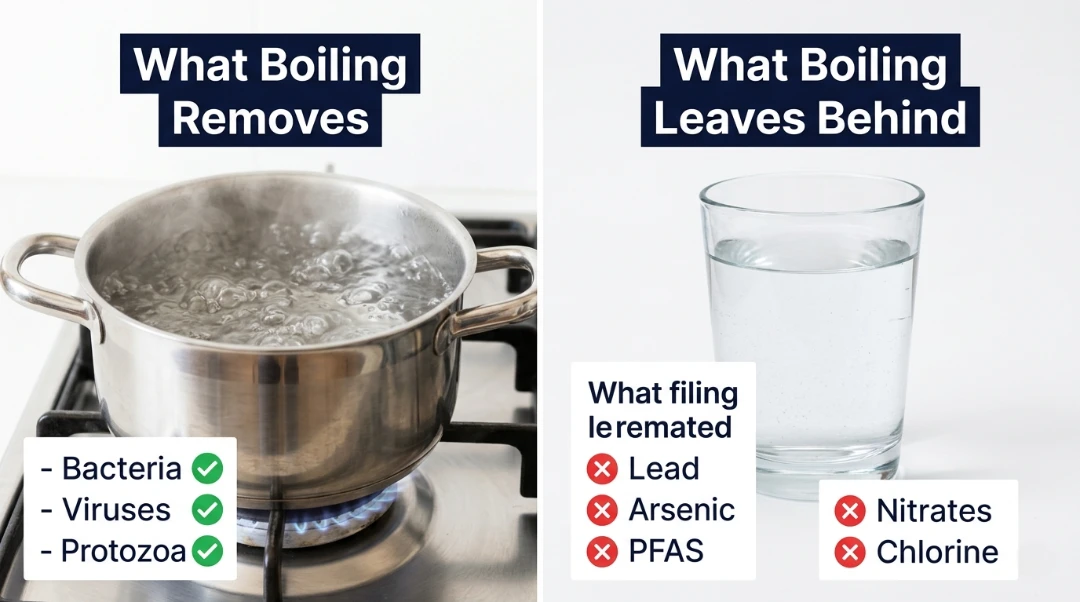
What Boiling Actually Removes
Boiling handles biological pathogens reliably when done correctly:
- Bacteria such as E. coli, Salmonella, and Campylobacter
- Viruses such as Norovirus and Hepatitis A
- Protozoa such as Giardia and Cryptosporidium
What Boiling Leaves Behind
Boiling has no effect on any of these:
- Lead and other heavy metals
- Arsenic
- PFAS compounds, often called forever chemicals
- Chlorine and chloramine disinfection byproducts
- Nitrates
- Pesticides and herbicides
Boiling water evaporates some of itself and decreases in total volume, any dissolved chemicals or metals already present become slightly more concentrated due to this concentration effect. If your drinking water contains lead, boiling it may actually provide an increased dose per glass compared to drinking without boiled.
Can Boiling Kill Bacteria Reliably?
Yes, when done correctly, boiling can kill bacteria and most other biological pathogens. But there is a right way and a wrong way to do it.
What a Rolling Boil Actually Means
Many people mistakenly believe any level of heat counts; this is simply not the case. A rolling boil refers to large and vigorously bubbling surface bubbles that won’t stop when stirred; any lesser form of boiling, such as gentle simmer or small bubbling at the bottom, aren’t sufficient.
How Long to Boil Based on Your Location
The time required depends on your elevation because water boils at a lower temperature at higher altitude. Since it is the heat itself that kills pathogens, not the act of boiling, you need more time to compensate at altitude.
- At most California elevations: bring to a rolling boil for at least 1 minute
- At elevations above 6,500 feet: bring to a rolling boil for at least 3 minutes
What to Do If the Water Looks Cloudy
Unless your tap water appears clear and has visible particles, do not boil it without first filtering it first through a cloth or paper towel to filter sediment out. Boiling unfiltered cloudy water without this step may trap pathogens inside particles which won’t fully reach with heat disinfection, leaving live pathogens living inside what might seem to be disinfected water.
Does Boiling Water Purify It From Chemical Contaminants?
No. This is where boiling falls completely short, and why this matters so much for homeowners in California.
Heat does not neutralize or remove chemical contaminants. Chlorine disinfection byproducts, pesticides, industrial chemicals, nitrates, and PFAS compounds pass through the boiling process unchanged.
The PFAS Problem Boiling Cannot Fix
Synthetic chemicals known as PFAS have been linked to immune suppression, hormone disruption, and an increased risk of cancer. They may be found in a variety of industrial products, non-stick cookware coatings, and firefighting foam. Testing has shown PFAS chemicals in water systems across California, and the EPA has imposed enforceable limitations on a number of these substances in public drinking water. When it comes to PFAS, boiling your water won’t help. It can make things a little worse due to the concentration effect.
Lead in Older California Homes
Lead enters drinking water not from the source, but from older plumbing, pipe solder, and plumbing fixtures inside the home. If your home was built before 1986, there is a real possibility that lead is leaching into your water at the tap. Boiling water that contains lead does not remove the lead. It concentrates on it. This is one of the most dangerous misconceptions surrounding boiling water safety.
Nitrates and Agricultural Runoff Near Tracy
Communities across California, particularly Tracy and San Joaquin County, have experienced issues related to agricultural runoff containing nitrates, naturally-occurring arsenic in groundwater sources and industrial contamination that do not respond to boiling. Families with infants are especially at risk from elevated nitrate levels in drinking water because these interfere with how red blood cells transport oxygen within very young children’s systems.
Does Boiling Tap Water Purify It the Way a Filter Does?
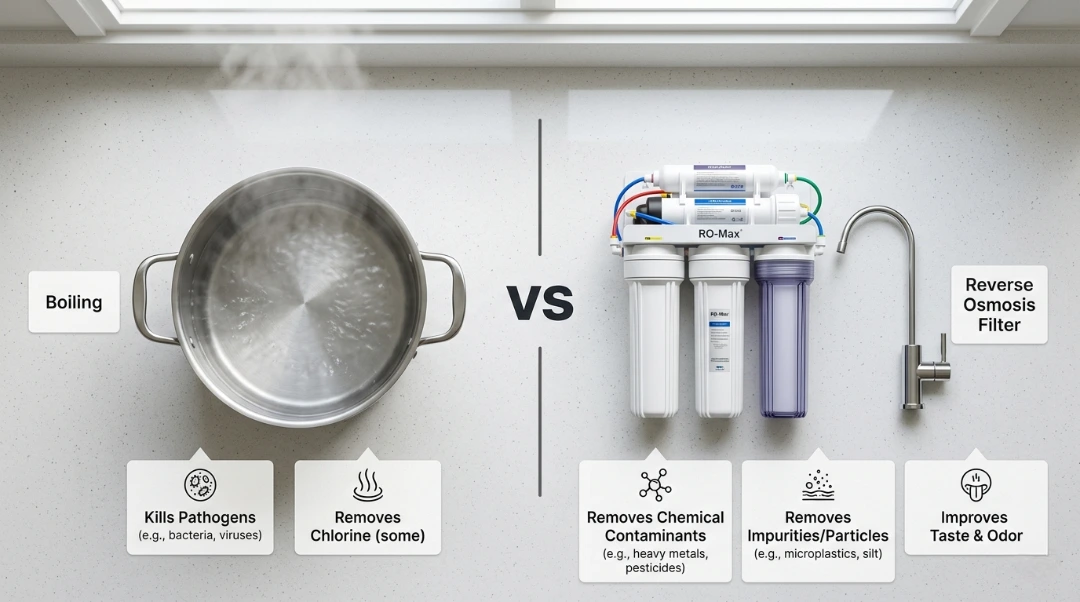
No, and the difference matters more than most people realize. Here is a direct comparison of what each approach actually removes:
|
Contaminant |
Boiling |
Reverse Osmosis Filter |
|
Bacteria |
Yes |
Yes |
| Viruses | Yes |
Yes |
|
Protozoa |
Yes | Yes |
| Lead | No |
Yes |
|
Arsenic |
No | Yes |
| PFAS | No |
Yes |
|
Nitrates |
No | Yes |
| Chlorine byproducts | No |
Yes |
|
Sediment |
No |
Yes |
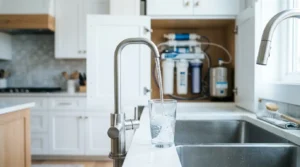
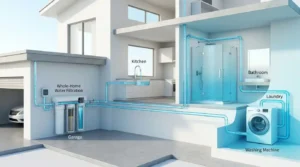
A reverse osmosis system forces water through a semi-permeable membrane that physically blocks dissolved solids, heavy metals, and chemical compounds that boiling cannot touch. A quality Water Purification System addresses both biological and chemical contamination at the same time, without any extra steps on your end.
How a Multi-Stage Filtration System Compares
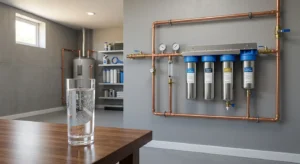
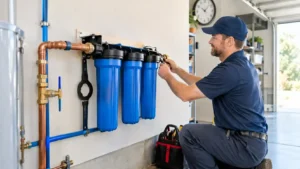
A 5-Stage Water Filtration System moves water through sediment pre-filters, activated carbon stages, the RO membrane itself, and then a post-filter for taste and odor. Each stage targets a different category of contaminants. Boiling, by contrast, only handles one category and does nothing for the rest. The filtration approach is comprehensive. Boiling is not.
Does Boiling Water Filter It? Understanding the Real Difference
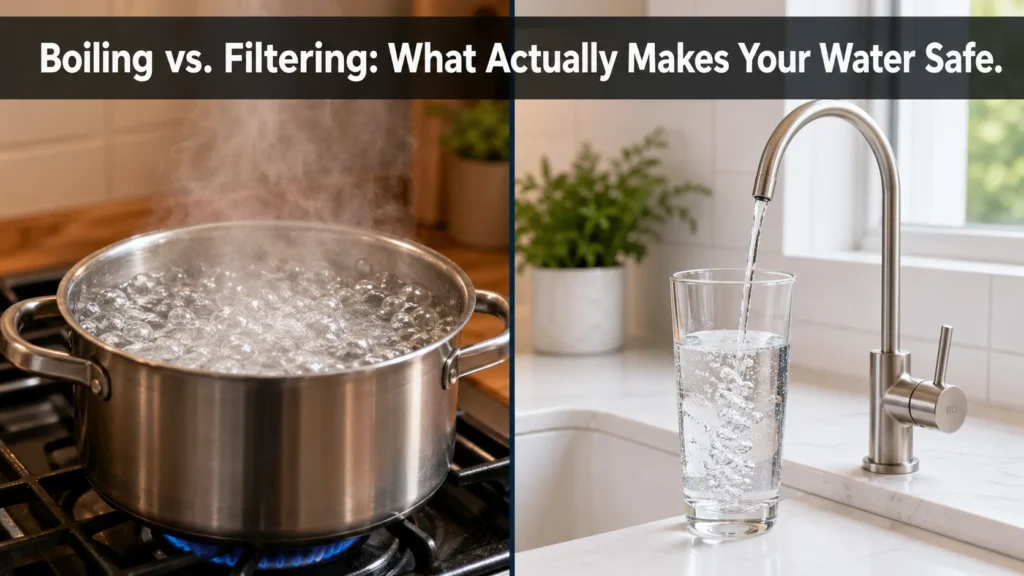
Does boiling water filter it? No. Filtering physically removes or blocks contaminants from passing through. Boiling destroys living organisms. Chemicals, metals, and dissolved solids flow right through the boiling process untouched.
Understanding this distinction is paramount to making informed decisions regarding your home water supply. Filtration and boiling aren’t two options that simply apply different levels of effort; rather they cover various categories of risk entirely.
When Boiling Makes Sense and When It Does Not
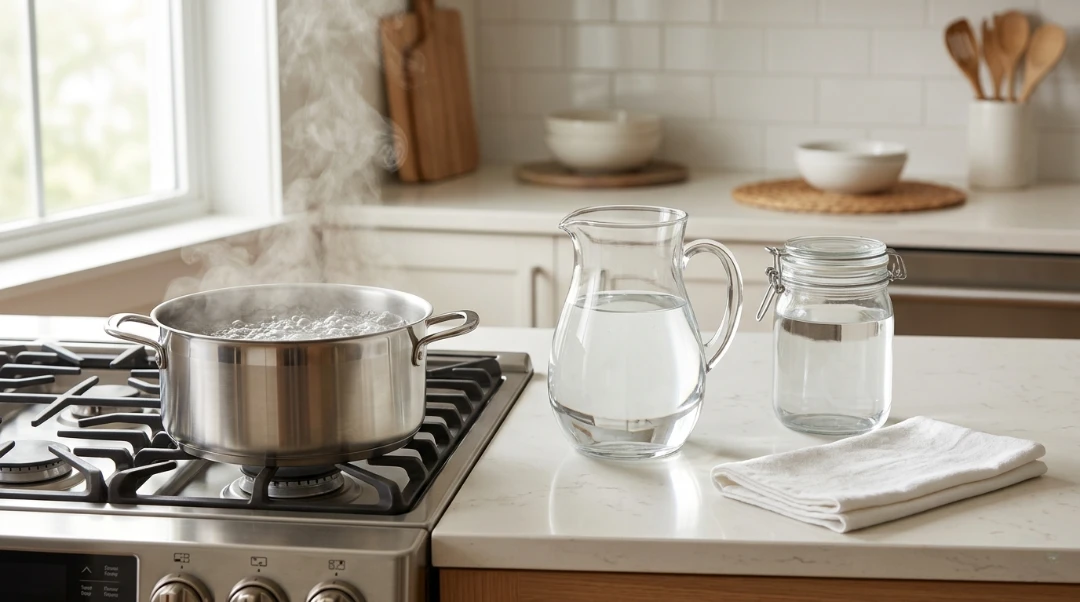
Boiling is a legitimate emergency response and it does serve a real purpose in the right situation.
When Boiling Is the Right Choice
Under a boil water advisory, when your municipal system experiences pressure loss, pipe breakage or contamination event requiring prompt attention by authorities, boiling can serve as an appropriate immediate response.
If you’re under an active boil advisory, follow these steps:
- If the water is cloudy, pour it through a clean cloth or paper towel first
- Bring it to a rolling boil
- Hold the rolling boil for at least 1 minute
- Let the water cool completely
- Store it in a clean, covered container that was not washed with the same tap water you’re concerned about
- Do not mix boiled water with unboiled water in the same container
- Use a clean cup or ladle to draw from it each time
You can generally continue using tap water for bathing, laundry, and hand washing even during a boil advisory, unless local authorities specifically advise otherwise.
When Boiling Is the Wrong Choice
A boil water advisory is not a long-term water safety plan. It is an emergency measure for a temporary crisis.
If your concern is everyday drinking water quality, and especially if you live in an area with known chemical, heavy metal, or agricultural runoff issues, boiling is simply the wrong tool.
What Tracy Homeowners Actually Need
For families in Tracy and surrounding San Joaquin County, where agricultural activity is heavy and where water testing has historically flagged contaminants including arsenic and nitrates, a permanent filtration solution makes far more practical sense than routine boiling.
If you want to understand what a complete filtration approach looks like and how to make sure your filtered water stays as healthy as possible, it is worth reading about how to remineralize reverse osmosis water to make sure beneficial minerals are preserved in your daily drinking water.
Conclusion
So, does boiling water kill everything? The honest answer is no. Boiling is effective against many germs, but it does not remove chemicals, heavy metals, or long-term contaminants that can affect health. For daily water your family drinks, cooks with, and uses to make coffee and baby formula, a properly installed reverse osmosis or multi-stage filtration system is the only approach that covers both biological and chemical threats together. Boiling has its place during genuine emergencies. But permanent protection requires a permanent solution.
The team at RO Water Filter System works with homeowners in Tracy and the surrounding area to find the right filtration system for their specific water supply and household needs, professionally installed. Contact us today to get started.
FAQs
Does boiling water kill everything in tap water?
No, boiling kills most bacteria and viruses but does not remove chemicals, heavy metals, or dissolved pollutants found in tap water.
Can boiling kill bacteria completely?
Yes, boiling water at a rolling boil can kill most harmful bacteria. However, it does not protect against chemical contaminants.
Does boiling water purify it for drinking?
Boiling disinfects water but does not fully purify it. It does not remove contaminants like lead, arsenic, or PFAS.
Does boiling water filter it like a water system?
No, boiling does not filter water. Filtration systems physically remove contaminants, while boiling only kills microorganisms.
Is boiling tap water enough for long-term safety?
No, boiling is only a temporary solution. For long-term safety, a proper filtration system is needed for consistent protection.