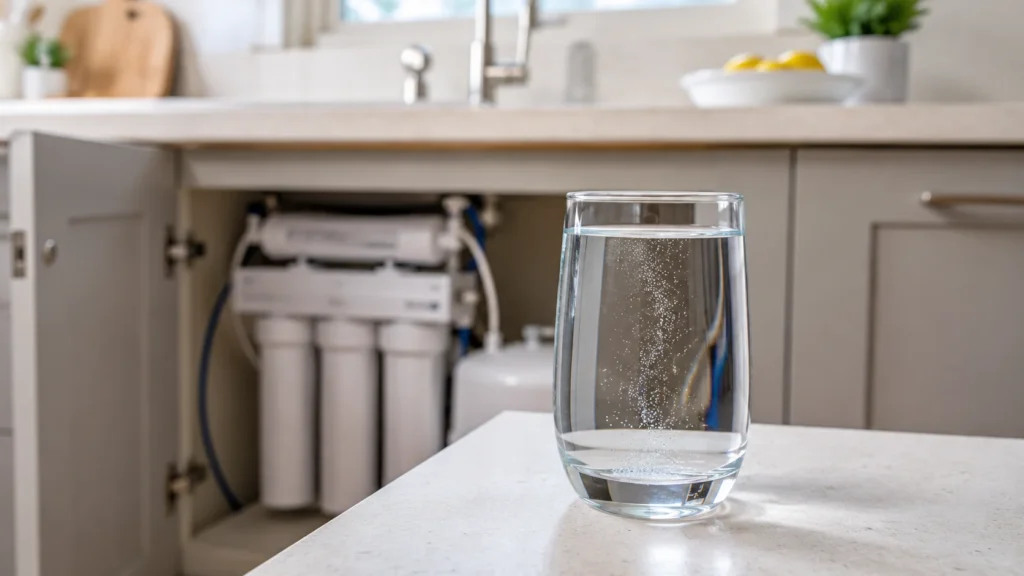
Does reverse osmosis remove microplastics? Yes, and it does it better than almost any other home filtration method available today. A reverse osmosis water filter for microplastics uses a 0.0001-micron membrane, which is thousands of times smaller than even the tiniest plastic particle. No microplastic can pass through it.
A good reverse osmosis water filter for microplastics is one of the most effective solutions available today. But the details matter. The membrane size, the number of filtration stages, and the quality of the installation all determine how well your system actually performs. At RO Water Filter System, we’ve seen plenty of homeowners buy a system and assume the job is done. It rarely is that simple.
What Are Microplastics?
Microplastics are plastic fragments smaller than 5 millimeters. Most are invisible to the naked eye. They come from two main sources:
- Primary microplastics: Manufactured small intentionally, found in cosmetics, synthetic textiles, and industrial processes
- Secondary microplastics: Larger plastic items (bottles, packaging, bags) that break into smaller fragments over time
These water sources pick up microplastics from agricultural runoff, urban storm water, and industrial discharge long before the water ever reaches a treatment plant.
Here’s the honest problem: conventional municipal treatment is not designed to remove microplastics. Chlorination kills bacteria. Sedimentation removes large particles. But a 1-micron plastic fragment? It passes right through.
Does Reverse Osmosis Remove Microplastics?
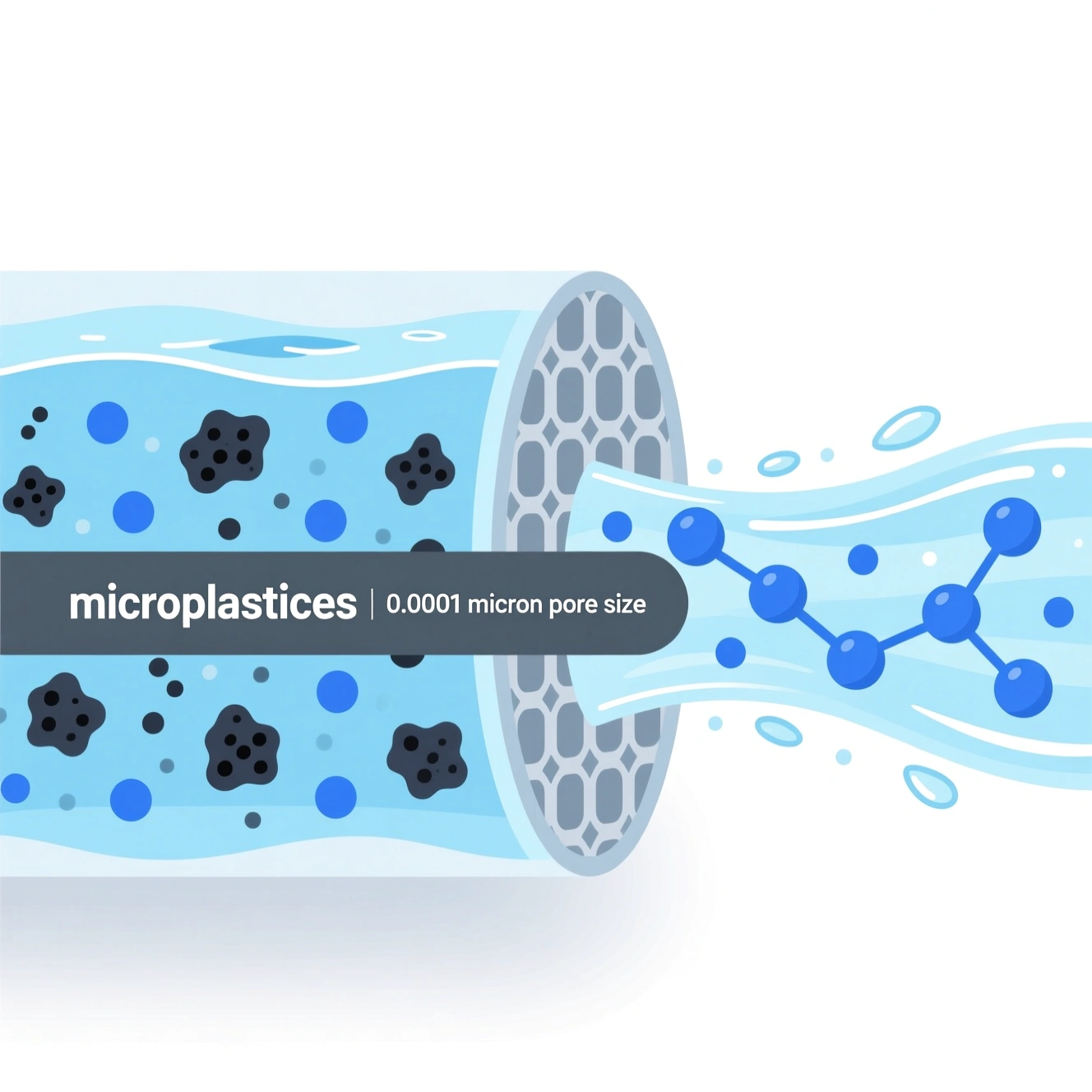
Yes. This is where RO technology earns its place. The reverse osmosis water filter for microplastics remove it from the water.
An RO membrane has pores between 0.0001 and 0.001 microns in diameter. Microplastics range from 1 micron to 5,000 microns. That size difference is the entire reason reverse osmosis systems are so effective, the membrane physically cannot allow microplastics to pass through to your drinking water.
Independent lab testing and NSF/ANSI Standard 401 certification confirm that properly functioning RO systems remove over 99% of microplastics from drinking water.
But there are conditions. The membrane must be intact. The system must be properly installed with no bypass leaks. And the pre-filters need to be doing their job so the membrane doesn’t get overloaded and degrade early.
What the Membrane Actually Does
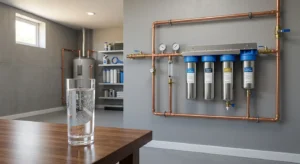
The RO membrane is a thin-film composite layer that works through pressure-driven separation. Water is pushed through under pressure, and dissolved solids, particles, and contaminants are rejected and flushed to drain. The water that passes through, called permeate, is what you drink.
Most quality RO systems combine this membrane with:
- A sediment pre-filter (removes large particles before they reach the membrane)
- A carbon block pre-filter (handles chlorine and chloramines that can damage the membrane)
- A post-carbon filter (polishes the taste before water reaches your glass)
In a properly staged system, the membrane does not work alone. That’s why a quality multi-stage setup, like a 7-Stage Water Filtration System gives you layers of protection that a basic 3-stage unit simply cannot match.
Does RO Filter Out Microplastics From All Water Sources?
Largely yes. But the source water conditions in your area determine how hard your system has to work to get there.
What Your RO Membrane Actually Handles
The RO membrane itself is what blocks microplastics. But it doesn’t work in isolation. Before water ever reaches the membrane, your pre-filters are doing critical work:
- High sediment loads clog pre-filters faster, starving the membrane of adequate flow pressure
- Elevated TDS levels increase the mineral concentration the membrane has to reject with every gallon
- Chloramine disinfection, standard in Tracy’s municipal supply, breaks down carbon pre-filters more aggressively than regular chlorine
- When pre-filters underperform, the membrane compensates, ages faster, and eventually filters less effectively
What Tracy’s Water Conditions Mean for Your System
This is where local knowledge matters. Tracy’s tap water isn’t the same as water in San Francisco or Sacramento. The San Joaquin Delta source blend creates specific challenges:
- Water hardness typically runs between 200 and 400 mg/L depending on the season
- That hardness means calcium and magnesium deposits build up on the RO membrane surface over time
- A scale-coated membrane looks completely normal from the outside
- But internally, those mineral layers reduce both water pressure through the membrane and filtration efficiency, including microplastic rejection
The Part Most Homeowners Never Check
Here’s what we see constantly in the field. A homeowner installs a quality RO system, changes filters once a year like the manual says, and assumes everything is fine. But nobody checks the membrane performance directly. A quick TDS reading on your output water tells you more than any visual inspection:
- Healthy RO output: 90% or more reduction from your input TDS reading
- Warning zone: Output TDS is more than 15% of your input reading
- At that point, microplastic filtration performance has also dropped, even if the water still tastes clean
Does RO Remove Microplastics; Or Just Reduce Them?
Both terms get used, and the difference matters.
Reduction means the system brings the level down significantly, typically 95% or more, but does not guarantee zero microplastics in the output water. Removal, in the context of RO, refers to removal to levels below detection thresholds in independent lab testing.
When an RO system is functioning correctly with an intact membrane and properly staged pre-filters, the performance is effectively removal rather than just reduction.
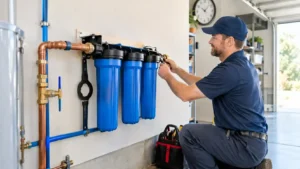
The key phrase is “functioning correctly.” A system with a pinhole in the membrane, a degraded carbon pre-filter, or an improperly sealed housing connection will underperform and you will not know by looking at the water. This is exactly why professional RO System Installation is worth the investment, not just for convenience but for the actual filtration results you get.
What Most Homeowners Get Wrong About Microplastic Filtration
We’ve done a lot of installations across Tracy and the surrounding areas. Here’s what we see repeatedly:
Buying a System Without Checking the Certification
Not every RO system on the market is tested for microplastics specifically. NSF/ANSI Standard 58 covers general RO performance. NSF/ANSI Standard 401 is the one that specifically covers emerging contaminants including microplastics. If your system isn’t certified to Standard 401, you don’t have a confirmed claim.
Skipping the Pre-Filter Maintenance
The RO membrane gets all the attention. But the carbon pre-filter is what protects the membrane from chlorine damage. Tracy’s municipal water uses chloramine disinfection, which is harder on carbon filters than standard chlorine. Most homeowners change pre-filters once a year. In high-use households with hard water, that schedule often isn’t enough.
Assuming More Stages Always Means Better
A 10-stage system sounds impressive. But if stages 8, 9, and 10 are redundant mineral-adding steps with no additional contaminant removal value, you’re paying for complexity without benefit. What matters is whether the critical stages, sediment, carbon, RO membrane, post-carbon, are quality components that are properly maintained.
Not Testing the Output Water
A TDS meter costs about $15. Testing your output water TDS every few months tells you quickly if your membrane is degrading. If your input water reads 300 ppm TDS and your output reads 120 ppm, your membrane is not performing at full capacity. A healthy RO system should reduce TDS by 90% or more.
Does Reverse Osmosis Filter Remove Microplastics Better Than Other Options?
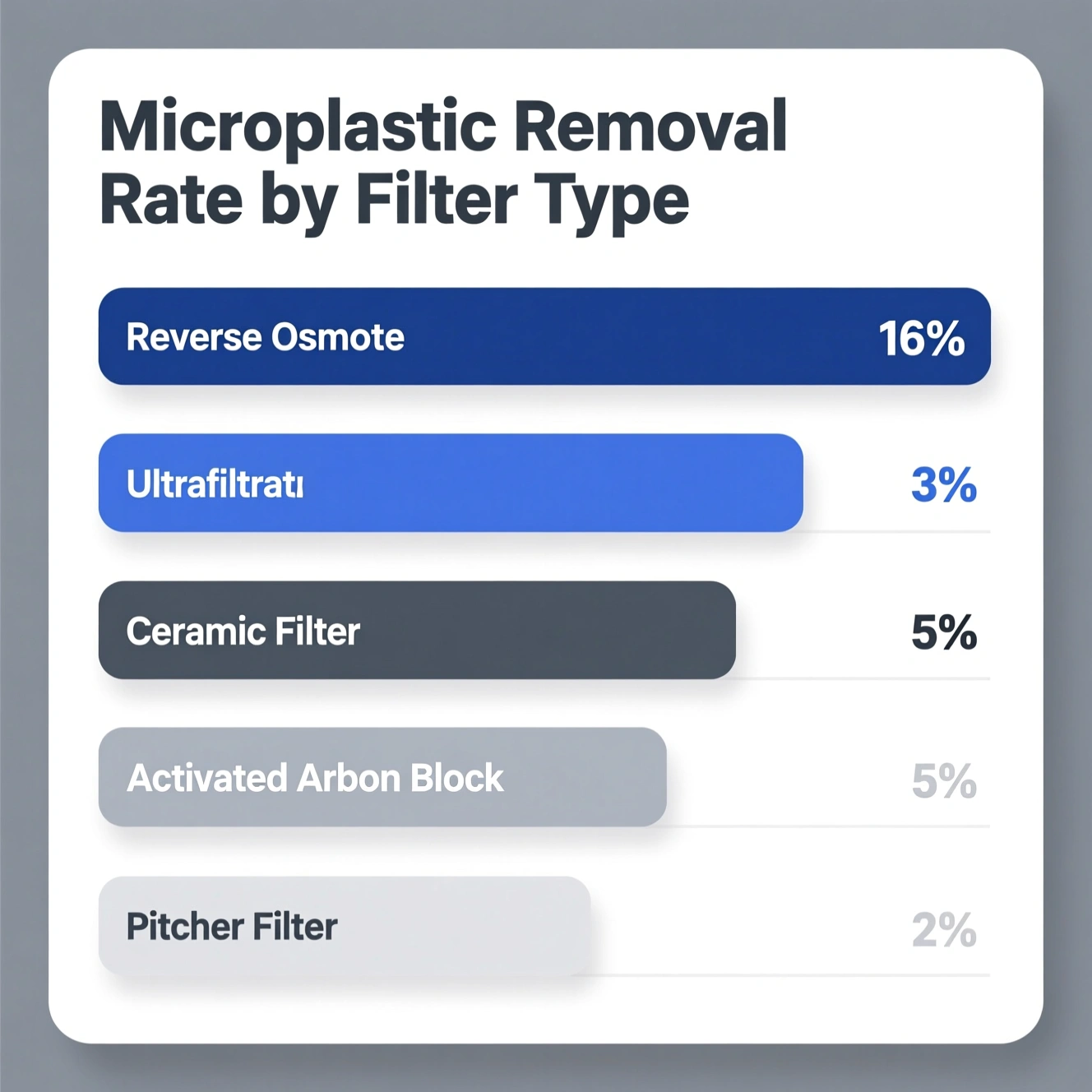
Here’s an honest comparison:
|
Filtration Type |
Microplastic Removal Rate | Notes |
| Reverse Osmosis (RO) | 95–99%+ |
Most effective; membrane acts as physical barrier |
|
Activated Carbon Block |
40–70% | Depends heavily on pore size and contact time |
| Pitcher Filters (Brita, etc.) | 20–50% |
Not designed or rated for microplastics |
|
Ceramic Filters |
60–80% | Better than carbon, but not as reliable as RO |
| Ultrafiltration (UF) | 80–95% |
Effective but doesn’t remove dissolved solids |
For drinking water safety where microplastics are a concern, RO consistently outperforms every other point-of-use option. Pitcher filters, in particular, give a false sense of security. They’re not rated for microplastics and most use activated carbon block media that is too porous to block sub-micron particles reliably.
Getting a Reverse Osmosis System Right in Tracy, CA
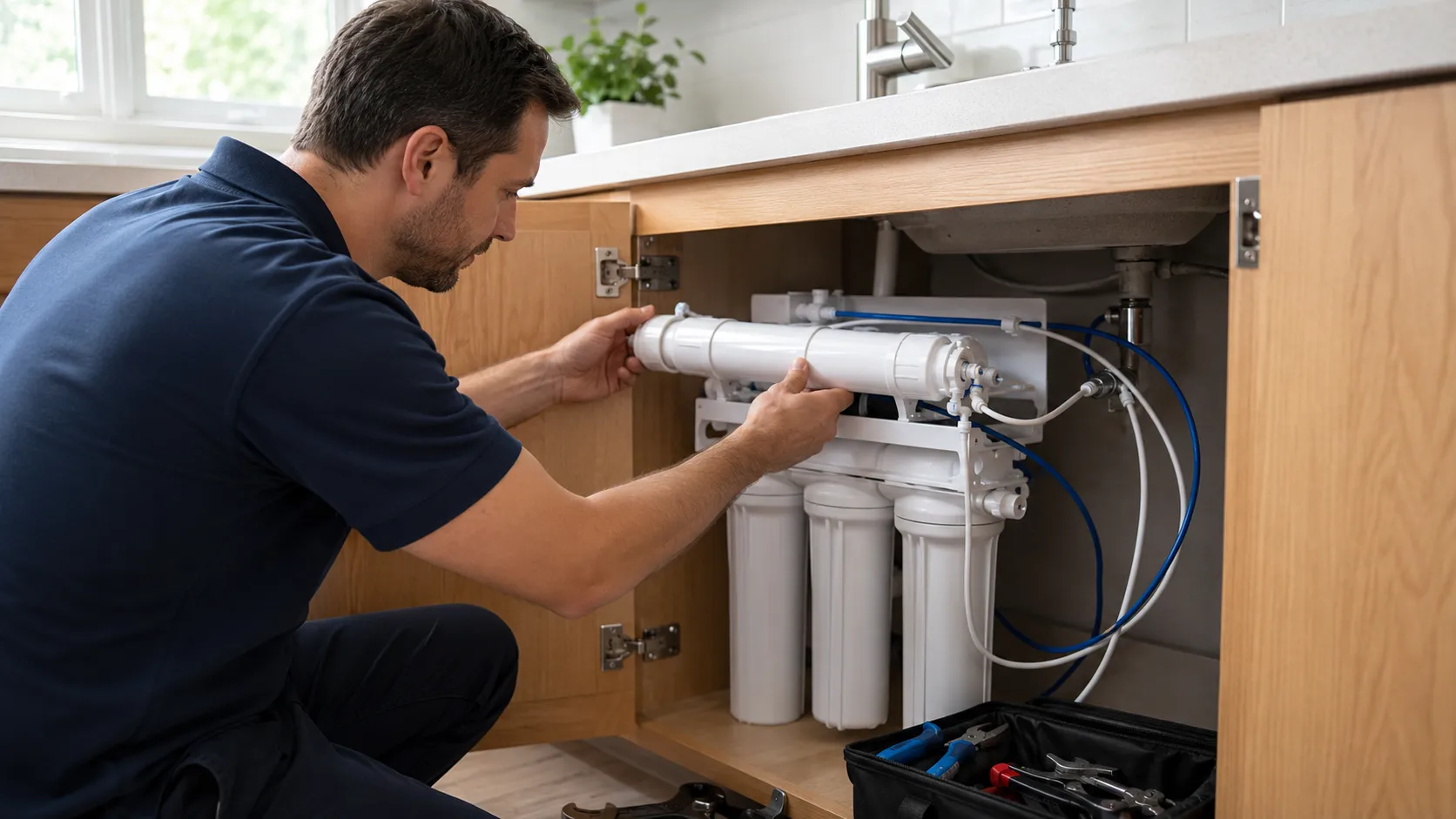
If you’re a homeowner in Tracy concerned about microplastics in drinking water, here’s a practical path forward:
- Test your source water first. Know your baseline TDS, hardness, and chloramine levels before choosing a system.
- Choose a system certified to NSF/ANSI 401 for microplastics and NSF/ANSI 58 for general RO performance.
- Invest in proper installation. A misaligned housing, a loose fitting, or an improperly torqued membrane cap creates bypass flow that defeats the purpose of the system.
- Follow the real maintenance schedule. Pre-filters every 6–12 months. Post-carbon every 12 months. Membrane every 2–3 years. More frequently if your TDS readings suggest degradation.
- Use a permeate pump if your water pressure is low. Homes with pressure below 60 psi will see significantly reduced RO output and efficiency without one. Many Tracy homes on the west side of the city fall into this range.
If you want a proven setup for a family home, a Reverse Osmosis System for Homes sized correctly for your household usage is the most reliable long-term solution.
Conclusion
The science is settled. A properly maintained reverse osmosis water filter for microplastics removes over 99% of these particles from your drinking water. No pitcher filter, no carbon unit, and certainly no case of bottled water comes close to that level of consistent, verified protection. But buying the right system is only half the job. Tracy’s hard water, high TDS, and chloramine disinfection create real demands on your RO membrane that a generic installation or a once-a-year filter swap won’t keep up with.
If you’re done guessing and ready to drink water you can actually trust, reach out to RO Water Filter System today. We know Tracy’s water. We’ve installed systems across this area for years. We’ll help you pick the right setup, get it installed correctly the first time, and show you exactly what maintenance your water conditions actually require. Contact us and let’s get it sorted.
FAQs
Does reverse osmosis remove microplastics?
Yes. RO membranes have 0.0001 micron pores, microplastics are 1–5,000 microns. A properly installed RO system removes over 99% of microplastics. NSF/ANSI Standard 401 certified systems are independently verified.
Does RO filter out microplastics better than carbon filters?
Yes. Carbon filters mainly improve taste and chlorine levels, while RO systems physically separate microscopic particles including many microplastics.
Does RO remove microplastics from all water sources?
It performs well across most municipal and well water sources, but efficiency depends on pressure, maintenance, and membrane condition.
How often should I maintain a reverse osmosis system?
Most systems need filter changes every 6 to 12 months. The RO membrane usually lasts 2 to 3 years depending on usage.
Is RO water safe for children and infants?
Yes. RO-treated water is commonly used in homes with infants because it reduces many unwanted contaminants, including microplastics and dissolved solids.