Most homeowners in Tracy, CA and the surrounding San Joaquin Valley do not have just one water problem. They have two or three stacked on top of each other. Hard water that scales the pipes. A faint sulfur smell from the well. Iron that stains the fixtures. Chloramines left over from municipal treatment. Each one of those problems needs a specific solution, and a generic off-the-shelf filter handles maybe one of them on a good day.
That is where a custom water treatment system changes the equation entirely. Instead of buying a product and hoping it fits, you start with a water test, identify exactly what is in your water, and build a system designed around those results. RO Water Filter System helps homeowners and business owners in Tracy do exactly that, and this guide walks through why this approach works, when you actually need it, and what to expect from the process.
What Makes a Custom Water Treatment System
The word custom gets used loosely in the water industry. Some companies call a pre-configured bundle “custom” because it comes with a few options. That is not what this means.
A water quality assessment is the first step towards a really customized filtering system. The particular pollutants found, their concentrations, and their interrelationships are all listed in that study. The system is then constructed in phases, each of which targets a particular issue in the proper sequence.
For example, iron has to be addressed before carbon filtration, or the carbon becomes fouled quickly. Hardness is often treated before a reverse osmosis system to extend the membrane’s service life. PFAS removal requires a specific media type that a standard sediment filter will not touch. The order matters. The media choice matters. The flow rate matters.
Custom engineered systems account for all of this. Off-the-shelf systems do not.
Who Actually Needs a Custom Water Treatment System
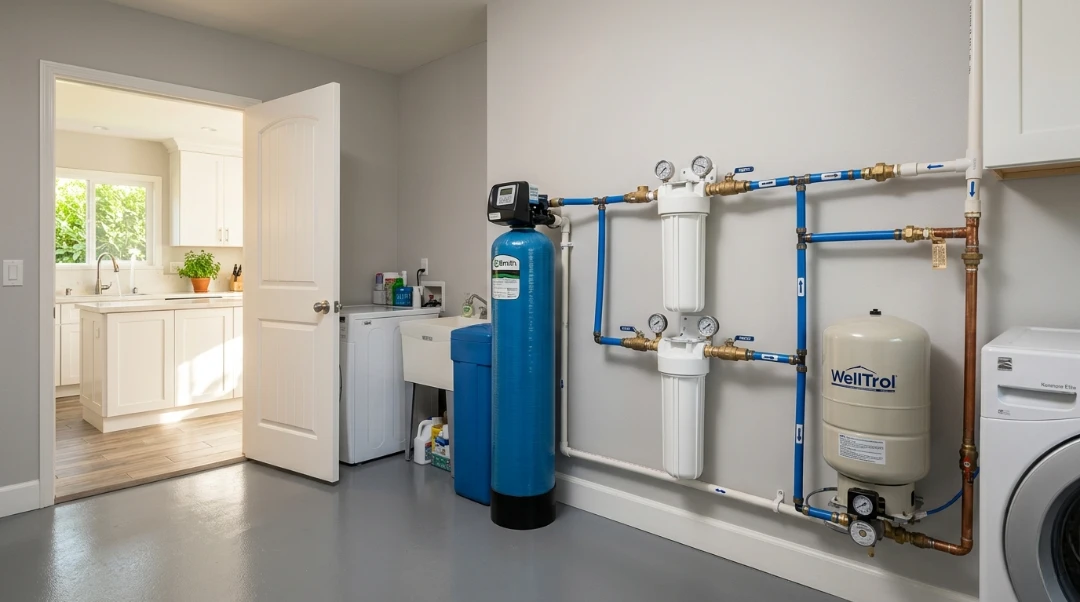
Not everyone does. A household on city water with good overall quality and only a taste concern might do fine with a basic under-sink unit. But there are clear situations where a standard product simply will not hold up.
Private Well Owners
The most frequent instance is Tracy and the surrounding region. Municipal treatment is not applied to well water. Your glass, shower, and appliances are all filled with precisely what comes out of the earth. The precise location, depth, geology, and proximity to agricultural or older infrastructure all affect the pollutant profile. The water chemistry of a neighbor two miles away may be very different.
Households With Hard Water
The water in the San Joaquin Valley is infamously hard and contains a lot of calcium and magnesium. When iron is added, the mixture destroys water heaters, prematurely clogs RO membranes, and leaves scale in every pipe in the home. That requires a phased strategy rather than a single cartridge filter.
Commercial and Industrial Users
A restaurant needs reliable TDS reduction for consistent coffee and beverage quality. A healthcare facility needs verified microbial removal. A hotel needs protection for its boilers and HVAC systems from scale buildup. These are not consumer problems. They require contaminant-specific remediation and real-time water quality monitoring to stay compliant and functional.
High-Income Households Investing in Whole-House Systems
These buyers are not looking for “good enough.” They want verified purity throughout the entire home, from the shower to the kitchen tap, with a system built to last 15 to 20 years with proper maintenance.
How a Custom Filtration System Is Designed
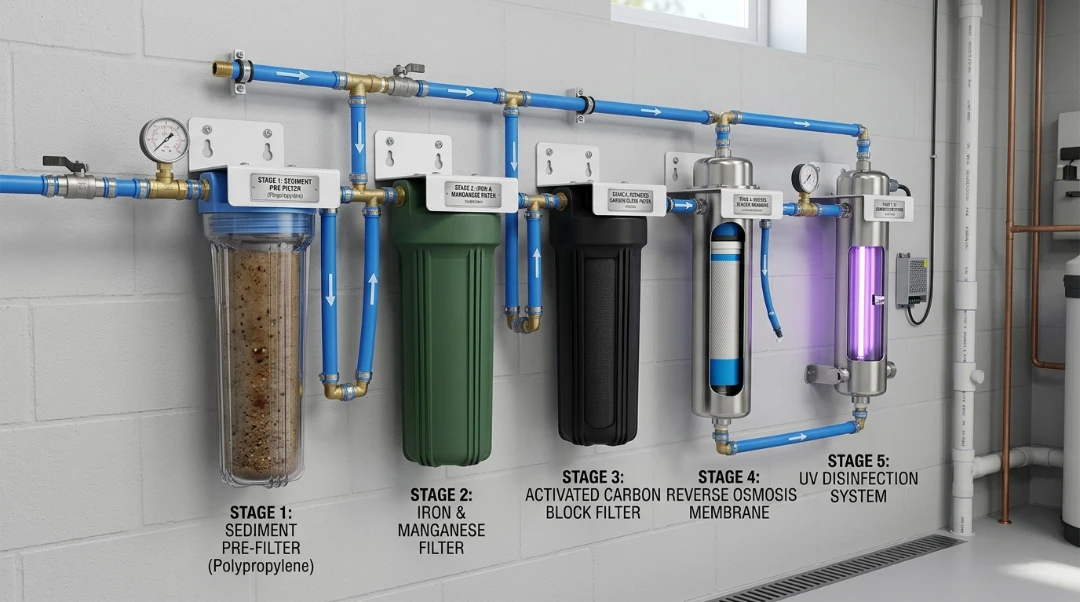
The design process for a custom filtration system follows a logical sequence. Understanding it helps you ask the right questions and avoid buying something that does not fit your situation.
Step 1: Water Testing
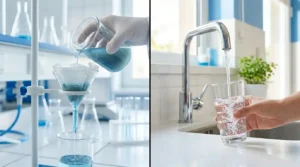
This is non-negotiable. A comprehensive water test covers hardness, pH, TDS, iron, manganese, nitrates, bacteria, and PFAS if there is any reason to suspect contamination. In California, private well owners can request testing through the State Water Resources Control Board, or use a certified private lab. The test results are the blueprint.
Step 2: Contaminant Mapping
Once the results are in, each contaminant is mapped to the right removal technology. This is where system design begins. Sediment? Pre-filter first. Iron above 0.3 mg/L? Oxidizing filter or aeration. Hardness above 120 mg/L? Water softener upstream. PFAS compounds? Activated carbon or specialized ion exchange media. Bacteria? UV disinfection at the point of entry or point of use.
The modular design approach allows each stage to be added, removed, or upgraded without replacing the entire system. That matters for long-term maintenance costs.
Step 3: Flow Rate and Pressure Calculation
A system that cannot keep up with peak demand fails in practice regardless of how well it removes contaminants. A family of four uses water differently than a six-bedroom household or a restaurant kitchen. The system has to be sized for actual usage, not average usage.
Step 4: Integration with Existing Plumbing
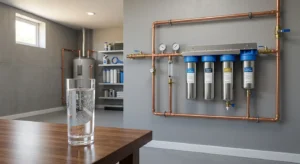
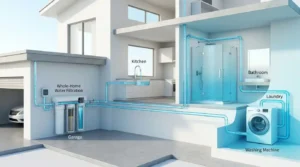
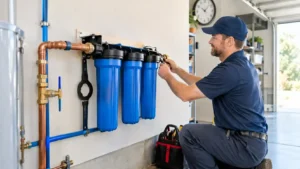
Whole-house systems install at the point of entry, where the main line enters the building. Point-of-use systems go at the tap. Some properties need both. The plumbing configuration, pressure, and available space all affect what is possible and what the installation will cost.
When Reverse Osmosis Is Enough, and When It Is Not
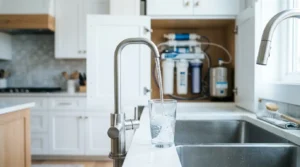
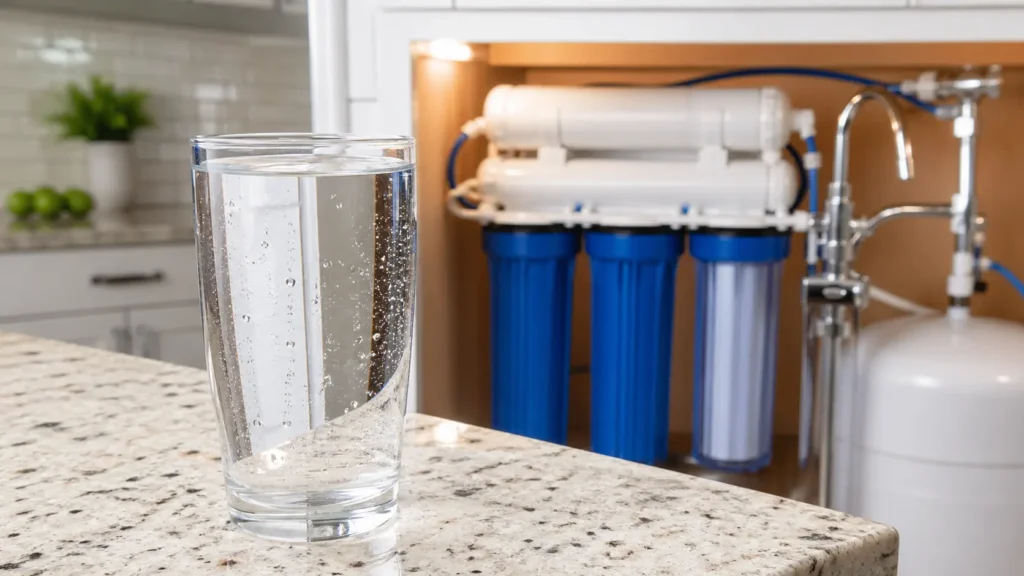
Heavy metals, nitrates, dissolved solids, and a variety of chemical pollutants, including certain PFAS chemicals, may all be effectively reduced using RO membranes. A high-quality RO system is often the best option for point-of-use drinking water purification.
That is why a proper custom water treatment plan often positions RO as the final polishing stage, not the first line of defense. Pre-treatment handles the heavy work. RO handles the fine removal. And post-treatment, sometimes a remineralization or UV stage, handles what comes after.
If you want to go deeper on the mechanics, the full explanation of how reverse osmosis works in water filtration systems covers membrane science, rejection rates, and what RO genuinely removes versus what it misses.
Common Buying Mistakes to Avoid
The water filtration market has a lot of noise. These are the mistakes that cost people money and frustration.
- Buying on price without testing first. The least expensive system that does not address your actual water problems is waste of money, not a bargain.
- Skipping pre-treatment. Sending untreated hard or iron-heavy water directly into an RO membrane is one of the fastest ways to void a warranty and cut membrane life in half.
- Ignoring flow rate. A system that works perfectly at low usage but drops pressure during morning routines is going to frustrate everyone in the house.
- Choosing a system based on stage count alone. A 10-stage water filtration system is only useful if each stage targets something real in your water. Stages for the sake of stages are a marketing number, not a quality indicator.
- Skipping maintenance. Filter replacement schedules exist for a reason. A clogged carbon block stops working and can become a bacterial breeding ground. Systems need attention on a regular schedule.
What Maintenance Looks Like
A well-designed custom filtration solution is not maintenance-free, but it is manageable. Here is what ongoing maintenance typically looks like for a whole-house plus RO combination:
- Sediment pre-filters: Replace every 3 to 6 months depending on source water turbidity
- Carbon filters: Replace every 6 to 12 months
- Water softener resin: Lasts 10 to 15 years with proper salt management; check salt levels monthly
- RO membrane: Replace every 2 to 4 years based on usage and water quality
- UV lamp: Replace annually regardless of lamp appearance
- System pressure check: Annually, or if flow rate drops noticeably
RO Water Filter System provides installation and ongoing support for customers in Tracy and nearby areas, so you are not figuring out the maintenance schedule on your own.
Local Water Considerations for Tracy and CA
Tracy sits in a region where water quality varies meaningfully depending on whether you are on municipal supply or a private well, and on how old the local infrastructure is. Municipal water in Tracy meets state standards, but many residents notice hardness, chloramine odor, and taste issues that a basic carbon filter helps but does not fully resolve.
A custom filtration system built for this region accounts for those realities. It is not a system designed for a Phoenix suburb or a Chicago apartment building. It is built for this specific water.
Conclusion
Over time, water-related issues become worse. The longer the proper system is not in place, the more scale collect, discolored fixtures, off-tasting water, shorter appliance life, and health risks from untreated toxins decline. For those with limitless funds, a custom water treatment system is not a luxury improvement. Since real and particular issues need real and specific answers, it is the realistic solution for anybody with genuine and specific water concerns.
If you are in Tracy or the surrounding area and you are not sure what is actually in your water or what system would genuinely fit your home or business, RO Water Filter System can help you start with a water assessment and build from there. Contact us today to schedule a consultation and get answers based on your actual water, not a product brochure.
FAQs
How do I know if I need a custom water treatment system?
If you have multiple water issues like hardness, odor, or staining, a custom system is usually the best solution. Testing your water is the first step to confirm this.
Is a custom filtration solution more expensive than standard systems?
The upfront cost can be higher, but it often saves money over time by reducing repairs, maintenance, and inefficiencies.
Can custom water treatment automation solutions reduce maintenance?
Yes, automation helps monitor system performance and alerts you when maintenance is needed, making upkeep easier and more predictable.
Do custom filtration systems work for both homes and businesses?
Yes, they are designed for a wide range of uses, from residential properties to restaurants and industrial facilities.
How long does installation take?
Most systems can be installed within a day or two, depending on complexity and property size.