Your dishes come out of the dishwasher covered in white spots. Your shower door has that pesky chalky film that refuses to go away, no matter what lotions or potions you try. And your skin feels dry no matter which lotions or potions are applied. If any of that sounds familiar, there’s a good chance you already know the answer: you probably have hard water. The team at RO Water Filter System hears this from homeowners in Tracy and the surrounding San Joaquin Valley all the time.
Hard water is one of those problems that sneaks up on you. You don’t taste it. You can’t always smell it. But it’s quietly working against your appliances, your plumbing, and your skin every single day. This guide breaks down exactly how do you know if you have hard water using seven clear, practical signs you can spot right now without any equipment.
What Is Hard Water, Really?
Before jumping to the signs, it helps to understand where hard water comes from. As water travels through soil and rock, before it ever reaches your tap, it picks up dissolved minerals, primarily calcium and magnesium. The more of these minerals it collects, the “harder” the water becomes.
Water hardness is measured in grains per gallon (GPG). Here’s a simple reference:
| Hardness Level |
GPG Range |
|
Soft |
0–3 GPG |
| Moderately Hard |
4–7 GPG |
|
Hard |
8–10 GPG |
| Very Hard |
11+ GPG |
Tracy’s municipal water comes largely from the Sacramento-San Joaquin Delta and local groundwater wells. That blend regularly produces hardness levels in the 8 to 14 GPG range, solidly in the “hard” to “very hard” category. So if you’re a homeowner here and you haven’t thought much about your water quality, this is worth paying attention to.
How Do You Know If You Have Hard Water? 7 Signs to Check Right Now
1. White Spots on Dishes and Glassware
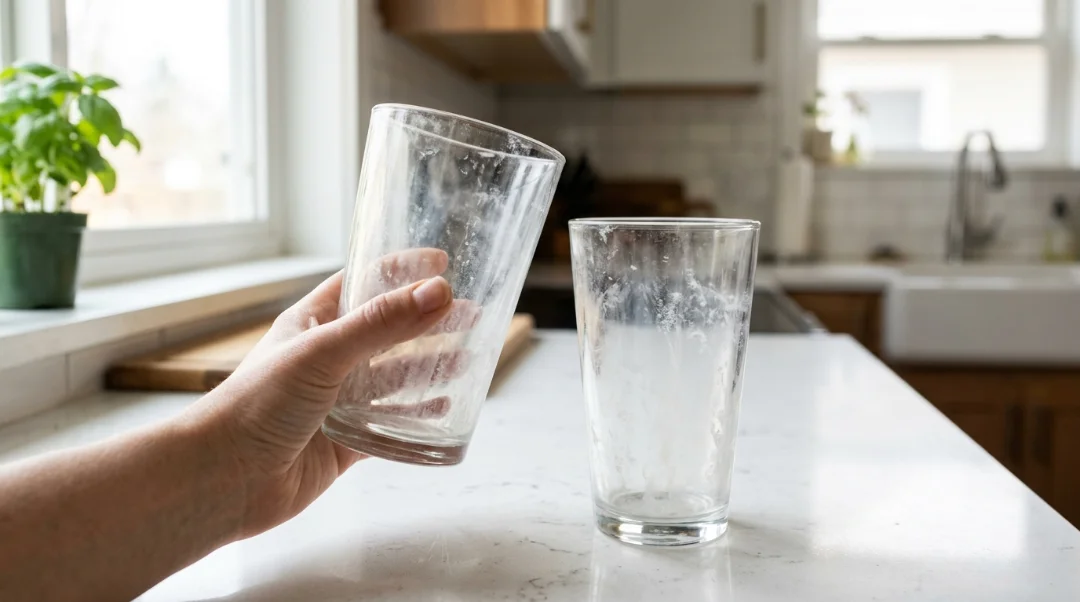
This is usually the first sign homeowners notice.
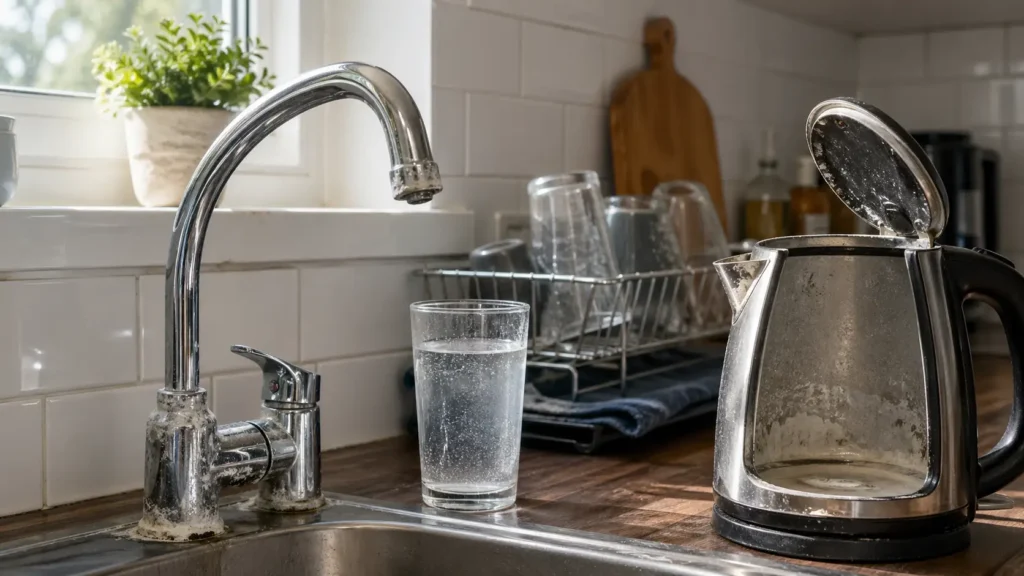
If your glasses come out of the dishwasher looking cloudy or spotted, mineral residue is likely drying on the surface.
It often looks like:
- White chalky marks
- Cloudy film
- Stubborn residue left after washing
And no, better dish soap usually won’t fix it.
Hard water minerals stay behind even after the rinse cycle.
2. Soap Doesn’t Lather Well
Here’s what most people don’t realize.
Soap reacts with calcium and magnesium. Instead of making rich foam, it creates sticky residue called soap scum.
You may notice:
- Shampoo feels harder to rinse
- Body wash leaves skin feeling coated
- Hand soap barely lathers
If you constantly feel like you’re using too much soap, that’s one of the classic signs of hard water.
3. Dry Skin and Dull Hair After Showering
Hard water can be rough on skin and hair.
Minerals make it harder to rinse away soap completely, leaving a thin film behind.
That often leads to:
- Itchy skin
- Tightness after showering
- Flaky scalp
- Hair that feels heavy or dull
Families with kids often notice this first during winter, when skin is already dry.
If your moisturizer isn’t helping much, your home’s water might be part of the problem.
4. Scale Buildup Around Faucets and Fixtures
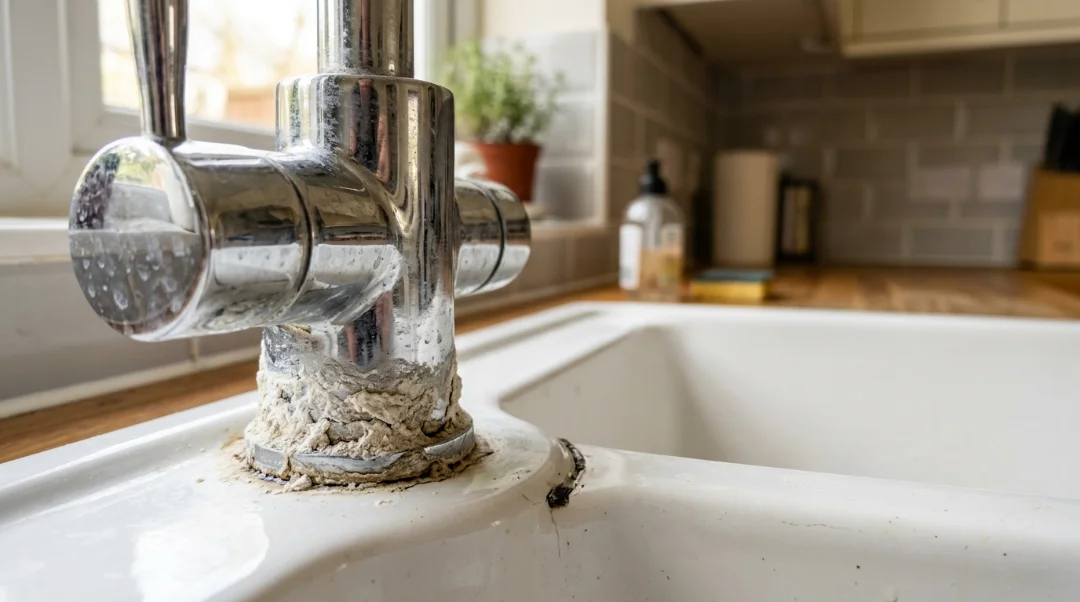
Look closely at your faucets.
See white crust around the base? That’s mineral buildup.
Hard water leaves scale around:
- Sink faucets
- Showerheads
- Bathtub drains
- Refrigerator dispensers
Over time, scale buildup gets thicker and harder to remove.
It can also reduce water flow from fixtures.
5. Low Water Pressure in Showers or Faucets
This one gets expensive.
Hard water minerals slowly build up inside pipes, fixtures, and aerators.
Eventually, they start to:
- Restrict flow
- Reduce pressure
- Create uneven spray patterns
A clogged showerhead is annoying. But the scale inside pipes is worse.
Left untreated, mineral deposits can slowly clog pipes and shorten plumbing life.
6. Appliances Wear Out Faster
Your appliances feel the effects too.
Hard water forces appliances to work harder because mineral scale acts like insulation around heating elements.
Common victims include:
- Water heater
- Dishwasher
- Washing machine
- Ice maker
- Coffee maker
You may notice:
- Longer heating times
- Higher utility bills
- Frequent maintenance
- Shorter appliance lifespan
Water heaters are especially vulnerable.
Even a small layer of scale can lower efficiency significantly.
7. Stiff Laundry and Faded Clothes
Clothes washed in hard water often feel rough.
Minerals stay trapped in fabric fibers, making laundry feel:
- Crunchy
- Less absorbent
- Faded faster
White towels turning gray? Very common.
Hard water can also make detergent less effective, so clothes may not feel fully clean.
How to Confirm It: Simple Home Tests
Spotting these signs gives you good reason to suspect hard water. But if you want a number, there are a few easy ways to confirm.
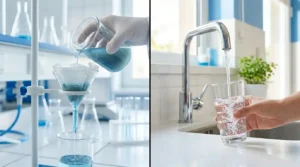
The soap test. Fill a clear bottle halfway with tap water. Add a few drops of pure liquid castile soap. Cap it and shake for 10 seconds. Soft water produces thick, white, fluffy suds. Hard water produces very little lather and leaves a milky or cloudy film in the water below.
A water hardness test kit. These inexpensive (usually between $10-20 at hardware stores) water testing strips offer instant GPG or ppm readings in minutes. Once dipped into tap water, match its color result against its chart for quick results indicating whether you have soft, moderate hard, hard or very hard water conditions.
Your local water quality report. Tracy’s municipal utility publishes an annual water quality report (also called a Consumer Confidence Report). This document shows the measured hardness of your water supply. If you’re on well water, you won’t find your specific reading there a test kit or professional test is more useful.
What to Do If You Have Hard Water in Tracy, CA
Once you’ve confirmed the signs, the next question is: what do you actually do about it?
The answer depends on what’s bothering you most. Here’s a practical breakdown.
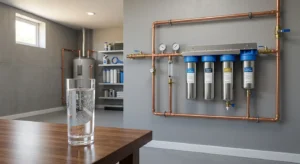
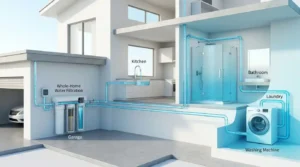
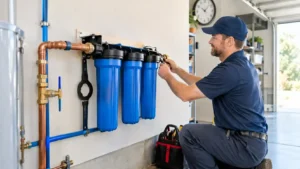
For hard water that affects your whole home; scale in pipes, reduced water heater efficiency, spotty dishes, soap scum throughout a Whole House Water Softener for Hard Water is the most thorough solution. It treats water at the entry point before it reaches any fixture, appliance, or pipe in the house.
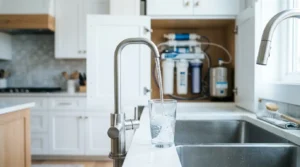
For drinking water quality specifically; if your concern is taste, TDS levels, or removing dissolved minerals from what you cook and drink, a reverse osmosis system under the kitchen sink is the right fit. An RO membrane reduces hardness minerals along with chlorine, nitrates, and other dissolved contaminants. Our RO System Installation service handles everything from start to finish.
For a broader filtration approach; if you want cleaner water for multiple uses, a Water Filtration System can be paired with a softener for a complete solution.
Honestly, most Tracy homeowners we work with need both. A softener handles the mineral problem throughout the home. An RO system gives you the cleanest possible drinking and cooking water at the tap. They complement each other well.
One Thing Worth Saying
Hard water isn’t a health emergency. Calcium and magnesium in drinking water aren’t harmful to most people. But the cumulative cost, to your appliances, your plumbing, your skin and hair, your water heater, your cleaning time, adds up faster than most homeowners expect. We’ve seen water heaters fail at six years old because of scale. We’ve seen pipes with almost no usable interior diameter in homes where the water was never treated.
The earlier you identify the problem, the less it costs to manage.
Conclusion
If you’ve been wondering how do you know if you have hard water, you probably already have your answer. Limescale in faucets, soap scum on shower doors, stained dishes, dry skin and struggling appliances, these aren’t random inconveniences but rather persistent problems which require solutions immediately. They’re consistent signs of a water quality problem that has a straightforward solution.
Tracy’s water supply is known to run hard. That’s not a complaint about the utility, it’s just the reality of water drawn from the Delta and local groundwater in the San Joaquin Valley. The good news is it’s fully treatable. RO Water Filter System has been helping homeowners in this area address hard water with the right equipment, properly installed. Reach out to us for a free consultation and find out exactly what’s in your water and what it’s going to take to fix it.
FAQs
How do I know if I have hard water in my home?
If you’re wondering how do I know if I have hard water, look for signs like white spots on dishes, soap that doesn’t lather well, and dry skin after showering. These everyday issues are often early indicators of mineral-heavy water.
What are the most common signs you have hard water?
The most common signs of hard water include scale buildup on faucets, cloudy glassware, stiff laundry, and reduced water pressure. These problems happen because of calcium and magnesium deposits left behind.
How to tell if you have hard water without a test kit?
If you want to know how to tell if you have hard water, try the soap bottle test or check for soap scum in your shower. Poor lather and residue left on surfaces are strong clues.
Are there visible signs you have hard water in the bathroom?
Yes, clear signs you have hard water in the bathroom include white buildup on shower doors, clogged showerheads, and soap scum on tiles. These are caused by mineral deposits over time.
Why do homeowners search how do you know if you have hard water after moving?
Many people search how do you know if you have hard water after moving because water quality varies by area. In places like Tracy, CA, mineral content in the water supply can quickly cause noticeable changes in cleaning, skin feel, and appliance performance.