Many Tracy residents encounter this problem since city-treated water uses chlorine disinfection systems, which use this substance to safeguard it against bacterial contamination; unfortunately, though this prevents disease, they often come with unpleasant taste, smell and daily comfort issues; this makes using an iron water filter for chlorine removal important in everyday life.
Most online guides only list products or give surface-level advice. They rarely explain how chlorine behaves in real homes, how water pressure and flow rate affect filtration, or when a whole house system makes more sense than a small filter. At RO Water Filter System, we focus on practical solutions that match how families actually use water every day.
Why Chlorine Is Still in Your Tap Water
Municipal water suppliers, including those serving Tracy and much of California, are required to add chlorine or chloramine to drinking water before it enters the distribution system. This kills bacteria and other pathogens during the journey from the treatment plant to your home.
The problem is that chlorine doesn’t disappear once in place, rather it remains active in our bodies as water we consume, cook with, bathe in or otherwise use. Some homeowners notice its effects immediately while others live with it for so long that it slipped their mind until tasting truly pure water made them aware of its existence again.
Chloramine is a variation worth knowing about. Many California water utilities have shifted from free chlorine to chloramine, which is a combination of chlorine and ammonia. Chloramine is harder to remove than standard chlorine and requires a specific filter media to treat it properly. Knowing which disinfectant your utility uses matters before you choose a system.
Do Carbon Filters Remove Chlorine?
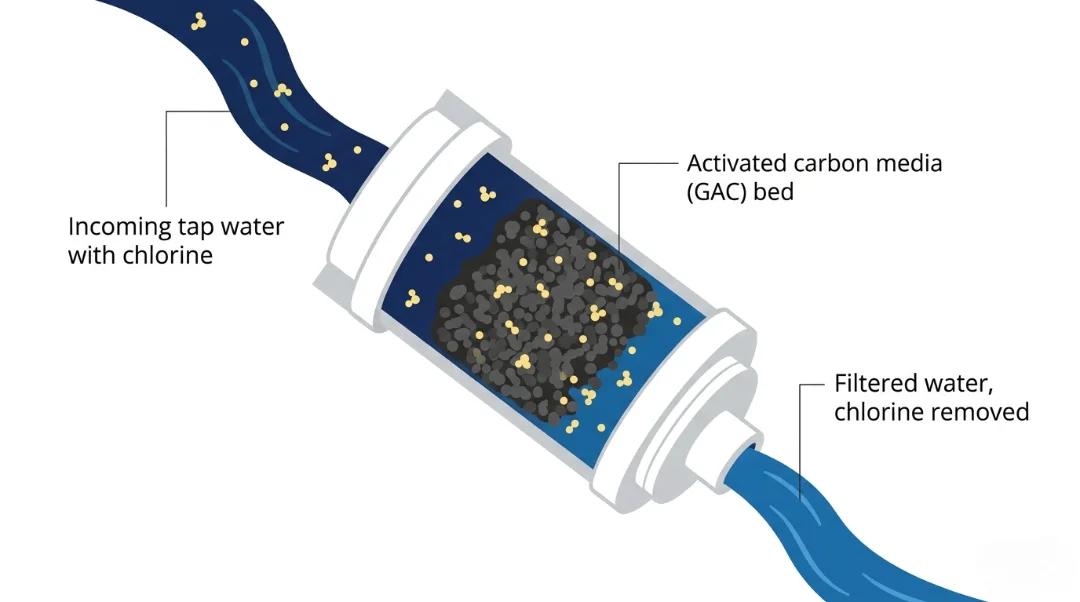
Yes. This is one of the most frequently asked questions by homeowners and its answer is simple. Activated carbon is one of the most reliable media for residential water filter for chlorine removal through an effective process called adsorption, where chlorine molecules bond directly to its surface instead of passing through with the flow.
What Makes Activated Carbon So Effective
Carbon used in water filters is treated to create an enormous internal surface area. A single pound of granular activated carbon can have a surface area larger than 100 acres when measured at the microscopic level. That surface area is what captures chlorine, chloramines, volatile organic compounds, and many other chemicals responsible for bad taste and odor.
There are two main types used in residential systems:
GAC (Granular Activated Carbon) uses loose granules packed inside a filter housing. Water flows through the bed of carbon, and contaminants are adsorbed along the way. GAC is effective for chlorine removal and is commonly used in whole house systems because it handles high flow rates without reducing water pressure significantly.
Carbon block filters compress activated carbon into a dense, solid block. Water is forced through the tighter structure at a slower rate, which increases contact time and improves contaminant removal. Carbon block filters are common in under-sink and point-of-use systems.
Does a Charcoal Filter Remove Chlorine?
When people ask “does a charcoal filter remove chlorine,” they are typically referring to activated carbon, since activated carbon is made from carbonized materials like coconut shells or coal. The short answer is yes, activated charcoal-based do carbon filters remove chlorine effectively. The key is the quality of the carbon media, the contact time with the water, and whether the system is sized correctly for your home’s flow rate.
Whole House vs. Under-Sink: Which System Fits Your Situation
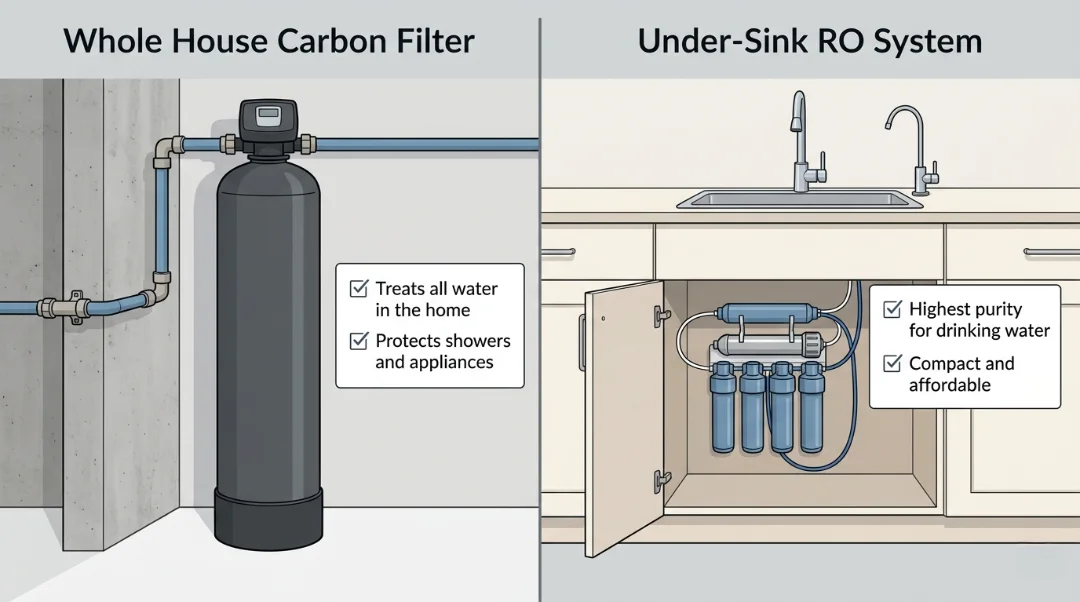
This is where most homeowners either make the right decision or spend money on a system that only partially solves their problem.
When an Under-Sink Filter Makes Sense
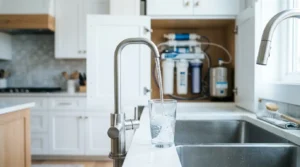
Installing an under-sink carbon filter or reverse osmosis system under your kitchen sink is an ideal way to ensure safe drinking and cooking water for you and your family. These systems treat water at its point of consumption, are more cost effective, easy to set up, and highly effective at filtering out chlorine chloramine and other impurities that might contaminate it from being consumed directly by humans.
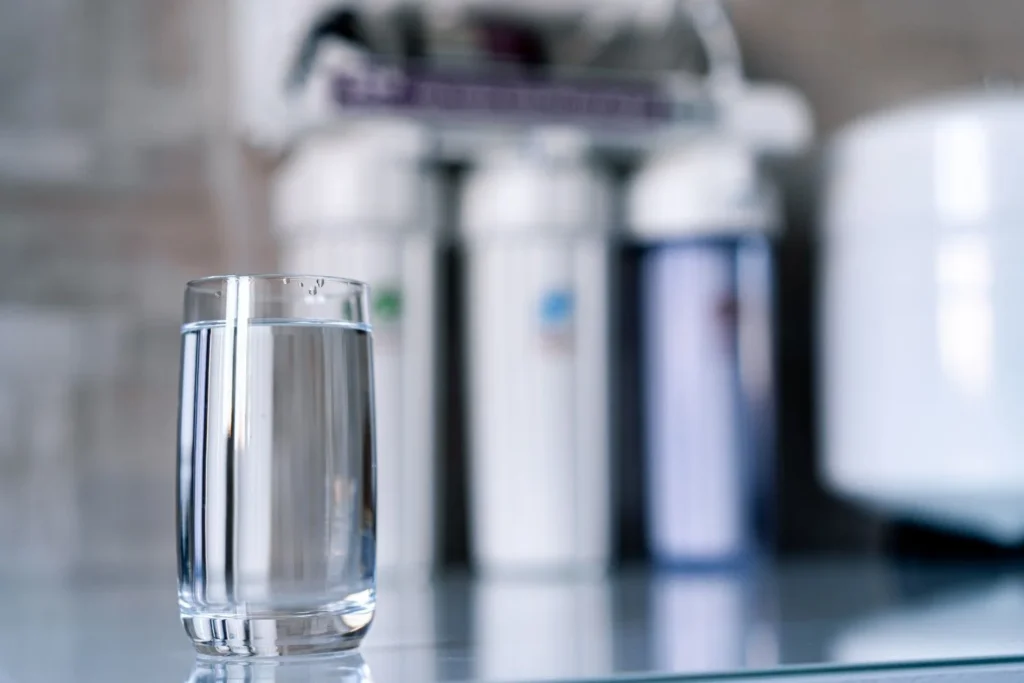
If your family drinks mostly from one tap, an under-sink or RO setup is a practical, well-targeted solution. A properly installed RO System Installation can remove not just chlorine but also dissolved solids, heavy metals, and other chemical contaminants that a carbon filter alone may leave behind.
When a Whole House System Makes More Sense
If you notice chlorine effects beyond just your drinking water, a whole house system becomes a better investment. Signs that a whole house unit may be right for you include:
- Dry or irritated skin after showering
- Hair that feels brittle or dull despite using quality products
- A chemical smell when running hot water for a bath
- Concern about chlorine exposure for children or individuals with sensitive skin
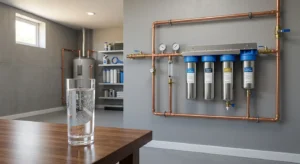
A whole house carbon filter, typically installed where the main water line enters the home, treats every drop of water before it reaches any faucet, shower, or appliance. This means your laundry, your dishes, your shower, and your drinking water are all addressed with one system.
Understanding Chloramine Removal: Not All Carbon Filters Are Equal
Standard GAC filters remove free chlorine very well. But if your Tracy area water supplier uses chloramine, you need to verify that your system is designed to handle it.
Catalytic carbon is a specially treated form of activated carbon that is significantly more effective at breaking down chloramines. Chemical reaction instead of simple absorption: it works through chemical conversion of chloramine into nontoxic form before passing through. If you are uncertain if your water contains chloramine or standard chlorine levels, contact your utility company, in Tracy for instance.
If your water contains chloramine and your current filter does not filter for it properly, while still being exposed to high concentrations of the chemical, your exposure could still exceed what was intended.
What Affects Filtration Performance in Your Home
Even a well-chosen water filter to remove chlorine can underperform if certain conditions are not accounted for.
Flow rate and water pressure are two of the most important factors. A whole house carbon filter needs to be sized to match your home’s peak water usage without creating noticeable pressure drops. For most single-family homes, a system rated at 10 to 15 gallons per minute is sufficient. Larger households or homes with multiple bathrooms running simultaneously need a higher-capacity unit.
Filter media volume also matters. A carbon filter housing that is too small will exhaust its capacity faster, meaning chlorine begins passing through before you realize the filter needs replacement. This is a common issue with inexpensive systems sold at big-box stores that use undersized media tanks.
Water temperature plays a smaller but real role. Warmer water reduces the adsorption efficiency of activated carbon. This is less of a concern in California’s climate but worth knowing if you are relying on a whole house system to treat hot water lines as well.
How Installation Affects Results
A whole house carbon filter installed incorrectly can cause more problems than it solves. Common installation mistakes include:
- Installing the filter after the water heater instead of before it, which means cold water lines remain untreated
- Skipping a sediment pre-filter, which causes carbon media to clog faster with particles
- Incorrect pipe sizing that restricts flow and reduces household water pressure
- No bypass valve, which makes filter maintenance difficult and forces you to shut off the home’s main supply for every service visit
For homeowners in Tracy and nearby cities like Manteca, Lathrop, and Stockton, professional installation is strongly recommended. A certified installer will assess your incoming water pressure, pipe diameter, and household demand before selecting a system size. RO Water Filter System provides this assessment as part of its installation process, which is the kind of practical, home-specific evaluation that generic online guides skip entirely.
If you are also interested in a multi-stage approach that combines carbon filtration with additional purification, exploring a 6-Stage Water Filtration System gives you layers of protection beyond chlorine alone, including fine membrane filtration and mineral balance.
Filter Maintenance: What to Expect
Whole house carbon filters are generally low maintenance compared to multi-cartridge under-sink systems, but they are not maintenance-free.
GAC tank systems typically need the media replaced or recharged every three to five years depending on water usage and incoming chlorine levels. Some systems include a backwash feature that extends media life by periodically flushing accumulated particles.
Carbon block cartridges in under-sink or point-of-use setups usually need replacement every six to twelve months. Skipping this step is the single most common maintenance mistake homeowners make. An exhausted carbon block does not stop water from flowing. It just stops filtering. There is no visual warning, and the water may not taste bad right away.
Choosing the Right System for a Tracy Home
Tracy sits in the CA where summer temperatures are high and water demand peaks during warmer months. Municipal water in this region comes from a combination of sources and often carries measurable chlorine levels that exceed what many families consider acceptable for taste.
For families focused primarily on clean drinking water, an under-sink carbon filter or reverse osmosis unit is a well-proven starting point. For those who want whole-home protection, skin and hair benefits, and appliance care, a whole house carbon system is the stronger investment.
Consulting a local professional who understands your specific water supply is the most reliable way to match a system to your home. Visiting a Household Water Filtration Systems that explains your options in detail is a good first step before making any decisions.
Conclusion
If chlorine contamination of your water supplies has an adverse impact, not only taste-wise, but on daily comfort, plumbing systems and overall water quality as a whole. A properly sized water filter for chlorine removal can make an enormous difference to how your water looks, smells and feels, including how long-lasting its filter cartridge lasts in between replacements.
At RO Water Filter System, we help homeowners in Tracy, CA choose and install systems that match real household needs. If you are unsure whether a whole house system or a point solution is right for you, the best next step is to get expert guidance and a setup that actually works for your home.
FAQs
Do carbon filters remove chlorine completely?
Carbon filters can remove most chlorine when properly sized and maintained. Performance depends on contact time, filter type, and water flow.
Does a charcoal filter remove chlorine in hot water too?
Yes, whole house charcoal systems treat both hot and cold water since filtration happens before water enters your heater.
Is a whole house system better than an under-sink filter?
It depends on your needs. Whole house systems treat all water, while under-sink filters only improve drinking water.
Can a carbon filter remove chloramine as well?
Standard carbon filters are less effective for chloramine. Catalytic carbon is better suited for chloramine removal.
Will installing a chlorine filter reduce water pressure?
A properly sized system should not affect pressure. Problems usually happen when the filter is too small for the home.