It’s a fair question, especially for anyone storing water for emergencies or buying in bulk. You pull a bottle from the cupboard or the garage and notice a date stamped on the bottom. Can water expire, or is that date just a formality? It’s a fair question, especially for anyone storing water for emergencies or buying in bulk. That answer is technically true and practically useless, because it skips the part that actually matters: what happens to the bottle, the plastic, and the taste over time.
RO Water Filter System has spent over 15 years installing residential water treatment systems across California’s Central Valley, which means fielding this exact question from homeowners stocking emergency supplies or just clearing out a pantry. Here’s the deeper answer, backed by FDA guidance and published heat-exposure research.
Can Water Expire? What the Date on the Bottle Actually Means
If you check the bottom of a bottled water label, there’s usually a printed date. Most people read that as an expiration date for the water itself. It isn’t.
The FDA does not require bottled water to carry an expiration date. Manufacturers add it voluntarily, almost always set at two years from the bottling date. The date is really about the plastic, not the water inside it. Plastic can begin to break down over time, especially under heat, and that’s the actual concern the date is meant to flag.
There’s also a regulatory backstory here that most articles skip: bottled water inherited this two-year convention from a 1987 New Jersey law that required all packaged food and beverage products, water included, to carry a shelf-life date.
That state law was later repealed, but the two-year date stuck as an industry default, which is why you still see it on nearly every bottle today even though no federal rule requires it.
So does water expire? No, H2O itself is chemically stable and doesn’t break down on its own. What changes is how the container and storage conditions affect the safety and taste of what’s inside it.
Shelf Life by Water Type, at a Glance
Different types of water carry different real-world risks once stored. Here’s how they compare side by side:
| Water Type | Unopened Shelf Life | Main Risk Factor | After Opening |
|---|---|---|---|
| Bottled (still) | 2 years (label date) | Plastic degradation, heat exposure | 3-7 days |
| Bottled (sparkling) | 1-2 years | Loss of carbonation, seal integrity | 1-2 days |
| Distilled | Indefinite if sealed | Container leaching, airborne contaminants | 1 week |
| Tap (stored) | 6 months | Chlorine off-gassing, container cleanliness | Use same day |
| RO-filtered (home tap) | No storage needed | N/A – drawn fresh on demand | N/A |
5 Things You Need to Know About Bottled Water Safety
Bottled water is widely trusted, but there’s more to its safety than many people realize. Understanding these key facts can help you make smarter and healthier drinking water choices.
1. The Plastic Bottle Is the Real Risk, Not the Water
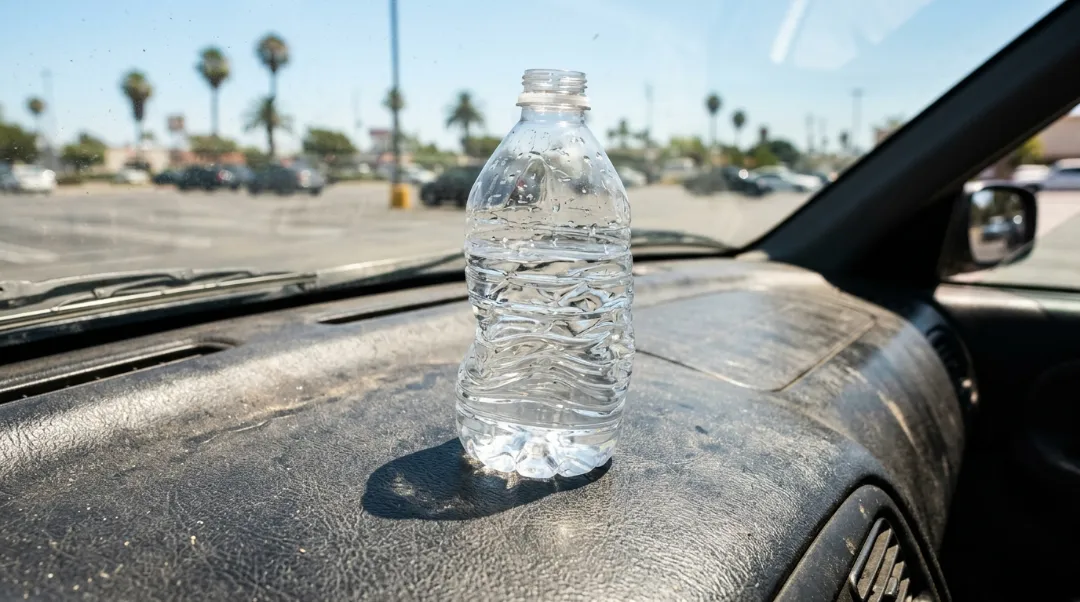
Most single-use water bottles are made from PET (polyethylene terephthalate). At room temperature, in a cool, dark space, PET is stable and safe. The problem starts when bottles sit in heat or direct sunlight for extended periods.
This isn’t a minor detail in places like Tracy, CA. Research from UC San Diego School of Medicine and Arizona State University found that a car parked in direct sun reaches an average interior temperature of 116°F within an hour, with dashboard surfaces averaging 157°F and sometimes climbing well past that. A water bottle left on a dashboard or in a back seat during a Central Valley summer is sitting at temperatures that actively accelerate plastic breakdown.
Hot plastic can release compounds into the water it holds. Most PET bottles labeled for water don’t contain BPA (Bisphenol A), but heat can still encourage other plastic compounds to migrate into the water. Research on microplastics has also flagged that older bottles, or ones kept at high heat for extended periods, are more likely to shed tiny plastic particles into their contents.
Practical takeaway: keep bottled water out of direct sunlight and out of hot cars, and treat “cool, dark place” as a literal storage instruction, not a suggestion.
2. Does Water Go Out of Date If It Tastes Flat?
Yes, water can develop a flat or stale taste well before any safety issue shows up. A sealed bottle stored for months can absorb trace carbon dioxide from the air pocket inside it, which slightly lowers the water’s pH and dulls the taste. Carbonated water goes flat faster for a related reason: it actively loses dissolved CO2 once the seal starts to degrade.
Water stored properly, in an undamaged sealed bottle, in a cool spot, should taste clean for the full two-year window. If the seal looks compromised, the water looks cloudy, or it smells or tastes off, don’t drink it. That’s a storage failure, not a water failure, but the result for you is the same: skip it.
3. Does Distilled Water Expire? What About Purified and Spring Water?
This comes up constantly. Does distilled water expire? Same short answer: the water doesn’t expire, but the container and storage conditions still apply, and in some ways they apply more strictly.
Can distilled water go bad? It can, but not because of the water’s own chemistry. Distillation strips out minerals and impurities, which ironically makes the water slightly more chemically “hungry”, meaning it can absorb trace compounds from a plastic container a bit more readily than mineral-rich tap water does.
For appliance use, humidifiers, steam irons, CPAP machines, this is rarely a real-world concern. The printed date is a freshness guide, not a hard safety cutoff, as long as the bottle has been sealed and stored properly. NSF/ANSI standards govern manufacturing and container safety for distilled water sold for consumption, which is part of why commercially bottled distilled water carries a reliable, predictable shelf life when unopened.
4. Storing Bottled Water for Emergencies: What You Actually Need to Know
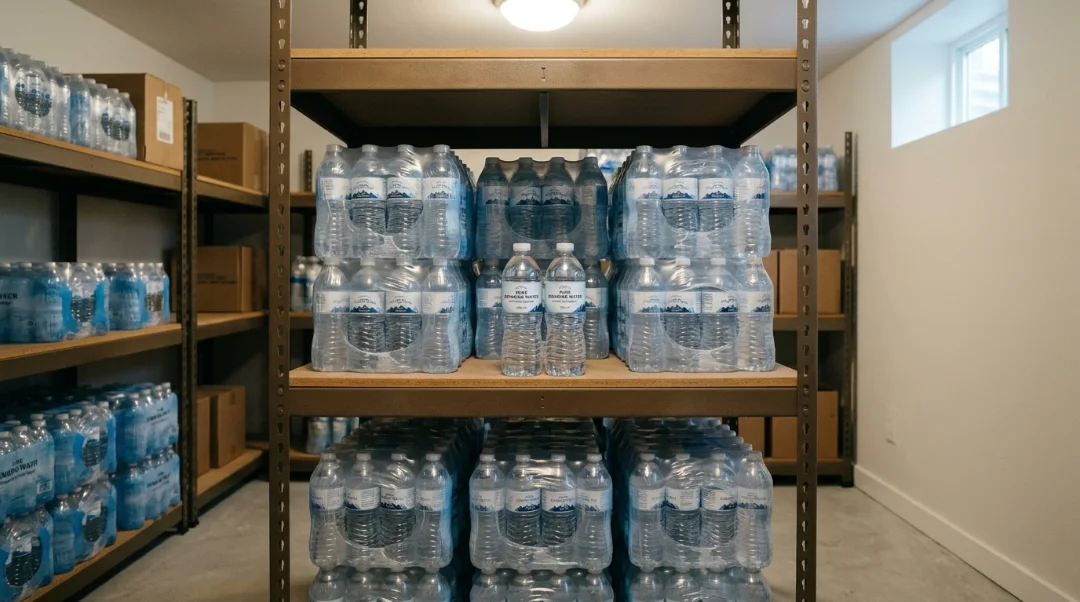
Keeping an emergency water supply on hand is smart planning. Ready.gov, the federal emergency preparedness resource, recommends storing at least a one-gallon-per-person, per-day supply, and rotating stock periodically rather than treating it as a one-time purchase. Here’s how to do that well:
- Keep bottles in a cool, dark location, a basement, closet, or pantry, away from cleaning chemicals or gasoline fumes.
- Avoid storing water directly on concrete floors, which can allow chemical transfer over long periods.
- Rotate stock on a schedule: use older bottles first, replace with fresh ones.
- Plan to replace commercially bottled water every one to two years, even if storage conditions were ideal.
- Once opened, finish a bottle within a few days. Drinking straight from the bottle introduces bacteria from your mouth that can multiply in the remaining water.
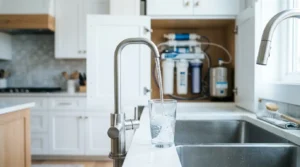
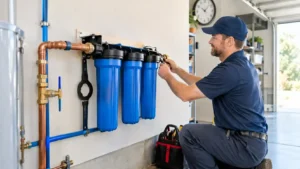
For a short-term supply, commercially bottled water is a reasonable choice. For a household’s everyday water needs, a home filtration system connected to your existing plumbing is the more dependable long-term answer; it removes the storage-and-rotation problem entirely. A Reverse Osmosis Water Filter system installed at your home gives you on-demand clean water without the ongoing cost and waste of buying cases of bottled water.
5. Bottled Water vs. Filtered Tap Water: What Is Healthier Long-Term?
Bottled water isn’t automatically cleaner than tap water. A meaningful share of bottled brands are filtered municipal tap water, repackaged in single-use plastic at a substantial markup, with the added downside of plastic leaching risk and packaging waste that filtered tap water simply doesn’t carry.
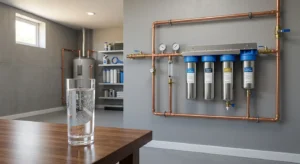
A quality home filtration system is the more cost-effective long-term option for most households. A 5-Stage Water Filtration System removes sediments, chlorine, heavy metals, and other common contaminants directly at your tap, giving you clean, great-tasting water on demand without the ongoing expense of buying bottled water.
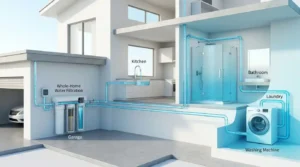
For homeowners evaluating their options, Household Water Filtration Systems offer a practical, cost-effective alternative that reduces plastic waste and gives you more consistent water quality control than relying on store-bought bottles.
Does Water in a Cool, Dark Place Last Longer?
Yes, storage conditions are the single biggest factor in how long bottled water stays safe and pleasant to drink. Heat accelerates plastic degradation, increases the rate of chemical leaching, and creates conditions in damaged or opened bottles where bacteria or algae can take hold.
As the dashboard heat data above shows, a few hours in a hot car during a Central Valley summer can do more damage to a bottle than months of proper pantry storage. If a bottle has been through that kind of heat cycle even once, treat the printed date as far less reliable than it would normally be.
Conclusion
So can water expire? Nope; but its packaging certainly can. Bottle types vary as do environmental elements like sunlight exposure. Furthermore, label dates serve only as guides; not an absolute safety checkpoint.
RO Water Filter Systems provide Tracy residents and nearby areas an economical, sustainable, and hassle-free alternative to purchasing bottled water. Professional installation enables your family to enjoy clean filtered water right out of the tap without plastic storage issues or ongoing costs. Get help choosing an RO system by reaching out today.
FAQs
Can bottled water go bad if unopened?
Yes, it can. Even unopened bottles can degrade over time if exposed to heat or sunlight. Proper storage in a cool, dark place helps maintain safety.
Does water go out of date in plastic bottles?
The water itself does not expire, but the plastic container can break down and affect quality. That’s why expiration dates are printed.
How long does bottled water last in hot climates?
In hot environments, bottled water can degrade much faster. It may only remain safe for a few months if exposed to high temperatures regularly.
Can distilled water go bad after opening?
Yes. Once opened, distilled water can absorb contaminants from the air. It’s best to use it within a few days.
Is filtered water better than bottled water?
For daily use, filtered water is often safer and more convenient. It avoids plastic exposure and provides fresh water continuously.