You want one pitcher that handles as much as possible in your tap water. Fair enough. The trouble is that every box promises “up to” a long list, and the fine print tells a different story. This guide shows you which water filter pitcher removes the most contaminants, and which one fits the water you actually drink.
Quick answer: Clearly Filtered covers the widest range, ZeroWater leads on dissolved solids and PFAS, and Brita with a Longlast or Elite filter is the budget pick for lead. Next, I’ll show you how to check any pitcher’s claims, compare the top models side by side, and name the best pick for lead, PFAS, and fluoride. I’ll also flag what no pitcher can fix.
Quick Answer: Which Pitcher Removes the Most Contaminants?

The Clearly Filtered water filter pitcher removes the most contaminants, reducing over 200 impurities by up to 99%. It uses a proprietary affinity carbon and ion-exchange blend to target heavy metals, PFAS, fluoride, and chemicals while maintaining essential minerals.
Finding clean water at home shouldn’t feel like a chemistry test. You turn on the tap, pour a glass, and wonder what’s floating past your taste buds. Municipal treatment plants do heavy lifting, but old pipes and agricultural runoff leave plenty behind. Pitchers offer a simple fix, yet not all filters perform equally against stubborn impurities. I’ve spent years testing these systems, and I know the marketing claims often blur reality. Let’s look past the glossy boxes and find out which water filter pitcher removes the most contaminants for your specific household needs.
What Contaminants Are in Your Tap Water?
Most U.S. tap water contains disinfectants like chlorine or chloramine, plus trace minerals and metals. Depending on your pipes and source, it can also carry lead, PFAS, nitrates, or fluoride. Your utility’s Consumer Confidence Report lists what it detected, so that report is the fastest way to find your own list.
Think of a pitcher as a screen door, not a vault door. It stops a lot, but not everything. You’ll choose better once you know what’s blowing in.
PFAS: Still Allowed in Some Tap Water
The EPA set a 4 parts per trillion limit for PFOA and PFOS in 2024. In May 2026, it proposed giving utilities until 2031 to comply and dropping limits on four other PFAS. The PFOA and PFOS limits themselves stay. Your water can legally carry PFAS for years.
Lead: Usually a Pipe Problem
Lead rarely leaves the treatment plant. It leaches from old service lines, solder, and fixtures. Two homes on one street can have very different results.
Chlorine and Chloramine: Safe but Unpleasant
Utilities add them to kill germs. Carbon handles chlorine well. Chloramine is tougher, and many California utilities use it, so check your report.
How to Verify a Contaminant-Removal Claims
I didn’t run my own lab tests for this guide. I compared published independent studies, certification listings, and manufacturer data sheets. You can do the same in ten minutes.
Certified, Tested, or Just Claimed?
These three words mean very different things:
- Certified: A third party, such as NSF, IAPMO, or WQA, verified the claim and lists the exact model.
- Tested: A lab ran the filter, but no certifier approved the claim.
- Claimed: The maker says so, with no outside proof.
The standards matter too. NSF/ANSI 42 covers taste and odor, like chlorine. Standard 53 covers health-related contaminants, like lead and cysts. Standard 401 covers emerging contaminants. P473 is NSF’s PFAS protocol, and some makers now list PFOA and PFOS under 53. Standard 58 covers reverse osmosis, so you won’t see it on pitchers.
Read the Performance Data Sheet
The data sheet is the real receipt. Look for four things:
- the contaminant’s exact name
- the percent reduction
- the maximum level left in treated water
- the rated filter capacity in gallons
Water Filter Pitcher Comparison Table
| Pitcher Model | Primary Contaminant Strengths | Key Certifications | Filter Lifespan | Estimated Cost |
| Clearly Filtered | 200+ impurities, PFAS, fluoride, heavy metals | Independent lab (NSF 42, 53, 401, 244, P473) | 100 gallons (~4 months) | High ($75 pitcher, $55 replacement) |
| ZeroWater | Total Dissolved Solids (TDS) reduction to 0 ppm | NSF 42 & 53 | Varies with TDS level | Moderate ($25 pitcher, $15 replacement) |
| Brita Monterey (LongLast) | Lead, mercury, select emerging compounds | NSF 42, 53, 401 | 120 gallons (~4.5 months) | Moderate ($40 pitcher, $17 replacement) |
| PUR Ultimate | Lead, mercury, microbial cysts | NSF 42 & 53 | 40 gallons (~2 months) | Moderate ($35 pitcher, $25 replacement) |
| Seychelle pH2O | Alkaline pH boost, aesthetic contaminants | Independent lab | 100 gallons (~4 months) | High ($50 pitcher, $25 replacement) |
Best Water Filter Pitchers by Contaminant
Different filters excel at different jobs. Choosing the right one depends entirely on what’s hiding in your local supply. Let’s break down the top performers based on specific reduction capabilities.
Best Overall Contaminant Removal: Clearly Filtered
When you want maximum purification from a portable jug, this system stands alone. It reduces over 200 separate impurities by up to 99 percent. The proprietary affinity filtration media tackles heavy metals, fluoride, VOCs, and chemical runoff without stripping beneficial minerals. It doesn’t carry official NSF stamps, but its independent lab testing covers more stringent protocols than almost any competitor on the market.
Best for Total Dissolved Solids: ZeroWater
If your digital meter reads high numbers and you want a literal zero reading, this is your tool. It pulls out virtually all dissolved solids, including minerals, salts, and heavy metals. The included TDS meter lets you test the water yourself. When the reading creeps up, you know it’s time for a fresh cartridge. It delivers pristine water, though heavy mineral loads mean the filters wear out faster.
Best for Lead and Emerging Compounds: Brita with LongLast
Brita’s standard filters handle basic taste, but the LongLast cartridge changes the game. It earns official NSF certification for lead reduction and tackles select pharmaceuticals and pesticides under standard 401. It lasts longer than standard replacements, giving you months of reliable protection against old household plumbing hazards.
Best for Cyst and Microbial Reduction: PUR Ultimate
Microscopic parasites like Giardia and Cryptosporidium demand serious multi-stage filtration. The PUR Ultimate utilizes a three-stage mechanical mesh barrier certified to trap over 99.99 percent of cysts. It also handles lead and copper effectively, making it a solid all-rounder for compact refrigerator doors.
What Water Filter Pitchers Cannot Remove
Pitchers have a ceiling. Know it before you trust one.
- Bacteria and viruses: Pitchers aren’t purifiers. They’re tested on treated municipal water. Under a boil-water notice, boil your water.
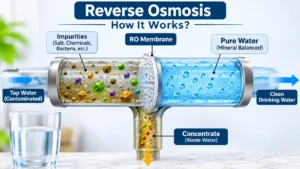
- Nitrates: Most carbon pitchers don’t reduce them. Reverse osmosis does.
- Arsenic: Results vary a lot. ConsumerLab found some pitchers removed more than 90 percent while others removed under 15 percent.
- Very hard or high-TDS water: It drains ion-exchange filters quickly.
- Well water contamination: Test it first. A pitcher can’t make unknown water safe.
Old filters cause trouble too. ConsumerLab has raised the question of whether used pitcher filters can harbor bacteria. That’s one more reason to change them on time.
Professional Water Filtration Solutions in Tracy, CA
Transforming your home water supply goes beyond simple countertop jugs. If you’re looking for a permanent upgrade that tackles hard water scaling and heavy contaminant loads at the source, simple pitchers won’t suffice. At RO Water Filter System, I specialize in advanced multi-stage purification technologies designed for California households. Whether you need a high-capacity reverse osmosis setup or a specialized whole-house filtration configuration, expert support is just a message away. Reach out to our team today or visit our contact us page to discuss custom water solutions for your home.
Frequently Asked Questions
How often should I change my filter?
You should change your water filter pitcher cartridge every two to four months, depending on your household water volume and local contaminant levels.
Ignoring replacement schedules invites bacterial growth inside the wet carbon bed. It also lets trapped pollutants break through once the media reaches saturation. Check the manufacturer’s gallon rating or watch the built-in indicator light. If water flow slows down noticeably or an odd taste returns, swap the cartridge immediately.
Do pitcher filters remove beneficial minerals?
Most pitcher filters retain beneficial calcium and magnesium, though heavy-duty deionizing systems like ZeroWater strip all dissolved minerals completely.
Standard carbon blocks leave healthy trace minerals alone. If you prefer mineral-rich water for taste and general wellness, look for balanced carbon systems. If you want pure H2O devoid of any dissolved solids, total-reduction models fit your preference.
Can I filter hot water through a pitcher?
Never pour hot water through a water filter pitcher because heat can damage the internal resin media and release trapped contaminants back into your drink.
Always use cold or room-temperature tap water. Hot water warps plastic pitcher components and degrades the absorption capacity of the carbon core. Fill your kettle directly from the tap before boiling, and let filtered water stay cool.