
Your water is coming out slower, there’s a white crust around the filter housing, and a bottle of white vinegar is sitting right there in the pantry. It feels like an obvious fix. So, can I put vinegar in my filter to clean it?
Quick Answer: Sometimes, yes, but only when the part was built to be rinsed and put back. Housings, pitcher reservoirs, and washable sediment screens handle a diluted soak well. Sealed carbon cartridges and other throwaway filters are meant to be swapped on a schedule, and soaking them rarely brings them back. The same logic applies to dishwasher, pool, hot tub, and air filters, and your manual always gets the final word.
This guide from RO Water Filter System goes filter by filter, so you can stop guessing. You’ll see what vinegar really does, which parts are safe to soak, which ones to leave alone, and the exact steps for a safe cleaning.
The Short Answer: Vinegar Helps With Some Filters and Hurts Others
Find your filter in the first column and you’ll know where you stand.
| Filter type | Vinegar okay? | Better move |
| Pitcher parts (reservoir, lid) | Yes, plastic parts only | Soak, rinse well, keep the cartridge out |
| Reusable sediment filter | Yes, if the maker says it’s washable | Rinse first, then a short soak |
| Filter housing | Yes, for scale stains | Quick soak or wipe, keep acid off the O-ring |
| Carbon cartridge | No | Replace on schedule |
| Sealed whole house cartridge | No | Replace it, clean only the housing |
| RO membrane | Only if the manufacturer allows it | Replace on schedule or use a membrane-safe cleaner |
| RO storage tank | Not a dependable sanitizer | Follow the maker’s sanitizing steps |
| Fridge filter | No | Replace the cartridge |
Outside the kitchen, the pattern repeats. Dishwasher traps, pool cartridges, hot tub filters, washing machine screens, and washable air filters are all meant to come out, get cleaned, and go back in, so a vinegar bath is a normal way to loosen the scale on them. Anything labeled disposable is a different story, and the replacement date is the cleaning plan.
What Vinegar Actually Does Inside a Water Filter
Vinegar is a mild acid. Most grocery store bottles are about 5 percent acetic acid, and that acid reacts with calcium carbonate, the main ingredient in hard water scale. The scale softens, breaks apart, and rinses away. That’s the whole trick, and it’s a good one for hard surfaces. It stops being useful the moment the problem isn’t scale. Carbon traps chlorine, odor compounds, and some chemicals inside microscopic pores. Once those pores fill up, no soak empties them. Vinegar also isn’t a dependable sanitizer, so it can’t promise a germ-free filter.
Here’s where people get fooled. Picture a carbon cartridge that has been in the housing for fourteen months. You soak it, the water speeds up, and the glass looks clear. But the speed-up came from dislodged scale and silt, not from restored capacity. The carbon behind that flow may have stopped handling chlorine long before. People who ask can I put vinegar in my filter to clean it are usually reacting to slow flow, and flow is only half of what a filter does.
Filters and Parts You Can Clean With Vinegar
Check your manual first. If it says rinse or wash, you’re in the clear. If it says replace, believe it.
Pitcher and Countertop Filter Parts
Take the cartridge out and set it aside. Then soak the reservoir, lid, and any plastic basket in equal parts vinegar and warm water for about 15 to 30 minutes. That white film at the bottom is usually scale, and it comes off with a soft brush. Rinse until there’s no smell at all. The cartridge itself stays out of the bath unless the maker says otherwise.
Reusable Sediment Filters and Housings
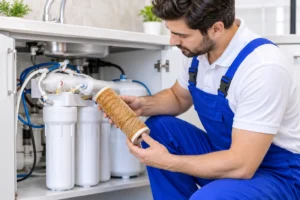
Washable sediment screens, the pleated or mesh kind, should get a plain water rinse first to move the loose silt. After that, a 20 to 30 minute soak in diluted vinegar can dissolve the scale hiding in the folds. Wound or spun cartridges are a different animal. They’re built to be replaced, and vinegar won’t open them back up.
For housings, a cloth or a short soak is enough for scale stains. Keep the acid off the O-ring and rubber seals, and look for cracks while you’re there. A dry or flattened O-ring causes more leaks than any amount of scale.
Filters You Should Not Soak in Vinegar
Carbon block and granular carbon cartridges top this list, for three reasons. First, the capacity problem we just covered: soaking can’t unload what the carbon has already absorbed. Second, carbon can pick up vinegar itself, which may show up as a sour taste in the first gallons after you reinstall it. Third, handling loose granules can shift them and create channels where water rushes through with little contact time.
Sealed whole house cartridges and refrigerator filters belong here too. They’re designed as one sealed unit, and their performance claims assume you use them as intended. If your fridge filter is overdue, here’s how to change a refrigerator water filter properly instead. A home acid bath can also give a manufacturer a reason to question a warranty claim, which is an unpleasant surprise when you’re already dealing with slow flow.
How to Clean a Filter Part With Vinegar, Step by Step
Use this routine for washable parts only.
- Shut off the water supply. For a pitcher, just empty it. On a pressurized housing, release the pressure before you open anything.
- Remove the part, and set aside the O-ring and any cartridge that isn’t washable.
- Mix distilled white vinegar with warm water. One part vinegar to three parts water works for most jobs. Go to equal parts for heavy scale, and add a drop of dish soap if there’s an oily film.
- Soak for 20 to 30 minutes, or up to an hour for stubborn scale.
- Scrub gently with a soft nylon brush.
- Rinse under clean running water until you can’t smell vinegar.
- Let everything air dry completely. Dry parts lose the leftover smell faster.
- Reassemble, turn the water back on, and flush for several minutes. For a pitcher, discard the first fills. Taste a glass yourself before the family does.
Tip: If you can still smell vinegar after flushing, stop. Rinse again, let the part dry longer, and flush more water before drinking.
Can You Use Vinegar on a Reverse Osmosis System?
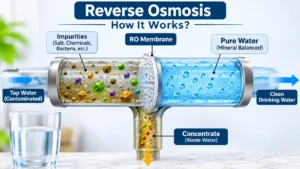
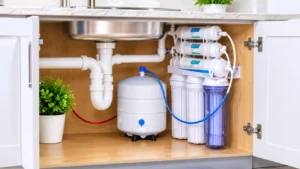
Only in limited cases. Vinegar should not go into an RO system unless the manufacturer’s manual allows it, because membranes and fittings have chemical limits. Most home RO filters and membranes are replaced on a schedule, and the storage tank needs a proper sanitizing routine that vinegar can’t reliably provide.
Acid cleaning does exist in the RO world. Scale on a membrane is a known problem, and acid solutions are one way to treat it. But home membranes vary in how much they tolerate, and for most households replacing the membrane on schedule is simpler and safer than experimenting. If your maker approves a vinegar or citric acid cleaning, follow their dilution and contact time exactly.
The tank and tubing are a separate story. Stored water can pick up a stale taste, and the fix is the manufacturer’s sanitizing routine followed by several full flushes. Many makers also tell you to remove the membrane first, since chlorine-based sanitizers can ruin it.
Because the system is sealed, pressurized, and full of small fittings, one wrong step can mean leaks or a damaged membrane. If your system keeps clogging despite good care, the setup may not suit your water. A properly matched Reverse Osmosis Water Filter Tracy, CA installation fixes the cause instead of the symptom.
Why Hard Water in Tracy Makes Filters Clog Faster
At RO Water Filter System, we install filtration and reverse osmosis systems for homes across Tracy and nearby Central Valley cities, so we plan around local hardness from the first visit. Hard water carries dissolved calcium and magnesium. When that water warms, evaporates, or sits still, those minerals drop out as scale, and scale loves housings, faucet spouts, and RO storage tanks.
A sediment pre-filter in hard water has two jobs: catching particles and surviving scale. It can clog sooner than the same filter would on softer water, and that’s often why a cartridge feels “dead” before its date.
Want real numbers? Read the City of Tracy’s annual water quality report for current hardness figures instead of relying on guesses. We also offer a free TDS meter test, which shows how much dissolved mineral is in your water and helps you decide how often to inspect your filters.
Safety Mistakes to Avoid
- Never mix vinegar with bleach. The combination releases chlorine gas. Use one product, rinse completely, and let the part dry before trying another.
- Skip cleaning vinegar. It’s often stronger than the 5 percent grocery type, and extra strength is rough on seals and plastics.
- Don’t leave vinegar sitting in lines or tanks. Long sits raise the odds of leftover odor and wear on fittings.
- Don’t skip the rinse. A vinegar smell means acid is still on the part.
- Don’t swap in apple cider vinegar. Its sugars and pigments can leave residue. Stick to distilled white vinegar.
When Cleaning Is the Wrong Fix and It Is Time to Replace
Cleaning is the wrong move when the filter has simply run out of life. Watch for four signs: flow that stays slow after you’ve cleaned everything, taste or odor that returns within days, a cartridge past the replacement date on its label (many carbon filters list six to twelve months, but yours may differ), or visible damage such as cracks or slimy buildup.
Here’s a simple rule. Clean when the problem looks like scale on a hard part. Replace when the problem lives inside the media. So the honest answer to can I put vinegar in my filter to clean it is often yes for the housing and no for the cartridge. Writing the install date on each cartridge with a marker saves you from guessing later.
If you’re tired of replacing small filters every few weeks, it may be worth comparing options, including how pitcher filters compare with under-sink systems.
Better Alternatives to Vinegar
- Mild dish soap and warm water: right for housings and plastic parts that don’t have scale.
- Citric acid solution: a gentler smell than vinegar, rinses clean, and handles scale well.
- Manufacturer-approved cleaners: the safest route for RO parts and anything specialized.
- Scheduled replacement: for cartridges, this is the real cleaning method. Set a phone reminder and let the calendar do the work.
Final Thoughts
So, can I put vinegar in my filter to clean it? For housings, pitcher parts, and washable screens, yes, with a short soak and a thorough rinse. For carbon and sealed cartridges, no. Replace them on time and save the vinegar for the hard parts.
If you’re not sure what’s in your system, or your filters keep clogging, contact us at RO Water Filter System and we’ll take a look. You can also explore our Water Filtration Installation Services in Tracy, CA or read What Is the Best Water Filtration System for Home to compare your options.
FAQs
Can I mix vinegar and bleach to clean a filter?
No, never. Mixing vinegar and bleach releases chlorine gas, which can irritate your eyes, nose, and lungs. Pick one cleaner for the job, rinse the part well with plain water, and only start a different cleaner once everything has been flushed out and dried.
How long should I soak a filter in vinegar?
Twenty to thirty minutes handles most light scale, and an hour is plenty for stubborn buildup on washable parts. Longer isn’t better, since extended contact can stress rubber seals and metal fittings. Rinse well afterward and let everything dry before reassembly.
Can apple cider vinegar be used instead?
It’s better to skip it. Apple cider vinegar carries sugars and natural pigments that can leave a sticky residue or tint on plastic parts. Distilled white vinegar is clear and consistent, which makes it easier to rinse away completely and spot any leftover smell.
Does vinegar kill bacteria in a filter?
Vinegar can reduce some germs on surfaces, but it isn’t a dependable sanitizer for drinking water equipment. It also can’t reach bacteria living inside a spent cartridge. If you’re worried about contamination, replace the cartridge and follow your manufacturer’s sanitizing steps for the housing or system.
Can I run vinegar through my whole house filter?
Not through the cartridge and not through the whole plumbing. Vinegar is fine for scrubbing an empty housing, but running it through a live system risks leaving a sour taste in your lines and fixtures. Swap the cartridge on schedule and clean the housing separately.