Clean drinking water matters, but clear water isn’t always free from unwanted substances. A reverse osmosis system can reduce many dissolved contaminants that ordinary sediment and carbon filters may not remove on their own. The right system depends on your water quality, the contaminants you want to reduce, and how much filtered water you need.
If you’re searching for what is reverse osmosis water filter system, the short answer is that it’s a water treatment unit that uses pressure to push water through a semipermeable membrane. The membrane separates much of the dissolved material from the treated water. In this guide, you’ll learn how the process works, what an RO water filter removes, the different system types, their benefits and drawbacks, and what to consider before buying one.
How Does a Reverse Osmosis System Work?

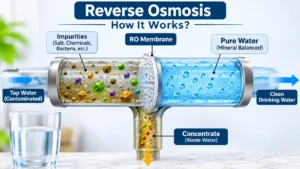
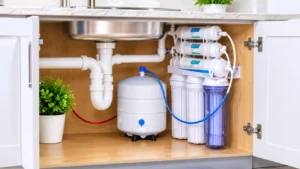
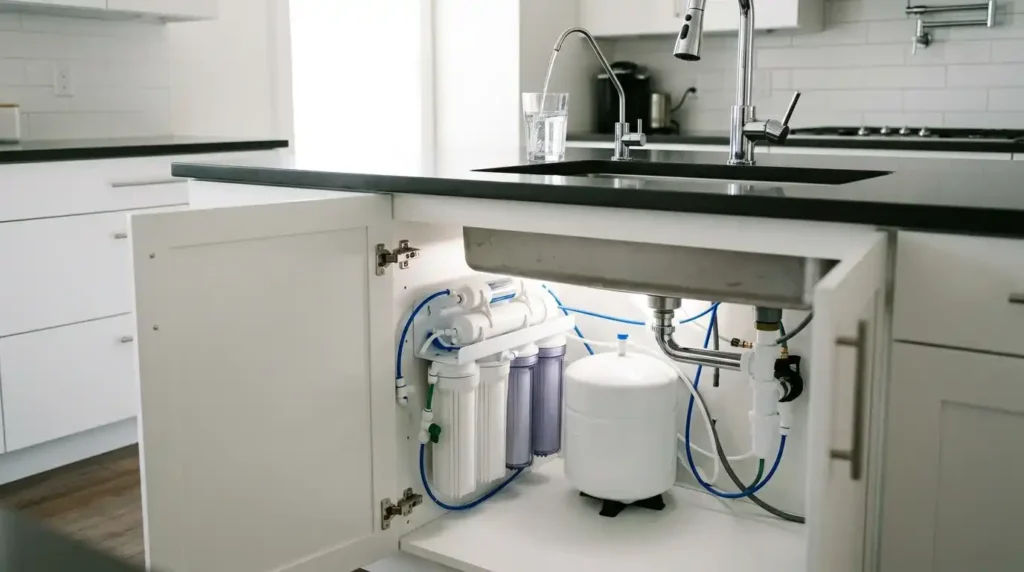
A reverse osmosis system pushes tap water through pre-filters and a semipermeable membrane using household water pressure. The membrane rejects dissolved contaminants and flushes them down the drain. Clean water collects in a storage tank, then a final carbon filter polishes it before it reaches your faucet.
Start with plain osmosis. When a thin membrane separates salty water from fresh water, fresh water drifts toward the salty side. Reverse osmosis flips that. Your home’s water pressure pushes water the other way, through the membrane and away from the contaminants. Picture a bouncer at a crowded door: water molecules get waved in, and nearly everything else stays outside.
That’s the idea behind reverse osmosis filtration. In a home unit, it happens in five stages.
Stage 1: Sediment pre-filter
This filter catches sand, rust flakes, and dirt. It’s the doormat that keeps muck away from the delicate parts downstream.
Stage 2: Carbon pre-filters
Activated carbon filters, often made of granular activated carbon (GAC), cut chlorine and many chemicals that cause bad taste and odor. They also shield the membrane, since chlorine damages most modern membranes.
Stage 3: The RO membrane
Most home membranes are thin-film composite (TFC) sheets rolled into a spiral. Their pores measure about 0.0001 microns, small enough to block most dissolved ions. Contaminants wash away in a separate stream called brine, or reject water, which flows to your drain. Depending on your water and the system, membranes often reduce total dissolved solids (TDS) by roughly 90 to 98 percent.
Stage 4: Storage tank
RO makes clean water slowly. A pressurized storage tank, usually holding 2 to 4 gallons, keeps a supply ready so your glass fills instantly.
Stage 5: Post-filter
A final carbon filter polishes the water on its way to the faucet. It removes any taste picked up from the tank.
Some systems add a remineralization or UV stage. More stages don’t automatically mean better water. Certification matters more, which we’ll cover next.
What Does a Reverse Osmosis System Remove?
A reverse osmosis system removes most dissolved contaminants from tap water, including lead, arsenic, nitrates, fluoride, sodium, and many PFAS compounds. Chlorine and taste-causing chemicals get caught by the carbon filters. Removal rates depend on the membrane, water pressure, and your starting water quality, so check the system’s NSF/ANSI 58 certification.
Here’s what a well-maintained system typically reduces:
- Metals: lead, arsenic, and copper
- Salts and minerals: sodium, fluoride, nitrates, sulfates, and the calcium and magnesium behind hard water
- PFAS: many of these “forever chemicals,” though results vary by compound
- Chemicals: chlorine, chloramine, pesticides, and herbicides (mostly handled by the carbon stages)
- Parasites: Cryptosporidium and Giardia cysts
Look for NSF/ANSI 58 certification. It’s the standard for RO drinking water systems, and the performance data sheet lists exactly which contaminants the unit is tested to reduce. A generic NSF logo doesn’t tell you that.
What reverse osmosis doesn’t fully remove
No home filter removes everything. RO has gaps:
- Dissolved gases: hydrogen sulfide (the rotten egg smell) and carbon dioxide can pass through.
- Some small organic chemicals: carbon stages handle many, but removal varies by compound.
- Bacteria and viruses: the membrane can block them, but home units aren’t designed to disinfect unsafe water.
A water test shows what’s actually in your supply, which beats guessing.
Types of Reverse Osmosis Systems
The most common types of reverse osmosis systems are under-sink units, countertop models, tankless systems, and commercial or whole-house systems. Each style varies by physical footprint, installation requirements, daily water output, and filtration efficiency to match different household needs.
Under-Sink Systems
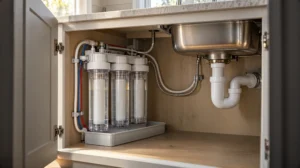
Under-sink models are the standard choice for most homes. Mounted inside the kitchen cabinet below your sink, these multi-stage units connect directly to your cold water supply line and feed a dedicated dispenser faucet. They offer high storage capacity and stay hidden out of sight.
Countertop Models
If you rent an apartment or want an option that doesn’t require drilling into countertops or altering plumbing, countertop units work well. These compact devices plug into standard electrical outlets or connect directly to your kitchen faucet aerator.
Tankless Systems
Tankless reverse osmosis units use internal booster pumps to push water through high-capacity membranes in real time. Eliminating the bulky storage tank saves up to 70% of under-sink cabinet space and prevents potential stagnation issues inside storage bladders.
Whole-House Systems
Whole-house or commercial-scale systems treat water at the point of entry before it reaches any tap or appliance. Because treating all household water creates significant wastewater, these systems require larger space setups, commercial pumps, and dedicated remineralization loops.
the drain. Most homeowners pair a whole-house filter or softener with an under-sink RO.
Pros and Cons of Reverse Osmosis Water Systems
The main pros of reverse osmosis systems include superior contaminant reduction, improved water taste, and long-term cost savings over bottled water. The primary cons are wastewater production during treatment, slower filtration speeds, mineral depletion, and the need for regular filter replacements.
Pros
- Unmatched Purity: Strips out impurities that basic pitcher filters miss.
- Cost Efficiency: Significantly cheaper per gallon than buying single-use bottled water.
- Better Cooking and Beverages: Removing chlorine and minerals improves the flavor of coffee, tea, soups, and ice cubes.
- Convenience: Delivers pure water directly from a dedicated tap without continuous manual refilling.
Cons
- Wastewater Generation: Standard systems flush out reject water (brine) to carry contaminants down the drain.
- Demineralization: The process removes beneficial minerals like calcium and magnesium alongside harmful impurities, slightly lowering water pH.
- Slower Flow Rates: Water trickles through dense membranes slowly, making a storage tank or booster pump necessary.
Benefits of a Reverse Osmosis System
Numbers on a spec sheet matter less than what changes in your kitchen.
- Coffee and tea: the flavor stays clean because chlorine and dissolved solids don’t muddy it.
- Ice: cubes come out clearer and stop smelling like the freezer.
- Appliances: kettles and coffee makers build less scale since hardness minerals drop.
- Cooking: soups, rice, and pasta cook in water that adds no off flavor.
- Less plastic: you carry fewer jugs and toss fewer bottles.
RO treats drinking and cooking water at one tap. Showers and laundry still get untreated water.
Reverse Osmosis vs Other Water Filters
RO isn’t the only option, and it isn’t always the right one.
| Option | Handles well | Misses | Best for |
| Pitcher or faucet carbon filter | Chlorine, taste, some metals | Dissolved salts, nitrates, fluoride | Light taste fixes |
| Whole-house carbon filter | Chlorine at every tap | Dissolved solids, most nitrates | Taste in the whole home |
| Water softener | Hardness minerals | Most contaminants | Scale on fixtures |
| Distillation | Most dissolved solids | Some VOCs; slow and energy-heavy | Specialty uses |
| Reverse osmosis | Dissolved solids, many metals, nitrates | Dissolved gases, microbes | Drinking and cooking water |
How Much Does an RO System Cost?
A typical under-sink reverse osmosis system costs about $150 to $600 for the unit, plus roughly $150 to $500 for professional installation. Yearly upkeep for replacement filters usually runs $50 to $150, with the membrane replaced every two to five years. Prices vary by brand, stages, and your plumbing.
Here’s how the costs break down:
- Unit: $150 to $600 for most under-sink models
- Installation: $150 to $500 if you hire a pro
- Filters: $50 to $150 per year
- Membrane: a periodic replacement every 2 to 5 years
- Water: the drain water adds a small amount to your bill
Run your own math. Multiply what you spend on bottled water each month by twelve, then compare it to the first-year cost above. That number tells you your payback time.
How Long Does an RO System Last, and What Maintenance Does It Need?
A well-maintained reverse osmosis system lasts about 10 to 15 years. Pre-filters and the post-filter typically need replacing every 6 to 18 months, and the membrane every 2 to 5 years. Sanitizing the system and checking tank pressure once a year keeps water tasting fresh and flow steady.
Three signs it’s time for service: slower flow, a taste change, or a TDS meter reading that’s no longer much lower than your tap reading. A handheld TDS meter costs little and takes ten seconds.
Is Reverse Osmosis Right for Your Home?
Answering “what is reverse osmosis water filter system” is the easy part. Deciding if you need one takes a look at your water.
Water in the Central Valley and Bay Area varies by source. City supplies, private wells, and local groundwater can differ in hardness, nitrates, and dissolved solids. Start with your utility’s annual water quality report, or a lab test if you’re on a well. Then compare the results with what an RO system targets.
RO makes the most sense if you:
- Buy bottled water regularly
- Have well water or high nitrates or TDS
- Notice scale, spotting, or off tastes
- Want one tap for drinking and cooking
If chlorine taste is your only complaint, a carbon filter may do the job for less.
Final Thoughts
You now have the answer to “what is reverse osmosis water filter system”, plus the trade-offs most pages skip. RO is a strong choice for drinking and cooking water when your supply has dissolved contaminants. It’s overkill if you only want to cut a chlorine taste.
If you’d rather skip the drilling and leak-checking, our team at RO Water Filter System offers Water Filtration Installation Services in Tracy, CA, and we install any brand or model. Contact us when you’re ready for a straightforward quote.
Frequently Asked Questions
Is reverse osmosis water safe to drink?
Yes, reverse osmosis water is safe to drink. It contains far fewer dissolved solids and contaminants than tap water, and the EPA’s recommended pH range for drinking water is 6.5 to 8.5. RO water often tests slightly acidic, around pH 6 to 7, which isn’t a health concern.
Does reverse osmosis remove healthy minerals?
Yes, reverse osmosis removes most minerals, including calcium and magnesium. For most people, food supplies the bulk of daily minerals, so drinking RO water rarely causes a shortage. If you want the taste and minerals back, add a remineralization filter, which adds some calcium and magnesium after the membrane.
Does reverse osmosis remove bacteria and viruses?
A reverse osmosis membrane can block bacteria and viruses, but home systems aren’t designed or certified to make unsafe water microbiologically safe. Use RO on water that’s already disinfected, like city tap water. For private wells or uncertain sources, add a UV purifier or ask a professional.
Can I install an RO system myself?
Yes, many homeowners install under-sink RO systems themselves in two to four hours. You’ll mount the filters, tap the cold water line, add a drain saddle, and drill a hole for the faucet. If you’re unsure about plumbing or leaks, hire a professional.