How Does a Water Filter Work? A Simple Guide to Cleaner Tap Water
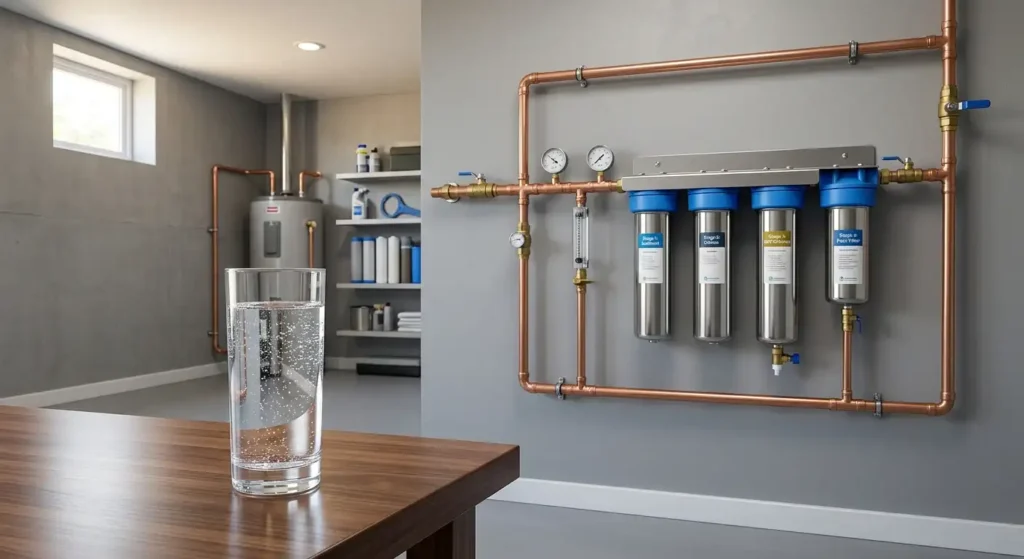
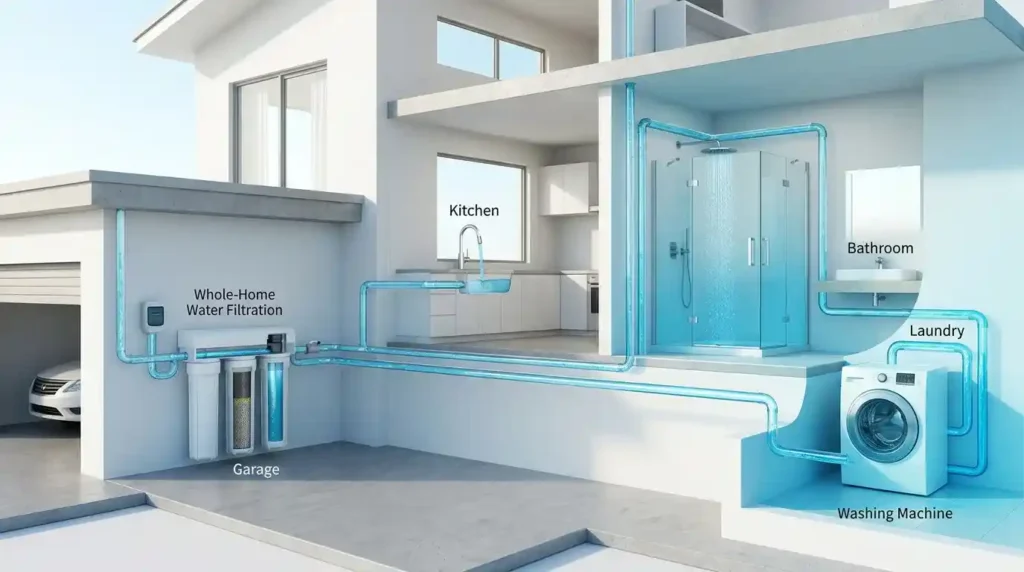
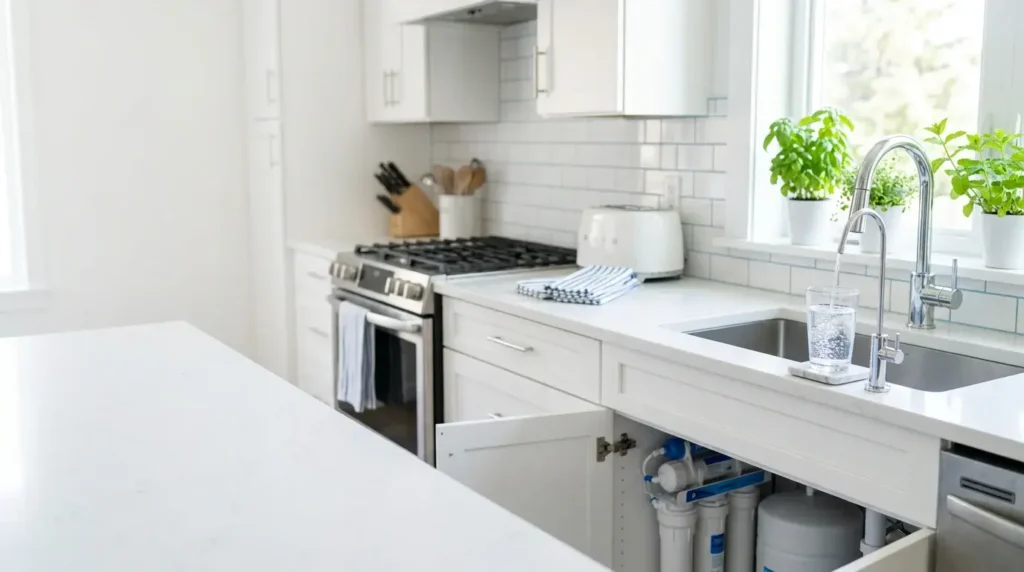
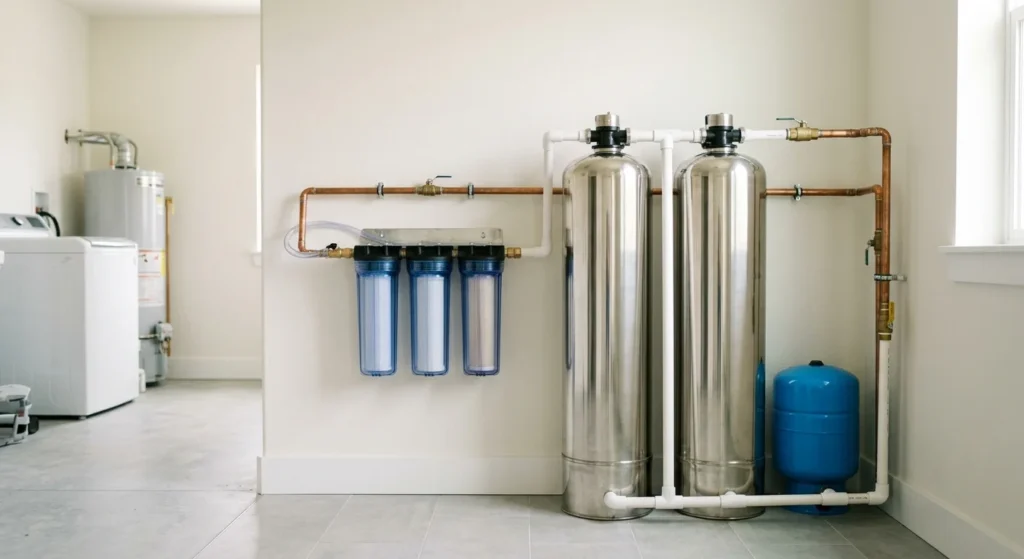
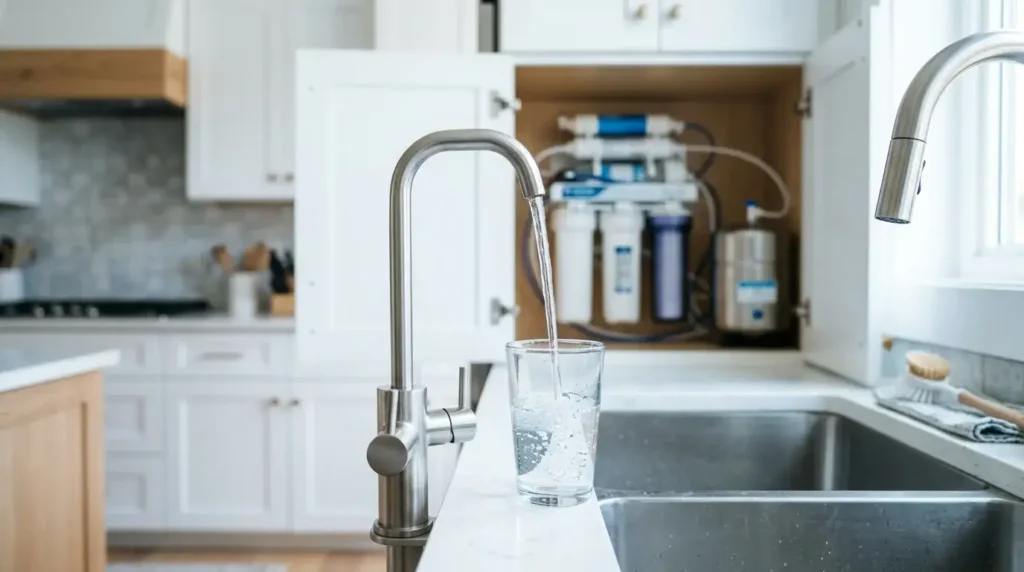
Plenty of people type “how does a water filter work” into a search bar while staring at a cartridge and a pile of marketing claims. Here’s the quick answer. A water filter pushes water through a barrier or a special material that traps, binds, swaps out, or disables unwanted substances. Cleaner, better-tasting water comes out the other side. I’ll walk you through what happens inside, in plain language. You’ll learn the five main filtration methods, what each one removes, and where each one falls short. I’ll also cover myths, replacement timing, and how to pick a system that fits your water. By the end, you’ll read a filter label with confidence. Why How Water Filters Work Matters Clean tap water isn’t guaranteed just because it comes from a municipal plant. Aging city infrastructure, pipe corrosion, and local runoff can introduce unwanted particles directly into your glass. Understanding the mechanics helps you select equipment that targets your home’s exact needs. Using the wrong mechanism wastes money and leaves specific contaminants in your drinking supply. A well-chosen system protects your family’s health, preserves home plumbing, and improves taste. What Happens During the Water Filtration Process? The water filtration process works by forcing raw water through media that separate clean liquid from unwanted solids and dissolved chemicals. Water enters under pressure, passes through microscopic pores or reactive materials, leaves behind trapped contaminants, and exits as clean drinking water. Every filtration setup relies on basic physics and chemistry. Depending on the design, water moves through fine pore spaces or touches treated surfaces. Physical straining: Larger particles get caught in the tight mesh of a barrier because they can’t fit through the openings. Adsorption: Dissolved chemicals cling to the massive surface area of specialized carbon media. Chemical conversion: Specific materials change the structure of minerals so they don’t stick to pipes or form deposits. What Are the Different Types of Water Filters? The primary types of water filters include mechanical sediment filters, activated carbon block filters, reverse osmosis units, ion exchange softeners, and polyphosphate scale inhibitors. Each style uses a distinct mechanism to address specific contaminants, from visible sand to invisible dissolved minerals. Point-of-Use (POU) vs. Point-of-Entry (POE) POU systems attach right where you draw water, such as under-sink units, countertop pitchers, or fridge lines. POE systems treat all incoming supply at the main shutoff before it spreads across your home. Housing and Cartridge Formats Drop-in cartridges: Standard 10-inch or 20-inch cylindrical media placed inside plastic filter housings. Inline filters: Sealed, self-contained tubes directly connected to supply lines for quick, low-profile placement. The 5 Main Filtration Methods Explained The 5 main filtration methods are mechanical filtration, absorption, sequestration, ion exchange, and reverse osmosis. These processes range from simple physical screens that trap floating dirt to advanced membrane separation that removes sub-micron particles and heavy metals. Here is how each individual process operates inside a system. 1. Mechanical Filtration Mechanical filtration acts like a fine sieve. As water pushes through a woven mesh, ceramic element, or spun polypropylene cartridge, solid debris gets caught. These barriers carry a micron rating: 5 Micron: Traps coarse sand, rust flakes, and visible silt. 1 Micron: Traps microscopic sediment invisible to the eye. 0.5 Micron: Traps microbial cysts such as giardia and cryptosporidium. 2. Absorption (Activated Carbon) How does activated carbon filter work? An activated carbon filter works through a process called adsorption, where liquid contaminants stick to the vast, porous internal surface of treated carbon. As water passes through, organic chemicals, chlorine, and bad odors cling to the carbon media. Manufacturers heat natural materials like coconut shells or wood to create millions of micro-pores. A single gram of activated carbon features over 3,000 square meters of internal surface area. Carbon comes in two main formats: Granular Activated Carbon (GAC): Loose carbon grains ideal for high flow rates, widely used in basic pitchers and inline filters. Carbon Block: Dense, compressed carbon powder offering tighter particle filtration alongside high chemical removal rates. 3. Sequestration Sequestration doesn’t pull minerals out of the water. Instead, it alters how those minerals behave. Filters using food-grade polyphosphate introduce tiny amounts of phosphate into the stream. This chemical action binds to calcium and magnesium ions. It keeps them floating in solution so they can’t form hard limescale inside coffee makers, combi ovens, or pipes. 4. Ion Exchange Ion exchange alters mineral chemistry by swapping unwanted ions for harmless ones. Water flows over a bed of tiny resin beads coated in sodium or hydrogen ions. When hard water rich in calcium and magnesium touches the resin, the beads capture those heavy mineral ions and release sodium or hydrogen back into the stream. This process prevents scale buildup in commercial appliances and water heaters. 5. Reverse Osmosis How does reverse osmosis work? Reverse osmosis works by using high pressure to force water molecules through a semipermeable membrane with microscopic pores sized at 0.0001 microns. Clean water passes through the membrane while dissolved solids, heavy metals, and impurities are swept away to the drain. An RO setup represents the tightest level of home water purification available. Because the membrane openings are tiny, incoming water pressure must push pure molecules through while leaving heavier compounds behind. Multi-Stage Filtration: How Methods Work Together Single-stage filters rarely clear every target issue on their own. Modern systems combine several methods in series to maximize efficiency and guard sensitive components. Stage 1 (Sediment): Clears rust and dirt so downstream filters don’t clog. Stage 2 & 3 (Carbon): Captures chlorine that would otherwise destroy delicate RO membranes. Stage 4 (RO Membrane): Strips total dissolved solids (TDS), lead, and heavy metals. Stage 5 (Post-Carbon): Polishes stored water before it flows out through your dedicated faucet. Understanding how a water filter works in a multi-stage layout reveals why pre-filters matter: they shield delicate main stages so your whole system lasts longer. Which Water Filtration Method Works Best for Each Problem? No single filter fixes every household water issue. Matching your target problem to the right media saves