You want clean water without a mountain of plastic cartridges or a drain running all day. That’s a smart goal, and it’s easier to hit than most people think. So, what are the most sustainable types of water filters? Ceramic filters, gravity-fed stainless steel filters, coconut shell carbon block filters, high-efficiency reverse osmosis systems, and UV purifiers lead the pack. They last longer, waste less water, or use fewer materials than the alternatives.
No single filter wins every category, so we’ll compare them side by side. This guide shows how to judge a filter’s water filter environmental impact, flags the mistakes that quietly raise waste, and explains how Tracy and Central Valley water changes the answer. By the end, you’ll know which eco-friendly water filter fits your home.
What Makes a Water Filter Sustainable?
A sustainable water filter wastes little water, uses fewer materials, lasts longer, and needs little energy. It also leaves less trash behind when you replace it. No filter scores perfectly on all five points, so the greenest option is the one that fits your water and your habits.
Think of a filter like a car. Fuel economy matters, but so does how long the engine runs and what happens at the scrapyard. These five factors tell you most of what you need to know about sustainable water filtration.
Water efficiency
Some filters send every drop to your glass. Others, like reverse osmosis, flush part of the incoming water down the drain to carry contaminants away. Check the recovery rate before you buy.
Lifespan
A filter that lasts two years creates half the waste of one you change every year. Longevity is your biggest lever. Look at the rated gallons and the cost per gallon, not only the sticker price.
Materials
Stainless steel, glass, and ceramic last for decades. Coconut shell carbon comes from a renewable by-product of the coconut industry. Plastic housings and cartridges are the weak spot, so a fully plastic-free water filter setup is rare but worth aiming for.
Energy use
Gravity-fed filters use none. Countertop RO units and booster pumps draw power. UV lamps do too, though the draw is small.
End of life
Ask what happens when you swap the cartridge. Some brands take them back. Most don’t.
Filtered Water vs Bottled Water: The Environmental Impact
Any filter beats bottled water on environmental impact. A bottle takes oil to make, fuel to ship, and a long time to break down. A single filter cartridge treats hundreds of bottles’ worth of water before it needs replacing. Brand claims vary, but a common figure for pitcher cartridges is about 300 bottles each.
Cost follows the same pattern. The EPA regulates tap water under the Safe Drinking Water Act, and filtering it costs pennies per gallon. Bottled water costs far more for the same volume.
Bottled water isn’t a purity upgrade either. Studies have found microplastic particles in bottled water. Some filters carry certification for microplastic reduction under NSF/ANSI 401, so you can cut that exposure at your own tap.
The Most Sustainable Types of Water Filters
These six options earn their place for different reasons. Start with what’s in your water, then pick the greenest filter that handles it.
Ceramic filters
Ceramic elements have tiny pores, often around 0.5 microns, that block bacteria, sediment, and cloudiness. When one clogs, you scrub the surface and put it back. That reuse makes ceramic one of the most environmentally friendly water filters you can buy.
The catch is that plain ceramic doesn’t remove chemicals like chlorine or dissolved metals. Versions with a carbon core do, but the core needs replacing every six to twelve months.
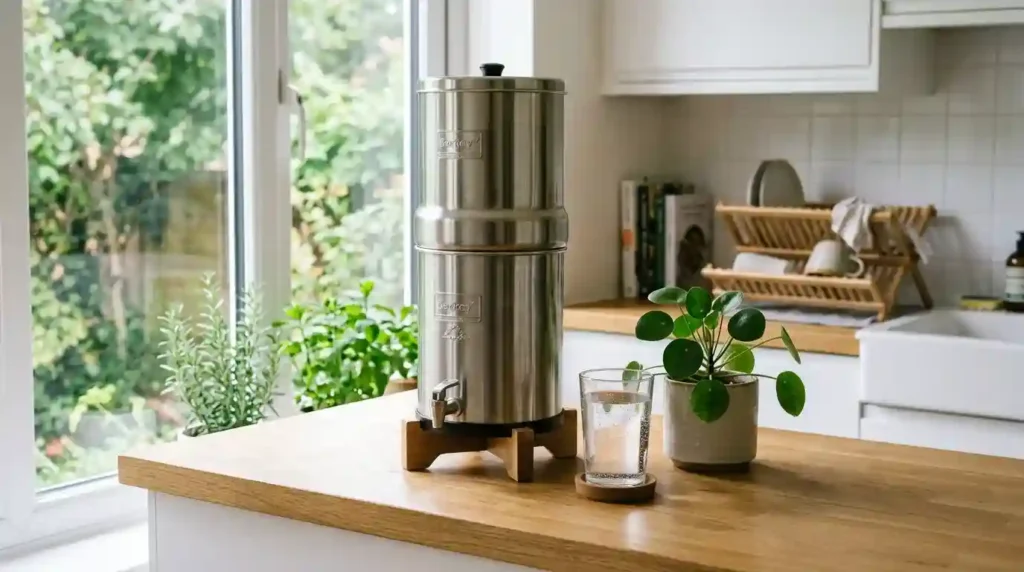
Gravity-fed stainless steel filters
These countertop units need no power and no plumbing. They also produce no wastewater, and the stainless steel tank keeps plastic contact low. Many models pair ceramic with carbon, and some hold NSF/ANSI 42, 53, and 372 certifications for taste, health contaminants, and lead-free materials.
For many households, this is the nearest thing to a zero waste water filter. Filtration is slow, so size the tank to your daily use.
Coconut shell carbon block filters
Carbon block filters pull chlorine, odor, and many chemicals out of water through adsorption. Coconut shell carbon comes from a renewable source, so it’s a more sustainable media than many alternatives. A block uses less plastic than a pitcher cartridge, though you still replace it every six to twelve months. Don’t stretch that schedule. A saturated carbon block stops working.
High-efficiency reverse osmosis systems
RO removes dissolved solids, nitrate, fluoride, lead, and many PFAS compounds. It’s also the filter people worry about most for wastewater. An efficient system can still be a responsible choice, and the RO section below explains how.
UV purification
UV purifiers kill bacteria and viruses with light. They add no chemicals and send no water down the drain. The lamp uses a small amount of electricity and needs replacing about once a year.
UV doesn’t remove chemicals or sediment, so pair it with a sediment filter. It’s a strong fit for well water.
Whole-house carbon and sediment filters
Sediment filters protect plumbing and appliances, and they extend the life of every filter downstream. A whole-house carbon tank treats chlorine at every tap. One large tank with media that lasts for years can beat a dozen small cartridges. Many tanks use water to backwash, so ask about flow settings before you buy.
Sustainable Water Filter Comparison Table

Here’s how the main types stack up. Lifespans vary by brand and water quality, so treat these as typical ranges.
| Filter type | Wastewater | Typical lifespan | Plastic use | Energy | Best for |
| Ceramic | None | Cleanable, reused until worn | Low | None | Bacteria, sediment |
| Gravity-fed stainless steel | None | Elements last a year or more | Low | None | Countertop, no plumbing |
| Coconut shell carbon block | None | 6 to 12 months | Low to medium | None | Chlorine, taste, odor |
| High-efficiency RO | Low to moderate | Filters 6 to 12 months, membrane 2 to 5 years | Medium | Low | Lead, nitrate, TDS |
| UV purifier | None | Lamp about 1 year | Low | Low | Microbes, well water |
| Whole-house carbon | Backwash water | Media lasts several years | Low per gallon | None to low | Chlorine at every tap |
| Pitcher | None | About 40 gallons per cartridge | High | None | Short-term, renters |
| Salt-based softener | Brine discharge | Years | Low | Low | Hard water |
If you’re asking what are the most sustainable types of water filters for a plain kitchen setup, the top rows of this table answer it.
Is Reverse Osmosis Sustainable Despite Wastewater?
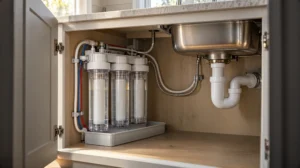
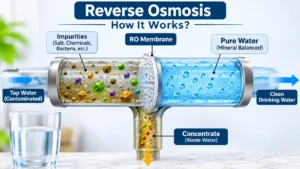
Reverse osmosis can be sustainable when the system is efficient. Standard under-sink units often send three to four gallons down the drain for every gallon of purified water, but high-efficiency models waste far less. Pair a good system with proper water pressure and you cut the waste a lot.
RO pushes water through a membrane under pressure. Contaminants can’t pass, so a reject stream rinses them away. Low pressure makes that stream bigger, which is why two identical units can waste very different amounts of water.
Ways to cut RO wastewater
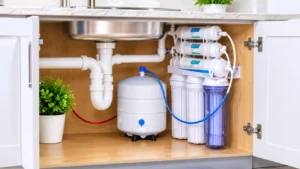
- Add an efficiency pump. It stops the storage tank’s back pressure from slowing the membrane, so more water ends up in your glass.
- Check your water pressure. If it’s low, a booster pump can help the membrane work as designed.
- Change filters on time. Clogged pre-filters force the membrane to work harder and waste more.
- Treat hard water first. A sediment filter or water conditioner protects the membrane and extends its life.
- Reuse the reject water. Use it on outdoor plants or for mopping. Skip salt-sensitive plants, and never drink it.
When RO is worth the water
RO earns its place when your water holds contaminants that simpler filters can’t touch. That includes lead, nitrate, fluoride, PFAS, or high total dissolved solids (TDS). If that’s your situation, an efficient RO system beats buying bottled water, which carries its own heavy footprint.
The Least Sustainable Filter Options
Knowing what to skip helps as much as knowing what to buy.
- Pitcher filters. They’re cheap and easy, but most cartridges last about 40 gallons. The plastic body and frequent swaps add up fast.
- Salt-based ion exchange softeners. They discharge salty brine when they recharge. That brine strains wastewater plants, and some California communities restrict these units.
- Cheap disposable cartridges. Low prices often hide short lifespans and a higher cost per gallon.
None of these is worse than bottled water. They just sit at the bottom of the sustainability ladder.
Common Mistakes That Make Filters Less Sustainable
- Skipping the water test. A filter that doesn’t match your contaminants wastes money and material. Test first, then choose.
- Running filters past their schedule. Old filters clog, lose performance, and push you to replace more parts later. Mark the dates on your calendar.
- Buying more system than you need. A whole-house RO setup for a household that only drinks two liters a day is overkill. Match capacity to real use.
- Choosing on price alone. A $15 cartridge that lasts two months costs more per gallon, and creates more trash, than a $60 one that lasts a year.
- Ignoring certifications. Look for NSF/ANSI 42, 53, 58, 401, and 372 listings from NSF, IAPMO, or the WQA. Certification shows a filter does what the label says.
How to dispose of used filters
Most cartridges aren’t accepted in curbside recycling because they mix plastic, carbon, and other materials. Check your brand’s website for take-back or mail-in programs. If none exist, keep the reusable housing and throw out only the spent cartridge.
How to Choose the Most Sustainable Filter for Your Home
Knowing what are the most sustainable types of water filters only helps if you match one to your water. Work through these steps.
Step 1: Know your water. Read your utility’s annual water quality report or order a lab test. This tells you what you need to remove.
Step 2: Match the technology to the problem. Bacteria and sediment point to ceramic or gravity-fed. Chlorine and taste point to carbon block. Lead, nitrate, or high TDS point to RO.
Step 3: Check certifications. Confirm the listing covers the contaminants you care about.
Step 4: Compare cost per gallon and lifespan. Divide the replacement cost by the rated gallons. The lowest number often means the lowest waste too.
Step 5: Check the materials. Choose stainless steel, glass, or ceramic where you can, and ask about take-back programs.
What this means in Tracy and the Central Valley
Tracy and much of the Central Valley deal with hard water and elevated TDS. Both can shorten filter life and raise RO waste. A sediment pre-filter and the right pressure make a real difference. Installation quality matters just as much. A poor drain connection or wrong tank pressure wastes water no matter how good the filter is.
Final Thoughts
So, what are the most sustainable types of water filters? The ones that last, waste little water, and use less plastic, then get maintained on schedule. Ceramic, gravity-fed, coconut shell carbon, efficient RO, UV, and whole-house carbon all qualify when you match them to your water. The right pick turns sustainable water filtration into a daily habit instead of a guilt trip.
If you live near Tracy, our Water Filtration Installation Services in Tracy, CA cover any brand and model. Our guide on What Is the Best Water Filtration System for Home can help you narrow your options. RO Water Filter System. has 15+ years of experience and 1,256+ installs across the Central Valley and Bay Area. Contact us when you’re ready to pick and install a filter that fits your water and your values.
Frequently Asked Questions
What is the most eco-friendly water filter?
There’s no single winner, but ceramic and gravity-fed stainless steel filters come closest. They use no electricity, send no water down the drain, and last a long time with cleaning. Choose a carbon block or high-efficiency reverse osmosis system if you need to remove chemicals, lead, or dissolved solids too.
If you want the most eco-friendly water filter for taste and bacteria alone, start with ceramic.
Are water filter pitchers bad for the environment?
Pitchers are better than bottled water, but they rank low among filters. Many cartridges need replacing about every 40 gallons, and the plastic body and cartridges add up quickly. A longer-lasting under-sink filter typically creates far less plastic waste over a year.
Renters and small households can still use a pitcher. Just keep an eye on recycling options.
Is a gravity-fed filter better than reverse osmosis for the environment?
Usually, yes. A gravity-fed filter needs no electricity, no plumbing, and produces no wastewater. Reverse osmosis removes more dissolved contaminants, though, including nitrate, fluoride, and salts. If your water needs that level of treatment, an efficient RO system is the more sustainable choice than buying bottled water.
Can you recycle used water filters?
Most cartridges aren’t accepted in curbside recycling because they mix plastic, carbon, and other materials. Some manufacturers run take-back or mail-in programs, and some local drop-off sites accept them. Check your brand’s website first. Otherwise, remove any reusable housing and throw the spent cartridge in the trash.
How long do sustainable water filters last?
It depends on the type. Ceramic and gravity-fed elements can last a year or more with cleaning. Carbon blocks usually last six to twelve months. RO pre-filters and post-filters last six to twelve months, and RO membranes last two to five years. Whole-house media can last several years.