
Most homeowners assume their water is safe because it looks clear. That’s understandable. If there’s no strange smell, discoloration, or visible sediment, everything seems fine.
But appearances can be misleading. Many contaminants found in drinking water are invisible to the naked eye. Learning how to test water quality at home can help you identify problems before they affect your family’s health, plumbing fixtures, or water treatment equipment. At RO Water Filter System, we regularly speak with homeowners who discover water issues only after noticing a bad taste, staining, or concerns about the safety of their drinking water.
Why Water Testing Matters More Than Most People Think
A glass of water can look perfectly clean and still contain contaminants.
Some common issues found in residential water supplies include:
- High levels of chlorine
- Nitrates
- Lead
- Arsenic
- Bacteria
- Volatile organic compounds (VOCs)
- Excess minerals
- Agricultural runoff
For homeowners in Tracy, California and nearby communities, water quality can vary depending on the source of supply, aging infrastructure, seasonal changes, and household plumbing conditions.
This is exactly why is it important to test water quality instead of relying on appearance alone.
Signs Your Water May Need Testing
You don’t always need visible problems to justify a water test.
Still, these warning signs deserve attention:
- Unpleasant taste
- Chlorine odor
- Rotten egg smell
- Cloudy water
- Blue-green staining
- White mineral buildup
- Dry skin after showering
- Recent plumbing repairs
- New home purchase
- Private well water use
Even if none of these signs are present, annual testing remains a smart practice.
How to Test Water Quality at Home
There are several ways homeowners can check water quality without immediately hiring a professional.
Option 1: Use Water Test Strips
Test strips are one of the simplest methods available.
Most kits can measure:
- pH
- Hardness
- Chlorine
- Iron
- Nitrates
- Nitrites
The process usually takes only a few minutes.
Steps include:
- Collect a fresh water sample.
- Dip the test strip into the water.
- Wait for the recommended time.
- Compare colors against the provided chart.
Test strips are affordable and useful for basic screening.
Option 2: Use a Water Test Kit
A complete water test kit provides more detailed information than basic strips.
Many kits test for:
- Lead
- Copper
- Bacteria
- Pesticides
- Volatile organic compounds
- TDS (Total Dissolved Solids)
These kits often require mailing samples to a laboratory for analysis.
For homeowners looking to test for pure water, laboratory-backed kits generally provide greater accuracy than instant home tests.
Option 3: Measure TDS Levels
A TDS meter measures dissolved solids in water.
These may include:
- Calcium
- Magnesium
- Sodium
- Minerals
- Salts
Low TDS doesn’t automatically mean water is safe. High TDS doesn’t always mean it’s dangerous.
Still, it offers useful insight into overall water quality.
Many homeowners use a TDS meter as a quick first step before ordering more comprehensive testing.
What Contaminants Should You Test For?
Different homes require different testing priorities.
City Water Users
Municipal water customers should consider testing for:
- Chlorine
- Lead
- Copper
- pH imbalance
- Volatile organic compounds
- Total dissolved solids
Even though public water systems must meet EPA standards, contaminants can enter water through household plumbing.
Well Water Users
Private wells require more frequent monitoring.
Well owners should test for:
- Bacteria
- Arsenic
- Nitrates
- Iron
- Manganese
- Sulfur
- Hardness
Many counties offer information about free well water testing kits or seasonal testing programs for private well owners.
If you rely on a private well, check local resources to see whether free well water testing kits are available in your area. For homeowners comparing filtration options, RO Water Filter System can be a useful starting point for understanding available solutions.
Understanding Your Water Test Results
Getting results is only half the process.
Knowing what those numbers mean matters just as much.
pH
A healthy pH generally falls between 6.5 and 8.5.
Low pH may:
- Corrode pipes
- Increase metal leaching
High pH may:
- Create scale buildup
- Affect water taste
TDS (Total Dissolved Solids)
TDS measures dissolved minerals and substances.
General guidelines:
| TDS Level | Water Quality |
| Below 300 ppm | Excellent |
| 300-600 ppm | Good |
| 600-900 ppm | Fair |
| Above 900 ppm | Poor |
Bacteria
Any bacterial contamination should be addressed immediately.
This is especially important for:
- Homes with private wells
- Homes with young children
- Older adults
- Immunocompromised individuals
Lead
Lead should never be ignored.
Even small amounts may create health concerns over time.
When Home Testing Isn’t Enough
Here’s what most people don’t realize.
Home kits are excellent screening tools. They are not always sufficient for identifying every contaminant.
Professional or certified laboratory testing is often recommended when:
- You purchase a new home
- A child lives in the household
- Water has unusual taste or odor
- Previous tests show concerning results
- Well water is your primary source
- Nearby construction affects groundwater
A certified laboratory can provide a much broader analysis than most retail kits.
Choosing the Right Water Treatment Solution
Testing helps identify the problem. Treatment solves it.
The best solution depends on what your water test reveals.
When Reverse Osmosis Makes Sense
Reverse osmosis systems are often recommended when testing identifies:
- Elevated TDS
- Lead
- Arsenic
- Nitrates
- Certain dissolved contaminants
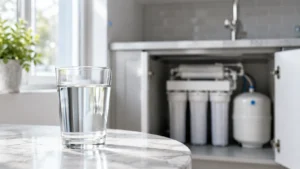
A properly maintained RO system uses multiple treatment stages, including an RO membrane and post-carbon filter, to improve drinking water quality.
Homeowners researching advanced treatment options can learn more about Drinking Water Filtration in Tracy, CA.
When a 5-Stage Filtration System Is Enough
Not every household needs reverse osmosis.
A quality filtration system may be sufficient for:
- Chlorine taste
- Mild odors
- Sediment
- General water quality improvement
Learn more about a 5-Stage Water Filtration System in Tracy, CA.
When a Whole House System Is Better
Point-of-use filtration only treats selected faucets.
A whole house system may be the better choice when:
- Hard water affects the entire home
- Sediment enters multiple fixtures
- Iron staining appears throughout the house
- Odors affect showers and appliances
When Water Softening Is Needed
If testing reveals excessive hardness, a water softener may help:
- Protect plumbing
- Extend appliance life
- Reduce scale buildup
- Improve soap performance
Water softening addresses minerals. It doesn’t replace filtration for contaminant removal.
Common Water Testing Mistakes Homeowners Make
We’ve seen these mistakes countless times.
Avoid them whenever possible.
- Assuming clear water is safe
- Testing only once and never again
- Ignoring unusual tastes or smells
- Using expired test kits
- Skipping laboratory confirmation
- Treating water before identifying the actual problem
- Buying oversized systems without testing first
A water test should guide every filtration decision.
What to Do After You Test Your Water
Once results arrive:
- Review all findings carefully.
- Identify contaminants above recommended levels.
- Compare treatment options.
- Verify maintenance requirements.
- Choose equipment designed for your specific water conditions.
Before investing in treatment equipment, it’s also worth reading Can Water Expire? 5 Things You Need to Know.
Conclusion
Your water may look perfectly clear, but appearance alone can’t confirm safety. Many contaminants are invisible, odorless, and impossible to detect without proper testing. Learning how to test water quality at home helps you make informed decisions about your family’s drinking water and identify potential concerns before they become larger problems.
If your results reveal contaminants, unusual mineral levels, or other water quality concerns, the next step is finding the right treatment solution. Contact RO Water Filter System can help homeowners evaluate water test results and choose filtration systems that match their specific water conditions and household needs.
FAQs
How often should I test my home’s water quality?
Most homeowners should test annually. Well water users may need more frequent testing, especially for bacteria, nitrates, and other contaminants that can change throughout the year.
Can I test for pure water using a home kit?
Home kits can provide useful information about pH, TDS, chlorine, and several contaminants. For complete analysis, certified laboratory testing offers more detailed results.
Why is it important to test water quality if city water is already treated?
Municipal water treatment helps protect public health, but contaminants can still enter water through aging pipes, household plumbing, or localized infrastructure issues.
Are free well water testing kits reliable?
Many county health departments and local programs provide free well water testing kits that offer valuable screening information. Laboratory confirmation may still be recommended for certain contaminants.
What should I do if my water test shows high levels of contaminants?
Start by confirming the results and identifying the specific contaminant involved. Then choose a treatment system designed to address that issue rather than purchasing filtration equipment based on assumptions.