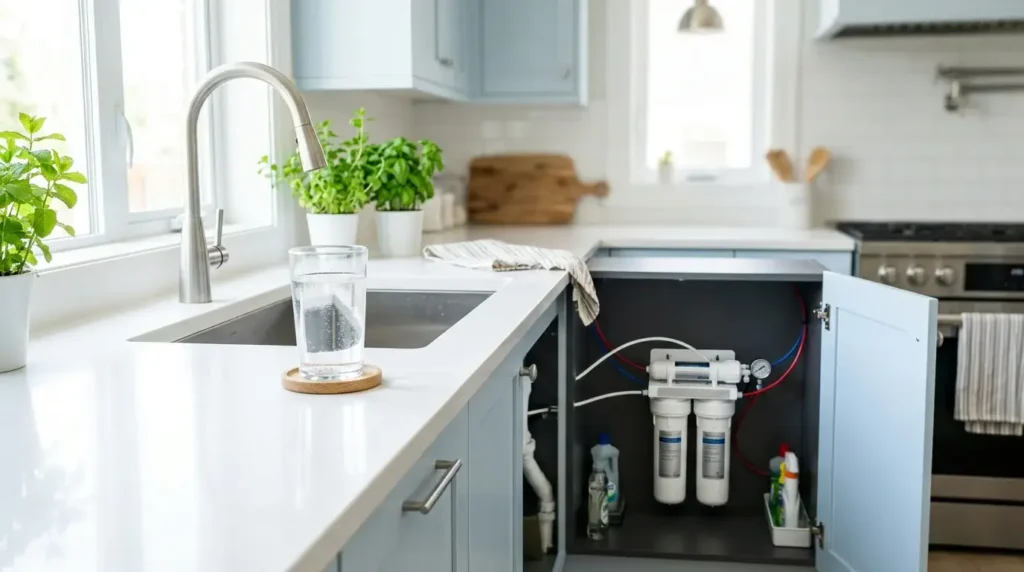
Ro Water Filter System

Water

A woman filling a glass with clean drinking water from a kitchen tap, illustrating what is sustainable water management through responsible home water usage.
Water

What Is Sustainable Water Management: And Honestly, Are We Doing Enough Before It’s Too Late?

What is sustainable water management? Sustainable water use involves conserving, managing, treating and protecting our freshwater supplies in order to meet current demand without leaving future generations with less freshwater resources than necessary. That means smarter sourcing options, efficient treatment processes, less waste production and the conservation of natural systems which replenish our supply over time. And if you’re a homeowner or business owner, it directly affects your water quality, your costs, and how much you’re contributing to the problem or the solution. RO Water Filter System sees this every day on the job. What Is Sustainable Water Management, Really? Sustainable water management means using water in a way that meets today’s needs without depleting what future generations will depend on. That definition sounds simple. In practice, it’s anything but. It covers how water is sourced, treated, distributed, used, and recycled across homes, farms, cities, and industries. It involves protecting watersheds, reducing waste, improving treatment systems, and making sure clean water doesn’t become something only certain communities or income levels can access. The challenge isn’t just supply. It’s balanced. Global water demand has more than doubled in the last 50 years. Climate shifts are making droughts longer and more severe. And in California, we already know what water stress looks like firsthand. Why California Homeowners Should Pay Attention California has been in a near-constant drought cycle for over two decades. The State Water Resources Control Board regularly issues conservation mandates. Water districts across the San Joaquin Valley, including those serving Tracy, have faced allocation cuts and rising costs. Here’s what that means practically for residents: Water rates continue to rise as supply becomes less reliable Hard water from Delta sources leaves scale buildup in pipes, water heaters, and appliances Agricultural runoff can introduce nitrates and other contaminants into groundwater Aging infrastructure in older Tracy neighborhoods may add sediment or lead exposure risk And yet, most homeowners are still running tap water without any filtration at all. That’s not a judgment. It’s just a gap between what people know and what they actually do about it. We can assess your home’s water quality, recommend the right level of filtration for your situation, and install a reverse osmosis water filter that actually matches your water conditions. What Makes Water Treatment Sustainable This is where the conversation gets more useful. What made water treatment sustainable isn’t just about using less water. It’s about treating water smarter. Efficiency Over Volume Older water treatment systems were designed for throughput, not efficiency. They used large amounts of energy, chemicals like chlorine and alum, and produced significant wastewater. Sustainable water treatment shifts that model by: Using less chemical disinfection where UV or membrane technology is viable Reducing backwash and reject water in filtration systems Treating water at the point of use rather than treating entire supplies to drinking-water standards Under-sink reverse osmosis systems are a good example of point-of-use logic. Instead of treating every gallon in your home to the same level, you filter only the water you actually drink and cook with. That’s smarter, not just cleaner. Water Recycling and Reuse Wastewater treatment has improved dramatically. In many California municipalities, treated wastewater is now reused for irrigation, industrial cooling, and in some cases, groundwater recharge. This is a core part of sustainably managing water resources at the regional level. At home, the equivalent might be capturing RO reject water for plant watering or outdoor use rather than sending it down the drain. Rainwater Harvesting California lifted restrictions on residential rainwater harvesting in 2012. Collecting roof runoff in cisterns for outdoor irrigation reduces pressure on municipal supply. It’s not a complete solution. But it’s a meaningful one, especially in a dry year. What Made Water Treatment Sustainable Over Time It didn’t happen overnight. Sustainable water purification evolved through decades of policy, technology, and necessity. Key shifts that changed how we approach water: 1970s: The Clean Water Act forced industrial and municipal polluters to treat discharge before releasing it 1990s: Membrane filtration technology became commercially viable, reducing chemical dependence 2000s: Smart metering and leak detection systems helped cities identify and fix massive distribution losses 2010s: Drought conditions in California accelerated adoption of tiered pricing and conservation mandates 2020s: Point-of-use filtration became mainstream as homeowners grew more skeptical of tap water quality Each shift made water treatment more sustainable. But the system still has serious gaps, especially at the individual and community level. The Role of Home Water Filtration in Sustainable Water Purification You might not think of your under-sink filter as a tool for sustainability. But it genuinely is. A properly installed Water Purification System in Tracy, CA handles what the municipal system doesn’t. An RO membrane removes dissolved solids, heavy metals, chlorine byproducts, and nitrates at a rate that standard carbon filters simply can’t match. And the sustainability angle? Homeowners with good point-of-use filtration buy far fewer single-use plastic water bottles. In a household that used to go through two or three cases of bottled water per week, that’s hundreds of plastic bottles out of the waste stream every year. Per household. Multiply that across a neighborhood. What Sustainable Water Management Looks Like at the Household Level You don’t need to redesign your plumbing or install a 10-stage system to make a difference. Honestly, most homeowners in Tracy don’t need anything that complex. What actually helps: Install a point-of-use RO system for drinking and cooking water. A 5-Stage Water Filtration System in Tracy, CA is sufficient for most residential needs and addresses the most common contaminants in Delta-sourced water. Fix leaks promptly. A dripping faucet wastes up to 3,000 gallons per year. That’s not a rounding error in a drought state. Run full dishwasher and laundry loads. Partial loads use the same water as full ones in most older machines. Use a TDS meter to monitor your water. If your tap water reads above 300 ppm, you’re dealing with significant dissolved solid content. That’s relevant for both health and appliance longevity. Service your filtration system on

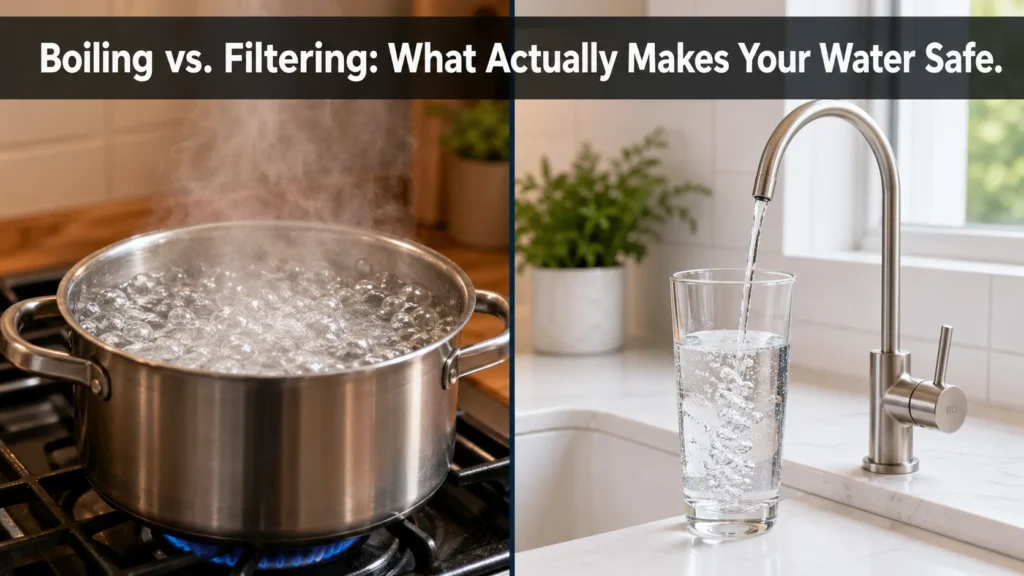
A comparison of a pot on a stove and a filtered water tap to illustrate the question: does boiling water kill everything?
Water

Does Boiling Water Kill Everything? The Shocking Truth Most People Don’t Know

You’re not alone if you’ve ever questioned if boiling tap water makes it totally safe to drink. Does boiling water kill everything? The truth is more nuanced than most people realize, and if you get it wrong, your family may continue to drink water tainted with dangerous pollutants. Homeowners in the Tracy region often ask us this question at RO Water Filter System, and the true response alters most people’s perceptions about water safety. Boiling can solve certain water-quality issues, like bacteria and viruses; it won’t remove chemicals, heavy metals or the contaminants increasingly found in California water supplies. In this article we detail what boiling handles well versus what it misses out on doing for everyday lives in your household. Does Boiling Water Kill Everything in It? No. Boiling does not kill everything in water, and this is the single most important thing to understand before you rely on it as your main safety method. Boiling is not a purification method, these terms are sometimes misused to mean the same thing; in reality they don’t disinfection kills living organisms while purification removes both living and nonliving contaminants like chemicals and metals dissolved from water sources. Boiling only performs one part of these jobs at any given time. What Boiling Actually Removes Boiling handles biological pathogens reliably when done correctly: Bacteria such as E. coli, Salmonella, and Campylobacter Viruses such as Norovirus and Hepatitis A Protozoa such as Giardia and Cryptosporidium What Boiling Leaves Behind Boiling has no effect on any of these: Lead and other heavy metals Arsenic PFAS compounds, often called forever chemicals Chlorine and chloramine disinfection byproducts Nitrates Pesticides and herbicides Boiling water evaporates some of itself and decreases in total volume, any dissolved chemicals or metals already present become slightly more concentrated due to this concentration effect. If your drinking water contains lead, boiling it may actually provide an increased dose per glass compared to drinking without boiled. Can Boiling Kill Bacteria Reliably? Yes, when done correctly, boiling can kill bacteria and most other biological pathogens. But there is a right way and a wrong way to do it. What a Rolling Boil Actually Means Many people mistakenly believe any level of heat counts; this is simply not the case. A rolling boil refers to large and vigorously bubbling surface bubbles that won’t stop when stirred; any lesser form of boiling, such as gentle simmer or small bubbling at the bottom, aren’t sufficient. How Long to Boil Based on Your Location The time required depends on your elevation because water boils at a lower temperature at higher altitude. Since it is the heat itself that kills pathogens, not the act of boiling, you need more time to compensate at altitude. At most California elevations: bring to a rolling boil for at least 1 minute At elevations above 6,500 feet: bring to a rolling boil for at least 3 minutes What to Do If the Water Looks Cloudy Unless your tap water appears clear and has visible particles, do not boil it without first filtering it first through a cloth or paper towel to filter sediment out. Boiling unfiltered cloudy water without this step may trap pathogens inside particles which won’t fully reach with heat disinfection, leaving live pathogens living inside what might seem to be disinfected water. Does Boiling Water Purify It From Chemical Contaminants? No. This is where boiling falls completely short, and why this matters so much for homeowners in California. Heat does not neutralize or remove chemical contaminants. Chlorine disinfection byproducts, pesticides, industrial chemicals, nitrates, and PFAS compounds pass through the boiling process unchanged. The PFAS Problem Boiling Cannot Fix Synthetic chemicals known as PFAS have been linked to immune suppression, hormone disruption, and an increased risk of cancer. They may be found in a variety of industrial products, non-stick cookware coatings, and firefighting foam. Testing has shown PFAS chemicals in water systems across California, and the EPA has imposed enforceable limitations on a number of these substances in public drinking water. When it comes to PFAS, boiling your water won’t help. It can make things a little worse due to the concentration effect. Lead in Older California Homes Lead enters drinking water not from the source, but from older plumbing, pipe solder, and plumbing fixtures inside the home. If your home was built before 1986, there is a real possibility that lead is leaching into your water at the tap. Boiling water that contains lead does not remove the lead. It concentrates on it. This is one of the most dangerous misconceptions surrounding boiling water safety. Nitrates and Agricultural Runoff Near Tracy Communities across California, particularly Tracy and San Joaquin County, have experienced issues related to agricultural runoff containing nitrates, naturally-occurring arsenic in groundwater sources and industrial contamination that do not respond to boiling. Families with infants are especially at risk from elevated nitrate levels in drinking water because these interfere with how red blood cells transport oxygen within very young children’s systems. Does Boiling Tap Water Purify It the Way a Filter Does? No, and the difference matters more than most people realize. Here is a direct comparison of what each approach actually removes: Contaminant Boiling Reverse Osmosis Filter Bacteria Yes Yes Viruses Yes Yes Protozoa Yes Yes Lead No Yes Arsenic No Yes PFAS No Yes Nitrates No Yes Chlorine byproducts No Yes Sediment No Yes A reverse osmosis system forces water through a semi-permeable membrane that physically blocks dissolved solids, heavy metals, and chemical compounds that boiling cannot touch. A quality Water Purification System addresses both biological and chemical contamination at the same time, without any extra steps on your end. How a Multi-Stage Filtration System Compares A 5-Stage Water Filtration System moves water through sediment pre-filters, activated carbon stages, the RO membrane itself, and then a post-filter for taste and odor. Each stage targets a different category of contaminants. Boiling, by contrast, only handles one category and does nothing for the rest. The filtration approach is comprehensive.

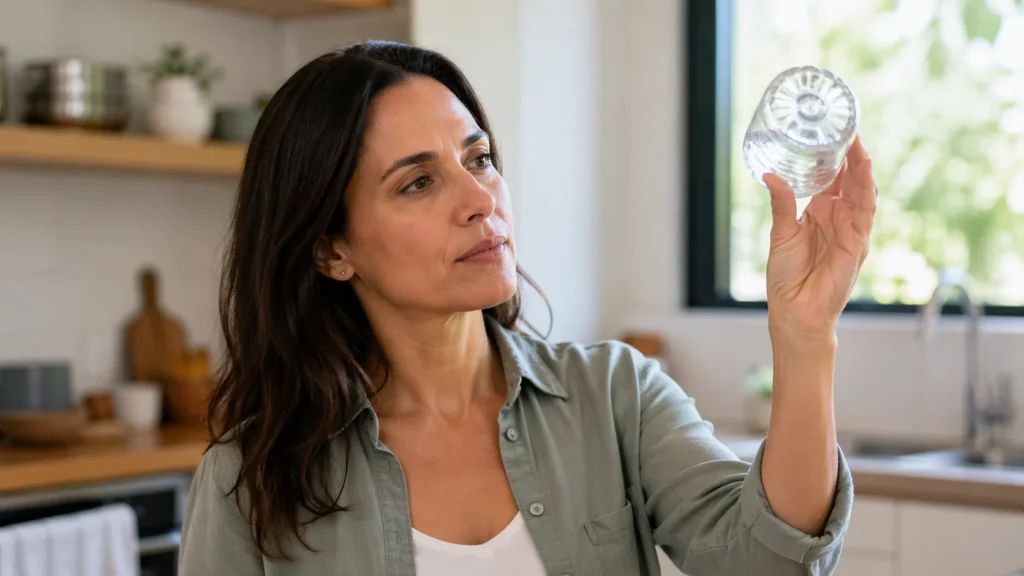
Can water expire concept woman checking bottled water expiration date in kitchen
Water

Can Water Expire? 5 Things You Need to Know About Bottled Water Safety

You see a date printed on a bottle you retrieve from your cupboard or garage. Now you wonder, can water expire, or is that just a formality? This is a common concern, especially for families storing water for emergencies or buying in bulk. Many online guides give surface-level answers, often saying “water doesn’t expire” without explaining what actually goes wrong over time. At RO Water Filter System, we see homeowners in Tracy, CA dealing with real issues like heat exposure, plastic breakdown, and poor storage conditions. This guide goes deeper, so you understand not just if water expires, but when it becomes unsafe or unpleasant to drink. Can Water Expire? What the Date on the Bottle Actually Means If you look at the bottom of a bottled water label, you will often see a date printed there. Many people assume this is an expiration date for the water itself. It is not. The FDA does not require bottled water to carry an expiration date. The manufacturer places the date on most bottles, which usually indicates a two-year shelf life. The plastic bottle, not the water within, is the main focus of this date. The worry is that the plastic may eventually start to degrade, particularly if it is heated or carelessly kept. So does water expire? Ultimately no; H2O remains chemically inert. What changes, though, is how its container and storage conditions impact overall safety and taste of its content. 5 Things You Need to Know About Bottled Water Safety 1. The Plastic Bottle Is the Real Risk, Not the Water Most single-use water bottles are made from PET (polyethylene terephthalate). At room temperature in a cool, dark space, PET bottles are generally safe. The problem starts when bottles are exposed to heat or sunlight for extended periods. Hot plastic water bottles may release chemicals into their contents. Of particular note is BPA (Bisphenol A), found in certain plastics; most PET water bottles labeled for water use do not contain this chemical, yet heat may still cause other compounds from plastic into water sources. Concerns about microplastics in bottled water have also been highlighted by research. Particularly in older bottles or those that have been kept at high temperatures for an extended period of time, tiny plastic particles may find their way into the water. Useful lesson: Keep bottled water out of direct sunlight and in a cool, dark place. 2. Does Water Go Out of Date If It Tastes Flat? Yes, water can develop a flat or stale taste over time, even if it is technically safe to drink. This happens for a few reasons. When water is stored in a sealed bottle for months, it can absorb trace amounts of carbon dioxide from the air inside the bottle. This slightly lowers the pH and can affect the taste. Carbonated water goes flat faster because it actively loses carbonation once the seal starts to degrade. Properly stored water stored in an undamaged, sealed bottle stored in a cool environment should taste clean well within its two-year expiry window. If the seal has been compromised or there are cloudy signs on the bottle or an off flavor is detectable then do not drink. 3. Does Distilled Water Expire? What About Purified and Spring Water? This is a question we get a lot. Does distilled water expire? The short answer is the same: the water itself does not expire, but the container and storage conditions still apply. Can distilled water go bad? It can, but not because of the water’s chemistry. Distilled water has had minerals and impurities removed, which actually makes it slightly more susceptible to absorbing compounds from the plastic container over time. For people storing distilled water for appliances like humidifiers or steam irons, this is less of a concern. The expiration date printed on the bottle is a guide for optimal freshness, not a hard safety cutoff, as long as the bottle has been stored properly. 4. Storing Bottled Water for Emergencies: What You Actually Need to Know Many homeowners in Tracy, CA, and the surrounding area keep emergency water supplies on hand. This is smart planning. But how long does bottled water stay safe in emergency storage? Here are the most important storage guidelines: Keep bottles in a cool, dark location such as a basement, closet, or pantry away from any cleaning chemicals or gasoline. Avoid storing water directly on concrete floors, which can allow chemical transfer over long periods. Rotate your stock. Use older bottles first and replace them with fresh ones on a rolling basis. The standard recommendation from emergency preparedness agencies is to replace commercially bottled water every one to two years, even if it has been stored correctly. Once a bottle has been opened, it should be consumed within a few days. Bacteria growth can begin in opened bottles, especially if you drink directly from the bottle and introduce microorganisms. For families building a serious emergency water supply, commercially bottled water is a reasonable short-term solution. For longer-term planning, a home filtration system connected to a reliable water source is a more dependable approach. A Reverse Osmosis Water Filter system installed at your home gives you on-demand clean water without the ongoing cost and waste of buying cases of bottled water. 5. Bottled Water vs. Filtered Tap Water: What Is Healthier Long-Term? Bottled water is not automatically cleaner than tap water. Some bottled water brands are just filtered municipal tap water bottled in plastic bottles at an increased markup price, leading to serious environmental concerns such as plastic leaching or microplastic contamination and single-use packaging costs. A better long-term approach for most households is a quality home filtration system. A 5-Stage Water Filtration System removes sediments, chlorine, heavy metals, and other common contaminants directly at your tap, giving you clean, great-tasting water on demand without the ongoing expense of buying bottled water. For homeowners evaluating their options, Household Water Filtration Systems offer a practical, cost-effective alternative that reduces plastic waste and

Scroll to Top