You’re staring at a box that says it removes “up to 99%” of contaminants. Of what, exactly? Most labels never say. If you’ve been trying to work out how to choose a water filter without paying for the wrong one, the process is simpler than the packaging makes it look.
Quick answer: find out what is really in your water, pick a treatment method that targets those specific contaminants, then choose a format (pitcher, under-sink, whole house) that fits your home and budget. Confirm the claims with an independent certification, and count the yearly upkeep, not just the price tag.
At RO Water Filter System, we find that skipping the first step is what leads to most bad purchases.
Quick answer: which water filter fits your problem?

Your problem picks the filter, not the other way around. Use this table as a shortlist, then confirm it with a test.
| What you want to fix | Filter that usually fits | Certification to look for |
| Chlorine taste and smell | Activated carbon | NSF/ANSI 42 |
| Lead from older pipes | Tap-level carbon block or RO | NSF/ANSI 53 (lead) or 58 |
| Nitrate, arsenic, fluoride, high TDS | Reverse osmosis | NSF/ANSI 58 |
| Hard water scale | Water softener | NSF/ANSI 44 |
| Bacteria in well water | UV plus a sediment filter | NSF/ANSI 55 |
| Chlorine in showers | Whole-house carbon | Check the exact model listing |
If you keep asking yourself what water filter do I need, this table is the shortest honest answer. It is a shortlist, not a verdict, because two houses on the same street can get very different test results.
Start with your water: source, test, and your real reason for filtering
Taste, smell, and clarity tell you very little. Lead has no flavor, and nitrate doesn’t change how water looks. The CDC’s advice is to test your water, choose a filter that removes what the test found, and skip the filter if your water has no harmful germs or chemicals. That is the right starting point for how to choose a water filtration system. It is also where you settle your real reason: health worries, taste, or protecting pipes and appliances. A filter bought for one reason rarely solves the other two.
City water or well water?
City water is treated and tested by your utility. The usual concerns are chlorine, chloramine, disinfection byproducts, and lead picked up from old plumbing. Private wells are your own responsibility. Bacteria, nitrate, iron, and arsenic are the common worries, and nobody tests for you.
Consumer report vs lab test vs test strips
Your utility publishes a Consumer Confidence Report every year. It shows what was found at the treatment plant, not what your own pipes add afterward. A certified lab test on a sample from your tap does show that. Test strips are fine for chlorine, pH, and hardness, but they can’t reliably catch lead, arsenic, or PFAS. Well owners should test for coliform bacteria and nitrate every year.
The four filtering methods in plain English
Most types of water filters rely on one of four methods, and none of them removes everything.
- Activated carbon traps chlorine, many organic chemicals, and the compounds behind bad taste and smell in its tiny pores. Carbon block is denser than granular carbon and usually does more, though it flows slower. Neither handles nitrate, fluoride, or dissolved minerals well.
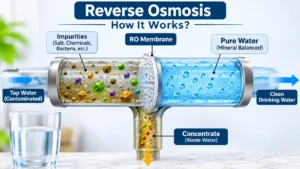
- Reverse osmosis pushes water through a membrane with pores far smaller than most contaminants. It can reduce nitrate, arsenic, fluoride, and total dissolved solids. The trade-offs are wastewater, slower output, and stripped minerals unless the system adds a remineralization stage.
- Ion exchange powers softeners. The resin swaps calcium and magnesium for sodium or potassium, which stops scale. That protects pipes and appliances, but it does nothing to make drinking water cleaner.
- UV and distillation handle germs differently. UV light inactivates bacteria and viruses, but it needs clear water, so it is paired with a sediment filter, and it ignores chemicals. Distillation boils water and collects the steam. It works, but it is slow and uses energy.
Pitcher, faucet, under-sink, countertop or whole house: which format fits your home?
Here is a water filter comparison by format. Different types of water filters suit different homes, and your living situation matters as much as your water.
| Format | Installation | Best for | Coverage |
| Pitcher | None | Renters, taste only | Drinking water |
| Faucet-mount | Minutes, no tools | Small kitchens, short-term use | One tap |
| Countertop | None, some need power | Renters, apartments | Drinking and cooking |
| Under-sink carbon | Light plumbing | Owners with chlorine or lead concerns | Kitchen tap |
| Under-sink RO | Plumbing and drain line | Nitrate, arsenic, high TDS | Kitchen tap |
| Whole house | Main line, professional | Chlorine, scale, sediment everywhere | Every tap |
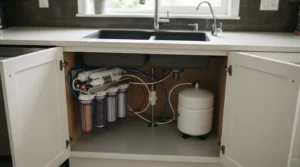
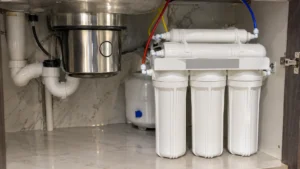
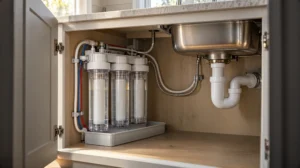
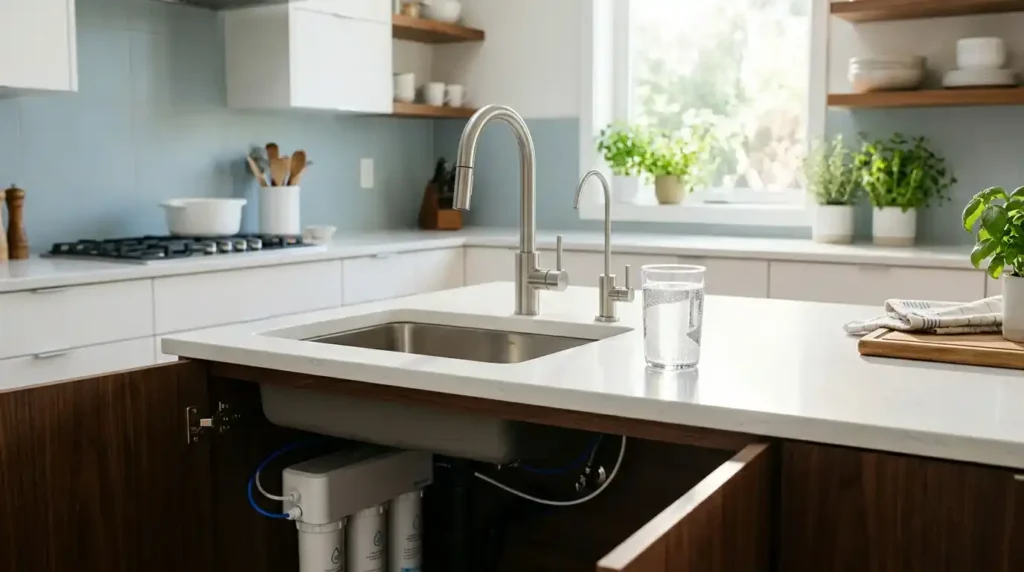
Measure your cabinet before you order anything. An under-sink system needs room for its housings, and an RO system adds a storage tank. On the under sink water filter vs reverse osmosis question, carbon keeps natural minerals and wastes no water, and it handles chlorine and certified lead reduction. RO removes dissolved contaminants carbon can’t, but it needs a drain line, a tank, and more upkeep.
Point-of-use vs point-of-entry: where should the filter sit?
Point-of-use filters treat water at one tap, usually the kitchen sink. Point-of-entry systems treat everything as it enters your home. Pick point-of-use for drinking-water concerns like lead and nitrate. Pick point-of-entry for chlorine in showers, scale, or iron stains on fixtures.
Lead is the classic trap. A whole house filter works before water reaches your plumbing, so lead released by your own pipes can slip past it. The best whole house water filter is the one sized for your peak flow in gallons per minute, matched to your test results, and certified for the contaminant you care about. Many homes end up with both: whole-house treatment plus a drinking-water filter at the kitchen tap.
City water vs well water: two different shopping lists
Two homes in the same ZIP code can need completely different equipment. A city water list usually looks like this: a carbon filter for chlorine and chloramine, a certified lead filter at the drinking tap if the pipes are old, and a softener only if hardness is a real problem. A well water list starts with a lab test. After that it may include a sediment pre-filter, a softener or iron treatment, UV when bacteria show up, and RO at the kitchen tap for nitrate or arsenic.
At RO Water Filter System, we start every recommendation from test results, not from a product. If you live in the Central Valley, scale on fixtures and water heaters is a common complaint, and hard water is widespread across the region. Check your utility’s hardness number before assuming you need a softener. The best whole house water filter for a well home looks very different from one for city water, so don’t copy a neighbor’s setup.
How to read a filter label before you pay
Part of how to choose a water filter is learning to read its label. “Removes 99%” means nothing until you know 99% of what. Look for named contaminants, not general claims.
The words matter too. “Certified” means an independent body that tested the product. “Tested to” or “compliant” can mean the manufacturer checked its own work. These standards are the ones worth knowing:
- NSF/ANSI 42: taste and odor, such as chlorine
- NSF/ANSI 53: health effects, such as lead
- NSF/ANSI 58: reverse osmosis performance
- NSF/ANSI 401: emerging compounds
- NSF/ANSI 372: lead-free materials
Check capacity in gallons, which tells you when the cartridge is spent. For whole house systems, check flow rate in gallons per minute against your household’s busiest moment, like laundry and a shower at once. Then search the exact model number in the certifier’s public database. A listing for the brand is not a listing for your model, and the contaminant you care about must appear under the claim.
What a water filter really costs in year one
Price should come last, and a fair water filter comparison counts the first twelve months, not just the checkout total. These are rough ranges, and they vary by brand and region.
| System | Upfront | Installation | Upkeep |
| Pitcher | $20 to $60 | None | Cartridge about every two months |
| Under-sink carbon | $100 to $400 | DIY possible | Cartridge often every 6 to 12 months |
| Under-sink RO | $200 to $700 | DIY or professional | Several filters yearly, membrane every few years |
| Whole house | From about $1,000 | Professional | Depends on media type |
Cost per gallon is simple math. Divide the cartridge price by its rated capacity. A $30 cartridge rated for 300 gallons costs 10 cents per gallon. A cheap pitcher can cost more per gallon than a pricier system over time. RO wastewater counts as a cost as well, so read the efficiency figure on the spec sheet.
The buyer’s regret timeline: month 1, month 6, month 12
This is the part of how to choose a water filter that spec sheets never cover. Regret shows up on a schedule.
Month 1. The cabinet is too tight for the housings. Someone skipped the break-in flush. A faucet-mount unit slows the stream more than expected. Or hot water went through a cold-only filter. Read the manual before you buy, not after.
Month 6. The cartridge reminder never got set. The replacement filters turn out to be pricey or hard to find. A pitcher’s taste quietly drifts back to how tap water tasted before. Maintenance decides whether the filter keeps working, and a forgotten cartridge looks fine while doing nothing.
Month 12. The yearly cost lands higher than the plan, and nobody has retested the water. Retest after the break-in period, then yearly, and compare the result with your first report. That one habit catches a failing filter early.
Five real setups for five real homes
- Renter with chlorine taste. A countertop or pitcher filter certified to NSF/ANSI 42. No drilling, and it goes with you when you move.
- Older home with a lead worry. A tap-level filter certified to NSF/ANSI 53 for lead, or RO certified to 58, at the kitchen sink. If the lab report shows lead only, certified carbon is enough. If it also shows nitrate or high TDS, the under sink water filter vs reverse osmosis choice answers itself: RO.
- Well owner with nitrate. Test at a certified lab first. Then RO at the kitchen tap, plus a sediment filter and UV if bacteria appear.
- Family with hard water and chlorine. A softener for scale, whole-house carbon for chlorine in showers, and a small drinking-water filter at the kitchen. If you’re still wondering what water filter do I need here, the answer is two stages, not one product.
- RO drinker who misses the minerals. Add a remineralization stage. Most daily minerals come from food, but the taste improves. If you follow a medical diet, ask your doctor.
Final thoughts
The right filter comes from three steps: test, match, certify. Now that you know how to choose a water filter without guessing, you can spot weak marketing quickly. The same steps will help you work out how to choose a water filtration system for any home. If you want help reading your results and sizing a system, see our Water Filtration Installation Services in Tracy, CA. RO Water Filter System has served homeowners across the Central Valley and Bay Area for over 15 years. Contact us for a straight answer about your water.
Frequently Asked Questions
Do I need a water filter at all?
Not always. If your water report shows nothing above health limits and you like the taste, you may not need one. Filters make sense for lead in old plumbing, well water, chlorine taste, or contaminants like PFAS and nitrate found in testing.
Is reverse osmosis water safe to drink long term?
Yes, for most healthy people. Most of your daily minerals come from food, not water. RO does remove calcium and magnesium, so some people add a remineralization stage for taste.
How often should I change my water filter?
Follow the manufacturer’s schedule, since it depends on capacity in gallons and your water quality. Pitcher cartridges often last about two months, and under-sink carbon filters commonly last six to twelve months. RO membranes last longer, often two to five years.
What’s the difference between a water filter and a water softener?
A filter removes contaminants like chlorine, lead, or sediment. A softener removes calcium and magnesium through ion exchange to stop scale. Many homes with hard water and chlorine use both.
Can a pitcher filter remove lead?
Some can, but many only handle chlorine taste. Check for NSF/ANSI 53 certification for lead reduction on the specific model. If your test shows high lead, use a certified point-of-use filter and replace cartridges on time.