Does Reverse Osmosis Remove Lead from Water? Complete Expert Guide
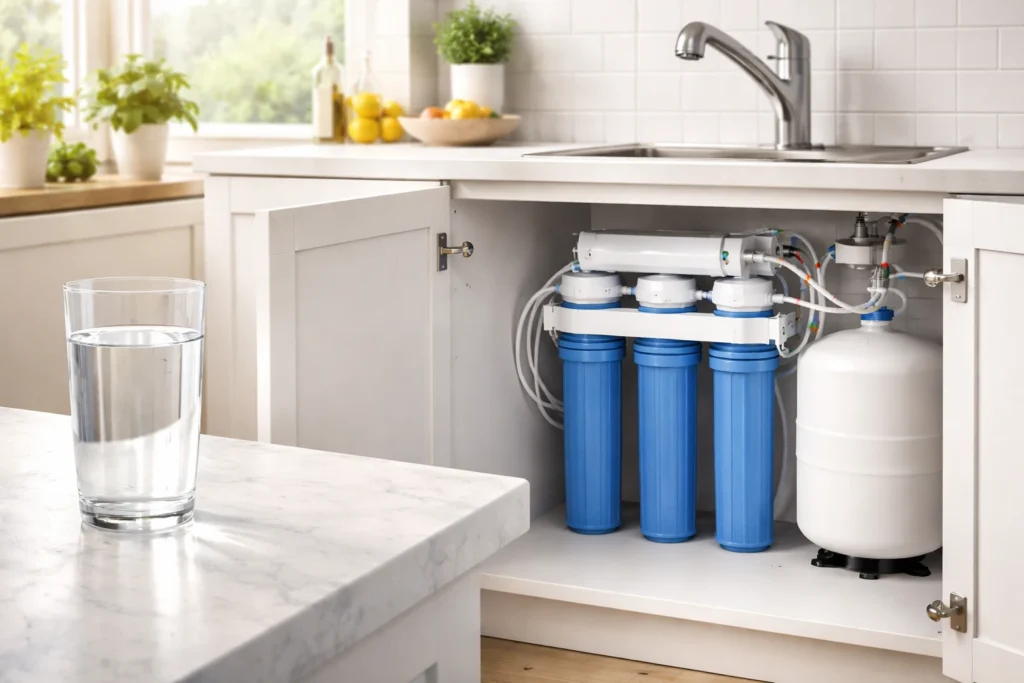
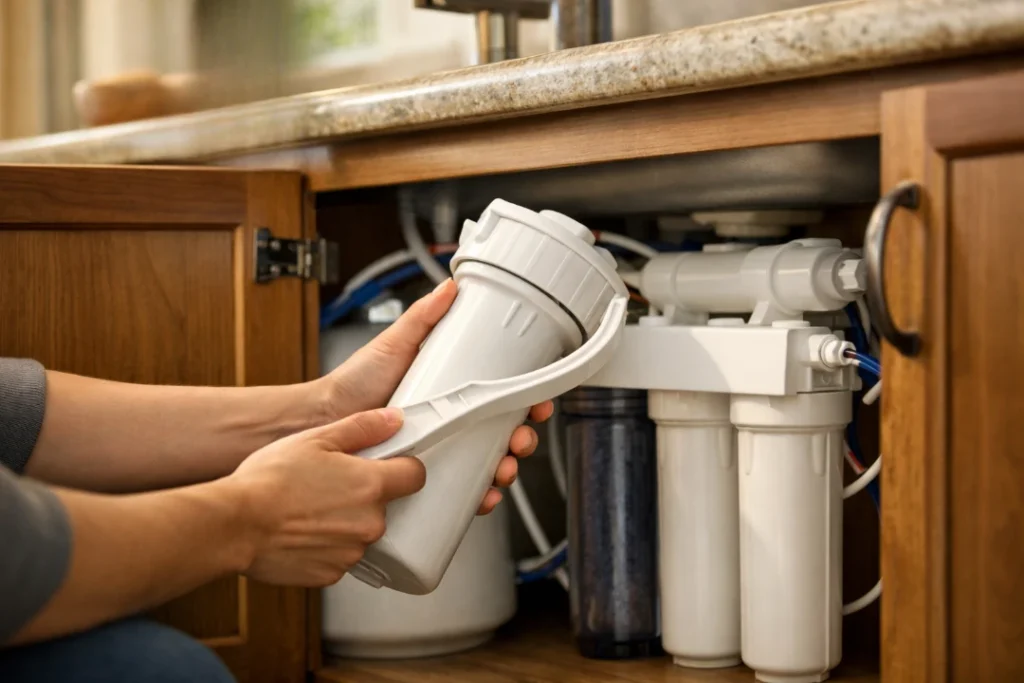
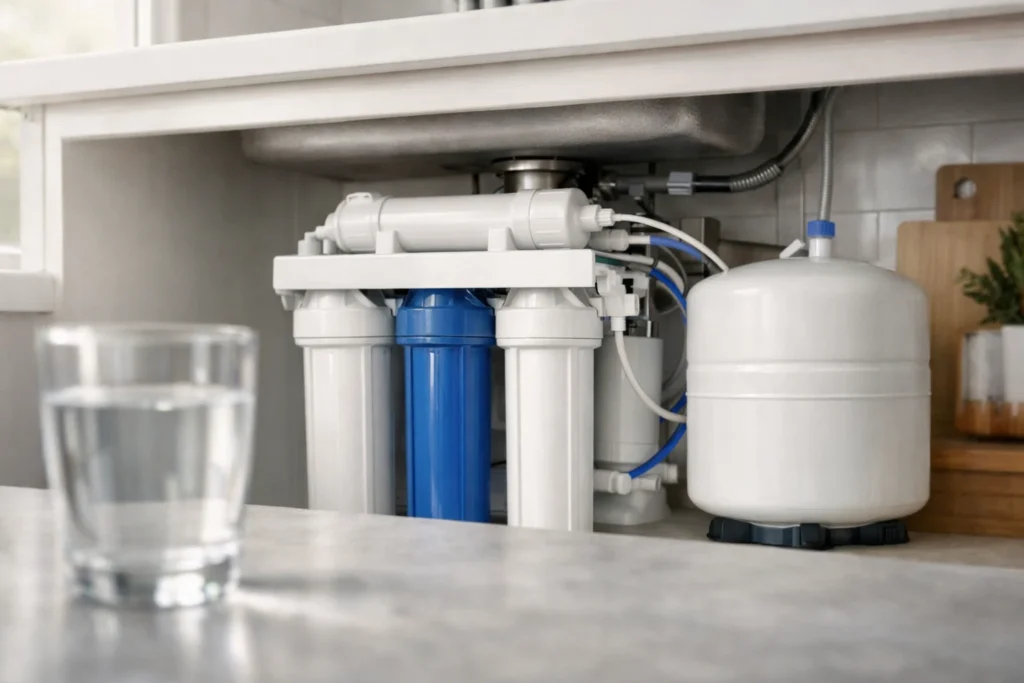
You’re right to worry about lead in your tap water. The EPA says no level of lead in drinking water is safe, and you can’t see, smell, or taste it. So here’s the quick answer. Does Reverse Osmosis Remove Lead from Water? Yes. A certified RO system removes about 97 to 99 percent of it at the tap it serves. We’ll walk through what that number means and where it falls short. You’ll see how RO works, how it compares with carbon filters, when a whole house system helps, and which buying mistakes cost people money. By the end, you’ll know what to ask before you buy. Why Lead in Drinking Water Is Still a Real Problem Lead rarely starts at the water source. It enters on the way to your tap. Old service lines, lead solder, and brass fixtures release lead into water as they corrode. The EPA calls the lead service line the most significant source of lead in drinking water. Age matters. Homes built before 1986 carry the highest risk, because lead pipes and solder were still common then. Plenty of lead service lines still run underground across the country, too. Drinking water makes up at least 20 percent of a person’s total lead exposure, according to EPA estimates. Young children face the greatest danger, since lead harms brain and nervous system development. That’s why the EPA sets its health goal for lead at zero. The rules are tightening. The EPA’s Lead and Copper Rule Improvements lower the lead action level from 15 ppb to 10 ppb, and most water systems must meet the new requirements by November 1, 2027. But an action level is a trigger for utilities, not a promise that your tap is safe. One home can test high while the whole system passes. How Reverse Osmosis Actually Removes Lead Does reverse osmosis remove lead works by pushing water through a semipermeable membrane under pressure. This membrane has pores rated as small as 0.0001 microns, which is far smaller than lead ions. Lead particles cannot pass through the membrane, so they are separated from the water and flushed away. A quality RO system typically has multiple filtration stages working together: A sediment pre-filter that removes larger particles like rust and dirt A carbon pre-filter that removes chlorine, which can damage the membrane The RO membrane itself, which handles heavy metal ion filtration including lead A carbon post-filter that polishes the water before it reaches your glass Does reverse osmosis remove lead when functioning efficiently have the capability of extracting up to 99% of lead from drinking water, earning recognition by both the Environmental Protection Agency (EPA) and National Sanitation Foundation (NSF) as an efficient point-of-use water purification method for lead removal. Can Reverse Osmosis Remove Lead in Every Situation? No. A certified RO system removes about 97 to 99 percent of lead from the water that passes through it, but results depend on the membrane’s condition, incoming water pressure, and the lead’s form. RO also treats only the tap it feeds, so lead elsewhere in your plumbing stays untouched. So will reverse osmosis remove lead every time? Only when the system is healthy and installed well. Four things can weaken results: A worn membrane. Membranes lose rejection performance as they age. Low water pressure. RO needs steady pressure to push water through the membrane. Missed filter changes. Clogged pre-filters strain the membrane. Uncertified parts. Cheap units may never have been tested for lead. Scope matters too. An under-sink unit treats one faucet. That’s usually enough, since drinking and cooking are where lead gets swallowed. Think of it like a deadbolt on your front door. It protects the door you put it on, not the open back window. Lead can also hide in the system itself. Check that the faucet and tubing carry NSF/ANSI 372, the standard for lead-free materials. Lead Contamination Signs Every Homeowner Should Know Here’s the tricky part. Lead has no color, taste, or smell. Clear, fresh-tasting water proves nothing. Look for risk clues instead: Your home was built before 1986. Your service line or indoor pipes are lead or galvanized steel. Your utility sent a lead notice, or lists your service line as lead or unknown. Water runs brown, or fixtures show blue-green stains. Both point to corroding plumbing. Recent water main work or plumbing repairs disturbed the lines. You can check exposed pipes yourself. Scratch one gently with a key. Lead is soft and dull gray, and it shows shiny silver under the scratch. A magnet won’t stick to it. If you suspect lead, call a plumber or your utility to confirm. Parents can also ask a pediatrician about blood lead testing for young children. Does an RO System Work Better Than Other Lead Filters? There are other options on the market. Pitcher filters, faucet-mount filters, and whole-house carbon filters all claim to reduce lead. Here is how they compare honestly: Filter Type Lead Removal Rate Coverage Cost Range Reverse Osmosis (under-sink) Up to 99% Point of use (kitchen sink) $200 to $600+ installed NSF-certified pitcher filter 30% to 95% (varies by brand) Single pitcher at a time $25 to $60 Faucet-mount filter 50% to 85% One faucet only $30 to $100 Whole-house carbon filter Variable, not always lead-rated Whole house $500 to $2,000+ The most effective point-of-use remedy for lead-contaminated water is a RO system. Since lead is a dissolved heavy metal ion rather than merely a particle, it can handle particles that the majority of simple carbon filters cannot. Unless the filter is certified particularly for heavy metal ion filtration, carbon alone is not usually dependable for lead. When a Whole House System Makes More Sense Whole house filtration treats water where it enters your home. That helps when the incoming water carries lead or other contaminants. It also protects every tap, from the bathroom sink to the ice maker. Here’s the catch. A whole house filter can’t catch lead that enters after it. Indoor pipes, solder,