Your water won’t lie to you even when it tastes perfect! If you detect faint chlorine odor first thing in the morning, white crust on shower glass or metallic flavors not present before, your water may already be showing you signs that something’s amiss.
Are whole house water filters worth it to buy or just giving false peace of mind? At RO Water Filter System we get asked this question on an almost weekly basis; and an honest response depends on what actually remains in your drinking supply, not on promises made through sales brochures.
What a Whole House Water Filter Actually Does
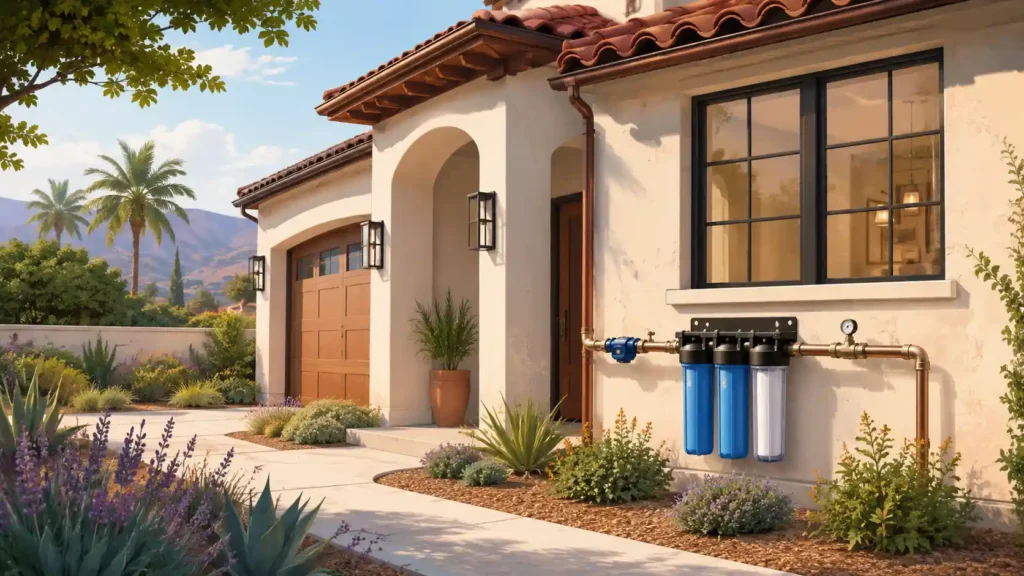
A whole house water filter is what’s called a point-of-entry (POE) system. It connects to your main water line, usually right where water enters your home, and treats every drop before it reaches a single faucet, shower, or appliance.
That’s different from a countertop pitcher or an under-sink unit, which only filters water at one location. A POE system protects your washing machine, water heater, dishwasher, and every bathroom in the house at the same time.
Most whole house systems use one or more of these filtration stages:
- Sediment filters that catch dirt, sand, and rust particles before they reach your plumbing
- Activated carbon filters that remove chlorine, chloramine, and many organic chemicals
- Water softeners that reduce calcium and magnesium for homes dealing with hard water
- Specialty media for iron, sulfur odor, or specific contaminants found in well water
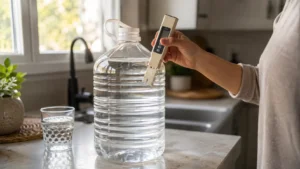
Some homes need just one stage. Others need a combination. That’s where a proper water test matters more than any product listing.
Well Water vs. City Water: Why Your Source Changes the Answer
You can’t answer “are whole house water filtration systems worth it” without knowing where your water actually comes from. Well water and city water create very different problems, and that changes what kind of system makes sense.
If You’re on Well Water
Well water isn’t treated by a city before it reaches your tap. That means whatever is in the ground near your property, iron, sulfur, sediment, nitrates, or bacteria, can end up in your glass. We’ve tested wells in outlying parts of San Joaquin County where hardness alone was enough to wreck a water heater within a few years.
For well water homes, a whole house system usually isn’t optional. It’s the baseline.
If You’re on City Water
City water in Tracy and most of the surrounding area is treated and meets federal safety standards. But “safe” and “pleasant” aren’t the same thing. Chlorine used for disinfection often lingers in the water by the time it reaches your home, and many local areas deal with naturally hard water from groundwater blending.
If your only complaints are taste, smell, or dry skin after showers, a whole house carbon filter can solve that without the cost of a full multi-stage system.
Are Whole House Water Filters Worth It?
Here’s the part most buying guides skip: worth it isn’t a yes or no question. It’s a math problem based on three things, your water quality, your household size, and how long you plan to stay in the home.
A whole house system tends to pay off when:
- You’re on well water with known contaminants
- Hard water has already started damaging pipes, fixtures, or appliances
- You have a large household where multiple under-sink units would cost more combined
- Someone in your home has sensitive skin, allergies, or asthma triggered by chlorine exposure
A whole house system is often not worth it when:
- You’re only concerned about drinking water taste, not whole-home water quality
- Your city water already passes recent testing with no major flags
- You’re renting and won’t be in the home long enough to recover the cost
- A simple under-sink filter would solve the actual problem you’re trying to fix
This is the honest version of are home water filtration systems worth it. It’s not about whether filtration works. It’s about whether your specific water and your specific household need that level of coverage.
Whole House System vs. Under-Sink or RO: Which One Do You Actually Need
A lot of homeowners assume a whole house filter and a reverse osmosis system do the same job. They don’t.
A whole house filter treats water at the entry point, protecting plumbing and improving water at every tap. It’s not built to remove things like dissolved salts, nitrates, or certain heavy metals down to a near-zero level.
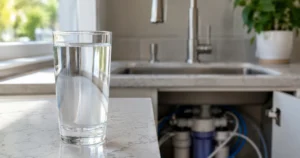
Reverse osmosis uses a semi permeable membrane to push water through and strip out far more at the molecular level, but it’s typically installed at one point, like your kitchen sink, not your whole house.
The honest comparison looks like this:
|
Concern |
Best Fit |
| Chlorine smell, hard water, sediment throughout the home |
Whole house filter |
|
Drinking water purity, lead, nitrates, dissolved solids |
Reverse osmosis |
| Both whole-home protection and pure drinking water |
Whole house filter plus point-of-use RO |
If your real concern is what’s coming out of your kitchen faucet for drinking and cooking, Drinking Water Filtration in Tracy, CA handles that directly without the cost of a full home system. If your goal is comprehensive coverage, Professional RO System Installation in Tracy, CA is worth a conversation before you commit to a whole house unit alone.
So is a whole house water filtration system worth it on its own? For some homes, yes. For others, pairing it with a point-of-use RO system at the kitchen sink gives you the best of both without overspending on either.
What It Costs to Install and Maintain a Whole House Filter
Cost is where most buying guides get vague. Here’s what actually drives the price.
Equipment cost. Basic sediment and carbon systems run lower. Multi-stage systems with softening or specialty media for well water cost more upfront because they’re doing more work.
Installation. This depends on your home’s plumbing layout, where your main line enters, and whether a bypass valve needs to be added. Homes in older Tracy neighborhoods sometimes need more plumbing adjustment than newer builds with more accessible main lines.
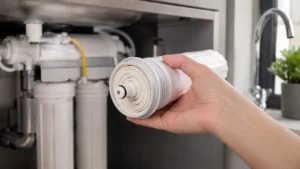
Ongoing maintenance. Sediment and carbon filters need periodic replacement, usually every 6 to 12 months depending on water quality and usage. Softener resin and specialty media last longer but still need occasional servicing.
A rough way to think about it: the cost of a whole house system is front-loaded, while the cost of skipping one shows up later, in shortened appliance life, more frequent repairs, and bottled water you didn’t plan on buying.
Common Mistakes Homeowners Make When Buying a Whole House System
We’ve seen the same mistakes repeat across hundreds of installs.
- Skipping the water test. Buying a system before knowing what’s actually in your water means you’re guessing at the solution.
- Buying based on price alone. The cheapest system on a shelf often can’t handle the flow rate of a full household, leading to weak water pressure.
- Ignoring household size. A system sized for two people will struggle in a home with five people and three bathrooms.
- Forgetting about hard water separately. A carbon filter won’t soften water. If scale buildup is your real problem, you likely need a whole house water softener for hard water alongside or instead of a standard filter.
- Assuming one system fixes everything. No single filter removes every possible contaminant. Matching the system to your actual water report matters more than any marketing claim.
When a Whole House System Is the Right Call (and When It’s Not)
If you’re on well water, dealing with visible hard water damage, or have a family member sensitive to chlorine, the case for a whole house system is strong. If your only issue is occasional taste complaints from city water, you may get more value starting with a household water purification system sized to your actual needs rather than the most expensive option available.
The right answer isn’t about following a trend. It’s about matching the system to the water you actually have.
Conclusion
So are whole house water filters worth it? Generally speaking, yes; their investment usually pays for itself through protected plumbing, reduced repair needs and great-tasting drinking water that won’t cause you any headaches or irritation. But for smaller or more specific concerns that arise within a household setting, targeted solutions might work better while being less costly overall.
What matters most is getting an honest read on your water before spending money on a guess. If you’re in Tracy or the surrounding areas and want a straight answer based on your actual water, not a sales pitch, reach out to RO Water Filter System and we’ll walk you through what your home really needs.
FAQs
Is a whole house water filter worth it if I already have a water softener?
A softener handles hardness, but it doesn’t remove chlorine, sediment, or organic contaminants the way a carbon or multi-stage filter does. Many homes use both together, since they solve different problems rather than competing ones.
Are whole house water filtration systems worth it for renters?
Usually not, since installation involves modifying the main water line and the cost is harder to recover if you’re not staying long term. A countertop or under-sink filter is typically a better fit for rental situations.
Are home water filtration systems worth it compared to just buying bottled water?
Over a year or two, a filtration system almost always costs less than regular bottled water purchases, and it solves the problem at every tap instead of just for drinking. It also cuts down on plastic waste, which bottled water doesn’t address.
Are water filtration systems worth it if my city water already passes safety testing?
Passing safety standards means the water is legally safe, not necessarily pleasant. Many homeowners still notice chlorine taste, dry skin, or appliance scale even when their water meets every regulation.
Is a whole house water filtration system worth it for well water homes specifically?
Yes, in most cases. Well water isn’t treated before it reaches your home, so contaminants like iron, sulfur, sediment, or bacteria can be present without any city oversight catching them first.