
You can install a great RO system and still catch a faint sulfur smell at the tap. That surprises people, because RO has a reputation as the filter that handles everything. It’s an excellent technology, but it isn’t magic, and knowing what doesn’t reverse osmosis remove is the difference between feeling protected and actually being protected.
Quick answer: on its own, an RO membrane doesn’t stop dissolved gases like hydrogen sulfide and carbon dioxide, some small organic chemicals such as certain solvents and pesticides, or live microbes in water that was unsafe to begin with. The carbon filters before and after the membrane catch much of the rest, which is why the whole system matters more than the membrane alone.
At RO Water Filter System, this is the misunderstanding we hear most, so here’s what slips through, why it happens, and what to add.
The Short Version: What Gets Past the Membrane
If you only have a minute, this is the list. Each item gets its own explanation below.
- Dissolved gases such as hydrogen sulfide (the sulfur smell) and carbon dioxide
- Some small organic chemicals, including certain solvents, pesticides and herbicides
- Chlorine, which the membrane doesn’t reliably stop and which can wear it out
- Microbes, if the water starts out unsafe or the system is poorly kept
- Healthy minerals, which get stripped out along with the unwanted material
Why Some Contaminants Slip Through
Picture a screen door. It keeps out flies and leaves, but a smell drifts straight through. An RO membrane works on a similar idea, just at a far smaller scale. Its pores are around 0.0001 microns wide, and it turns contaminants away based on their size and electrical charge. Dissolved salts, many heavy metals and sediment get rejected, which is why anyone asking what does reverse osmosis remove gets such a long list.
Gases and small, uncharged organic molecules are different. They’re tiny and carry little charge, so they can travel along with the water. That one fact explains most of what follows.
Dissolved Gases and the Smell That Won’t Leave
Hydrogen sulfide is the classic example. It gives water that rotten egg smell, and the membrane can’t hold it back. Carbon dioxide passes through too, which is why RO water tends to read slightly acidic. It’s a mild effect, but it surprises anyone expecting perfectly neutral water.
Here’s a common scenario. A household on a private well installs an RO unit and still notices a faint sulfur smell at the cold tap. Nothing is broken. The membrane simply wasn’t built for gases. A carbon post-filter can soften a mild smell, but a strong one usually needs treatment before the RO stage, such as aeration or oxidation. One quick check first: if only the hot water smells, the water heater is a more likely culprit than your source water.
Pesticides, Herbicides and Industrial Chemicals
Some small organic molecules, including certain solvents and agricultural chemicals, are small enough, or dissolve well enough into the membrane material, that part of them can cross over. How much depends on the specific compound, so there’s no single rule.
Activated carbon is what usually closes this gap, and most household RO units include a carbon stage before the membrane and another after it. That helps, but it isn’t a guarantee. If you live near farmland or an industrial site, or a lab test flagged a particular chemical, don’t assume RO covers it. Ask for performance data on that exact compound, and match the filter stages to the result.
Does Reverse Osmosis Remove Bacteria, or Just Block Most of Them?
An intact RO membrane has pores so small that bacteria are far too large to cross, so in a healthy system most never reach your glass. But RO isn’t designed or certified as a disinfection device, so it shouldn’t be trusted to make unsafe water safe on its own. On paper, the news is good. Can reverse osmosis remove bacteria? A healthy, intact membrane blocks them. The trouble is that a home system isn’t a lab setup, and a few real-world problems get in the way.
A worn membrane, a loose seal or a tiny pinhole leak gives microbes a path around the barrier. Then there’s what happens after the membrane. RO water carries no leftover disinfectant, so the storage tank, tubing and post-filter can grow a thin biofilm if the system sits unsanitized or the filters run past their date. Stored water can also pick up airborne microbes over time.
So will reverse osmosis remove bacteria from an untreated well? Don’t count on it. RO units are made for water that’s already microbiologically safe. If your source has tested positive, add UV disinfection and treat RO as one layer, not the whole plan. For everyone else, the fix is routine: sanitize the tank and components about once a year (or as the manufacturer says), and change filters on schedule.
Can Reverse Osmosis Remove Chlorine? Mostly Thanks to Carbon

Partly, but the membrane isn’t the hero here. Chlorine can slowly damage the thin membrane layer, so RO systems put a carbon pre-filter in front to take chlorine out first. That carbon stage, not the membrane, does most of the chlorine removal in a household unit.
Here’s the part many buyers miss. Because chlorine is hard on the membrane, the carbon pre-filter isn’t optional. When it’s spent, chlorine reaches the membrane, which can wear it down faster and let more dissolved solids through. You may notice a chemical taste returning or a TDS meter reading creeping up.
One extra detail for city water: some utilities use chloramine, a chlorine and ammonia blend, instead of plain chlorine. Standard carbon handles it more slowly, so check your local water quality report and ask whether your carbon stage is suited to it.
The Membrane Is Only One Stage of the System
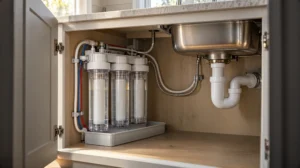
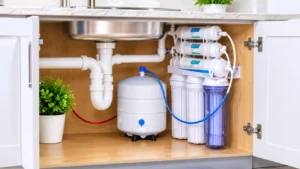
This is where most of the confusion starts. Plenty of articles credit “reverse osmosis” with results that really belong to the whole assembly. A typical under-sink unit looks like this:
| Stage | What it does | What it helps cover |
| Sediment filter | Traps dirt and particles | Protects the membrane from clogging |
| Carbon pre-filter | Adsorbs chlorine and many organic chemicals | Chlorine, some pesticides and solvents |
| RO membrane | Rejects dissolved salts, metals and more | Most dissolved solids |
| Carbon post-filter | Polishes the water before the faucet | Leftover odors and some gases |
| Optional UV or remineralizer | Disinfects or adds minerals back | Microbes, flat taste |
Notice what the table implies. Can reverse osmosis remove chlorine without the carbon pre-filter? Not in a way you’d want to rely on. Does reverse osmosis remove bacteria that start growing in the tank afterward? No, because the tank sits downstream of the membrane.
When you compare systems, look at every stage, not just the membrane. At RO Water Filter System, we install any brand or model, and the first thing we check is what’s sitting around the membrane.
Healthy Minerals and the Contaminants RO Only Partly Handles
Not everything RO takes out is a contaminant. It strips calcium and magnesium along with the unwanted material, which is why RO water can taste flat. For most people, food supplies the bulk of daily minerals, so this is more a taste issue than a health one. If you miss the flavor, a remineralizing cartridge puts some back.
A few contaminants sit in the middle. Nitrate and fluoride are reduced well by many systems, but the rate moves with the membrane, water pressure, temperature and your water’s chemistry. Rather than trusting one percentage from an article, read the performance data sheet for your specific system. PFAS comes up often too, and our guide on does reverse osmosis remove PFAS goes through it.
How to Close the Gaps for Your Situation
Once you know what doesn’t reverse osmosis remove in your own situation, the fix is usually small. Can reverse osmosis remove bacteria already living in a well? Not reliably, so that row below includes UV. Match the add-on to the problem instead of buying extras by default.
| Your situation | What RO may miss | What to add |
| City water with chlorine or chloramine | Chlorine wearing down the membrane | Fresh carbon pre-filter, catalytic carbon for chloramine |
| Private well with a sulfur smell | Hydrogen sulfide gas | Aeration or oxidation before the RO stage |
| Private well with a positive bacteria test | Unsafe microbes | UV disinfection plus yearly sanitizing |
| Near farmland or industry | Certain pesticides or solvents | Extra carbon capacity and a compound-specific test |
How to Tell Your System Isn’t Keeping Up
Simple Checks You Can Do at Home
A basic TDS meter costs little and tells you a lot. Test your tap water and your RO water, then compare. If the gap between them narrows over time, the membrane or carbon stage needs attention. Other warning signs include a chemical taste coming back, a stale taste after the tank sits unused for a few weeks, slower flow, or a filter date you can’t remember.
Water Quality in Tracy and the Central Valley
Many Central Valley homes deal with hard water and sediment, which load filters faster and can shorten membrane life. Before adding anything, read your utility’s latest annual water quality report. Private wells aren’t regulated like public supplies, so a certified lab test is your best starting point. With 15+ years and more than 1,256 installs across the Central Valley and Bay Area behind us, testing first is the habit we’d recommend every time.
Final Thoughts
Reverse osmosis is still one of the strongest choices for drinking water at home. It just works best when you know its blind spots. Gases, some small organic chemicals and microbes in unsafe water are the main ones, and carbon stages, UV and regular upkeep cover them. Remember what doesn’t reverse osmosis remove, test your water, and build the system around the results. If you’re ready to set up a Reverse Osmosis Water Filter Tracy, CA system that fits your home, contact us and the RO Water Filter System team will help you choose.
FAQs
Will reverse osmosis remove bacteria if my well test came back positive?
Not reliably. RO isn’t certified to disinfect water, so add UV treatment, sanitize the RO system, and retest before you rely on the water for drinking.
What does reverse osmosis remove best?
It’s strongest on dissolved salts, many heavy metals and sediment-sized particles. That’s the flip side of what doesn’t reverse osmosis remove, so it helps to read both lists together.
Can a bigger carbon filter fix a sulfur smell?
It can soften a mild smell, but strong hydrogen sulfide usually needs treatment before the RO stage, such as aeration or oxidation. Check whether only the hot water smells first, because that points to the water heater instead.
Do I need UV with RO if I’m on city water?
Usually not, since public supplies are disinfected before they reach your home. A well-kept RO system is generally enough, though some households add UV if the tank often sits unused for long stretches.