You’ve probably noticed that both options promise pure, clean water. That makes the choice confusing. Here’s the quick answer: reverse osmosis (RO) fits most homes because it’s faster, cheaper to run, and better tasting. Distilled water still wins for CPAP machines, steam irons, and car batteries.
This guide gives you a clear verdict on reverse osmosis vs distilled water, backed by real numbers on cost, speed, and contaminants. We’ll show how each method works, what each one misses, and which one suits your kitchen and budget. We’ll also cover taste, minerals, pH, and what’s in Northern California tap water.
Reverse Osmosis vs Distilled Water at a Glance
Here’s the side-by-side view before we get into the details.
| Factor | Distilled water | Reverse osmosis |
| Method | Boils water, then condenses the steam | Pushes water through a semipermeable membrane |
| Speed | About 4 to 6 hours per gallon | On demand at the tap |
| Energy use | Roughly 2.5 to 3.5 kWh per gallon | Water pressure; some models add a small booster pump |
| Running cost | Mostly electricity | Mostly filters and membrane changes |
| Taste | Flat | Clean; better with remineralization |
| Minerals | Almost none | Most removed; some can be added back |
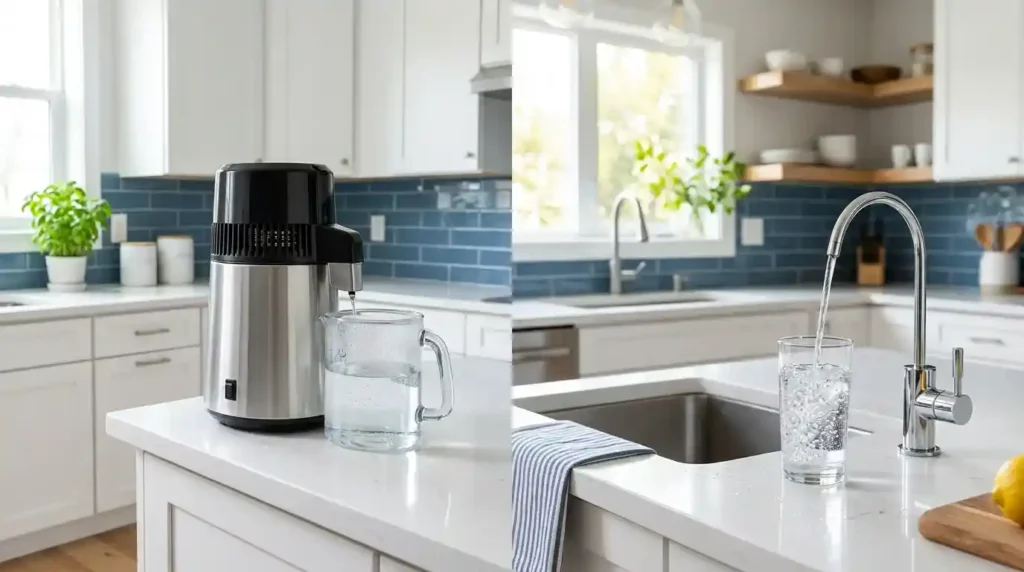
| Setup | Plug in a countertop unit | Under-sink install or countertop unit |
| Best for | CPAP, irons, humidifiers, batteries | Drinking, cooking, coffee, ice |
What Is Distilled Water?
Distilled water is water that’s been boiled into steam and condensed back into liquid. Minerals, salts, metals, and most microbes stay behind in the boiling chamber. The result is demineralized water with almost no total dissolved solids (TDS), which is why it suits irons, humidifiers, and lab work.
Picture the fog on a kettle lid. That’s distilled water forming, and a distiller collects it on purpose.
How Distillation Works
A countertop distiller heats water to its boiling point. Steam rises and leaves heavy contaminants behind, including lead, arsenic, nitrates, and calcium. A cooling coil turns the steam back into liquid, which drips into a clean container. Most home units make one gallon in four to six hours.
What Distillation Misses
Distillation has one weak spot. Volatile organic compounds (VOCs) and some chlorine byproducts boil at lower temperatures than water. They can ride the steam into your finished water. Some distillers add a carbon filter to catch them, so check the specs before you buy.
Where Distilled Water Still Wins
Some jobs need mineral-free water. Minerals leave scale, and scale ruins small machines.
- CPAP humidifier chambers, when the manual calls for it
- Steam irons and humidifiers
- Car batteries
- Homes with no plumbing access for an under-sink unit
What Is Reverse Osmosis Water?
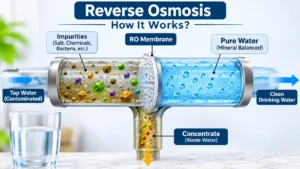
Reverse osmosis (RO) water is tap water pushed through a semipermeable membrane that blocks dissolved salts, metals, and chemicals. A typical under-sink system also uses sediment and carbon filters. It removes most TDS, along with contaminants like lead, nitrates, and PFAS, and delivers cold, ready-to-drink water from a dedicated faucet.
Think of the membrane as a bouncer at a club door. Water molecules get in, and almost everything else stays out.
How Reverse Osmosis Works
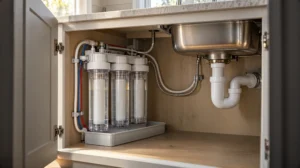
Your home’s water pressure does the heavy lifting. Water passes through a sediment filter first, which catches sand and rust. A carbon filter follows and removes chlorine and many chemicals. Then the membrane blocks dissolved salts and metals, and a final carbon stage polishes the taste. The rejected water, called brine, flushes down the drain.
What RO Removes
Most residential membranes reject roughly 90 to 99 percent of TDS. That includes lead, arsenic, nitrates, and many PFAS compounds. The membrane doesn’t handle chlorine or chloramine on its own. The carbon stage does that job, and catalytic carbon works best on chloramine. Look for NSF/ANSI 58 certification, the standard for RO drinking water systems.
Remineralization Filters
A remineralization filter adds small amounts of calcium and magnesium after the membrane. It lifts pH slightly and rounds out the flavor. Many homeowners add one for the taste alone.
Reverse Osmosis vs Distilled Water: Key Differences

Both methods clean water well. The real differences show up in daily life.
Purity and Contaminant Removal
On pure removal, reverse osmosis vs distillation is close to a tie. Distillation leaves almost no dissolved solids behind. RO leaves a small amount, but its carbon stage catches VOCs that distillers can miss. Boiling does give distillation an edge on microbes. If your source isn’t microbiologically safe, add a UV stage to your RO system or disinfect the water first.
Taste and Mineral Content
People who find the distilled water taste flat usually miss the minerals. Calcium and magnesium give water its body, and without them it feels thin and hollow. The reverse osmosis water taste is clean and crisp, especially with a remineralization filter. Coffee and tea show the gap fastest. Brew a cup with each and you’ll notice.
Speed and Convenience
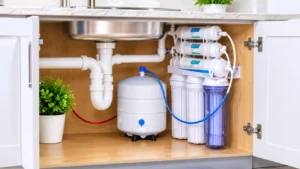
RO wins this round by a wide margin. A distiller makes about a gallon every four to six hours, so a family of four runs it nearly nonstop. An under-sink RO system stores several gallons in a tank and refills it in the background. You just open the faucet.
Cost Over Time
On RO vs distiller cost, electricity decides the match. Say a distiller uses 3 kWh per gallon and your rate is 30 cents per kWh. That’s about 90 cents per gallon. Three gallons a day adds up to roughly $985 a year.
RO filter sets commonly run about $50 to $150 a year, plus a membrane every few years. Upfront prices overlap, since a countertop distiller and an under-sink RO system both start in the low hundreds of dollars. Installation adds to the RO total. Check your own utility rate, because California electricity prices vary by provider and time of day.
Energy and Wastewater
Both methods have an environmental cost. Distillers burn electricity but waste almost no water. A standard RO system sends about 3 to 4 gallons to the drain for each gallon it makes. Models with a pump cut that ratio sharply. Either choice reduces plastic bottle use.
Maintenance and Installation
Distillers need descaling. Minerals build up in the boiling chamber, so you’ll clean it with vinegar or citric acid every few weeks, depending on your water. They also run hot and make some noise.
RO needs a filter change about once a year and a membrane change every two to five years. Installation takes space under the sink and a small hole for the faucet. Renters can pick a countertop RO unit instead.
Is Reverse Osmosis or Distilled Water Healthier?
Both are safe to drink, and neither is healthier on purity alone. Reverse osmosis often has a small edge for daily use because it can keep or add back some minerals, while distilled water has none. Your food supplies most minerals anyway, so water choice matters less than contaminant removal.
For reverse osmosis water vs distilled water for drinking, the safety question is settled. Both remove the contaminants that worry people most. The real debate is about minerals.
Do You Need Minerals From Your Drinking Water?
Most people don’t need drinking water for minerals because food supplies the bulk of daily calcium and magnesium. The World Health Organization has reviewed demineralized water and flagged taste and mineral intake as the main concerns. Adding a remineralization filter handles both.
Think of your plate as the main supply line and water as a small top-up. Someone with a limited diet may want trace minerals added back. Cooking with demineralized water can also pull minerals out of foods, which is one reason some families prefer remineralized RO water for soups and rice.
Is RO Water Acidic?
RO water can be slightly acidic, often with a pH between 5.5 and 7. Removing minerals strips the water’s buffering ability, so it absorbs carbon dioxide from the air and drops in pH. The change is mild and safe for drinking, and a remineralization stage raises pH closer to neutral.
Distilled water absorbs carbon dioxide the same way. If pH matters to you, a remineralization filter is the easy fix.
Which Water Works for CPAP Machines and Baby Formula?
Use distilled water in a CPAP machine unless the manufacturer’s manual says otherwise. Most makers specify distilled water because minerals leave deposits in the humidifier chamber. RO water has fewer minerals than tap, but it isn’t guaranteed mineral-free or sterile. For baby formula, ask your pediatrician first.
Ask about fluoride too, since both RO and distillation remove it. Anyone with a weakened immune system should check with a doctor as well. Neither method keeps water sterile once it sits in a container.
How to Choose the Right Water Purification Method
Start with how you’ll use the water. Then check what’s in it.
Match the Method to the Job
When you weigh reverse osmosis vs distilled water for your own home, volume is the tiebreaker.
- Drinking and cooking: RO. You’ll use gallons every day.
- Coffee, tea, and ice makers: RO with a remineralization filter.
- CPAP, humidifiers, steam irons, car batteries: Distilled, or whatever the manual lists.
- Aquariums and hydroponics: RO, often with deionization (DI) resin for tighter control.
- Renters without under-sink access: A countertop RO unit or a countertop distiller.
Check Your Local Water First
Tap water across the Central Valley and parts of the Bay Area often runs hard, and calcium and magnesium raise your TDS. Some Valley wells also carry nitrates, and many Northern California utilities treat with chloramine instead of plain chlorine. Plenty of homeowners in Tracy, Manteca, and Modesto tell us their kettles line with white scale. That’s hard water doing its work.
Pull your utility’s annual Consumer Confidence Report (CCR) to see what’s in your supply. The California State Water Resources Control Board also publishes water quality data. Then grab a handheld TDS meter, which usually costs under $30. Test your tap, then test the treated water. A big drop shows the system works.
TDS meters can’t detect lead or PFAS, so send a sample to a certified lab if those worry you. Keep in mind that RO treats one faucet. It won’t protect your water heater from scale, but a whole-house water softener will.
Final Thoughts
For most homes, reverse osmosis vs distilled water ends in RO’s favor. You get clean water on demand, a lower running cost, and a taste you’ll enjoy. Keep a gallon of distilled water for the CPAP or the iron, and let RO handle everything you drink.
Test your tap first, then match the system to your water. If you need help, Contact us at RO Water Filter System. We provide Water Filtration Installation Services in Tracy, CA, and we also serve Livermore, Modesto, Manteca, Lathrop, Pleasanton, and Brentwood.
Frequently Asked Questions
Is distilled water better than reverse osmosis?
No, distilled water isn’t better than reverse osmosis for most households. Both remove nearly all dissolved contaminants, but RO delivers water on demand, costs less to run, and tastes better to most people. Distilled water is the better pick only for appliances that require mineral-free water, such as CPAP humidifiers.
Does reverse osmosis water have minerals?
Yes, but only a little. Reverse osmosis removes most dissolved minerals, typically 90 to 99 percent of TDS. A small share passes through, and a remineralization filter can add calcium and magnesium back. Distilled water has almost none by comparison.
Does reverse osmosis remove fluoride?
Yes, reverse osmosis removes most fluoride, often 85 to 95 percent depending on the membrane and water pressure. Distillation removes nearly all of it. If your family relies on tap water fluoride for dental health, ask your dentist or pediatrician whether you need a supplement or a different setup.
How much water does an RO system waste?
A standard under-sink RO system sends about 3 to 4 gallons to the drain for every gallon of purified water. Efficient models with a pump can cut that to about 1 or 2 gallons. Your water pressure and TDS level also change the ratio.
Can you boil water instead of distilling it?
No, boiling isn’t distillation. Boiling kills most microbes, but it leaves dissolved contaminants like lead, nitrates, and arsenic in the pot. As water evaporates, those contaminants become more concentrated. Distillation works because it collects the steam and leaves the pollutants behind.