Your RO system runs quietly under the sink every day. You don’t think about it much. But here’s the thing: the reverse osmosis membrane filter at the heart of that system doesn’t last forever. And when it starts to fail, it rarely gives you an obvious warning.
Most homeowners only discover there’s an issue when testing their water, or experiencing an unusual change in taste, or testing for contaminants like lead, PFAS and dissolved solids at RO Water Filter System. However, once aware of these signs it becomes easier than ever to stay ahead.
What Is a Reverse Osmosis Membrane Filter and Why It Matters
The membrane is the core of any RO system. It’s a semi-permeable membrane with pores so fine they filter particles as small as 0.0001 microns. Water molecules pass through. Most everything else doesn’t.
Here’s what a properly functioning reverse osmosis membrane removes from your tap water:
- Lead and heavy metals
- PFAS and PFOA compounds
- Dissolved salts and nitrates
- Chlorine byproducts
- Sediment and microplastics
Without a working membrane, the rest of the system is basically running water through a series of basic filters. That’s not nothing, but it’s a long way from true multi-stage filtration. If you’re not sure what stage system you have, or if you’re looking at upgrading to something more reliable, our Reverse Osmosis Water Filter service covers what’s available and what fits different home setups.
How Long Does an RO Membrane Actually Last?
The standard answer is two to five years. But that range is wide for a reason. Membrane lifespan depends heavily on:
- Water quality: High TDS, high chlorine, or heavy sediment loads wear membranes down faster
- Usage volume: More demand equals faster degradation
- Pre-filter condition: If sediment and carbon pre-filters are overdue, they stop protecting the membrane
- System design: A tankless RO system with a permeate pump operates differently from older tank-style units
The honest truth is that most homeowners replace their membrane filter for ro system based on time alone and often stretch it too long. Testing TDS at least twice a year gives you a much clearer picture than relying on a calendar.
Signs Your Reverse Osmosis Membrane Filter May Be Failing
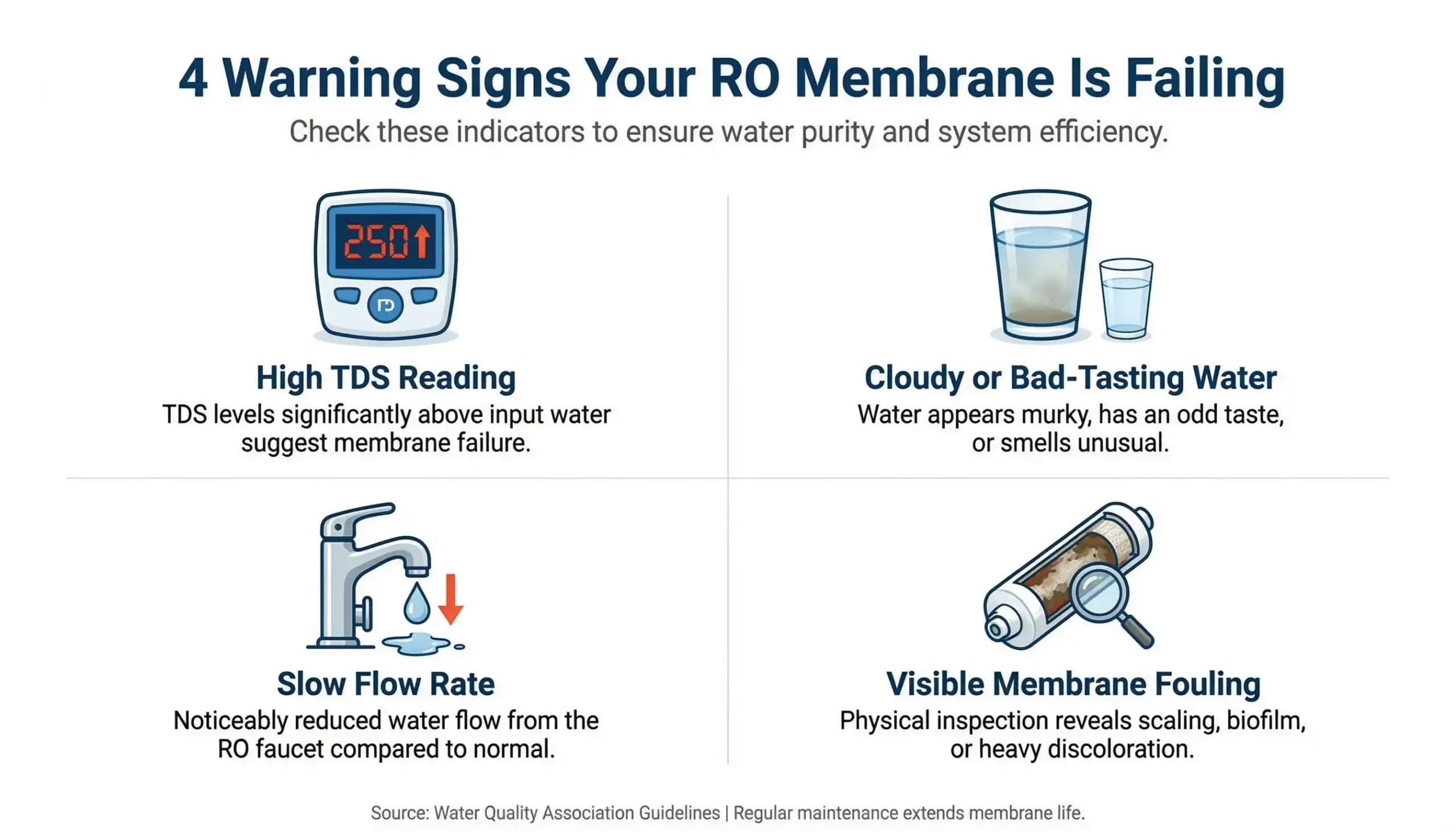
TDS Readings Are Climbing
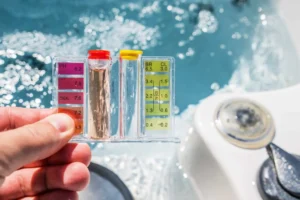
A well-functioning RO system typically reduces Total Dissolved Solids (TDS) by 90 to 98 percent. If you test the incoming water and then the filtered output, the math should be obvious. A TDS meter is cheap and takes seconds to use. If your reduction is dropping below 85 percent, that’s a clear signal to look at the membrane.
Water Tastes or Smells Different
Filtered water shouldn’t taste like anything. If you’re picking up a faint mineral taste, a hint of chlorine, or just something “off,” the membrane may no longer be removing what it should. Don’t wait on this one. Changes in taste are almost always a water quality issue, not a coincidence.
The System Is Producing Water More Slowly
RO systems are slow by design. But if your system used to fill a glass in 30 seconds and now takes twice as long, the membrane may be clogging or the water waste ratio may have shifted. A fouled membrane works harder to push water through, which reduces output.
More Frequent Tank Cycles or Constant Running
If your system seems to run constantly or refill the tank more often than it used to, that’s often a pressure or membrane issue. It can also mean the pre-filters need changing, so check those first. But if they’re fine, the membrane is the next place to look.
Why NSF/ANSI 58 Certification Matters When Replacing
Not all replacement membranes are equal. When you’re shopping for a replacement, look for NSF/ANSI 58 certification. That certification means the membrane has been independently tested to confirm it actually removes what it claims to remove, including lead, cysts, and other regulated contaminants.
We’ve seen homeowners buy budget replacement membranes that technically fit their system housing but don’t carry NSF certification. The system appears to work, the TDS drops a little, and no alarm goes off. But those membranes may not provide reliable removal of the contaminants that matter most, especially PFAS and heavy metals.
What Affects RO Membrane Performance Over Time
Chlorine and Chloramine Damage
Chlorine is one of the fastest ways to damage a TFC (thin-film composite) membrane. Municipal water treated with chloramine is even more aggressive. If your carbon pre-filters aren’t being replaced on schedule, chlorine passes through and chemically attacks the membrane. This is one reason a proper filter replacement schedule isn’t optional. It’s part of protecting your biggest investment in the system.
Scaling from Hard Water
High mineral content causes scaling on the membrane surface over time. Calcium and magnesium build up and reduce the effective surface area available for filtration. If you’re in an area with very hard water, the membrane works harder and ages faster. Some homeowners pair an RO system with a water softener upstream to reduce this load.
Biological Fouling
If the system sits unused for extended periods without flushing, biofilm can form on the membrane. This is more common in vacation homes or seasonal properties. Knowing how to flush RO membrane before and after extended downtime is a simple step that extends membrane life significantly.
When to Replace Your Membrane Filter vs. When to Just Test
You don’t need to replace a membrane just because it’s been two years. But you should test it. Here’s a simple approach:
|
Situation |
What to Do |
| 2 years old, no taste issues |
Test TDS replace only if reduction is below 85% |
|
3+ years old, TDS rising |
Replace membrane and test pre-filters |
| Taste change, system running constantly |
Replace membrane, check pre-filter condition |
|
No taste issue but 4+ years old |
Replace proactively before the next season |
Does Your System Type Change the Equation?
Yes. A basic three-stage under-sink unit has fewer protective layers than a full 5-Stage Water Filtration System. In a five-stage setup, the pre-filters do more work protecting the membrane, and the post-carbon stage handles any remaining taste issues after the tank. The membrane itself can often last closer to the upper end of its rated lifespan.
In a three-stage unit with no sediment pre-filter or with a post-carbon filter that hasn’t been replaced in years, the membrane is carrying more load. It ages faster. And when it starts to fail, the water quality drops quickly because there’s less backup filtration.
Replacing an RO Membrane: DIY or Call a Pro?
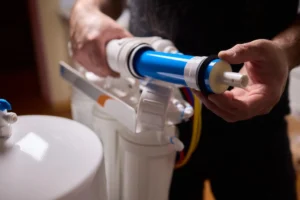
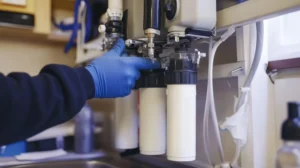
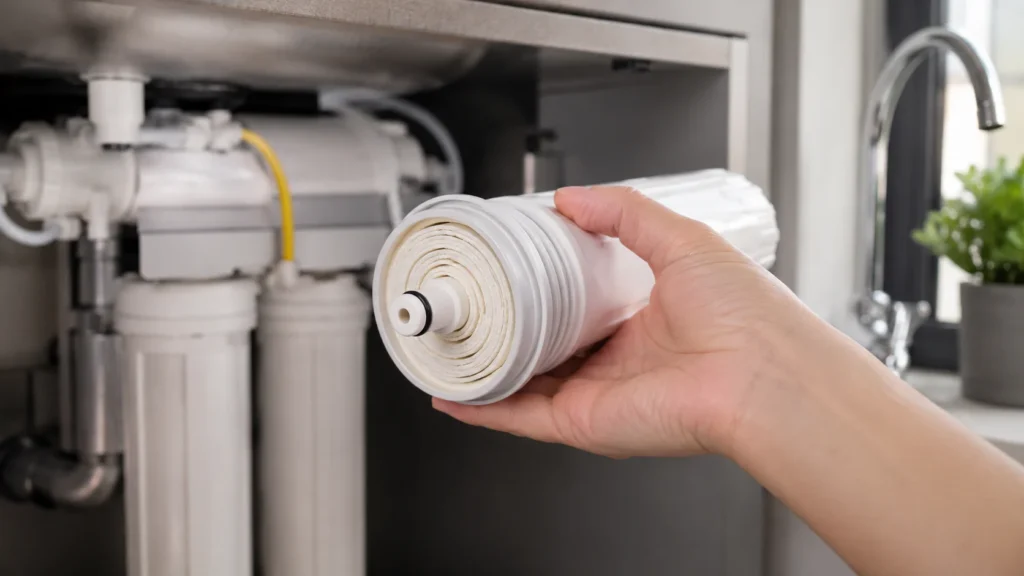
Membrane replacement itself isn’t complicated. The membrane housing unscrews, the old membrane slides out, the new one slides in. Most under-sink RO housings follow the same general design.
But here’s what we see when homeowners do it themselves without guidance: they replace the membrane but don’t check pre-filter condition, don’t flush the system properly after installation, and don’t verify TDS reduction afterward. The new membrane gets hit immediately with the same water chemistry that degraded the old one. It ages faster than it should.
A proper replacement also means checking the O-rings, inspecting for any signs of scaling in the housing, verifying system pressure, and running a full flush cycle before putting the water back into use. See the RO Water Filter System home page for service availability in your area.
Should You Add a Remineralization Stage?
RO water is very pure, which also means it’s slightly acidic and has no mineral content. Some people prefer to add a remineralization stage that adds back calcium and magnesium for a more balanced, natural taste. This is optional, not a requirement.
If you’re drinking RO water as your main source and you’re also health-conscious about mineral intake, the remineralization stage is a reasonable upgrade. But the membrane itself doesn’t need it to function. It’s a preference choice, not a filtration necessity.
The Bottom Line on Your Reverse Osmosis Membrane Filter
The membrane is the hardest-working part of your system. It’s doing the job that no other filter in the line can do. And unlike a clogged sediment filter that shows up as reduced flow, a failing reverse osmosis membrane filter can fail silently. Water still comes out. The system still runs. But the contaminate removal you paid for is no longer happening at the level it should.
If you haven’t tested your TDS levels in the last six months, that’s the first step. If your system is over three years old, a membrane check is overdue. RO Water Filter System serves Tracy, California and surrounding communities with system check-ups, membrane replacements, and full filter service. Contact us today if you’d like someone to take a look.
FAQs
How often should I replace my reverse osmosis membrane?
Most reverse osmosis membranes last two to five years, but the right interval depends on your water quality and usage. Testing TDS reduction twice a year is a more accurate way to decide than relying on time alone. If reduction drops below 85 percent, it’s time to replace the membrane regardless of age.
Can ro membranes be cleaned instead of replaced?
In some cases, yes. Scaling and light biological fouling can sometimes be addressed with a cleaning cycle using approved membrane cleaning solutions. But once a membrane has been chemically damaged by chlorine or physically degraded by pressure cycling, cleaning won’t restore performance. A replacement is the only reliable fix at that point.
What is TDS and how does it relate to membrane performance?
TDS stands for Total Dissolved Solids and it measures the concentration of dissolved minerals, salts, and compounds in water. A healthy RO system should reduce TDS by 90 to 98 percent. Measuring both the incoming and outgoing TDS with a meter gives you a clear, objective reading of how well your membrane filter for ro system is actually performing.
Does the brand of replacement membrane matter?
Yes and no. What matters most is that the replacement membrane is NSF/ANSI 58 certified and rated for your system’s size and flow requirements. Within that, quality does vary. Membranes from established manufacturers with traceable certifications consistently outperform generic off-brand options, especially when it comes to PFAS and heavy metal rejection.
Are reverse osmosis membranes safe to use long after the rated lifespan?
The water may still look and taste acceptable, but a membrane past its useful life may no longer meet the contaminant removal standards it was certified for. Continuing to use an expired membrane for drinking water is a risk that’s difficult to detect without testing. Regular TDS testing, combined with staying close to the manufacturer’s replacement schedule, is the safest approach.