Your RO works hard every day to remove chlorine, lead, sediment and other impurities, but its filters have their limitations. Knowing how often to change RO filters is the difference between having clean water and water that’s slowly deteriorating without you realizing it. If you’re running an RO system at home, this guide gives you the actual schedule, not just vague ranges.
RO Water Filter System serves homeowners throughout California, and the number one maintenance question we hear is about filter replacement. This guide is built to answer it completely.
Why RO Filter Replacement Actually Matters
Here’s what most people don’t realize. When an RO filter expires, it doesn’t just stop working. It can start releasing trapped contaminants back into your water. That sediment filter that’s been catching rust, silt, and debris for 14 months? It gets saturated. Water starts channeling through weak spots. The carbon block that was neutralizing chlorine can lose its adsorption capacity entirely.
The result isn’t dramatic. Your water won’t turn brown overnight. But your TDS levels increase gradually, your water may start tasting flat or slightly off, and the RO membrane starts working harder than it should. That shortens its life.
The honest truth is: a neglected RO system gives you a false sense of security. You think you’re drinking filtered water. You might not be.
How Often to Change RO Filters: The Full Replacement Schedule
Every stage in your system has a different job, and a different lifespan. Here’s the breakdown most manufacturers and technicians how often to change RO filters follow:
Pre-Filter Stage (Sediment Filter)
- Replacement interval: Every 6 to 12 months
- What it does: Catches larger particles like rust, sand, silt, and sediment before they reach the membrane
- Signs it’s due: Visible discoloration, reduced water flow, pressure drop after the filter housing
If you’re in an area with older plumbing or higher sediment in the source water, lean toward the 6-month end. Don’t wait for visible signs.
Pre-Filter Stage (Carbon Block Filter)
- Replacement interval: Every 6 to 12 months
- What it does: Removes chlorine, chloramines, volatile organic compounds, and protects the RO membrane from chemical damage
- Signs it’s due: Chlorine taste or smell returning to your water, even faintly
The carbon block filter lifespan directly affects your RO membrane. Chlorine is one of the fastest ways to degrade a membrane. If this filter goes too long, the membrane takes the hit.
RO Membrane
- Replacement interval: Every 2 to 3 years (some last up to 5 with proper pre-filter maintenance)
- What it does: This is the core of the system. It removes dissolved solids, heavy metals, bacteria, nitrates, fluoride, and more
- Signs it’s due: TDS levels rising in your filtered water, noticeably lower output volume, slow flow rate from the dedicated faucet
RO membrane replacement frequency depends heavily on how well the pre-filters are maintained. If you skip pre-filter changes, your membrane wears out in half the time. We’ve seen this dozens of times.
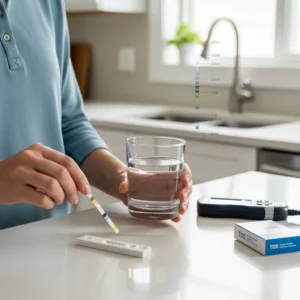
Use a TDS meter to check your filtered water every few months. If your rejection rate drops below 75 percent (meaning TDS in filtered water is more than 25 percent of your source water’s TDS), the membrane likely needs replacing.
Post-Carbon / Polishing Filter
- Replacement interval: Every 12 months
- What it does: Final pass before the water reaches your glass. Removes any residual taste or odor from the storage tank
- Why it matters: Even clean water can pick up slight off-flavors from sitting in a storage tank. This filter catches that.
Remineralization Filter (If Applicable)
- Replacement interval: Every 12 months
- What it does: Adds calcium, magnesium, and trace minerals back into the water after the membrane strips everything out
Not every system has this stage, but if yours does, don’t skip it. Depleted mineral cartridges stop adding anything useful and can slightly acidify your water.
Quick Reference: RO System Filter Change Schedule
| Filter Stage | Replacement Frequency | Key Warning Sign |
| Sediment Pre-Filter | Every 6–12 months | Visible debris, pressure drop |
| Carbon Block Pre-Filter | Every 6–12 months | Chlorine taste/smell returning |
| RO Membrane | Every 2–3 years | Rising TDS, slow flow rate |
| Post-Carbon Polish Filter | Every 12 months | Flat or off taste from faucet |
| Remineralization Filter | Every 12 months | Flat taste, water testing acidic |
Signs Your RO Filters Need Changing Now
Don’t rely only on the calendar. Your system will usually tell you something is wrong before the scheduled date if conditions are harder than usual.
Watch for these signals:
- Water pressure drop after the filter housing (sediment filter likely clogged)
- Chlorine taste or smell is back (carbon filter expired)
- TDS meter readings climbing in your filtered water (membrane may be failing)
- Water output is noticeably slower than usual
- Water taste change, flat, chemical, or metallic notes
- It’s been over 12 months and you haven’t changed anything
Any one of these is a reason to check your filters. Two or more is a reason to replace them today.
What Affects How Quickly RO Filters Wear Out
Replacement intervals aren’t one-size-fits-all. Several factors push filters toward the shorter end of their lifespan.
Water Quality in Your Area
California municipal water varies by city. Higher chlorine dosing, harder water with elevated mineral content, or seasonal increases in sediment all shorten filter life. If you’re in Tracy, CA or the surrounding Central Valley, you’re dealing with moderately hard water that can speed up sediment and carbon filter wear.
If you’re curious about your source water quality, your local utility’s annual water quality report is a good starting point.
Household Water Usage
A single person using their RO faucet occasionally will get close to the top end of every replacement interval. A family of five using the system daily for drinking, cooking, and filling a countertop water pitcher will hit the low end or below it.
Pre-Filter Maintenance Discipline
This one matters more than most people think. Skipping or delaying sediment and carbon pre-filter changes is the single biggest reason RO membranes fail early. Those pre-filters exist specifically to protect the membrane. If you’re looking for a Reverse Osmosis Water System Installation that comes with a proper maintenance walkthrough, make sure that’s part of the service.
How to Check Your Filters Without Guessing
You don’t have to rely on taste alone. Here’s a simple routine that how often to change RO filters takes five minutes.
Step 1: Use a TDS meter. Test your tap water (source) and your RO output. Divide the RO result by the source result. If rejection is below 75 percent, something is wrong.
Step 2: Check water pressure. If your RO faucet is noticeably slower than it was six months ago, either a pre-filter is clogged or the membrane is under-performing.
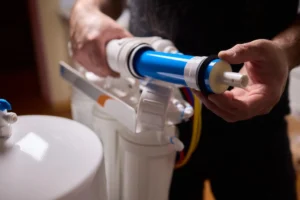
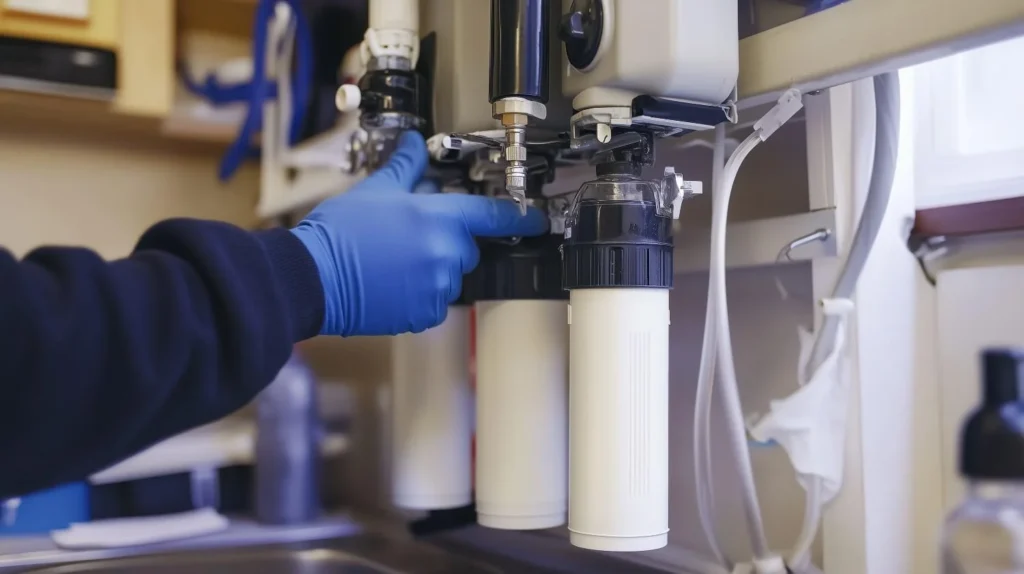
Step 3: Inspect filter housings during a change. The color and texture of a spent sediment filter tells you a lot about what’s in your water. A heavily discolored or compressed filter cartridge means your source water is working that stage hard.
Step 4: Set calendar reminders. Sounds simple. But it’s the most practical advice there is. Write the installation date on each filter housing with a marker when you install it.
Common Mistakes That Shorten Filter Life
We’ve installed a lot of systems. Here’s what we see homeowners do that shortens filter lifespan and costs them more in the long run.
- Waiting for the water to taste bad before checking filters
- Replacing only one stage and skipping the others during annual maintenance
- Using off-brand replacement cartridges that don’t match the system specs
- Not flushing a new RO membrane after installation (it needs a full tank cycle to seat properly)
- Running the system without pre-filters installed thinking it will “be fine for a while”
If you want a Water Filtration System Tracy CA that runs reliably for years, the single best investment is consistent pre-filter replacement on schedule.
When to Consider a Full System Upgrade
Filters wear out, but systems age too. How often to change RO filters is over 10 years old, you’re replacing filters regularly, and you’re still seeing rising TDS or slow output, the issue may be the system itself.
Some older units have cracked membrane housings, degraded O-rings, or check valves that no longer hold pressure. Patching around aging components with new filters only goes so far. At that point, a full system evaluation makes more sense.
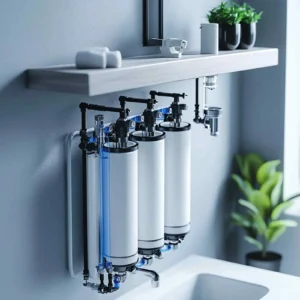
A 10-Stage Water Filtration System in Tracy, CA offers more filtration stages and longer intervals between some replacements because the workload is distributed across more media. It’s worth exploring if you’re already investing in annual filter costs.
Conclusion
Maintaining your RO system is not difficult. It does, however, call for consistency. The most crucial lesson is that how often to change RO filters is determined by your consumption, the quality of your source water, and the diligence with which you replace pre-filters on time. Don’t neglect the yearly polishing filter, check your membrane with a TDS meter every two years, and adhere to the 6- to 12-month norm for sediment and carbon stages.
if it’s been more than a year since the last ro filters replacement, it’s time to take a look.. The staff at RO Water Filter System can assist you in determining what needs to be replaced, what is still functional, and how to create a maintenance schedule that works for your home. Get in touch with us right now, and we’ll ensure that your system is doing the tasks for which you installed it.
FAQs
How frequently should RO filters be changed?
Most sediment and carbon filters should be replaced every 6 to 12 months. The exact timeline depends on water quality, household size, and daily water usage.
How often replace RO membrane in a residential system?
Most RO membranes last between 2 and 5 years. Proper pre-filter maintenance usually helps maximize membrane lifespan.
What are the signs that I need a reverse osmosis filter change?
Common signs include slower water flow, unusual taste, higher TDS readings, strange odors, and longer tank refill times.
Can I delay my RO filter replacement schedule if the water still tastes good?
Taste alone isn’t always a reliable indicator. Filters can lose effectiveness before noticeable changes occur, so scheduled maintenance is still recommended.
Does hard water affect RO filter lifespan?
Yes. Hard water can increase membrane wear and reduce efficiency over time. In some homes, a water softener helps extend membrane life and improve overall performance.