You grab a cold water bottle from the fridge, take a long sip, and feel good about staying hydrated. But what if the plastic itself is quietly adding chemicals to your drink? It’s a fair question, and more homeowners are asking it. Phthalates in water bottles are a real concern backed by peer-reviewed research, and the more you understand them, the better choices you can make for your family.
At RO Water Filter System, we hear this question often, especially from parents and health-conscious households who want cleaner, safer drinking water without relying on single-use plastic. Let’s cut through the noise and focus on what actually matters.
What Are Phthalates and Why Are They in Plastic?
Phthalates are a family of synthetic chemicals used as plasticizers, meaning they make rigid plastic more flexible, softer, and durable. They’re found in polyvinyl chloride (PVC) products, food packaging, medical tubing, vinyl flooring, and yes, many types of plastic containers including some water bottles. The U.S. Environmental Protection Agency has flagged several phthalates as chemicals of concern due to their ability to interfere with the body’s hormone systems.
Here’s the thing that makes them tricky: phthalates aren’t chemically bonded to the plastic. They’re just mixed in. So over time, and especially under heat or physical stress, they can migrate out of the material and into whatever they’re touching, including your water.
Common Types Found in Consumer Products
- DEHP (Di-2-ethylhexyl phthalate) widely used in PVC packaging and older plastic products
- DBP (Dibutyl phthalate) common in adhesives and some plastic films
- BBP (Benzyl butyl phthalate) found in flooring and food packaging materials
- DINP and DIDP higher molecular weight phthalates sometimes used as DEHP replacements
Phthalates Water Bottles: What the Research Actually Shows
Studies have detected phthalate compounds in commercially sold bottled water brands across the United States, though contamination levels vary widely. A peer-reviewed analysis published in 2021 found phthalate migration from plastic packaging into water, with concentrations that rose when bottles were exposed to higher temperatures, like sitting in a hot car or being stored near a heat source.
Most single-use PET (polyethylene terephthalate) bottles carry low phthalate risk compared to older PVC-based containers. But the issue doesn’t stop there. Reusable plastic bottles, especially older ones or those made from cheaper materials, can contain higher levels. The leaching potential increases when the plastic is scratched, aged, or repeatedly exposed to dishwasher heat.
When Does Leaching Get Worse?
- Heat exposure: Bottles left in a hot car, warm storage rooms, or washed in hot water
- Physical damage: Cracks, scratches, or wear on the bottle surface increase migration
- Age of the container: Older plastic breaks down more readily and releases more chemicals
- Long storage time: Water stored for weeks in plastic has more contact time with the material
- Acidic or carbonated contents: Can accelerate chemical breakdown in some plastic types
Health Issues Linked to Phthalate Exposure
Phthalates are classified as endocrine disrupting chemicals. That means they can interfere with the body’s natural hormone signaling, even at low doses. The concern isn’t usually a single exposure but the cumulative effect of ongoing, low-level contact over months and years.
Who Is Most at Risk?
Vulnerability matters a lot here. Adults with healthy detox pathways handle trace exposures differently than infants, young children, or pregnant women. Research has linked chronic phthalate exposure to:
- Fertility issues in both men and women, including reduced sperm count and altered ovarian function
- Developmental delays and hormonal disruptions in infants exposed in utero
- Thyroid hormone imbalances
- Increased risk of metabolic disorders over time
- Potential links to certain types of cancer, though research is still developing
It’s worth being honest: drinking water is not the primary source of phthalate exposure for most people. Food packaging, household dust, and personal care products contribute more. But drinking water adds to that total load, and for families already concerned about endocrine disrupting chemicals, reducing any avoidable exposure source makes sense.
BPA-Free Doesn’t Mean Phthalate-Free
A lot of consumers saw “BPA-free” on a bottle and assumed the plastic was safe. It’s an understandable conclusion, but it misses the bigger picture. BPA and phthalates are different chemicals. Removing BPA from a product says nothing about whether phthalates are present.
In fact, some BPA replacements, like BPS and BPF, carry their own concerns. The shift in manufacturing has not eliminated the issue of plasticizer chemicals leaching from plastic water bottles. It’s moved the target. If you’re buying reusable bottles for your kids, look for stainless steel or glass, not just a BPA-free label.
Other Additives in Bottled Water Worth Knowing
Phthalates aren’t the only thing to think about when it comes to bottled water quality. A few other common additives come up regularly in homeowner questions.
Sodium Bicarbonate in Water Bottles
Some bottled water brands add sodium bicarbonate in water bottles to adjust pH and improve taste. It’s the same compound as baking soda and generally considered safe. But it does raise sodium content, which matters for people on low-sodium diets or managing blood pressure. It’s not a toxin, but it is worth checking the label if you’re sensitive to sodium intake.
Calcium Chloride in Bottled Water
You’ll see calcium chloride in bottled water listed as a mineral additive on many brand labels. It’s used to restore minerals stripped out during the purification process, which improves the flat taste of highly filtered water. At typical concentrations it’s considered safe. But it does contribute to the overall mineral content, and if you’re comparing bottled water to filtered tap water, understanding what’s added versus what’s naturally present helps you make a better comparison.
Is Bottled Water Chlorinated?
This is a question we hear often. Is bottled water chlorinated the same way tap water is? The short answer is: sometimes, depending on the source. Some brands use municipal tap water that has been further filtered, and that source water is initially treated with chlorine or chloramine. After purification, chlorine levels drop significantly. Others source from springs or wells where chlorination isn’t used at all. Either way, the plastic packaging becomes the bigger variable, not the chlorination.
Can Reverse Osmosis Remove Phthalates From Drinking Water?
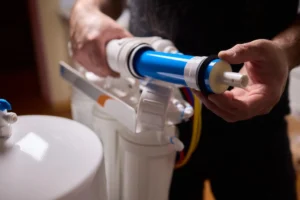
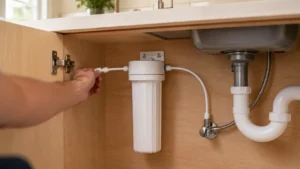
Yes, and this is where home filtration becomes a real solution rather than just a nice-to-have. Reverse osmosis systems work by forcing water through a semi-permeable membrane at a microscopic level, filtering out particles, heavy metals, dissolved solids, and many organic compounds, including phthalates.
A properly maintained RO system with a quality carbon pre-filter and a tight membrane can reduce phthalates in your drinking water to very low levels. Combined with microplastics and phthalates being filtered together, you get water that’s cleaner in ways that bottled water, with all its plastic packaging issues, simply can’t match.
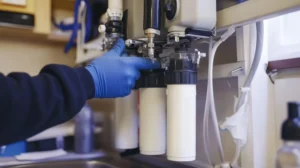
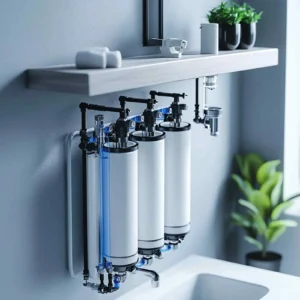
RO Filtration Stages That Target Chemical Contaminants
- Sediment pre-filter: Removes particles that could clog the membrane
- Activated carbon pre-filter: Reduces chlorine, VOCs, and some organic chemicals before the membrane
- RO membrane: Removes up to 99% of dissolved contaminants including heavy metals and many endocrine disrupting chemicals
- Post-carbon filter: Final polishing stage to improve taste and remove any remaining trace compounds
For homeowners in the Tracy area, pairing an RO system with regular filter replacements is one of the most effective ways to reduce chemical exposure from drinking water.
Learn more about what’s in your tap water on the Drinking Water Filtration in Tracy, CA.
Filtered Tap Water vs Bottled Water: The Honest Comparison
Bottled water is sold for convenience and a perception of purity. But when you dig into it, the picture gets complicated. Bottled water in the United States is regulated by the FDA, not the EPA, and FDA standards for bottled water are generally no stricter than EPA standards for tap water. Some are actually less strict for certain contaminants.
Home filtration, especially with a properly maintained RO system, gives you more control over what’s in your water and eliminates the plastic packaging concern entirely. If you’re interested in how the costs and environmental trade-offs stack up, our breakdown of Water Filters vs Bottled Water covers that in detail.
Honestly, most families who switch to an under-sink RO system stop buying bottled water within a few months. Not just for environmental reasons, but because the water tastes better and they stop wondering what’s leaching out of the bottle.
Practical Steps to Reduce Phthalate Exposure at Home
You don’t need to overhaul your life to make meaningful improvements. A few targeted changes reduce phthalate exposure significantly.
- Switch to stainless steel or glass reusable bottles instead of plastic ones
- Never leave plastic water bottles in a hot car or near heat sources
- Stop refilling single-use plastic bottles; they’re not designed for multiple uses
- Install an under-sink reverse osmosis system for your primary drinking water source
- If you must use plastic containers, look for food-grade plastics labeled #1 (PET) or #5 (PP) and avoid #3 (PVC) and #7 (other)
- Replace old, scratched, or discolored plastic bottles and food containers regularly
The Bottom Line
Phthalates in water bottles are a legitimate concern, not just internet health anxiety. The research on endocrine disrupting chemicals and their link to fertility issues, hormonal disruptions, and developmental problems in children is serious enough to take practical steps. You don’t have to wait for regulators to set stricter standards before protecting your own household’s drinking water.
If you’re in the Tracy, CA area and want to stop relying on bottled water entirely, RO Water Filter System can help you find the right filtration setup for your home. A quality reverse osmosis system removes far more than just phthalates from your water. Contact us today to find out what’s in your water and what the right solution looks like for your family.
FAQs
Can phthalates really leach into bottled water?
Yes, small amounts of phthalates or similar chemicals may migrate into bottled water under certain conditions, especially when plastic bottles are exposed to heat or stored for long periods. The risk depends on the type of plastic and storage environment.
Is bottled water safer than tap water when it comes to phthalates?
Not always. Bottled water can still be exposed to chemicals from plastic packaging, while properly treated tap water filtered through a quality reverse osmosis system may reduce many contaminants. The best choice depends on the source and treatment method.
Can reverse osmosis remove phthalates from drinking water?
A well-designed reverse osmosis system can reduce many organic contaminants, including certain phthalates, although performance varies by system and operating conditions. Regular filter and membrane maintenance is essential for consistent results.
Do reusable plastic water bottles contain phthalates?
Many modern reusable bottles are manufactured without intentionally added phthalates, but this depends on the material and manufacturer. Stainless steel or glass bottles are often preferred by consumers looking to minimize plastic-related chemical exposure.
Should parents worry about phthalates in water bottles for children?
Parents often choose to limit unnecessary exposure because children may be more sensitive to endocrine-disrupting chemicals. Using filtered tap water in glass or stainless steel containers and avoiding heat-damaged plastic bottles can help reduce potential risks.