Your tap water might look perfectly fine. But if you’ve ever noticed a faint chlorine smell first thing in the morning, or your coffee tastes oddly flat, something is off. Tracy’s municipal water comes from the San Joaquin Delta and while it meets safety standards, it can carry chloramines, sediment, and dissolved minerals that standard filters just don’t handle well. That’s where a reverse osmosis system for homes comes in.
RO Water Filter System has helped hundreds of Tracy homeowners understand what’s really in their water and what to do about it. This guide covers exactly how RO works, what it removes, and whether it’s the right fit for your home.
What Is a Reverse Osmosis System for Homes?
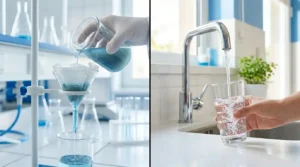
Reverse Osmosis systems for homes provide multi-stage water filtration through pressure on a semipermeable membrane with pores as small as 0.0001 microns to physically block out contaminants that have made their way through, leaving water that has been stripped of most impurities on one end and purified on the other side.
But it’s more than just the membrane doing the hard work; an optimal RO system includes pre-filters, the membrane itself and post-filters working together as one system.
How the Filtration Process Actually Works
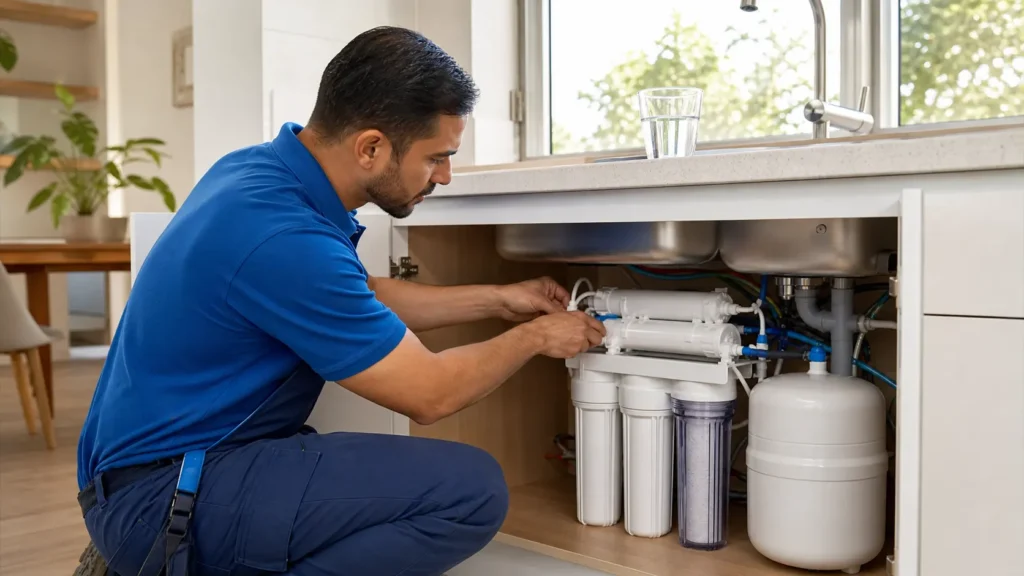
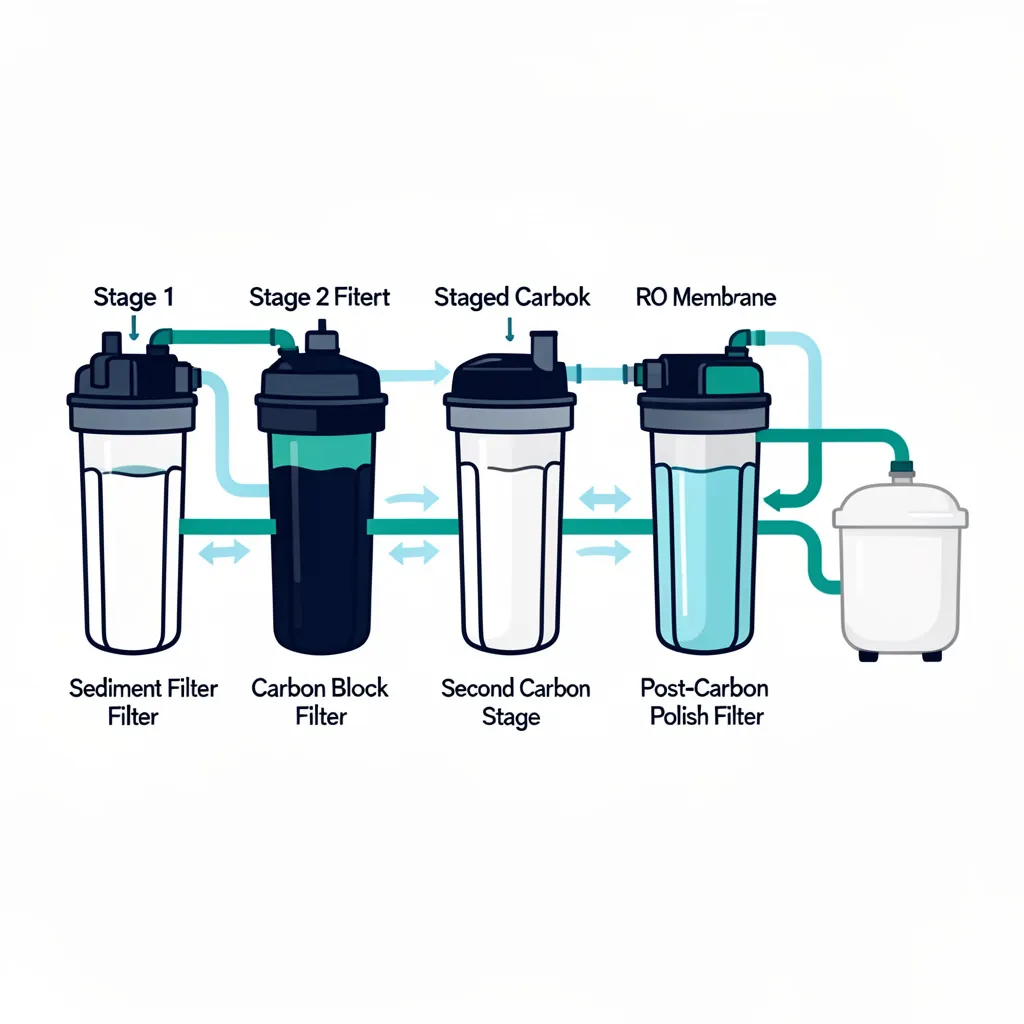
Here’s what happens inside a typical 5-stage RO system, in order:
- Stage 1: Sediment Pre-Filter: Catches rust, sand, and larger particles before they damage the membrane
- Stage 2: Carbon Block Filter: Removes chlorine and chloramines, which would otherwise degrade the RO membrane quickly
- Stage 3: Second Carbon Stage: Takes care of volatile organic compounds (VOCs) and any remaining taste issues
- Stage 4: RO Membrane: The core stage. Forces water through at pressure, blocking up to 99% of dissolved contaminants
- Stage 5: Post-Carbon Polish Filter: A final pass to improve taste and clarity before water reaches your tap
Some systems include an additional stage called the Remineralization or Alkaline Filter stage after their membrane filter, to replace lost minerals like calcium and magnesium that were lost due to filtering processes, useful if you prefer drinking water with more of an earthy flavor!
What Does a Home RO System Actually Remove?
This is the question most homeowners ask first. And honestly, it’s the right question.
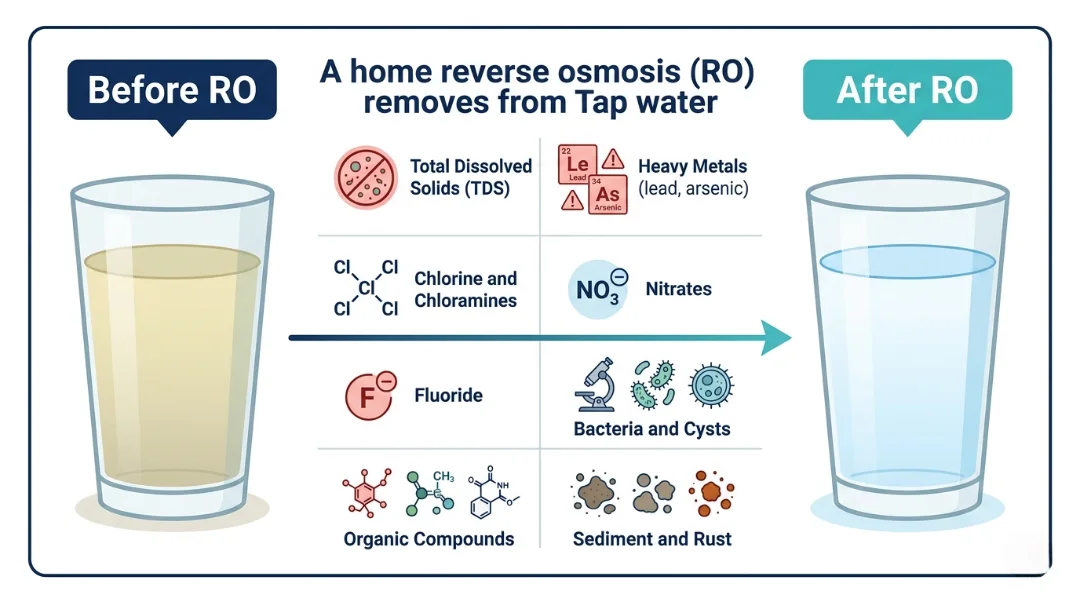
A quality RO system removes:
- Total Dissolved Solids (TDS): minerals, salts, and metals dissolved in water
- Heavy metals: lead, arsenic, chromium, mercury
- Chlorine and chloramines: common in Tracy’s municipal supply
- Nitrates and nitrites: particularly relevant for households on well water
- Fluoride: reduced significantly by the RO membrane
- Bacteria and cysts: the membrane blocks most microbiological contaminants
- Organic compounds: pesticides, herbicides, and pharmaceutical residues
Tracy’s water TDS often runs between 300 and 600 parts per million depending on the season and source blend. A good RO system can bring that down to 20 to 50 ppm. You’ll feel the difference in how the water tastes, how your ice looks, and even how your skin feels after showering if you go the whole house route.
Under-Sink vs. Whole House Reverse Osmosis: Which One Do You Need?
Honestly, most homeowners in Tracy don’t need a whole house reverse osmosis system, at least not right away.
Here’s a practical way to think about it:
|
Situation |
Better Fit |
| You want better drinking and cooking water |
Under-sink RO system |
|
You have hard water damaging appliances and fixtures |
Whole house RO system or water softener + under-sink combo |
|
You’re on well water with high contamination |
Full house reverse osmosis system |
|
You have a large household with high water demand |
Whole house RO system (high GPD rating needed) |
|
You’re a renter or want a budget option |
Under-sink RO system |
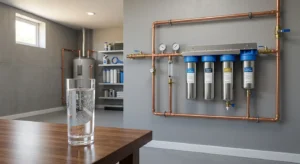
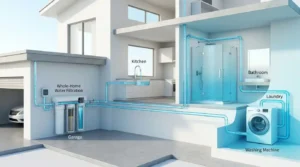
A whole house RO system or whole house ro system treats every water outlet in your home, showers, laundry, dishwasher, everything. That level of filtration makes sense when you’re dealing with well water, very high TDS levels, or documented contamination. It’s a bigger investment, and it comes with a higher water waste ratio, so it’s not the automatic answer for every home.
For most Tracy families using city water, a quality under-sink RO system tied to your drinking tap and refrigerator line covers the bases well.
What to Expect During and After Installation
Before Installation
A few things worth checking before you schedule:
- Water pressure matters. Most RO systems need at least 40–60 PSI to work properly. If your home runs lower than that, a permeate pump or booster pump may be needed.
- Cabinet space under the sink. A standard 5-stage system with a storage tank needs about 15–18 inches of clearance. Tankless RO systems are slimmer and work for tighter spaces.
- Your existing plumbing. Older homes with lead or galvanized pipes may need a line assessment first.
After Installation
Expect a short adjustment period. The first tank or two of water may have a slightly off taste, that’s normal. It’s residual carbon from new filters and clears up quickly.
You’ll also notice:
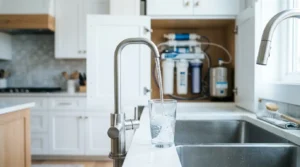
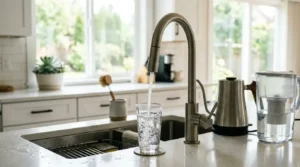
- A dedicated faucet on your sink (usually brushed nickel or chrome)
- A small storage tank under the sink (or none, if you opted for tankless)
- Slightly slower flow from the RO tap vs. your standard faucet, this is normal given the filtration process
If you used a Reverse Osmosis Water Filter from a reputable installer, production rate (GPD: gallons per day) should be noted at setup. A typical household system produces 50 to 100 GPD, which fills a storage tank between uses.
Maintenance: What Most People Underestimate
RO systems are low maintenance, not zero maintenance. Here’s a realistic schedule:
- Every 6–12 months: Replace sediment and carbon pre-filters
- Every 2–3 years: Replace the RO membrane (can last longer with good pre-filtration)
- Every 12 months: Replace the post-carbon polishing filter
- As needed: Sanitize the storage tank (typically once a year)
Skipping filter changes is the most common mistake we see. A clogged sediment filter makes the membrane work harder, shortens its life, and drops your water pressure. It’s a $15 fix that people delay until it becomes a $150 membrane replacement.
A good 5-Stage Water Filtration System will often include filter replacement reminders, but setting a calendar reminder yourself is the safest bet.
Common Buying Mistakes to Avoid
If you’re shopping for a home RO system, watch out for:
- Buying on stage count alone. A 10-stage system isn’t automatically better than a 5-stage one. What matters is the quality of each stage, the membrane GPD rating, and the pre-filter design.
- Ignoring TDS rejection rate. Look for systems that reject 95–99% of TDS. Cheap membranes often underperform after the first few months.
- Forgetting about water waste. Traditional RO systems waste 3–4 gallons for every gallon of clean water produced. Tankless RO systems and permeate pump-equipped models improve that ratio significantly.
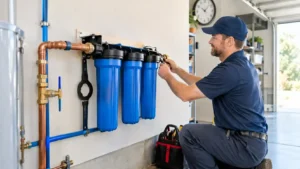
Skipping professional installation. A DIY install gone wrong means slow leaks under your sink, pressure issues, or a voided warranty. For a reverse osmosis whole house setup especially, professional installation isn’t optional, it’s protection for the investment.
Is a Reverse Osmosis System Right for Your Tracy Home?
If your household drinks a lot of tap water, has children, uses a refrigerator filter, or has ever had a water quality notice in your area, yes. An RO system makes sense.
If you’re on well water east of Tracy near the Byron or Mountain House areas, or if you’ve tested your water and seen TDS above 500 ppm or detected any heavy metals, a full house reverse osmosis system or at minimum a strong under-sink setup is worth the investment.
The team at RO Water Filter System serves Tracy and the surrounding areas, including Lathrop, Manteca, Stockton, and Mountain House. If you already have a system and just need a professional install, that’s something they specialize in.
Conclusion
A reverse osmosis system for homes is one of the most effective water treatment options available to homeowners today. It doesn’t just improve taste, it reduces real contaminants that affect long-term health and home appliance performance. In Tracy, where Delta water blended with groundwater can vary in mineral content and chemical treatment, having that extra layer of protection at the tap genuinely matters.
Whether you need a compact under-sink unit or a full house system, the right setup depends on your water quality, household size, and budget. Don’t guess. Get your water tested, understand what you’re dealing with, and then choose accordingly. Contact RO Water Filter System to schedule a consultation or get your system professionally installed, they’ve been doing this in the Tracy area for years and know exactly what local water demands.
FAQs
What does a reverse osmosis system for homes remove from water?
It removes dissolved solids, chlorine, heavy metals, and many organic compounds. The result is cleaner and better-tasting drinking water.
Is a whole house reverse osmosis system worth it in Tracy, CA?
For most city homes, it’s not necessary. But for well water or very high TDS levels, a whole house reverse osmosis system can significantly improve water quality.
How often do RO filters need to be replaced?
Most filters need changing every 6 to 12 months, while membranes last around 2 to 3 years depending on usage and water quality.
Does RO water taste different?
Yes. Many homeowners notice a cleaner and softer taste because impurities and chlorine are removed.
Can I install an RO system myself?
Some basic systems allow DIY setup, but professional installation ensures proper drainage, pressure balance, and long-term performance.