If you have been reading about does reverse osmosis remove PFAS contamination in local water supplies and wondering whether a home filter can actually protect you, here is the direct answer: yes, reverse osmosis removes PFAS. A quality RO system reduces PFAS concentrations by 90 to 99 percent, making it one of the most effective home water treatment options available today.
This guide covers how RO removes PFAS, removal rates by specific compound, what PFOA and PFOS are, why forever chemicals are so hard to filter by other methods, and what to look for in a certified system. RO Water Filter System covers what most sources skip so you can make a clear, informed decision for your family.
Does Reverse Osmosis Actually Remove PFAS?
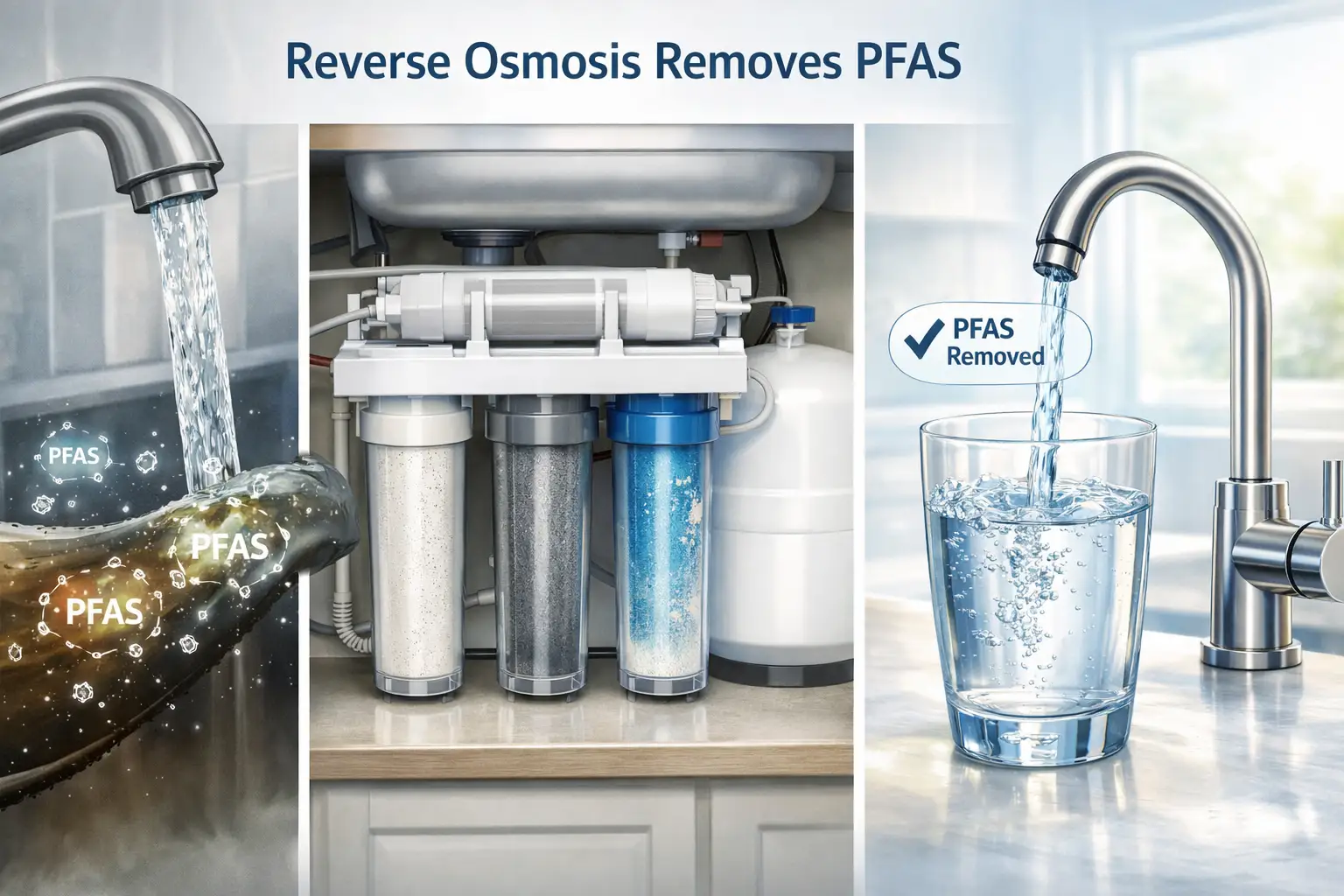
Does reverse osmosis remove PFAS; Yes, and the answer is not complicated. Reverse osmosis forces water through a semi-permeable membrane with pores as small as 0.0001 microns. PFAS molecules, even the smallest variants, are far too large to pass through. They get rejected at the membrane and flushed away as wastewater.
A properly designed RO system with activated carbon pre-filters reduces does reverse osmosis remove PFAS concentrations by 90 percent or more in real-world home conditions. The carbon pre-filter handles a share of the PFAS load before water even reaches the membrane, so the two stages work together as a combined barrier.
The key phrase is “properly designed and maintained.” A low-quality membrane or a system running without filter changes will not deliver those results. Quality components and regular maintenance are what make the difference.
How Reverse Osmosis Works
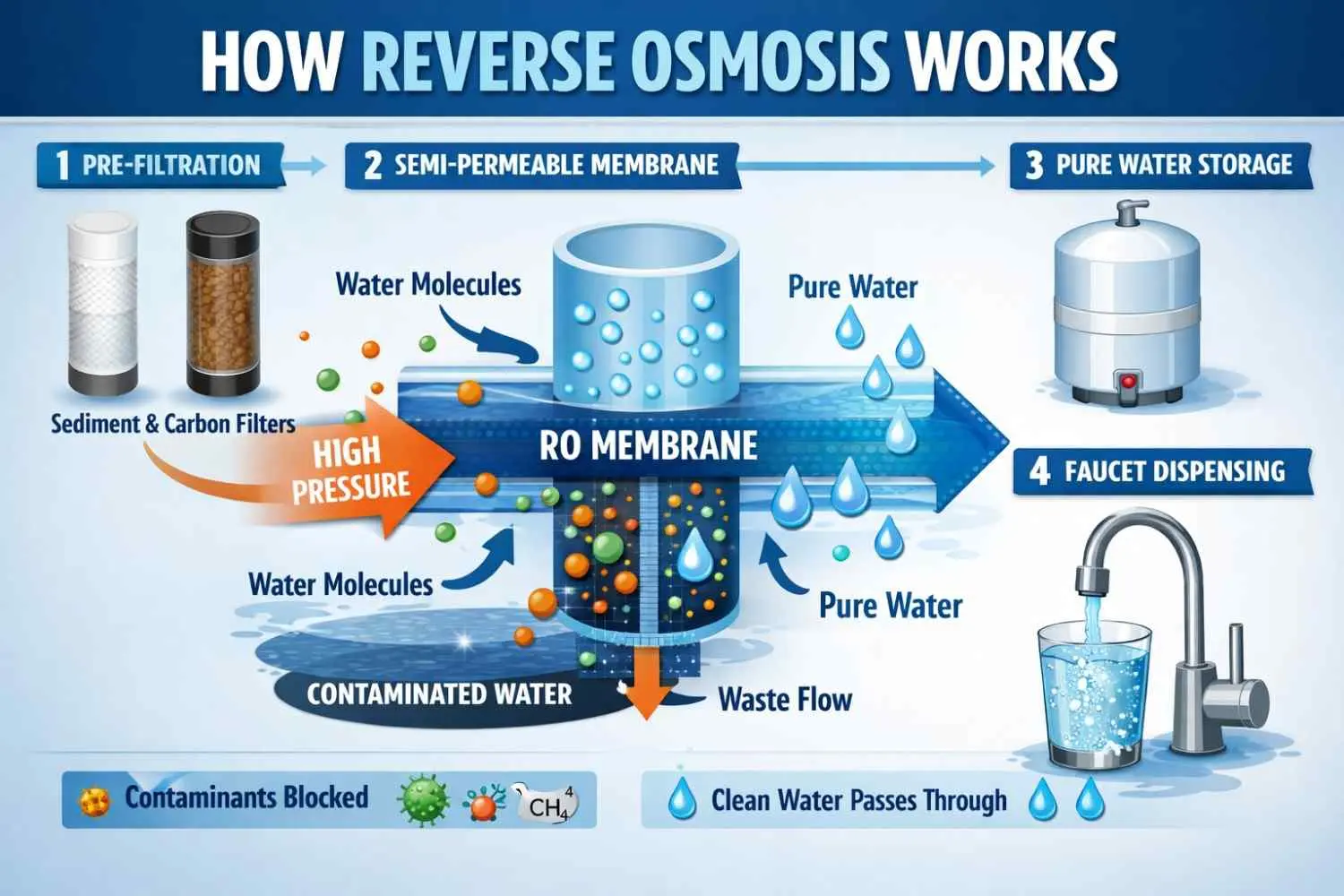
A typical home Reverse Osmosis Water Filter system uses a combination of filters and a membrane to clean tap water at the point of use, usually under the kitchen sink. The process involves:
- Pre‑filtration that removes sediment and chlorine.
- Activated carbon filters that reduce many organic chemicals.
- A reverse osmosis membrane that separates water molecules from many dissolved solids and contaminants.
- Post‑filtration for taste and final polishing.
How Much PFAS Does Reverse Osmosis Remove? Removal Rates by Compound
This is the question most does reverse osmosis remove PFAS, dodge. Here are the actual removal efficiency ranges based on NSF/ANSI 58 testing and EPA-referenced studies:
| PFAS Compound | What It Is | RO Removal Rate |
|---|---|---|
| PFOA (perfluorooctanoic acid) | Found in nonstick cookware, firefighting foam | 90 – 99% |
| PFOS (perfluorooctane sulfonate) | Found in firefighting foam, industrial sites | 90 – 99% |
| GenX (HFPO-DA) | Replacement for PFOA in industrial use | 85 – 95% |
| PFBS (perfluorobutane sulfonate) | Short-chain PFAS, used in some stain repellents | 80 – 94% |
| PFNA (perfluorononanoic acid) | Found in some food packaging and industrial coatings | 88 – 99% |
Long-chain PFAS like PFOA and PFOS are the easiest for RO to capture because their larger molecular size makes membrane rejection more complete. Short-chain variants like PFBS are smaller and slightly harder to reject, which is why those rates sit a little lower. A high-quality membrane paired with activated carbon pre-filtration covers both ends of the spectrum better than either filter stage alone.
No home system guarantees 100 percent removal. But 90 to 99 percent on the compounds most commonly found in drinking water is meaningful, real-world protection.
Does Reverse Osmosis Remove PFOA and PFOS Specifically?
Yes, and these two are the ones most homeowners should be focused on.
PFOA and PFOS are the most studied and most regulated PFAS compounds. The EPA finalized maximum contaminant levels (MCLs) for both in April 2024, setting limits at 4 parts per trillion each the lowest enforceable standard ever set for any contaminant in U.S. drinking water. That is how seriously regulators now treat them.
Both are long-chain PFAS, meaning their molecular size makes them highly rejectable by a quality RO membrane. NSF/ANSI 58-certified RO systems have been independently tested to demonstrate this. When you see an RO system carrying NSF/ANSI 58 certification, it means a third-party lab has verified the system’s claim about what it removes, including PFOA and PFOS where specifically listed on the performance data sheet.
Short answer: if your water concern is PFOA and PFOS, reverse osmosis is your strongest home defense.
What Makes RO Effective at Removing PFAS?
Most filters fail against PFAS because PFAS molecules bond chemically to surfaces differently than sediment or chlorine does. Standard pitcher filters and faucet attachments use basic activated carbon, which adsorbs some PFAS but not reliably and not at the levels a certified RO system achieves.
Here is what makes RO different:
Membrane pore size. The RO membrane operates at 0.0001 micron filtration. The smallest PFAS molecules are still roughly 1,000 times larger than a water molecule, making them physically unable to pass through the membrane under normal operating pressure.
Activated carbon pre-filtration. Carbon filters in a multi-stage RO system adsorb PFAS compounds before they reach the membrane, reducing the load the membrane has to handle. This extends membrane life and improves overall efficiency.
Pressure-driven rejection. RO uses water pressure to push clean water through the membrane while contaminants concentrate on the other side and drain away. PFAS cannot dissolve back through the membrane the way some volatile compounds can escape through aeration.
Multi-stage design. A properly configured RO system with sediment pre-filter, carbon block pre-filter, RO membrane, and carbon post-filter creates multiple removal opportunities. does reverse osmosis remove PFAS has to get past all of them, and it usually does not.
Reverse Osmosis vs Other Filtration Options
Reverse Osmosis vs Carbon Filters Alone
Carbon filters do remove some PFAS, but a reverse osmosis system adds an additional barrier through its membrane. For many homeowners with PFAS concerns, RO offers higher confidence in reduction levels.
For general water quality (taste, chlorine, odor) alone, carbon filters may be adequate. But for PFAS, the membrane is a key advantage.
Reverse Osmosis vs Saltless Water Softener
A saltless water softener improves water feel and reduces scale without using salt. Softening and PFAS reduction serve different purposes:
- Softening helps appliances and plumbing.
- RO helps reduce chemical contaminants including PFAS.
When Whole House Systems Make Sense
A whole house filtration system treats all water entering your home. It’s ideal if you want every tap water outlet filtered. But for PFAS, whole house systems must include filters rated for does reverse osmosis remove PFAS removal. In many cases, homeowners choose a point of use RO system for drinking and cooking water because it is more cost‑effective than treating the entire house with RO level filtration.
If you are comparing options, read our guide on House Water Filter vs Reverse Osmosis to determine what fits your situation.
What to Expect with Installation
Correct installation of a does reverse osmosis remove PFAS, matters for performance. Here’s what to know:
- RO systems require a dedicated faucet.
- Proper water pressure ensures membrane efficiency.
- Pre‑filtration should match your local water quality conditions.
- Avoid DIY shortcuts that compromise seals or flow.
Professional fitting helps ensure you get predictable results and reduces risk of leaks or reduced performance.
Maintenance Matters: How Often to Change Reverse Osmosis Filter
To keep your RO system reducing PFAS effectively, you must follow a maintenance schedule:
- Sediment and carbon pre‑filters: change every 6 to 12 months.
- Reverse osmosis membrane: typically replace every 2 to 3 years.
- Post‑filters: change annually or per manufacturer advice.
Maintenance needs depend on both water quality and use. Water has more sediment or chemicals, more frequent changes might be required if water quality declines; regular checks ensure consistent performance from your system.
Common Homeowner Questions and Mistakes
Mistake: Thinking Any Filter Will Do Many homeowners assume their pitcher or faucet filter handles PFAS it usually doesn’t. Most basic filters lack the right media or pore size to capture these chemicals. If PFAS is your concern, you need a system specifically certified for it.
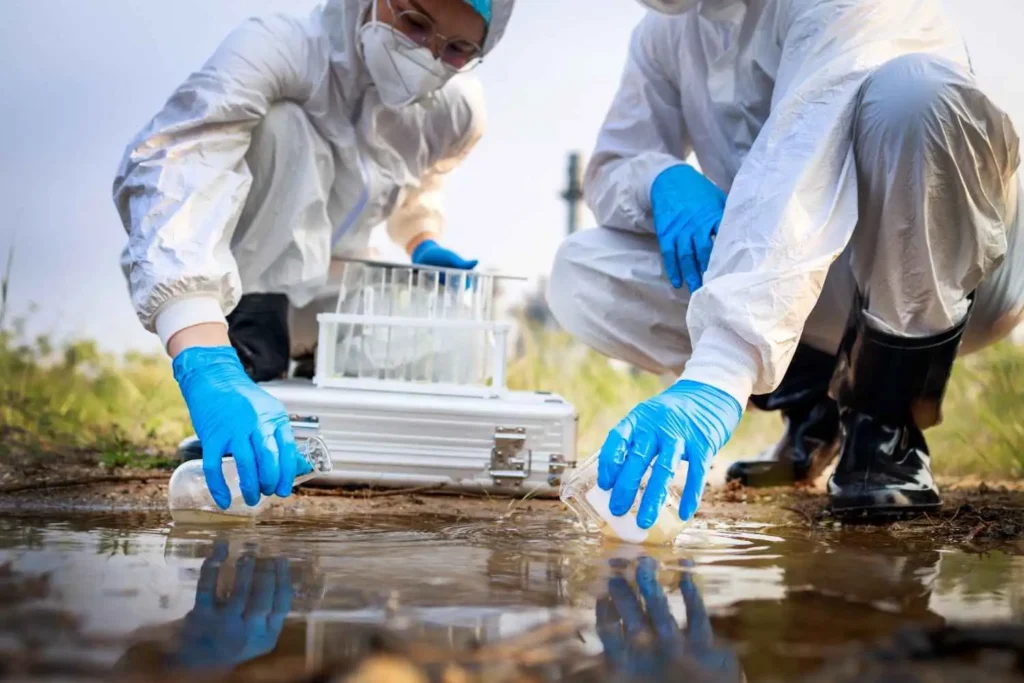
Mistake: Skipping a Water Test Every water supply is different. Choosing a filtration system without knowing what’s actually in your water is like treating a symptom without a diagnosis. Get a test first, then pick your solution.
Can I Test Whether My RO System Is Actually Working? Absolutely. Send water samples to a certified lab one taken before the system and one after. The results will tell you exactly how well your unit is performing in real-world conditions.
Does Reverse Osmosis Also Remove Fluoride? In most cases, yes. A quality RO membrane will reduce fluoride alongside other contaminants, though the exact reduction rate depends on the membrane’s specifications and condition.
Choosing the Right RO System
When selecting an RO system, look for:
- High‑quality reverse osmosis membrane
- NSF/ANSI certifications for contaminant reduction
- Clear maintenance guidance
- Trusted service support
A well‑matched system delivers safer drinking water and peace of mind.
Conclusion
For homeowners asking does reverse osmosis remove PFAS, the answer is that reverse osmosis is one of the most effective home water treatment options to reduce PFAS and improve water safety. A system with quality pre‑filters and membrane will significantly lower PFAS levels when installed and maintained correctly.
If you are concerned about PFAS in your tap water in Tracy CA and want reliable protection, contact us at RO Water Filter System for help choosing and installing the right reverse osmosis filter solution. Taking action now improves your water quality and supports your family’s health.
FAQs
Does reverse osmosis remove PFAS from drinking water?
Yes. Reverse osmosis removes PFAS from drinking water by forcing water through a semi-permeable membrane that physically blocks PFAS molecules. Combined with activated carbon pre-filtration, a quality RO system reduces PFAS concentrations by 90 to 99 percent in real-world home conditions.
How effective is reverse osmosis at removing PFAS?
Reverse osmosis is among the most effective home water treatment technologies for PFAS. Independent testing under NSF/ANSI 58 standards shows removal rates of 90 to 99 percent for long-chain PFAS like PFOA and PFOS. Short-chain variants see slightly lower but still significant reduction rates of 80 to 94 percent.
What percentage of PFAS does reverse osmosis remove?
A properly designed and maintained RO system removes between 90 and 99 percent of PFOA and PFOS, 85 to 95 percent of GenX, and 80 to 94 percent of PFBS. Removal rates depend on membrane quality, system condition, and whether pre-filtration stages are functioning correctly.
Does reverse osmosis remove PFOA and PFOS?
Yes. PFOA and PFOS are long-chain PFAS compounds and among the easiest for RO membranes to reject due to their molecular size. NSF/ANSI 58-certified systems have been independently tested for both. Removal rates of 90 to 99 percent are achievable with a quality system under proper operating conditions.
Does RO filter remove PFAS?
Yes. The RO membrane is the primary removal mechanism, but the activated carbon pre-filters in a multi-stage system also capture a portion of PFAS before water reaches the membrane. The combination of carbon and membrane filtration is what makes RO particularly effective compared to carbon-only filters.