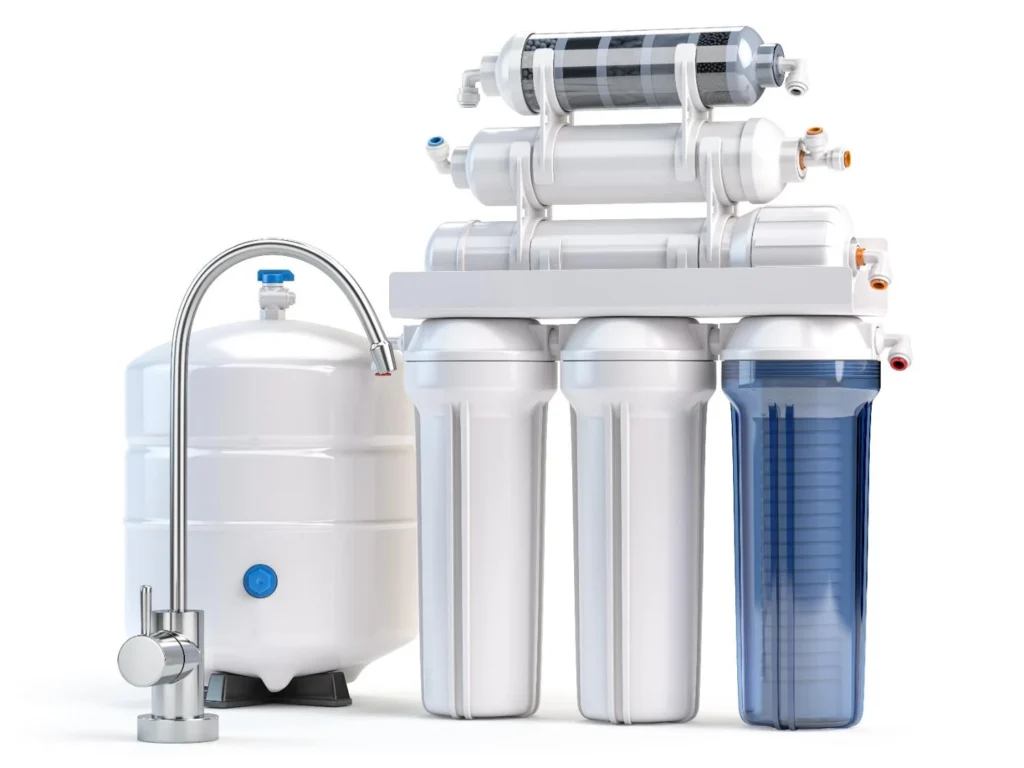
Both systems clean your water, so the confusion is fair. Picking the wrong one wastes money. Here’s the quick answer. A whole house filter treats water at every tap, mainly for chlorine, sediment, and taste. Reverse osmosis purifies the water you drink and cook with. Many homes need one, and some need both.
If you’re asking what is the best water filtration system for home use, the answer starts with your water, not the product. This guide shows how each system works, where each one wins, and what upkeep costs you. By the end of this whole house water filter vs reverse osmosis guide, you’ll know which setup fits your home, your budget, and your tap water.
What Is a Whole House Water Filter and How It Works
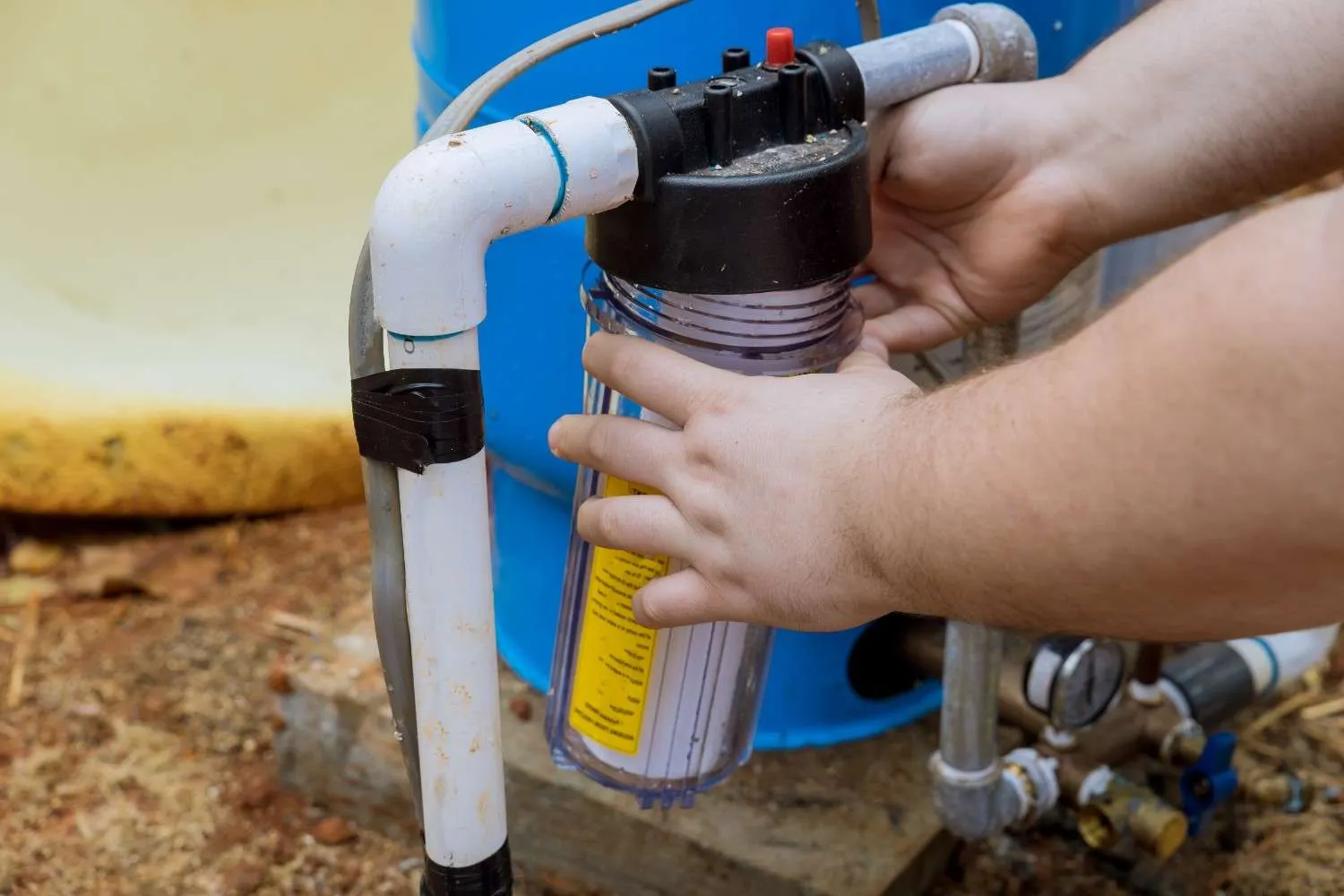
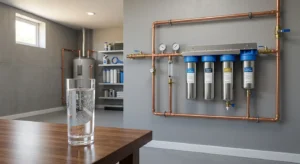
A whole house water filter is a point-of-entry system that treats all incoming water before it flows through your plumbing. It mounts directly where your main water line enters your home, ensuring every shower, sink, washer, and toilet receives filtered water without reducing your overall house water pressure.
These setups use multi-stage filtration to trap specific contaminants based on your local water quality:
-
Sediment Prefilter: Traps sand, silt, rust, and dirt particles down to 5 microns. This stage protects interior pipes and prevents downstream filter clogging.
-
Activated Carbon Block: Absorbs chlorine, chloramines, unpleasant odors, and organic compounds. Carbon media improves general taste and prevents skin irritation in showers.
-
Specialty Media Tanks: Use copper-zinc alloys (KDF) or catalytic carbon to neutralize heavy metals, hydrogen sulfide (rot-egg smell), and pesticides.
-
Post-Filter Stage: Catches any remaining microscopic particulates before water enters your indoor plumbing network.
Unlike localized point-of-use units, these systems handle high flow rates ranging from 10 to 20 gallons per minute (GPM). They focus on high-volume filtration rather than hyper-fine purification.
What Is a Reverse Osmosis System and How It Works
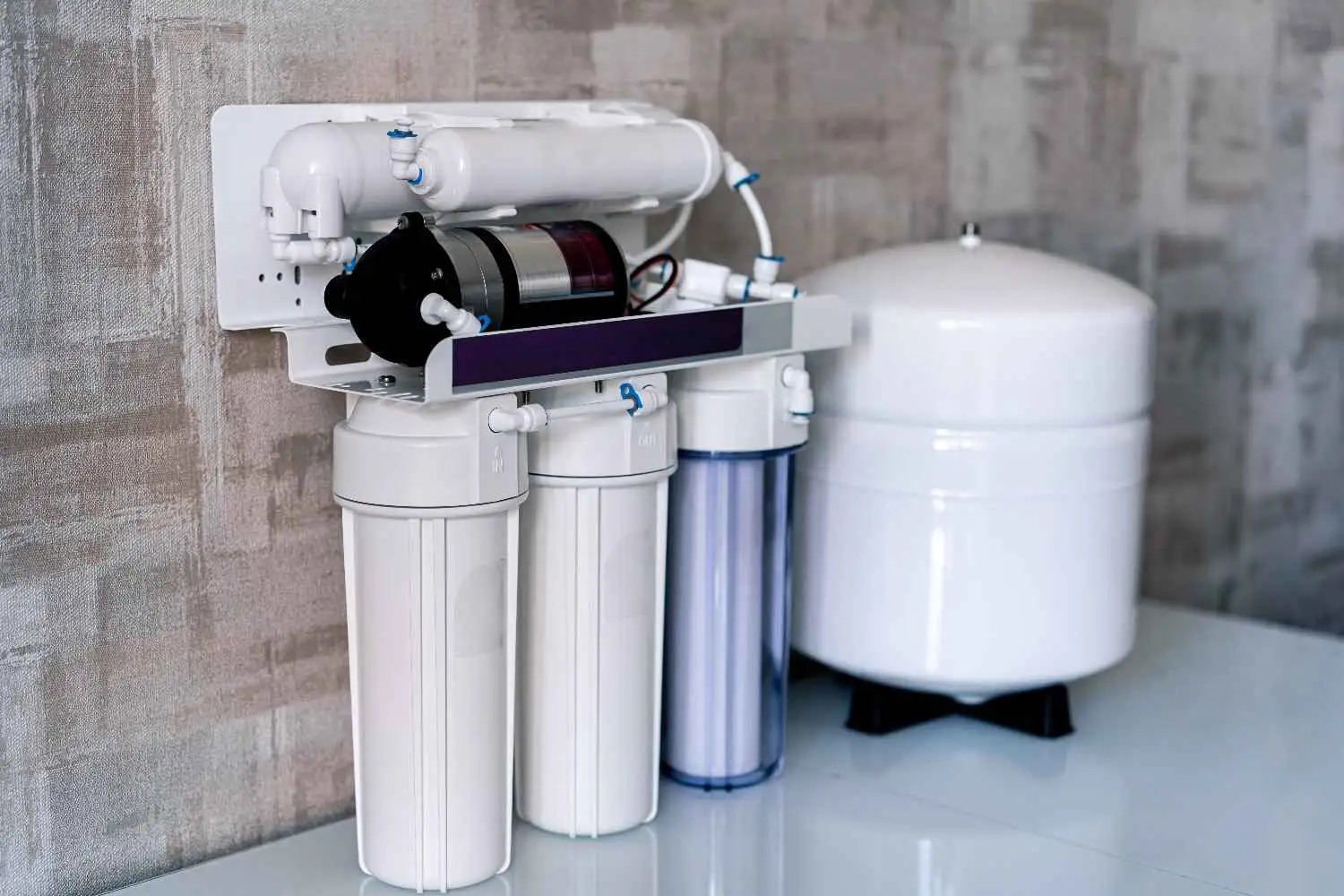
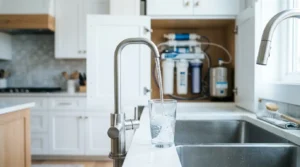
A reverse osmosis system is a point-of-use unit that forces pressurized water through a semi-permeable membrane to remove dissolved solids. Installed typically under the kitchen sink, it purifies water at a microscopic level (0.0001 microns) to produce pristine drinking and cooking water.
A standard under-sink setup relies on a multi-step purification process:
-
Sediment and Carbon Pre-Filtration: Removes suspended solids and chlorine that could degrade the delicate RO membrane.
-
Semi-Permeable Membrane: Forces water molecules through tiny pores while rejecting dissolved salts, fluoride, lead, arsenic, nitrites, and microplastics.
-
Storage Tank: Collects purified water slowly, holding 2 to 4 gallons ready for immediate use.
-
Post-Carbon Polishing Filter: Cleans the water as it flows from the storage tank to your dedicated countertop faucet.
-
Remineralization Stage (Optional): Adds essential minerals back into the purified water like calcium and magnesium to restore balanced pH and crisp natural taste.
Because reverse osmosis membrane pores are small, the process requires line pressure (at least 40 psi) and rejects wastewater carrying concentrated contaminants down the drain line.
Whole House Water Filter vs Reverse Osmosis
Here’s how the two stack up side by side. In a Whole House Water Filter vs Reverse Osmosis match-up, neither one wins every round. They solve different problems at different points in your plumbing.
| Feature | Whole House Filter | Reverse Osmosis |
|---|---|---|
| Where it treats | Main line, every tap | Usually one kitchen tap |
| Best at removing | Chlorine, sediment, odor, many chemicals | Dissolved solids, nitrates, fluoride, many metals |
| Softens hard water | No | Reduces hardness minerals at one tap only |
| Water waste | Low (some tank types backwash) | Yes, wastewater goes to the drain |
| Flow rate | High | Slow, tank-fed |
| Upfront cost | Higher | Lower for an under-sink unit |
| Filter changes | Cartridges every 3 to 12 months, media tanks last years | Pre-filters every 6 to 12 months, membrane 2 to 3 years |
So which is better, reverse osmosis or filtration? Ask what you want to fix. If the complaint is chlorine smell, sediment, or stained fixtures, a whole house filter fits. If the worry is nitrates, arsenic, or high dissolved solids in your drinking water, reverse osmosis fits.
The ro system vs filtered water debate comes down to depth versus reach. A whole house filter covers every tap but cleans less intensely. RO cleans deeply but only where you drink. Water filtration vs reverse osmosis isn’t a fair fight, because the two were never built for the same job.
Pros and Cons of Whole House Filters
Whole house filters give you broad protection with little daily effort. They also have clear limits. Here’s the honest list.
Pros
- Treats every tap, shower, and appliance
- Cuts chlorine taste and smell throughout the house
- Catches sediment before it reaches your water heater and fixtures
- Delivers high flow with no storage tank
- Wastes little water
- Needs attention only a few times a year
Cons
- Costs more upfront than an under-sink unit
- Usually needs a plumber for the main line install
- Doesn’t remove dissolved salts or nitrates
- Doesn’t soften hard water by itself
- Loses performance if you skip cartridge changes
- May leave your drinking water needing extra treatment
Some people notice softer-feeling skin and hair after chlorine comes out of their shower water. That’s worth mentioning, but results vary from person to person.
Pros and Cons of Reverse Osmosis Systems
Reverse osmosis vs whole house filter is mostly a question of purity versus coverage. RO gives you the cleanest glass of water at home. It asks for a little more patience and plumbing detail.
Pros
- Delivers the strongest drinking water purification for a home
- Reduces dissolved solids, nitrates, fluoride, arsenic, and many heavy metals
- Improves the taste of coffee, tea, soup, and ice
- Costs less upfront than a whole house system
- Fits under most kitchen sinks
Cons
- Sends wastewater to the drain
- Produces water slowly and stores a limited amount
- Removes beneficial minerals along with the unwanted ones
- Can taste flat to some people
- Treats one tap unless you plumb extra lines
- Works best with steady household water pressure
Many RO systems waste several gallons for each gallon of clean water. Models with a permeate pump waste less. Check the spec sheet for the ratio before you buy.
When a Whole House System Makes More Sense
A whole house system makes more sense if your primary goal is removing chlorine odors, stopping pipe corrosion, or eliminating sediment across your entire home. It is the ideal choice when your municipal supply is safe to drink but contains heavy disinfectant smells or abrasive rust particles.
Consider choosing a point-of-entry system if:
-
Your skin feels dry or irritated after hot showers due to municipal chlorine.
-
You notice reddish rust stains or sandy debris sitting in toilet tanks.
-
You want to shield new tankless water heaters and appliances from sediment damage.
-
You dislike point-of-use units taking up under-sink cabinet storage space.
Many homes in areas with older infrastructure benefit from this type of Water Filtration System.
When Reverse Osmosis Is the Better Choice
Reverse osmosis is the better choice if you have specific health concerns regarding dissolved contaminants like lead, nitrate, arsenic, or PFAS in your drinking supply. It targets microscopic pollutants that physical carbon block filters miss.
Opt for an under-sink RO system when:
-
Water utility reports show high levels of dissolved heavy metals or fluorides.
-
You rely on well water containing dissolved nitrates or agricultural runoff.
-
You prefer pure, low-TDS water for drinking and cooking without buying bottled jugs.
-
You want an affordable upgrade path without modifying your home’s main plumbing lines.
Should You Combine Both Systems?
In many homes, the most effective setup includes both technologies.
A whole house filter improves water quality throughout the house.
A reverse osmosis system provides high purity drinking water.
This combination offers two levels of protection:
- House filtration systems remove chlorine and sediment for the whole home.
- Reverse osmosis water filtration provides purified water for drinking and cooking.
Some homeowners also explore whole house water filter vs reverse osmosis, though these are less common because they require significant equipment and storage capacity.
Do You Need a Water Softener or Reverse Osmosis?
Many homeowners ask whether they need a water softener or reverse osmosis system.
The answer depends on the water problem.
Water softeners solve hard water problems
Hard water contains high levels of calcium and magnesium. Signs include:
- white mineral spots on fixtures
- soap that does not lather well
- scale buildup on appliances
A water softener removes these minerals. If you want to more information about Whole House Water Softener for Hard Water.
Reverse osmosis focuses on drinking water purification
An RO system removes dissolved contaminants from drinking water but does not solve whole house water filter vs reverse osmosis.
In homes with hard water, many people install:
- a water softener for the home
- an RO system for drinking water
Installation and Maintenance Considerations
Before choosing a system, homeowners should understand installation and maintenance needs.
Whole house system maintenance
Most house water filters require:
- filter replacement every 6 to 12 months
- occasional inspection of the filtration housing
Maintenance is usually simple once the system is installed.
Reverse osmosis maintenance
RO systems require a few more components to maintain.
Typical service includes:
- sediment and carbon filter replacement
- membrane replacement every few years
- tank sanitation
Proper maintenance ensures the system continues producing clean drinking water.
Choosing the Right Water System for Your Home
Comparing whole house water filter vs reverse osmosis depends upon your water goals. When considering these two systems, ask yourself these questions about what you want out of them:
- Do you want cleaner water for the entire house?
- Are you mainly concerned about drinking water purity?
- Are you experiencing sediment, chlorine odor, or hard water?
Many homeowners begin by investing in a Household Water Filtration System which improves overall water quality throughout their house and then adding an RO system at their kitchen sink to provide even further purification for drinking water.
RO Water Filter System team can assess your home water conditions and recommend an ideal setup solution.
Conclusion
Understanding the differences between whole house water filter vs reverse osmosis can help homeowners select an effective solution. While whole house systems improve water quality throughout their homes, reverse osmosis systems offer purified drinking water at specific taps – for many households using both systems together is often optimal.
An RO system ensures safe drinking water for kitchen use while whole house filters provide daily water usage improvements. If you need assistance choosing which system will best serve your home’s water quality needs, contact us RO Water Filter System is on hand to assess it and recommend an ideal filtration setup solution that best meets them.
FAQs
Which is better: reverse osmosis or filtration?
Neither is universally better because they serve different purposes. Reverse osmosis provides superior purification for drinking water by removing dissolved solids. Standard whole house filtration treats higher volumes of water to remove chlorine, sediment, and odors across every tap without wasting water.
Can a whole house filter remove fluoride and lead?
Standard carbon whole house filters cannot effectively remove fluoride or dissolved lead at high flow rates. Eliminating these dissolved contaminants requires specialized media like activated alumina or a dedicated point-of-use reverse osmosis system.
Does reverse osmosis remove good minerals from water?
Yes, reverse osmosis membranes remove up to 99% of all minerals, including beneficial calcium and magnesium. Many modern RO systems include a remineralization post-filter to restore healthy minerals and raise water pH before consumption.
Can you put a reverse osmosis system on a whole house supply?
While whole house reverse osmosis systems exist, they are expensive and require large storage tanks, commercial booster pumps, and extensive remineralization loops to prevent acidic water from corroding indoor copper pipes.