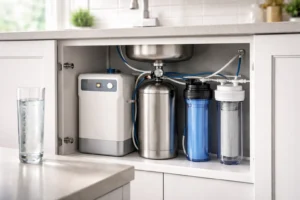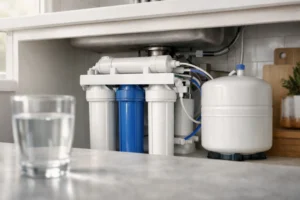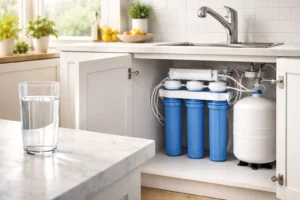
Have you seen bottles marked “deionized water”, and wondered what this label actually signifies? Many have. Most who search this topic are looking for purification options either for drinking water consumption, appliances use, aquariums and car batteries/humidifiers etc. Although deionization might sound scientific it’s worthwhile understanding its practical applications before investing in any water treatment systems.
The majority of articles on this subject either remain too superficial or go too deeply into industrial chemistry to be of much help. The RO Water Filter System tutorial describes what is deionized water, how it works, how it differs from distilled water and reverse osmosis, and which choice is best for you.
What Is Deionized Water?
Deionized water (also called DI water, demineralized water, or di water) is water that has had its dissolved mineral ions removed. That includes calcium, magnesium, sodium, chloride, sulfate, and other charged particles that naturally exist in tap water and groundwater.
Water gets “ionized” as it absorbs mineral salts from pipes, rock, and soil. Tap water conducts electricity because these minerals have an electrical charge. Through a process known as ion exchange, those charged particles have been removed from deionized water, leaving it with almost no total dissolved solids (TDS) and very low electrical conductivity.
How Does the Deionization Process Work?
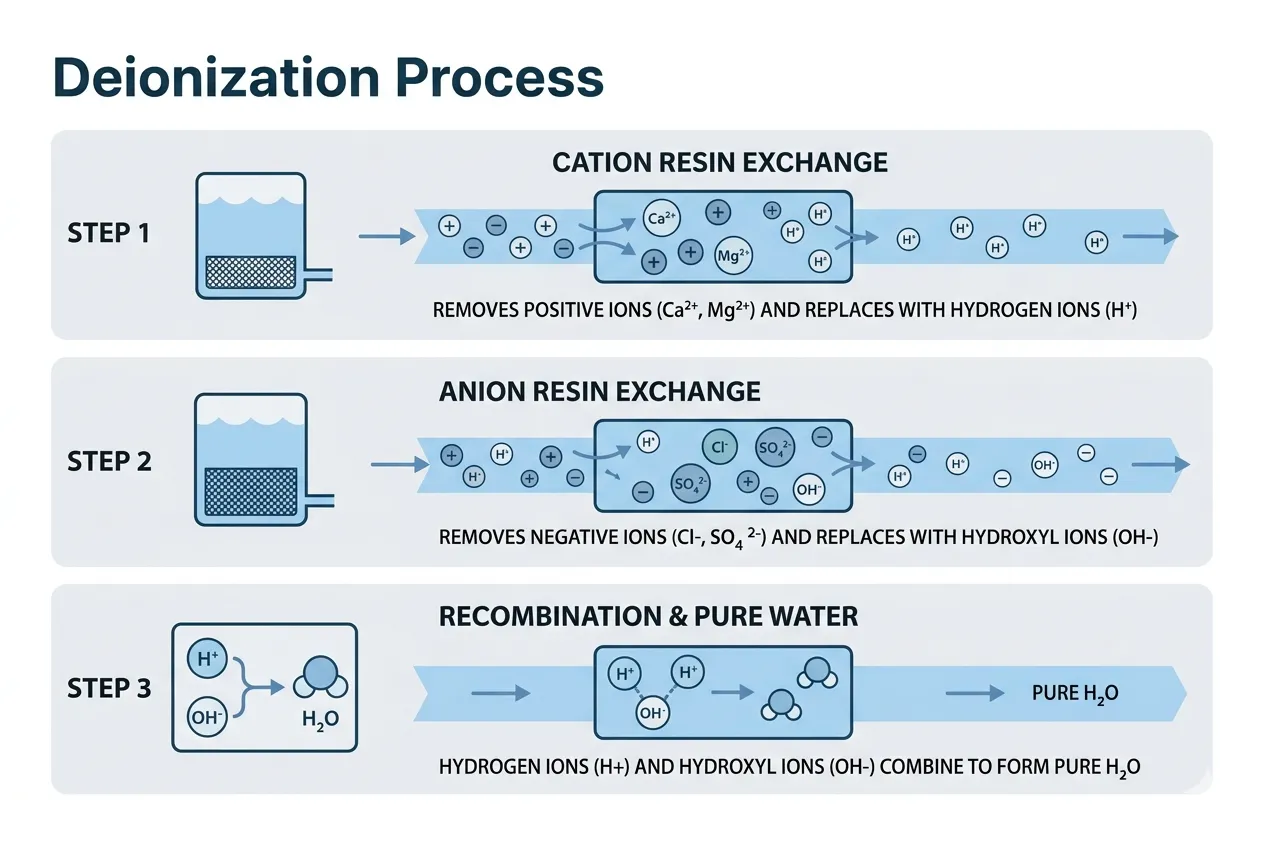
Deionization uses ion exchange resins to remove unwanted minerals. Here’s an outline of its operations:
Water passes through a cation resin bed
This resin carries a negative charge and pulls out positively charged minerals like calcium, magnesium, and sodium. It replaces them with hydrogen ions (H+).
Water then passes through an anion resin bed
This resin carries a positive charge and captures negatively charged minerals like chloride, sulfate, and nitrate. It replaces them with hydroxyl ions (OH-).
Hydrogen and hydroxyl ions combine
H+ and OH- combine to form plain water (H2O). At this point, the water has been stripped of virtually all dissolved mineral salts.
A mixed bed deionizer combines both resin types in a single tank for higher purity output. This is common in laboratory settings or any application requiring ultrapure water (UPW).
The result is water with very high resistivity and near-zero TDS. In fact, water purity in DI systems is often measured by electrical resistivity rather than just TDS, since truly pure water does not conduct electricity well.
Deionized Water vs. Distilled Water: Are They the Same?
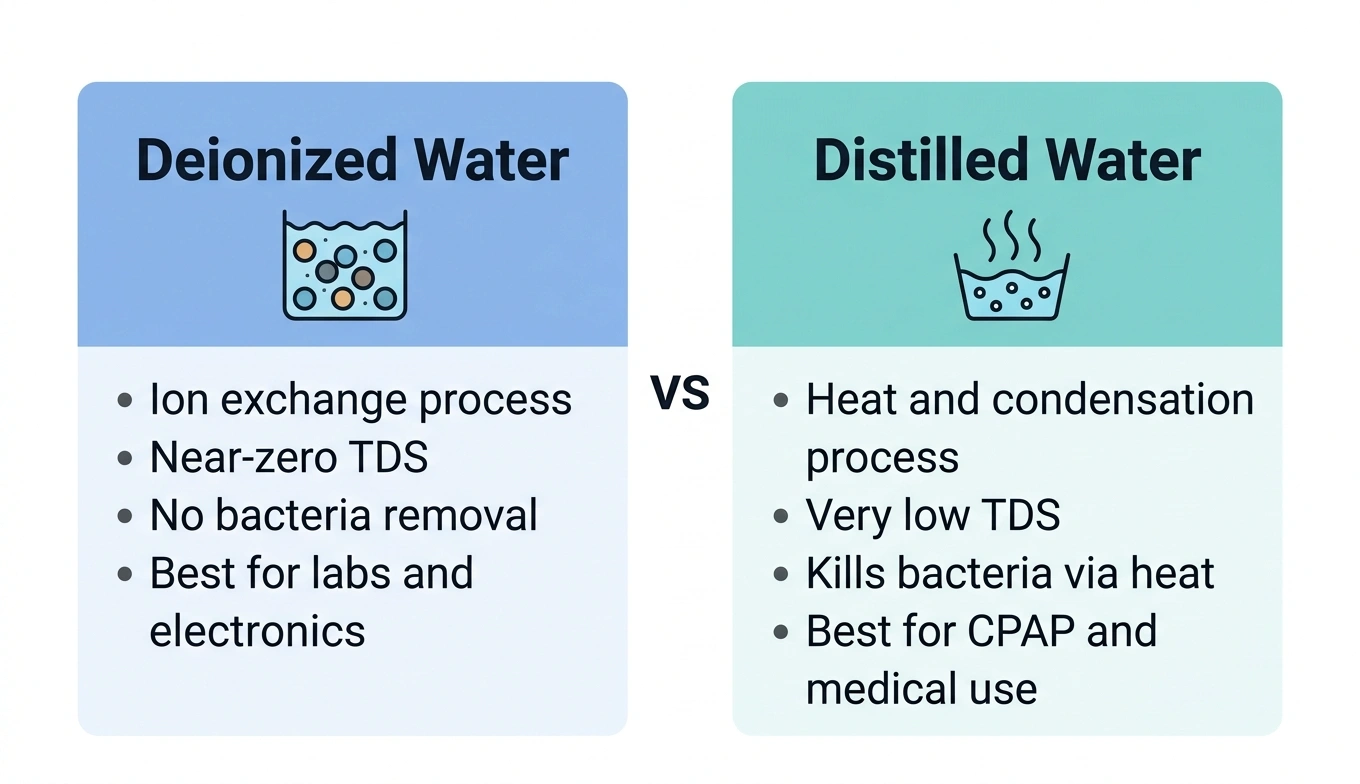
Here is a simple comparison:
|
Property |
Deionized Water |
Distilled Water |
|
Ion removal |
Very high | High |
| Organic compound removal | Limited |
Better |
|
Bacteria removal |
No | Yes (heat kills bacteria) |
| TDS level | Near zero |
Very low |
|
Common use |
Labs, electronics, aquariums |
Medical, drinking, CPAP |
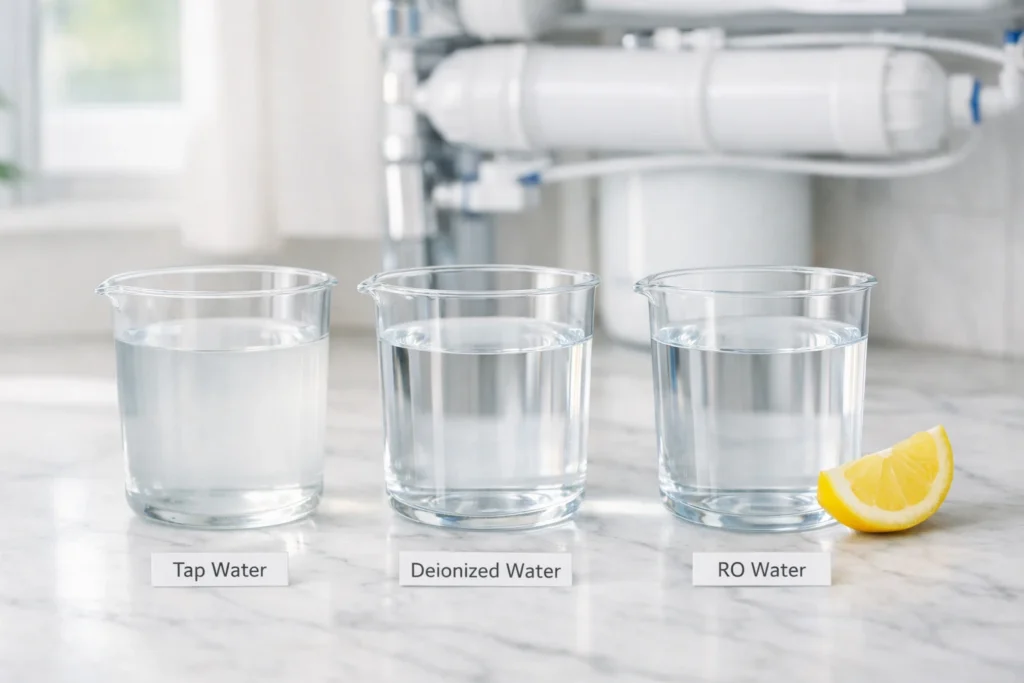
So is deionized the same as distilled water? Not exactly. Both are highly purified, but they are made differently and have different strengths depending on the application. For most drinking water needs at home, neither is necessary. A quality reverse osmosis system handles that job well.
Is Deionized Water Safe to Drink?
Herein lies the issue: DI water is not ideal for regular drinking. Herein lies its primary flaw. Your body needs minerals like calcium and magnesium in its water supply for proper functioning; water with no mineral content at all may actually deplete these from your system over time if consumed heavily, leaving most people disappointed by its taste since many minerals that give water its subtle taste have been removed from its composition.
However, moderate consumption of DI water should not cause harm; indeed it has long been used as standard practice in laboratory and industrial settings where purity overshadows flavor or nutrition concerns.
Reverse Osmosis systems offer, tasty drinking water. ROs can filter out contaminants like heavy metals, chlorine fluoride and dissolved solids; and some systems include an additional stage that adds beneficial minerals back into their drinking supply, giving you fresh drinking water which also contains beneficial elements to ensure good health daily.
Where Is Deionized Water Actually Used?
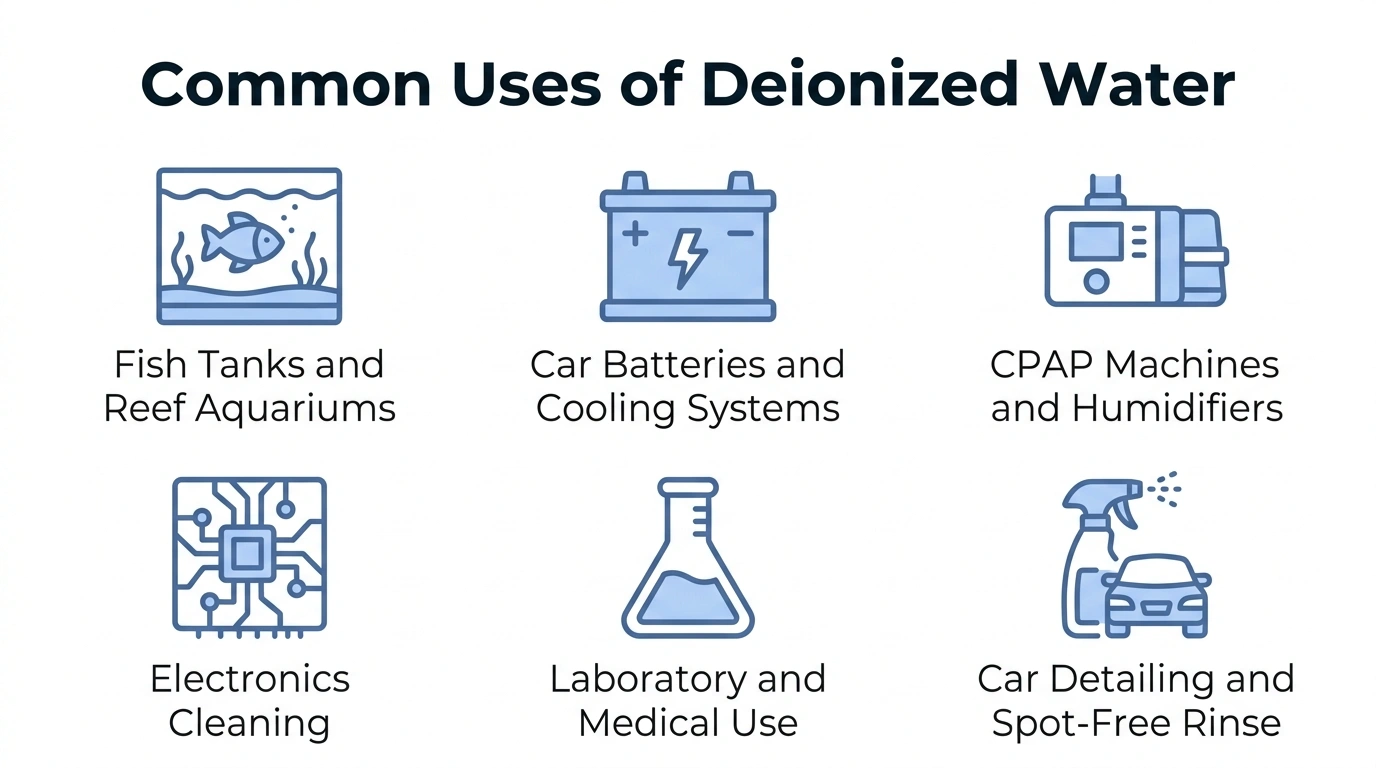
DI water has clear, practical applications. Understanding these helps you figure out whether you need it or whether a home filtration system serves your needs better.
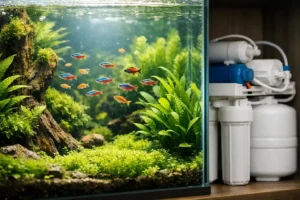
- Aquarium hobbyists use DI water to create a neutral baseline for reef tanks or freshwater setups, then add back specific minerals to match the fish’s natural habitat.
- Car owners and mechanics use it in batteries, cooling systems, and radiator top-offs to prevent mineral buildup and scale deposits inside the engine system.
- CPAP and humidifier users are often advised to use distilled or DI water in their machines to prevent mineral buildup in the water chamber and tubing.
- Electronics cleaning and manufacturing rely on deionized water because any electrical charge from dissolved minerals could damage sensitive components.
- Laboratories and medical facilities require water with extremely low TDS for experiments, reagent preparation, and equipment sterilization.
- Detailing and car washing professionals use it for final rinse applications to eliminate water spots caused by mineral residue drying on painted surfaces.
If you fall into one of these groups, a dedicated di water system or a lab-grade purification unit makes sense. For most homeowners, a well-built RO system covers drinking, cooking, and appliance protection without going to the extreme of full deionization.
Deionized Water vs. Reverse Osmosis Water
Comparison is of critical importance when purchasing water treatment systems for their home.
Reverse osmosis involves forcing water through a semi-permeable membrane under pressure and filtering out particles exceeding certain sizes, including most dissolved solids, heavy metals, chlorine byproducts, bacteria and sediment, leaving behind clean drinking water that’s safe to drink.
Deionization uses chemical ion exchange to specifically remove charged particles. It does not use a membrane and it does not remove bacteria or non-ionic organic compounds on its own.
In practice:
- RO water is suitable for drinking and daily use at home.
- DI water is suited for industrial, scientific, or specialized applications.
- RO systems can be paired with a DI post-filter stage when near-zero TDS water is needed for specific tasks.
For a Tracy homeowner dealing with hard water, high TDS from local groundwater, or concerns about tap water quality, a Reverse Osmosis Water Filter handles the job more practically than a standalone DI system. If you want even more thorough multi-stage filtration for your whole home, a 7-Stage Water Filtration System adds layers of protection including sediment, carbon, and membrane stages.
Does Tap Water in Tracy, CA Need This Level of Purification?
For most Tracy homeowners, a reverse osmosis system removes the contaminants that matter most for health and appliance protection. Full deionization is rarely needed at the household level unless you have a specific technical application.
If your concern is mineral buildup on fixtures, appliance scaling, or taste, RO is the right solution. If you are running sensitive equipment like aquarium reef systems or electronics cleaning operations from home, a DI stage added after RO can push water purity even further.
RO Water Filter System also offers information on alternative treatment methods such as Ozone Water Treatment, which addresses bacteria and organic contaminants differently than either RO or DI processes.
Common Mistakes People Make When Choosing a Water Purification Method
Assuming deionized water is safer to drink than filtered water
It is not. Removing all minerals does not make water healthier for consumption. It makes it more useful for specific technical tasks.
Thinking DI and distilled are identical
They are both highly purified but made through different processes with different strengths.
Buying a DI system for home drinking water
Unless you are pairing it with an RO membrane and adding minerals back in, this is unnecessary and potentially counterproductive for daily use.
Ignoring local water quality before choosing a system
What works in one city may be overkill or insufficient in another. Tracy’s water profile has its own characteristics that affect which filtration approach delivers the most value.
Conclusion
That makes it genuinely useful for laboratories, electronics, aquariums, car maintenance, and equipment that cannot tolerate mineral buildup. For everyday home use and drinking, however, most Tracy homeowners are better served by a properly sized reverse osmosis system that cleans water without removing everything the body needs.
Now that you understand what is deionized water, it’s clear that it serves a very specific purpose. If you are weighing your options for better water at home or in your business, RO Water Filter System is ready to help you figure out exactly what your water needs and which solution fits your situation. Reach out to get honest, practical guidance from a team that knows water and the systems that work best.
FAQs
What exactly does deionized water mean?
Deionized water is water that has had its dissolved mineral ions removed using ion exchange resins. The process replaces charged particles like calcium, magnesium, and chloride with hydrogen and hydroxyl ions, which combine to form pure water.
Is deionized water the same as distilled water?
No. Both are highly purified but produced differently. Distillation uses heat to evaporate and recollect water, which removes bacteria and some organic compounds.
Can you drink deionized water regularly?
It is not recommended as your primary drinking water. Water with no mineral content tastes flat and can, over time, affect mineral balance in the body with heavy daily consumption.
What is a di water system used for at home?
Most home uses for a di water system fall into specific categories: reef aquariums that require mineral-free water as a base, car detailing to avoid water spots, CPAP or humidifier maintenance to prevent scale buildup, or small home lab setups. General homeowners typically do not need a full DI system for drinking or cooking purposes.
How does demineralized water differ from regular filtered water?
Regular filtered water removes sediment, chlorine, and some contaminants but retains most dissolved minerals. Demineralized water has those minerals specifically removed through ion exchange.