You’re right to ask before spending a few thousand dollars. Here’s the quick answer. You need one if chlorine, chloramine, sediment, iron, or odor affects every tap in your home. You probably don’t if your water tests clean and you only want better drinking water.
Do you need a whole home water filter in your house, though? I’ll help you answer that with facts, not a sales pitch. You’ll learn what these systems do, which signs matter, how to test your water, and what they cost. I’ll also compare them with softeners and reverse osmosis, so you don’t buy the wrong tool.
What Is a Whole Home Water Filter?
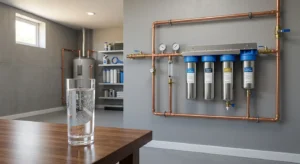
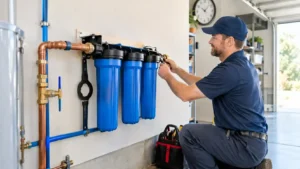
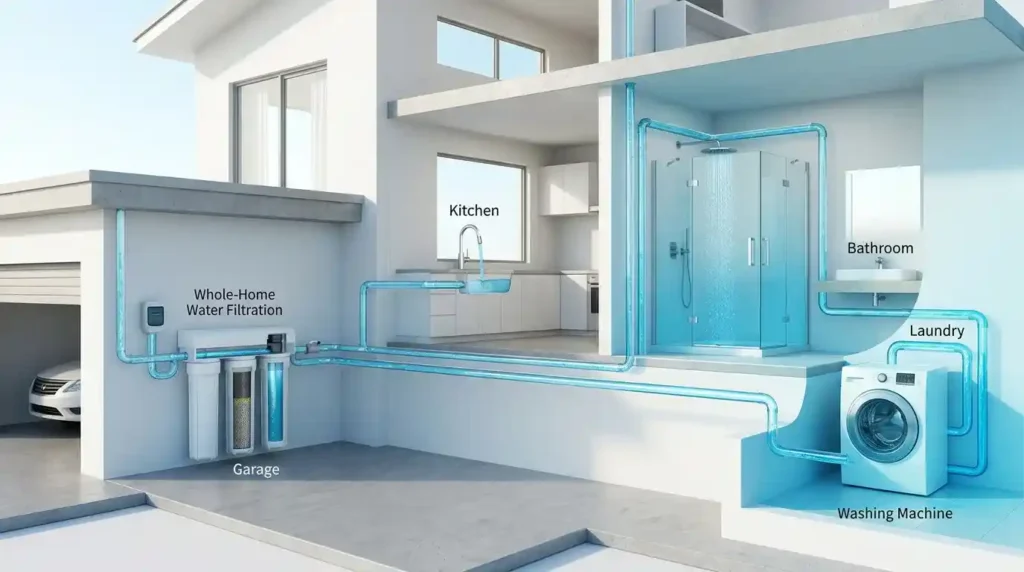
A whole home water filter is a point-of-entry system installed on your main supply line to treat all water entering your house before it reaches any tap, showerhead, or appliance.
Unlike small filters attached to single faucets, these setups clean water for drinking, cooking, bathing, and laundry simultaneously. They typically feature multi-stage designs to catch different contaminants at different steps.
Point-of-Entry vs. Point-of-Use Options
Understanding your setup options helps you avoid spending money on redundant systems:
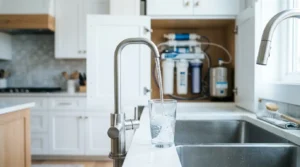
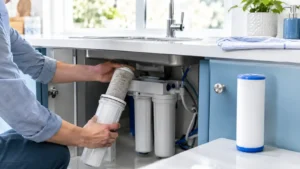
- Whole house filter vs under sink filter: Under-sink units treat dedicated drinking taps, whereas point-of-entry setups safeguard plumbing lines, water heaters, and showers.
- Inline vs whole house water filter: Inline filters attach directly to specific appliances like refrigerators or ice makers. They are cheap and quick to install, but their small cartridges require frequent changes and cover only one appliance.
- Whole house water filter vs reverse osmosis: A standard point-of-entry system uses physical media (like carbon) to remove bulk chemicals and sediment at high flow rates. Reverse osmosis relies on a semi-permeable membrane to strip dissolved solids, making it ideal for dedicated kitchen taps.
Signs You Need a Whole Home Water Filtration System
You need a whole-home filtration system if you notice persistent mineral crust on fixtures, chemical smells across all taps, or rapid appliance wear.
1. Persistent Chlorine or Chemical Odors
Municipal treatment facilities use chlorine or chloramines to disinfect water supplies. While necessary for municipal safety, these compounds evaporate into shower steam, irritating your lungs and drying out skin.
2. Crusty Mineral Deposits and Limescale
White buildup on faucets, showerheads, and glass doors indicates hard water. This scale coats heating elements inside dishwashers and water heaters, driving up energy costs and cutting appliance lifespans.
3. Discolored Water or Floating Sediment
Yellow, brown, or cloudy water signals rust flakes, sand, or silt in your lines. A simple sediment pre-filter traps these coarse minerals before they wreck valve seals and clog faucet aerators.
City Water vs. Well Water: What’s Actually in It?
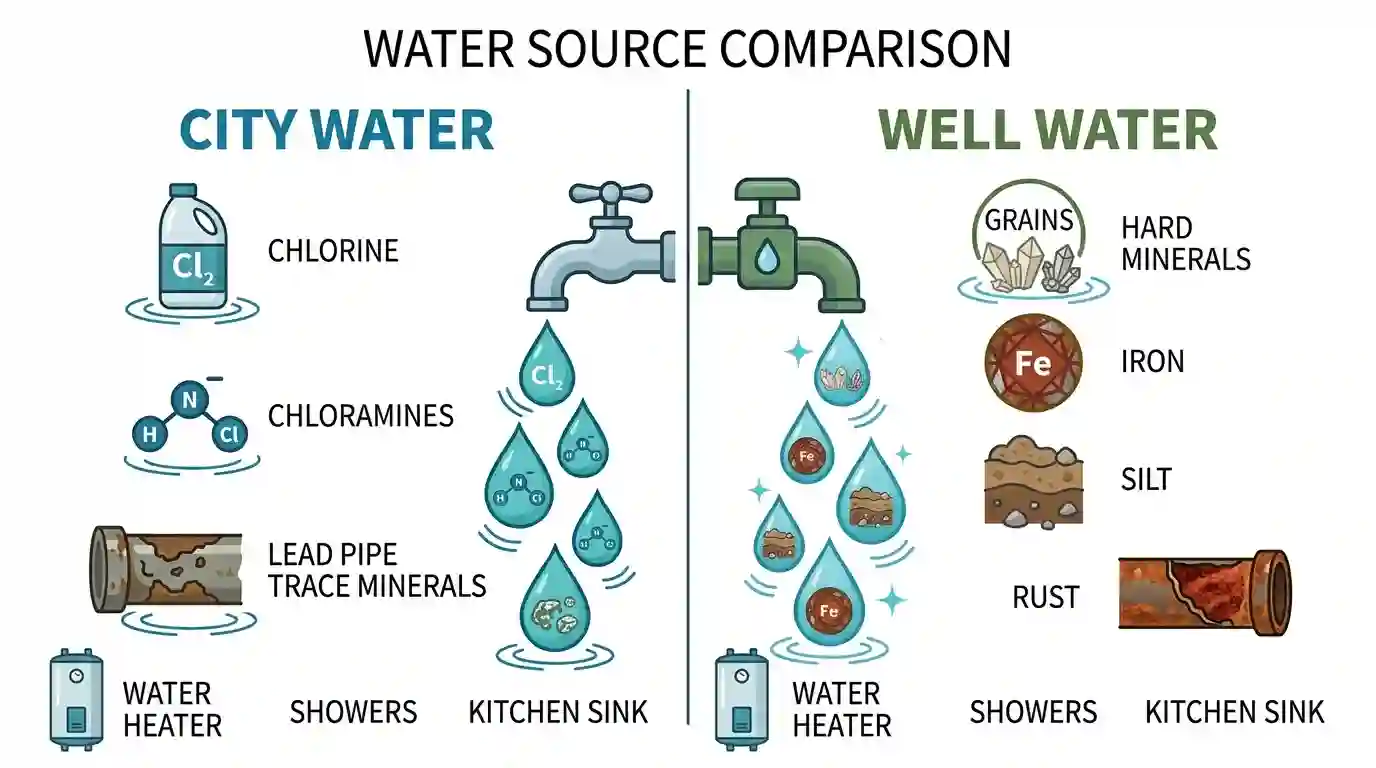
City water contains residual disinfectant chemicals like chlorine, chloramines, and pipe heavy metals, whereas well water frequently contains heavy minerals, iron, bacteria, and agricultural runoff.
Your incoming water line determines the exact filtration stages you need. Treating municipal tap water requires a vastly different approach than treating a private rural well.
| Water Characteristic | Municipal / City Water | Private Well Water |
| Primary Disinfectants | Chlorine, Chloramines | None (Unless UV added) |
| Common Contaminants | Disinfection byproducts, VOCs, lead | Iron, manganese, hydrogen sulfide, bacteria |
| Hardness Levels | Moderate to High | High to Severe |
| Testing Responsibility | Utility Provider | Homeowner |
City Water Challenges
Public utilities keep water biologically safe, but treatment additives like chloramines and chlorine leave unpleasant odors. Aging municipal distribution networks can also leach lead, copper, and sediment into supply lines before water reaches your home.
Well Water Challenges
Private wells are completely unregulated by public standards. Unfiltered well water often contains high levels of iron that leave orange tub stains, sulfur that smells like rotten eggs, and silt that ruins plumbing components.
Top Benefits of Installing Multi-Stage Filtration
Multi-stage filtration works like a relay team. Each stage handles one job, then passes the water along. Here’s what that can do for you:
- Better taste at every tap. Less chlorine and odor improves coffee, ice, and cooking.
- Gentler showers. Some people notice less dryness once chlorine is gone. Results vary.
- Less chlorine in shower steam. Filtering at the main line reduces what can turn to vapor.
- Protected plumbing. A sediment pre-filter keeps grit out of valves, washer screens, and your water heater.
- Brighter laundry. Chlorine can fade colors over time.
- Less bottled water. Filling a glass at home costs far less than buying cases.
Here’s the catch. A filter can’t remove what its media wasn’t built to catch. It won’t soften hard water, and it won’t fix every contaminant.
Whole House Filter vs. Water Softener vs. Reverse Osmosis
People mix these up constantly. Each one solves a different problem.
| System | What it does | What it doesn’t do | Best for |
| Whole house filter | Reduces chlorine, sediment, and many chemicals | Doesn’t remove hardness minerals | Whole-home taste, odor, sediment |
| Salt softener | Removes calcium and magnesium by ion exchange | Doesn’t remove chlorine or most chemicals | Hard water and scale |
| Salt-free conditioner | Reduces scale formation | Doesn’t remove hardness minerals | Scale control without salt |
| Under-sink RO | Reduces dissolved solids, nitrates, and many metals | Doesn’t treat the whole home | Drinking and cooking water |
| Inline filter | Treats one appliance or tap | Doesn’t protect other plumbing | Fridge, ice maker, renters |
Whole house water filter vs reverse osmosis is the most common mix-up. RO treats one tap with a fine membrane, so it removes more dissolved contaminants. A whole house filter treats every tap but doesn’t reach that level. Many homes use both. The whole house unit protects the plumbing, and the RO unit polishes drinking water.
Whole house filter vs water softener is simpler. A filter removes contaminants. A softener removes hardness minerals. If you have both chlorine and scale, you may need both.
How to Find Out What’s in Your Water
You can determine your water quality by reviewing your city’s annual Consumer Confidence Report or ordering an independent laboratory water test for private wells.
Guessing your water quality often leads to buying the wrong filtration media. Gathering reliable testing data ensures your multi-stage configuration targets exact contaminants.
- For City Water: Search online for your local utility provider’s Consumer Confidence Report (CCR). This annual report details regulated contaminant levels and treatment methods.
- For Private Wells: Send a water sample to an accredited certified laboratory. Test specifically for total dissolved solids (TDS), coliform bacteria, nitrates, iron, pH, and hardness grains per gallon.
How Much Does a Whole House Water Filter Cost?
A complete whole-home water filtration setup costs between $600 and $3,000 for equipment, with professional installation adding $500 to $1,500 depending on plumbing layout.
Equipment Purchase : $600 – $3,000 (Based on stages & capacity)
Professional Install : $500 – $1,500 (Varies by plumbing layout)
Annual Maintenance : $100 – $300 (Filter cartridge replacements)
Initial Purchase and Setup Costs
Entry-level 2-stage systems start around $150 to $300, while robust multi-stage POE systems bundled with salt-free conditioners range from $800 to $2,500. Complex installations requiring main line bypasses or outdoor enclosures increase labor expenses.
Long-Term Maintenance and Savings
Replacing sediment pre-filters and carbon blocks annually costs roughly $100 to $300. This expense is easily offset by eliminating store-bought bottled water, lowering water heater energy bills, and preventing premature appliance replacements.
Localized Filtration Guidance
Plumbing layouts, hard water levels, and regional municipal lines vary significantly by city. If you live in Northern California, regional hard water issues make tailored multi-stage protection essential. For localized assistance, professional Water Filtration Installation Services in Tracy, CA can help assess your main supply line and install balanced point-of-entry equipment. At RO Water Filter System, we offer specialized recommendations to keep your plumbing protected and your home water clean.
Final Thoughts
Determining if Do You Need a Whole Home Water Filter comes down to protecting your entire house versus managing isolated taps. If you’re dealing with bad taste, dry skin, or scaled fixtures, a point-of-entry system provides complete peace of mind. Test your water today to pick the right filtration setup for your home, and feel free to Contact us with any questions.
Frequently Asked Questions
Do whole home water filters reduce water pressure?
A correctly sized system will not drop water pressure noticeably. Choosing a system rated for your home’s peak flow rate typically 7 to 15 gallons per minute keeps shower and tap pressure strong.
How often do whole-home filter cartridges need replacing?
Sediment pre-filters require replacement every 3 to 6 months, while main carbon blocks last 6 to 12 months depending on household water usage.
Can I install a whole home water filter myself?
Handy homeowners can install basic systems using push-fit connectors. However, complex multi-stage installations involving main water cut-offs, copper soldering, or drain lines are best handled by licensed plumbers.
Does a whole house water filter remove chloramine?
It can, if it uses catalytic carbon. Chloramine is tougher to remove than chlorine, so standard carbon often falls short. Look for a system tested to NSF/ANSI 42 with a listed chloramine claim, and check the flow rate before you buy.
Does a whole house water filter reduce water pressure?
A properly sized system causes only a small pressure drop. Problems appear when the filter is too small for your home’s flow rate, measured in gallons per minute (GPM), or when clogged cartridges go unchanged. Matching the system to your plumbing and replacing cartridges on schedule keeps pressure steady.