If you’re staring at your water bill wondering why your glass still tastes off, you’re not alone. Most homeowners ask the same question before they buy anything: how much does a water filtration system cost? The short answer is that most homeowners pay somewhere between $200 for a basic under-sink unit and $4,500 for a fully installed whole-house system with softening built in.
That range depends on your water source, the size of your home, and how many contaminants you’re trying to remove. I’ll walk you through real pricing for every system type, what drives the cost up or down, and how to avoid paying for filtration stages your water doesn’t even need. By the end, you’ll know exactly what to budget and why.
Average Water Filtration System Cost by Type
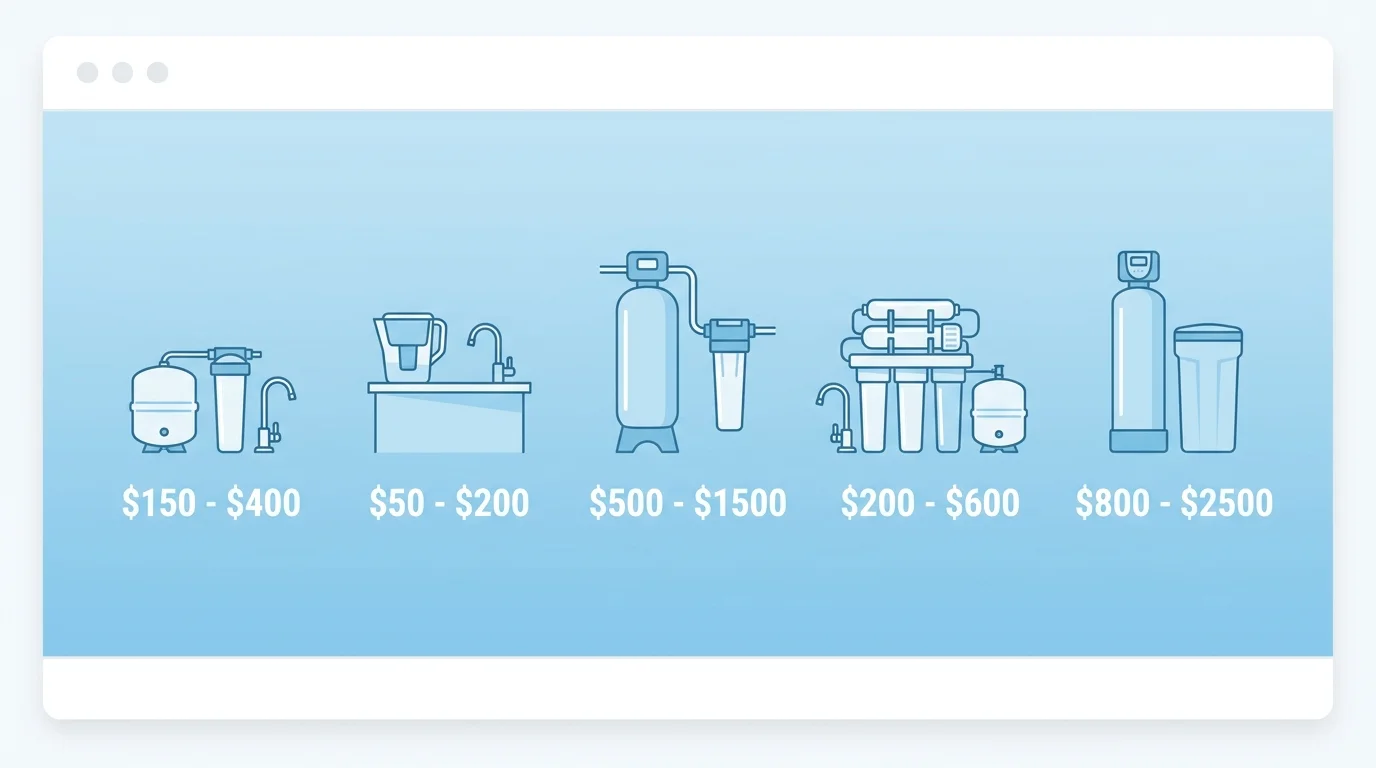
A cost comparison of common water filtration system types, from under-sink filters to whole-house softeners, with average price ranges for each.
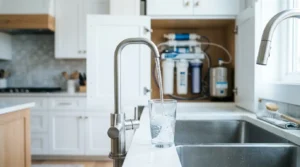
The overall price tag depends heavily on where and how the equipment treats your water supply. A small point-of-use unit focuses strictly on single-faucet drinking water, whereas point-of-entry equipment purifies every drop entering your household plumbing lines.
| Filtration System Type | Average Unit Price | Average Installation Cost | Total Estimated Investment |
| Under-Sink Filter | $100 – $400 | $100 – $250 | $200 – $650 |
| Under-Sink Reverse Osmosis | $150 – $500 | $150 – $300 | $300 – $800 |
| Whole-House Carbon System | $600 – $1,500 | $300 – $800 | $900 – $2,300 |
| Water Softener / Conditioner | $700 – $1,800 | $400 – $1,000 | $1,100 – $2,800 |
| UV Disinfection System | $400 – $1,000 | $200 – $500 | $600 – $1,500 |
| Well Water Filtration Unit | $1,200 – $3,500 | $500 – $1,200 | $1,700 – $4,700 |
Under-sink units remain the go-to budget pick for renters or homeowners who only care about pure drinking water. Whole-house configurations demand a bigger upfront commitment, but they protect your pipes, hot water heater, and water-using appliances from scale buildup and harsh chemicals.
Water Filtration System Cost Breakdown: Equipment vs. Installation
Understanding how your money gets divided helps prevent surprise fees during setup. Your invoice typically splits into two main buckets: hardware costs and professional plumbing labor.
- Equipment & Media: Tank size, valve quality, and internal media (like catalytic carbon or KDF media) dictate hardware pricing.
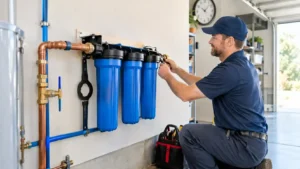
- Plumbing Labor: Professional installers charge between $450 and $1,200 depending on regional rates, pipe accessibility, and existing loop setups.
- Permits and Misc. Parts: Some municipalities require plumbing permits ($50–$150). You may also need extra shut-off valves, bypass lines, or drain connections.
Whole-House Water Filtration System Cost
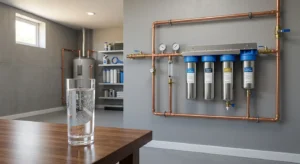
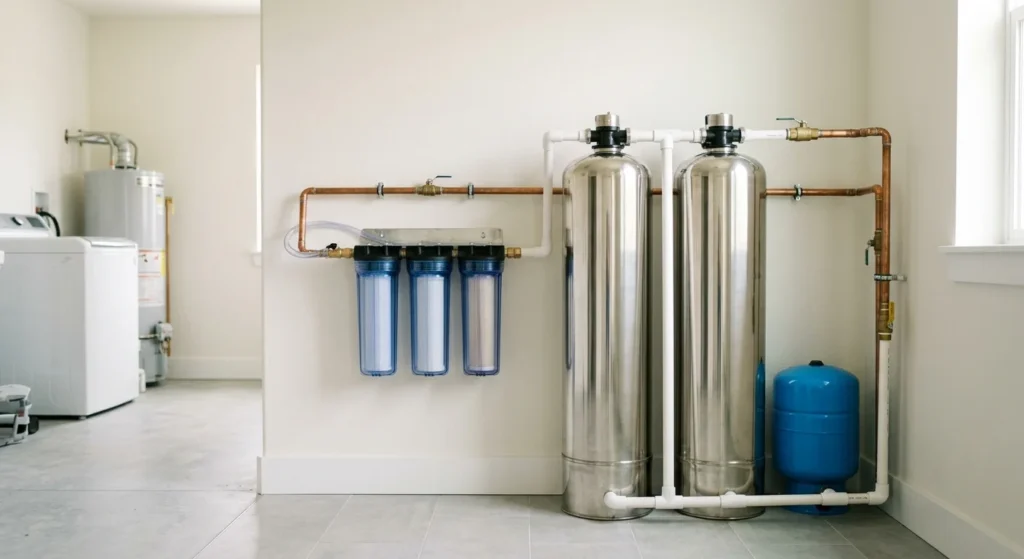
A whole-home water filtration system cost typically ranges from $800 to $2,800 including professional installation. This price covers standard single- or dual-tank units designed to filter municipal supplies.
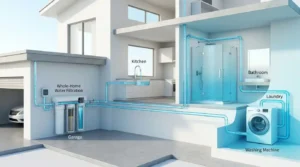
These systems attach directly to your main supply line, removing unwanted elements before water reaches your kitchen, showers, or washing machine.
- Basic Cartridge Units ($300 – $800 total): Multi-stage filter housings using replaceable filter cartridges. Great for low-to-moderate water usage.
- Backwashing Tank Systems ($1,200 – $3,000+ total): Heavy-duty setups containing media beds that clean themselves automatically. Though pricier upfront, their media bed lasts up to 10 years, saving money on replacement filters down the road.
Water Softener and Conditioner Cost
A water softener costs $800 to $2,500 installed, while a salt-free conditioner runs closer to $1,000 to $2,800. Traditional softeners use salt and resin beads to remove calcium and magnesium through ion exchange. Conditioners use a different process, often Template Assisted Crystallization, to neutralize hardness minerals without removing them or using salt.
If you’re on a well and dealing with scale buildup on fixtures, a softener pays for itself over time by protecting appliances like water heaters and washing machines. Salt-based units need periodic salt refills, which adds a small recurring cost that salt-free conditioners avoid.
Combination units that pair a carbon filter with a conditioner in one tank cost more upfront but save space and cut down on separate maintenance schedules.
Water Filtration System Cost for Well Water vs. City Water
Private wells and municipal water supplies present vastly different purification challenges, directly driving system costs.
Municipal (City) Water Needs
City water treatment focuses primarily on taste, odor, and chemical byproducts left behind during public disinfection.
- Primary targets: Chlorine, chloramines, volatile organic compounds (VOCs), and municipal sediment.
- Typical setup: Catalytic carbon paired with a sediment pre-filter.
- Total expected cost: $800 – $2,000.
Private Well Water Needs
Well supplies are raw groundwater, so they often contain complex organic and inorganic compounds.
- Primary targets: High iron and manganese levels, hydrogen sulfide (rotten egg smell), heavy sediment, acidic pH, and micro-organisms.
- Typical setup: Air injection oxidation filters, green sand media beds, and UV disinfection systems.
- Total expected cost: $1,800 – $4,500+.
Factors That Affect Water Filtration System Cost
Why do two neighbor homes sometimes pay totally different prices for clean water? Several variables move the needle:
Water Quality Test Results: High levels of chloramines or dissolved iron demand specialized media, which costs more than basic activated carbon.
- Flow Rate Requirements: Sizing a unit for a 1-bathroom home requires less capacity (10 GPM) than a 4-bathroom household (18-20 GPM). Higher flow rates demand larger tanks and larger media beds.
- Plumbing Modifications: Installing a bypass valve, retrofitting aged galvanized pipes, or adding dedicated electrical outlets for backwash heads increases labor charges.
- Third-Party Certifications: Systems carrying independent NSF/ANSI certifications (like Standard 42 for taste/chlorine or Standard 53 for heavy metals) undergo strict testing, reflecting in slightly higher equipment pricing.
Hidden Long-Term Costs: Filters, Maintenance, and Utilities
Upfront equipment fees are only part of the equation. Calculating your long-term total cost of ownership keeps your home budget on track.
Beyond replacement filters, account for minimal utility shifts:
- Water Usage: Reverse osmosis systems flush extra water down the drain during purification (often a 1:1 or 2:1 waste-to-pure ratio), slightly altering municipal water bills.
- Electricity: Automatic backwashing valves and UV lights draw modest power, usually adding less than $20 to your annual electric bill.
How to Get the Best Value on a Water Filtration System
Getting the best value means paying only for the exact filtration stages your specific water chemistry requires. Buying a massive well water system for low-chlorine city water wastes cash on features you’ll never use.
- Test Before Buying: Order an independent water test to identify exact total dissolved solids (TDS), hardness levels, or contaminants.
- Right-Size Your System: Don’t buy a massive unit if your peak flow rate only demands 12 GPM.
- Compare Warranties: Look for lifetime tank warranties and at least 5-year coverage on control valves.
Local Expertise Matters
If you’re looking for tailored solutions, working with local experts makes all the difference. For regional homeowners seeking custom installation without the guesswork, check out RO Water Filter System for top-tier Water Filtration Installation Services in Tracy, CA. Getting your system installed right the first time protects your home and keeps your water running pure.
Final Thoughts
A water filtration system cost ranges anywhere from $200 for simpler point-of-use options up to $3,000+ for multi-stage whole-house units. Matching your system directly to your household’s daily water usage and specific test results ensures you don’t overpay for unnecessary stages.
Ready to figure out the exact setup your home needs? Contact us today to get your water tested and lock in a clear, upfront estimate.
Frequently Asked Questions
What is the average lifespan of a whole-house water filter?
A quality whole-house water filter system lasts between 10 and 15 years with basic maintenance. While heavy-duty tanks and control valves endure for over a decade, internal filter media beds typically require replacement every 5 to 10 years, and pre-filter cartridges need swapping every 3 to 6 months.
Can I install a whole-house water filtration system myself to save money?
Yes, handy homeowners can install basic cartridge-style whole-house systems themselves, saving $300 to $800 in plumbing labor costs. However, complex backwashing tanks, water softeners, or systems requiring main supply line rerouting are best handled by licensed plumbers to prevent leaks and protect warranties.
Does a water filtration system increase home value?
Yes, an installed whole-home water purification system or softener can increase home appeal and property value. Homebuyers view clean water setups as valuable upgrades that protect plumbing fixtures, reduce appliance wear, and eliminate the need for personal point-of-use units.
How long does a water filtration system last?
Most tank-based systems last 10 to 15 years with proper maintenance, while cartridge-based systems can last just as long if you keep up with filter swaps. The tank and housing usually outlast the filter media inside, which is the part that needs regular attention.
Can I install a water filtration system myself?
Under-sink and countertop filters are usually simple enough for a homeowner to install without help. Whole-house systems, reverse osmosis setups, and anything requiring a new drain line are better left to a licensed plumber to avoid leaks or voided warranties.