You’re holding a quote for a whole home water filtration system, and the price made you pause. That’s a smart reaction. So, is full house water filtration worth it? Yes, if you own your home and deal with chlorine taste, hard water scale, sediment, or well water problems. No, if you rent or only want better drinking water.
I’ll give you a straight answer backed by numbers you can check against your own quotes. You’ll see what these systems do, what they miss, what they cost, and how to tell if your home needs one. I’ll also cover what filter is best for drinking water, since that’s a different job from protecting your whole house.
Quick Answer: Is a Whole House Water Filter Worth It?
A whole house water filter is worth it if you own your home, rely on unchlorinated well water, or want to protect your plumbing and appliances from scale, chlorine, sediment, and heavy metals. It provides treated, clean water from every single tap, shower, and household appliance.
However, if you live in an apartment or only care about improving the taste of your cooking water, an under-sink unit or countertop pitcher is a far more budget-friendly solution.
Benefits of Whole House Water Filtration
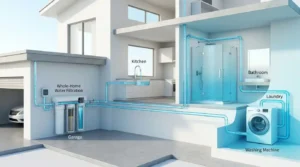
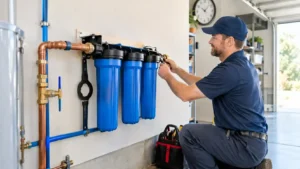
Installing a point-of-entry treatment unit changes how water interacts with your entire home. Instead of treating problem water at a single tap, these systems intercept water right where the main supply line enters your property.
1. Protection for Plumbing and Home Appliances
Unfiltered tap water carries sediment, rust flakes, dissolved minerals, and chemical oxidizers. Over time, sediment abrasion eats away at pipe walls, while scale builds up inside your water heater, dishwasher, and washing machine.
By placing a sediment filter and chemical media tank at the entry point, you shield your appliances. Water heaters operate up to 29% more efficiently without scale buildup, which translates directly to lower monthly energy bills and extended appliance lifespans.
2. Improved Skin and Hair Health
Chlorine and chloramines are standard municipal disinfectants, but they strip natural oils from your skin and hair. Bathing in chlorinated water can trigger eczema flare-ups, scalp irritation, and brittle hair. Furthermore, hot shower steam vaporizes chemicals into chloroform gas, degrading indoor air quality. Removing these chemicals at the main line makes daily showers significantly gentler on your body.
3. Comprehensive Water Security
Point-of-use pitch filters only protect what you pour into a glass. They do not clean the water you use to rinse vegetables, wash clothes, or brush your teeth. A centralized filtration setup delivers clean, safe water across every room in your residence, giving you total peace of mind.
Pros and Cons of Whole-House Water Filters
To evaluate whether this investment fits your goals, you need to balance the practical advantages against the real-world operational trade-offs.
| Pros | Cons |
| Filters water at every tap, faucet, and shower head | High upfront purchase and installation costs |
| Protects expensive plumbing and water heating equipment | Requires dedicated floor space in a garage or basement |
| Eliminates harsh chlorine odors and shower steam vapors | Needs routine filter cartridge and media replacements |
| Increases property value for future homebuyers | Not suitable or practical for renters or apartments |
Whole-House Filter vs. Reverse Osmosis vs. Water Softener: What’s the Difference?
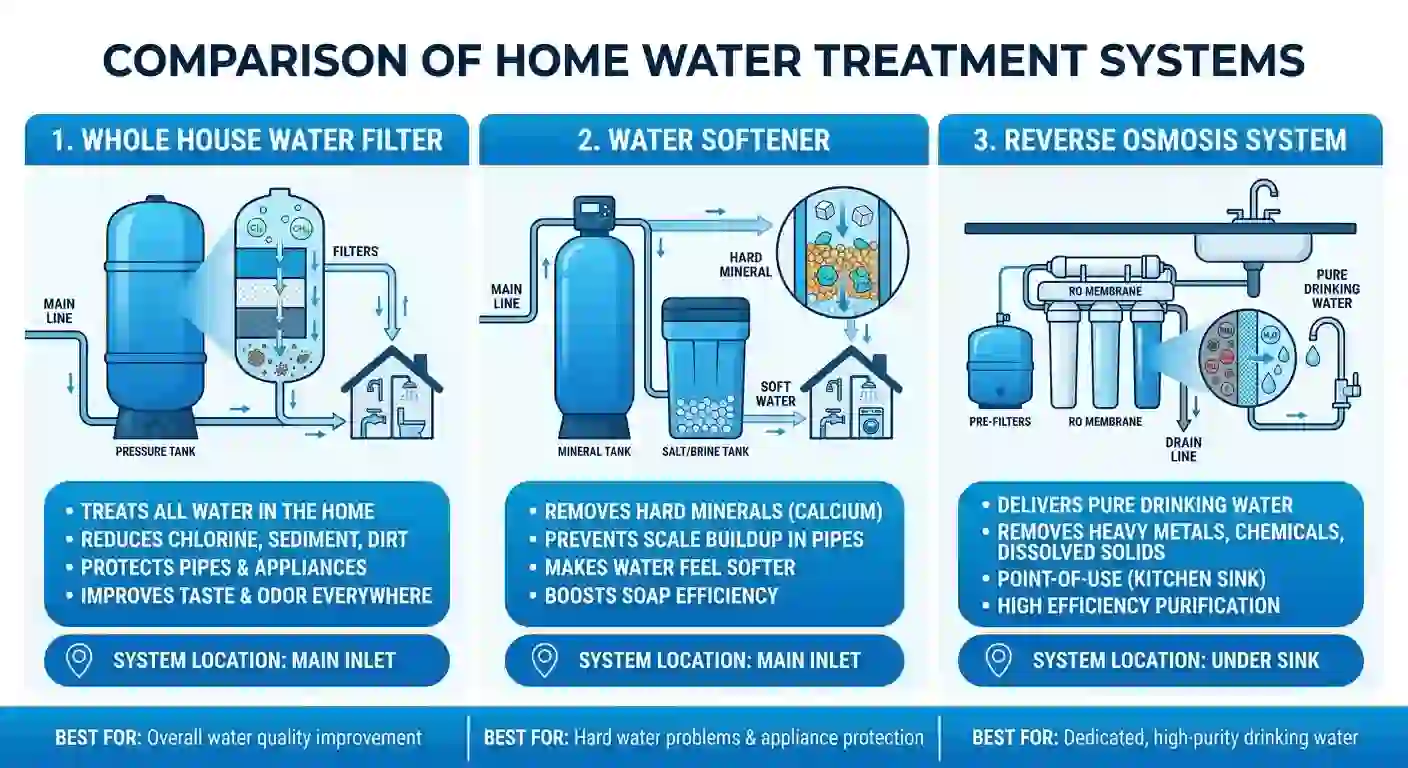
A common mistake homeowners make is assuming one system fixes every water issue. In reality, these three technologies perform entirely different jobs.
Whole-House Water Filter
This system targets water quality issues across the entire property. Using activated carbon filters, catalytic carbon, or sediment pleated cartridges, it pulls out chlorine, chloramines, pesticides, industrial solvents, and physical debris like dirt or rust particles.
Water Softener
A water softener is not a filter. It uses an ion-exchange process with salt brine to strip hard minerals like calcium and magnesium from your water supply. While it prevents stubborn scale buildup on fixtures, it does not remove chemical contaminants, chlorine, or heavy metals. Many homes with hard water require both a softener and a filtration system working together.
Reverse Osmosis (RO) System
An RO unit pushes water under pressure through a ultra-fine semi-permeable membrane. It strips up to 99% of total dissolved solids (TDS), including lead, nitrates, arsenic, microplastics, and fluorides.
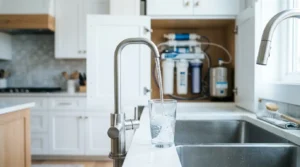
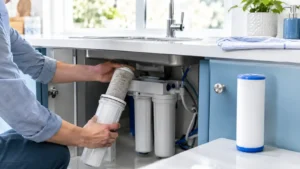
Because high-volume RO systems are expensive and produce wastewater, they are usually installed as point-of-use units right under the kitchen sink specifically for drinking and cooking.
City Water vs. Well Water: Do You Really Need Whole-Home Treatment?
Your water source dictates the exact setup you need.
Municipal (City) Water Considerations
Public utility water is monitored to meet Environmental Protection Agency (EPA) standards. However, “regulated” does not mean completely pure. Cities rely heavily on chlorine or chloramine for disinfection, leaving a chemical taste and odor.
Additionally, water travels through miles of aging city mains and home service lines, picking up lead, microplastics, sediment, and trace industrial compounds like PFAS before reaching your faucet. A catalytic carbon whole home system effectively neutralizes these disinfectant chemicals and residual debris.
Private Well Water Considerations
Private wells are completely unregulated by federal health standards. You are entirely responsible for testing and treating your own supply. Groundwater often carries heavy concentrations of sand, clay sediment, dissolved iron (which leaves red-orange stains), sulfur (which creates a rotten-egg smell), and coliform bacteria from agricultural runoff.
If you draw from a private well, a multi-stage system featuring heavy-duty sediment trapping, iron oxidation tanks, and a UV light sterilizer is essential to protect your health and plumbing fixtures.
Key Factors to Consider Before Buying a Whole-House System
Before purchasing any unit, evaluate these core specifications to avoid water pressure drops or under-performing equipment.
1. Flow Rate (GPM)
System capacity is measured in gallons per minute (GPM). If your home requires 10 GPM during peak hours such as running a shower, washing machine, and dishwasher at the same time but you install a 5 GPM system, your water pressure will drop drastically.
- 1 to 2 Bathrooms: 8 to 10 GPM capacity
- 3 to 4 Bathrooms: 12 to 15 GPM capacity
- 5+ Bathrooms: 20+ GPM capacity
2. Number of Filtration Stages
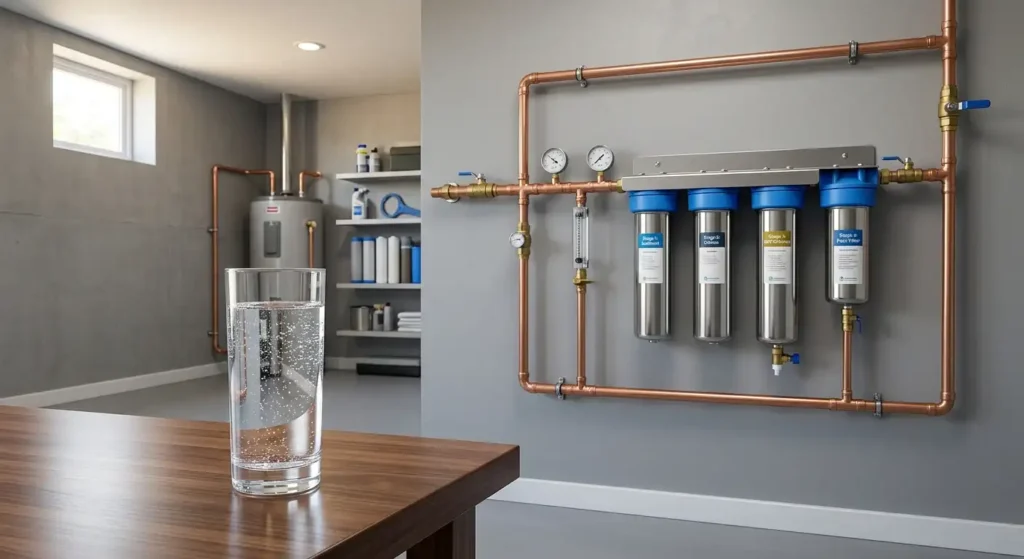
Multi-stage filtration setups use specialized media in sequential order:
- Stage 1 (Sediment Pre-Filter): Traps dirt, sand, and rust down to 5 microns to prevent clogging downstream filters.
- Stage 2 (Kinetic Degradation Fluxion / KDF Media): Uses copper-zinc formulations to reduce heavy metals and extend carbon lifespan.
- Stage 3 (Activated or Catalytic Carbon): Adsorbs chlorine, chloramines, synthetic organic chemicals, and foul odors.
- Stage 4 (Post-Filter or UV Lamp): Catches microscopic media fines or neutralizes
3. Independent Certifications
Never rely on unverified marketing claims. Look for systems tested and certified by recognized authorities like NSF International, IAPMO, or the Water Quality Association (WQA):
- NSF/ANSI Standard 42: Establishes performance criteria for aesthetic factors like chlorine taste and odor.
- NSF/ANSI Standard 53: Validates reduction of specific health-related contaminants like lead, VOCs, and MTBE.
- NSF/ANSI Standard 55: Covers ultraviolet microbiological water treatment systems.
Cost Breakdown: Upfront Investment vs. Long-Term Maintenance
Evaluating whether a whole house filter makes financial sense requires looking at both initial equipment expenses and ongoing maintenance costs.
Initial Expenses
- Basic DIY Cartridge System: $300 – $800 (suitable for basic sediment and chlorine removal).
- Advanced Heavy-Duty Media Tank System: $1,200 – $3,000 (offers multi-stage treatment with a 5-to-10-year lifespan).
- Professional Plumbing Installation: $500 – $1,500 depending on pipe access, bypass valve needs, and local labor rates.
Annual Maintenance Costs
- Sediment Pre-Filters: $30 – $80 per year (replaced every 3 to 6 months).
- Main Carbon Replacement Media or Cartridges: $100 – $300 per year (replaced annually or bi-annually depending on capacity).
- UV Lamp Replacement (If Applicable): $80 – $150 annually.
Financial Example:
Consider an average family spending 45permonthonbottleddrinkingwaterandwater-pitcherreplacements(540/year). Over five years, that totals $2,700 spent on temporary fixes that create plastic waste and fail to protect home plumbing.
A quality $1,800 whole-house system with $120 in annual maintenance costs pays for itself within four to five years while simultaneously adding protection for expensive appliances like hot water heaters.
What Filter Is Best for Drinking Water?
The best filter for drinking water is a multi-stage Reverse Osmosis (RO) system installed directly at the point of use. While a whole-house filter excels at broad sediment and chemical extraction across every faucet, an under-sink RO system delivers ultra-pure drinking water by stripping micro-contaminants, heavy metals, and dissolved solids down to the molecular level.
I always suggest combining both approaches for the ideal home setup. Use a whole-home carbon system to handle main-line issues like chlorine, shower steam, and sediment, then pair it with an under-sink RO filter in the kitchen. This dual arrangement protects your plumbing pipes while providing crisp, clean, bottled-quality drinking water right where you need it most.
How to Choose the Right System (Step-by-Step)
Follow this simple checklist to avoid overspending on features you do not need:
- Test Your Water First: Order a certified laboratory test or request your city’s annual Consumer Confidence Report. Do not guess what is in your water.
- Identify Specific Target Contaminants: If your issue is hard water scale, select a softener. If it is chlorine odor or cloudiness, pick a carbon unit. If you have well bacteria, prioritize UV treatment.
- Calculate Peak Water Demand: Count the total bathrooms in your home to ensure you pick a unit with a high enough GPM rating.
- Budget for Maintenance: Verify cartridge prices and replacement frequencies so long-term operating costs fit your household budget.
internal drop-in cartridges every 6 to 12 months.
Final Thoughts: Finding the Right Solution
Determining if a full house filtration setup makes sense comes down to evaluating your water quality test against your household goals. If you want to protect your home’s infrastructure, prevent dry skin, and eliminate municipal chemical odors across every single room, a whole-house system is a reliable, high-value home improvement.
If you are evaluating custom setups or require expert guidance on whole home vs. point-of-use equipment, explore Water Filtration Installation Services in Tracy, CA or contact us directly at RO Water Filter System, to review What Is the Best Water Filtration System for Home tailored to your specific water source.
Frequently Asked Questions
Does a whole house water filter reduce water pressure?
A properly sized system will not reduce noticeable water pressure. However, if you choose a system with a GPM rating lower than your peak home demand, or if you fail to replace clogged sediment pre-filters, water flow will drop significantly.
Does a whole house filter remove calcium and prevent hard scale?
No, standard filtration media does not remove dissolved calcium or magnesium. To treat hard water scale, you must install a dedicated ion-exchange water softener or a salt-free water conditioner alongside your filter.
How long do whole-home filtration systems last?
Heavy-duty media tank systems typically last between 7 and 10 years before the main carbon bed requires replacement. Standard filter housings last indefinitely, provided you replace the
Can I Install a Whole House Water Filter Myself?
Handy homeowners can install a basic cartridge-style system, but tank systems with drain lines and bypass valves usually need a licensed plumber. Local codes may require permits. A bad install can cause leaks or low pressure, so hire a pro if you’re unsure.
Do Whole House Water Filters Work?
Yes, whole house water filters work for the contaminants they’re designed and certified to reduce, such as chlorine, sediment, and rust. They don’t remove everything. PFAS, lead, nitrates, and bacteria need specialized media, UV, or a point-of-use system like reverse osmosis.