Most people forget when they last changed their filter. That’s normal. The short answer: water filters last from 2 months to 5 years, depending on type. Pitcher cartridges sit at the short end, and RO membranes reach the long end.
If you’re asking what is the lifespan of a water filter in your own home, I’ll help you find the real number. You’ll get a lifespan chart, a simple formula, warning signs, yearly costs, and a clear look at what happens when you wait too long. I’ll also cover how hard water and chloramine change the math.
How Long Does a Water Filter Last?
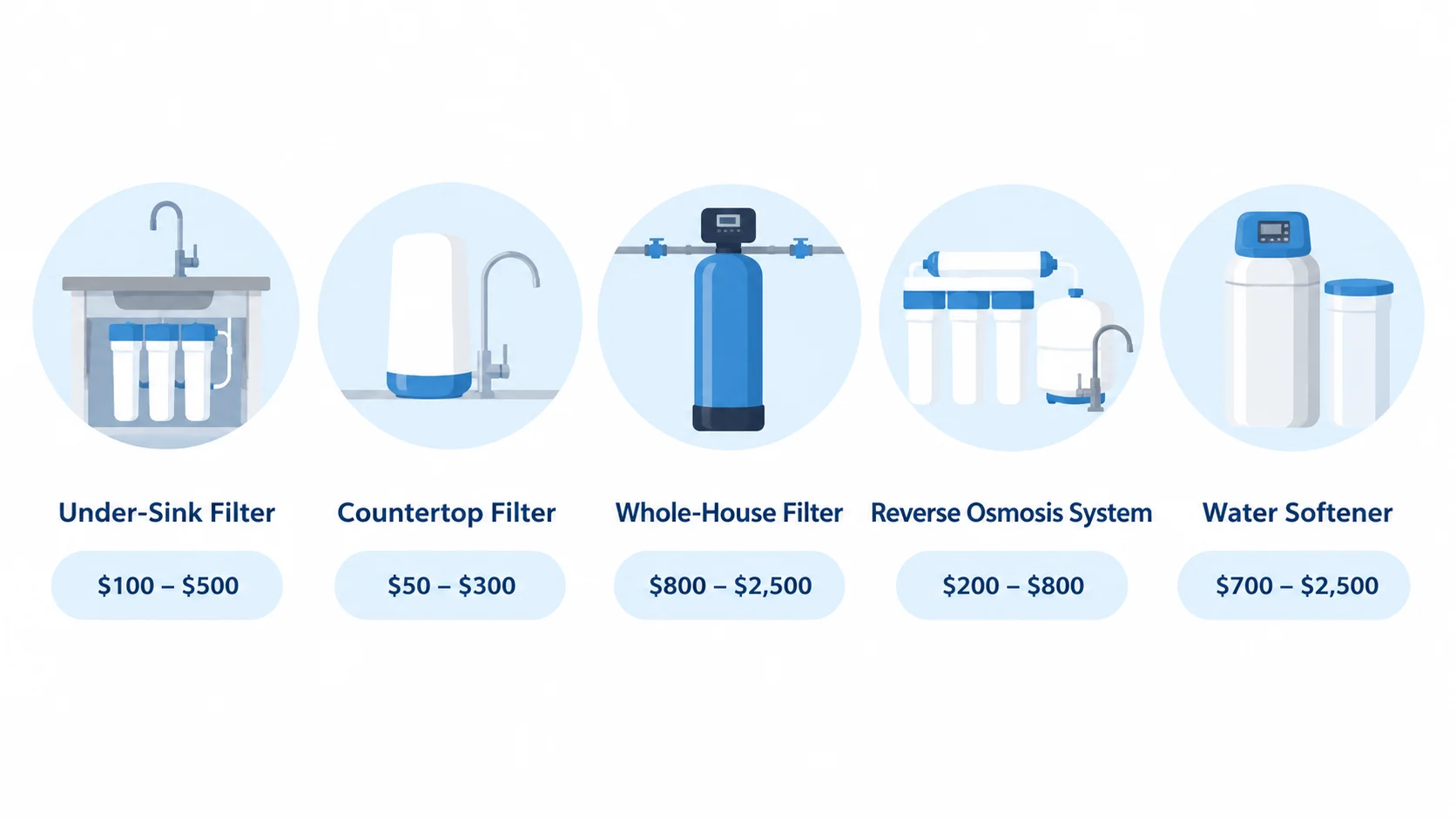
Most water filters last between 2 and 12 months, and reverse osmosis membranes last 2 to 5 years. Pitcher filters need changing every 2 months, refrigerator filters every 6 months, and sediment or carbon cartridges every 3 to 12 months. Whole-house media tanks can run for several years.
These are planning ranges, not promises. Every cartridge has a rated filter capacity in gallons and a maximum filter replacement interval in months. Follow whichever limit you reach first. Your label has the final word.
| Filter type | Typical replacement interval |
| Standard pitcher cartridge | 2 months (about 40 gallons) |
| Long-life pitcher cartridge | Up to 6 months |
| Faucet-mounted filter | 2 to 3 months |
| Refrigerator filter | 6 months |
| Sediment pre-filter | 3 to 9 months |
| Under-sink carbon filter | 6 to 12 months |
| RO pre-filters | 6 to 12 months |
| RO membrane | 2 to 5 years |
| RO post-filter | 12 months |
| Whole-house cartridge | 3 to 12 months |
| Whole-house media tank | 5 to 10 years |
Two terms get mixed up. Filter lifespan means how long a cartridge works well. System lifespan means how long the housings, tanks, and valves last. Housings and tanks often run 10 years or more. The cartridges inside wear out much sooner.
Lifespan by Filter Type
Pitcher and Faucet-Mounted Filters
Pitcher cartridges and faucet attachments feature compact housings filled with activated carbon granules and ion-exchange resin. Because of their tiny size, they handle only 40 to 200 gallons before losing adsorption capacity, translating to roughly 2 to 3 months of daily use.
Refrigerator Water Filters
Refrigerator filters clean drinking water and keep ice makers free of bad tastes and odors. Appliance manufacturers engineer these internal carbon blocks to last 6 months under standard family usage, or about 200 to 300 gallons.
Sediment Pre-Filters
Sediment cartridges serve as your system’s frontline defense, catching physical particles like sand, silt, rust, and pipe scale. They generally last 3 to 6 months, though heavy sediment spikes from nearby utility work or well pumps can clog them much sooner.
Activated Carbon Filters
Activated carbon blocks remove chlorine, chloramine, volatile organic compounds (VOCs), and unpleasant odors. Depending on your water quality and total consumption, carbon cartridges offer a reliable filter service life of 6 to 12 months.
Reverse Osmosis (RO) Membranes
Reverse osmosis membranes feature microscopic pores that strip out dissolved solids, heavy metals like lead, fluoride, and arsenic. Protective pre-filters keep these delicate membranes running smoothly for 2 to 4 years before total dissolved solids (TDS) levels begin to rise.
How to Calculate Your Water Filter’s Lifespan
The simplest way to calculate your water filter’s lifespan is by dividing its rated gallon capacity by your household’s daily filtered water usage. This basic calculation reveals the true service life of your cartridge instead of relying solely on an arbitrary calendar date.
- Single-Person Household: A single resident uses about 2 gallons of filtered water per day for drinking and cooking. Dividing 1,000 by 2 yields 500 days of service. However, because wet carbon media degrades over time, the owner should still respect the manufacturer’s maximum 12-month calendar cap to prevent microbial growth.
- Family of Five: A family of five uses around 8 gallons daily across water bottles, cooking pots, dog bowls, and refrigerator lines. Dividing 1,000 by 8 yields 125 days, meaning this family will need a filter replacement every 4 months.
Key Factors That Shorten Your Water Filter’s Lifespan
Water Quality
Dirty water uses up filters faster. Sediment clogs cartridges. Hard water leaves scale on membranes and housings. Chlorine and chloramine load carbon, and chloramine is harder to remove. Many California utilities use it, and catalytic carbon handles it better.
Many Central Valley and Bay Area homes have hard water, so expect the short end of each range. Read your utility’s annual Consumer Confidence Report to see what’s in your supply. Main repairs and nearby construction can also stir up sediment overnight.
Household Usage
More water means a faster filter. Big families, daily cooking, and ice makers all drain filter capacity. Water pushed through above the rated flow rate also spends less time touching the media. Less contact time means weaker treatment.
Skipped Pre-Filters
Think of a sediment filter as a doorman. If he quits, the whole crowd reaches the next room. Overdue pre-filters push grit and chlorine into later stages. On service calls, the most common problem I see is an RO membrane that failed early because the pre-filters ran late.
Pressure, Heat, and Idle Time
Most RO units need at least 40 psi to work well. Pressure above 80 psi stresses fittings and housings, and a pressure regulator can fix that. Hot water damages cartridges, so keep it away from them. A filter that sits wet in a vacation home can turn stale, so flush it before you drink.
Top Signs It’s Time to Change Your Water Filter
A noticeable drop in water pressure at the tap is the most common sign that your filter needs changing. As trapped sediment, rust, and debris fill up the tiny pores inside the cartridge, water struggles to pass through, causing flow rate restriction.
Watch out for these clear warning signals:
- Slower Flow Rates: Water trickles out of your faucet dispenser or takes twice as long to fill a pitcher.
- Return of Off-Tastes or Odors: Unpleasant chlorine smells, metallic notes, or musty tastes return as carbon media hits complete saturation.
- Cloudy or Discolored Water: Fine particles or sediment bypass clogged media, leaving water looking murky.
- Rising TDS Readings: A digital TDS meter reveals increasing total dissolved solids downstream of your reverse osmosis system.
- Indicator Light Warnings: Built-in system monitors alert you that the internal timer or gallon counter has expired.
How to Extend the Lifespan of Your Water Filtration System
You can’t stretch a cartridge past its capacity. You can stop wasting it. These habits protect every stage:
- Replace pre-filters on schedule, since they protect the membrane.
- Flush new cartridges to clear loose carbon fines.
- Add pressure gauges before and after a whole-house system to spot clogging early.
- Check backwash settings on tank systems, because too short a cycle leaves media dirty.
- Store spare cartridges sealed, cool, and dry.
- Clean the housing and check the O-ring at every change.
- Write the install date on the housing with a marker.
Set a phone reminder two weeks before each due date. A simple alert beats a perfect memory.
What Does Filter Replacement Cost per Year?
Annual water filter replacement costs range from $30 for basic pitcher cartridges up to $150 or more for multi-stage systems. Keeping up with routine filter replacement protects your plumbing hardware and helps avoid expensive emergency repairs.
| System Type | Average Annual Filter Cost | Typical Components Replaced |
| Water Pitcher | $30 – $60 | 4 to 6 basic filter cartridges |
| Refrigerator Filter | $80 – $100 | 2 OEM or compatible carbon blocks |
| Under-Sink 3-Stage System | $60 – $120 | Sediment, carbon, and inline polishers |
| Under-Sink Reverse Osmosis | $80 – $150 | Annual pre/post filters + pro-rated membrane |
| Whole-House Filtration | $100 – $250 | Sediment cartridges or media top-offs |
Investing in timely replacements keeps operating expenses low compared to buying bottled water, while protecting kitchen appliances from scale buildup and internal corrosion.
What Happens If You Don’t Change Your Water Filter On Time?
An overdue filter stops reducing contaminants reliably. Saturated carbon can let chlorine, lead, and other contaminants pass, clogged cartridges restrict flow, and bacteria can grow on wet media. Worn RO membranes pass more dissolved solids, such as arsenic or fluoride, if they’re in your water.
One late week won’t hurt. Months late adds up. A full sponge can’t hold more water, and squeezing it may release some of what it held. Saturated media can behave the same way.
Clogged cartridges also strain housings and seals. That can lead to leaks under the sink. Slow flow can starve ice makers and dispensers too. Late changes cost more than on-time changes.
Final Thoughts
Keeping track of your water filter service life ensures clean, great-tasting water at every faucet. By pairing calendar guidelines with your household’s daily gallon consumption, you can swap out cartridges right on time without wasting money or compromising water quality.
If you’re exploring Water Filtration Installation Services in Tracy, CA, our local team at RO Water Filter System can help evaluate your home’s water profile, install high-efficiency equipment, and build a maintenance routine tailored to your needs. Feel free to Contact us today to set up a consultation!
Frequently Asked Questions
Do unused water filters expire?
Unused water filters do not expire as long as they stay sealed in their original dry packaging away from moisture and direct sunlight. Store extra cartridges in a cool, dark cabinet to keep their activated carbon and synthetic media completely intact until installation.
Can you wash and reuse a water filter?
Most carbon blocks, RO membranes, and spun-polypropylene sediment filters cannot be washed or reused because trapped contaminants embed deep inside their microscopic fibers. Only specific pleated polyester sediment cartridges can be rinsed off a few times before requiring a complete replacement.
Why does my new water filter make water taste strange?
New water filters often impart a slightly different taste during the first few gallons because of loose carbon dust and trapped air bubbles. Flushing 3 to 5 gallons of water through a fresh cartridge clears out non-toxic carbon fines and restores clean, crisp water.
What should I do with my filter if I go on vacation?
If you travel for more than a week, turn off the water supply to your system and flush the faucet for 2 to 3 minutes upon returning. For extended trips over a month, remove wet cartridges, dry them completely, or replace them upon returning to prevent stagnation.