You fill a glass at the sink and wonder what’s in it. That’s a smart question. If you want to know how to purify water at home, the short answer is simple. Boil it for one minute to kill germs, or run it through a filter certified for the chemicals you’re worried about. The right pick depends on what’s actually in your water.
I’ll walk you through each option so you don’t waste money on the wrong fix. You’ll learn how to purify tap water with seven methods, how to test your supply first, and what each method can’t remove. Then you’ll get a step-by-step plan and storage tips. By the end, you’ll know exactly where to start.
What Is the Safest Way to Purify Water at Home?
The safest way to purify water at home depends on the problem. Boiling for one minute kills germs during a boil water advisory. For chemicals like lead, PFAS, or arsenic, a certified reverse osmosis system works best, because boiling can’t remove them.
No single method fixes everything. Think of water treatment as a toolbox. A hammer drives nails, but it won’t tighten a screw. Boiling kills germs. Filters catch particles and some chemicals. Reverse osmosis handles the widest range of dissolved contaminants.
Start with the problem you’re solving. Germs call for boiling or disinfection. A chlorine taste calls for activated carbon. Lead, nitrates, or PFAS call for a certified filter or RO system. Not sure what you’re dealing with? Test first. Guessing costs more than testing.
Water Filtration vs. Water Purification: What Is the Difference?
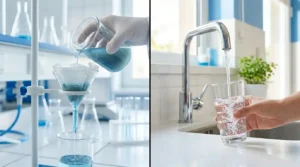
Water filtration physically blocks larger particles, sediment, chlorine taste, and heavy metals using microscopic barrier media. Water purification goes a step further by neutralizing or destroying biological pathogens like viruses, bacteria, and protozoa, or removing dissolved atomic solids through specialized semi-permeable membranes.
Understanding this distinction helps you select the right equipment for your house:
- Water Filtration: Uses media like granular activated charcoal or ceramic blocks. Filters improve taste and trap physical debris, rust, and organic chemicals. They excel at handling everyday tap concerns like chlorine taste, lead, and sediment.
- Water Purification: Uses processes like boiling, UV sterilization, distillation, or reverse osmosis. Purification destroys or removes invisible microscopic biological threats that standard physical filters might miss.
How to Test Your Home Water Quality Before Purifying
You should test your home water quality using an EPA-certified laboratory analysis or an at-home testing kit with a Total Dissolved Solids (TDS) meter. Testing identifies specific contaminants like lead, nitrates, coliform bacteria, and high mineral hardness so you can choose the correct treatment method.
To get an accurate picture of your supply, follow these practical steps:
- Read Your Local Water Report: If you’re on a municipal system, review your community’s annual Consumer Confidence Report (CCR) issued under Environmental Protection Agency guidelines.
- Use a TDS Meter: A digital Total Dissolved Solids meter measures the concentration of dissolved inorganic salts and minerals in parts per million (PPM).
- Perform a Multi-Parameter Strip Test: Test strips check for pH levels, free chlorine, nitrates, nitrites, and water hardness.
- Send Samples to a Certified Lab: For private wells, order an annual lab test checking for coliform bacteria, heavy metals like arsenic or copper, and agricultural chemicals.
Home Water Purification Methods
Different situations call for different purification techniques. Here’s a breakdown of the most effective approaches you can use at home.
1. Thermal Disinfection (Boiling)
Boiling remains the gold standard for killing pathogens.
- How it works: Extreme heat denatures the proteins of microorganisms.
- Execution: Bring water to a vigorous, rolling boil for 1 minute. If you live at elevations above 5,000 feet, boil for 3 minutes to compensate for lower air pressure and lower boiling temperatures.
- Limitation: It causes water to taste flat due to oxygen loss. Pour the cooled water back and forth between two clean containers to restore air.
2. Chemical Treatment (Unscented Liquid Bleach)
When power outages prevent boiling, unscented household bleach offers a reliable chemical disinfectant.
- How it works: Sodium hypochlorite oxidizes cell walls, killing bacteria and viruses.
- Execution: Use fresh, unscented liquid chlorine bleach with an 8.25% sodium hypochlorite concentration. Add 6 drops per gallon of clear water (or 12 drops if cloudy). Mix thoroughly and let it sit for at least 30 minutes before drinking.
- Limitation: Chemical treatments don’t remove heavy metals, pesticides, or mineral salts.
3. Gravity & Countertop Ceramic Filters
Ideal for off-grid living, homesteads, or emergency preparedness without electricity.
- How it works: Gravity pulls untreated water through dense ceramic or carbon elements, trapping bacteria and physical debris.
- Execution: Pour raw water into the upper chamber; clean water collects in the lower chamber. Periodic cleaning with an abrasive pad removes sediment buildup from ceramic elements.
4. Distillation Units
Distillation creates pure water through evaporation and condensation.
- How it works: Boiling creates steam, leaving heavy metals, minerals, and impurities behind. The steam condenses back into liquid in a separate chamber.
- Limitation: The process requires significant electrical energy or an external heat source, producing clean water at a slow rate.
5. Ultraviolet (UV) Water Sterilizers
UV light provides immediate biological protection for homes drawing from private wells or clear surface sources.
- How it works: A UV-C lamp emits germicidal light wavelengths that scramble pathogen DNA, preventing them from reproducing.
- Limitation: Water must be clear before entering the UV chamber. Suspended dirt particles cast shadows, shielding microorganisms from the light.
What Each Method Removes (and What It Doesn’t)
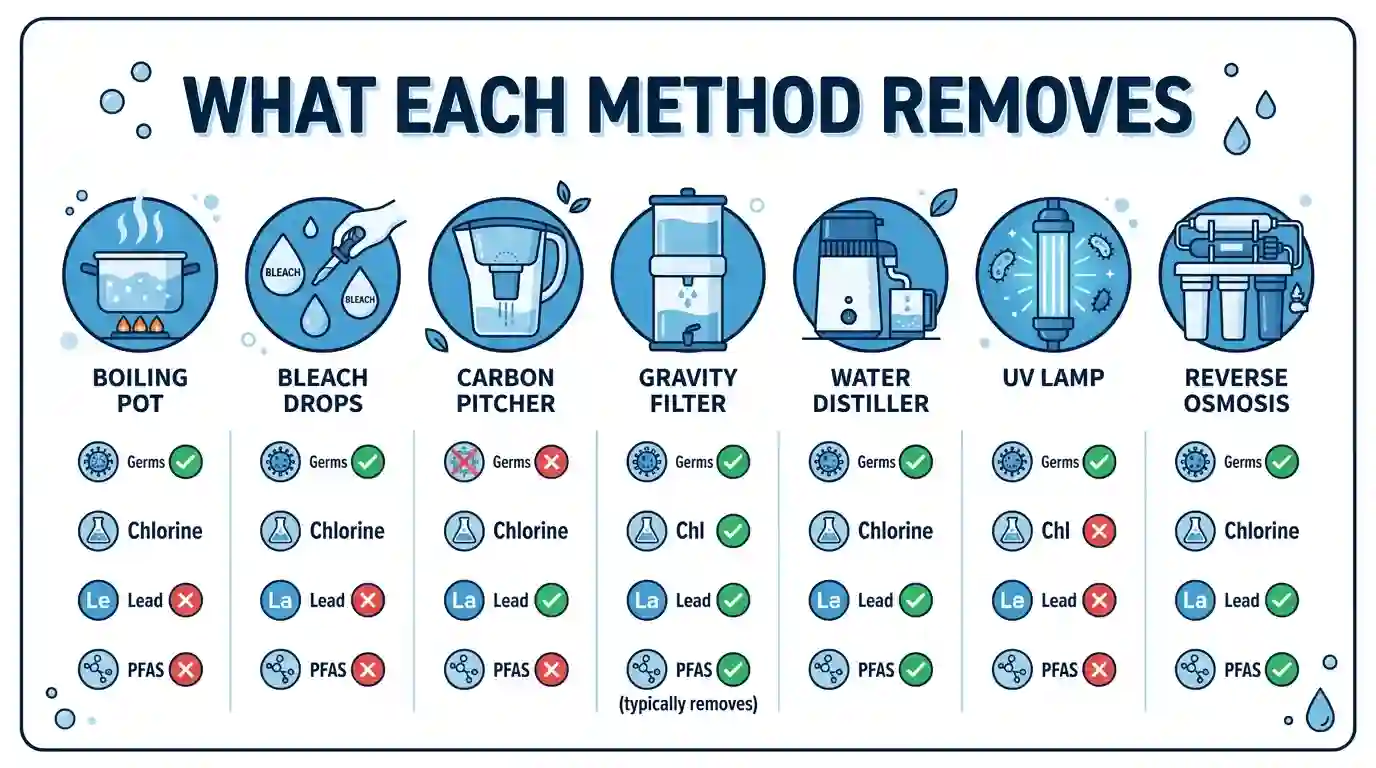
Use this table to match your problem to a fix.
| Method | Germs | Chlorine and taste | Lead and metals | Nitrates and PFAS |
| Boiling | Yes | No | No | No |
| Bleach or tablets | Most | Adds chlorine | No | No |
| Carbon filter | No | Yes | Certified models only | Limited |
| Gravity filter | Varies by element | With carbon | Varies by element | Varies by element |
| Distillation | Yes | Mostly | Yes | Mostly |
| UV | Yes | No | No | No |
| Reverse osmosis | Not designed for germs | Yes | Yes | Yes, if certified |
How to Purify Water at Home Step by Step
Follow this reliable process to treat raw or suspect water during emergencies or daily use.
Step 1: Clarify the Source Water
Cloudy water reduces the effectiveness of all purification methods. Strain raw water through clean cloth, coffee filters, or paper towels to remove suspended mud, rust, and organic debris. Let fine sediment settle to the bottom of your bucket, then pour the clear liquid into a secondary container.
Step 2: Choose Your Primary Treatment Method
Select the treatment option matching your current situation:
- Boiling: Place clear water on a stove, campfire, or hot plate until it reaches a rolling boil for 1 to 3 minutes.
- Chemical: Add unscented liquid chlorine bleach following strict drop ratios based on water clarity.
- Reverse Osmosis System: Direct household tap water through pre-filters and a semi-permeable membrane to eliminate both biological and dissolved mineral contaminants automatically.
Step 3: Aerate and Cool
If you boiled your supply, let it cool naturally. Pour the liquid back and forth between two clean vessels to reintroduce oxygen and eliminate flat taste.
Step 4: Verify Treatment Safety
Check that chemical treatments have left a faint chlorine smell after standing for 30 minutes. If no chlorine odor is present, repeat the dose once and let it stand for another 15 minutes.
How to Store Purified Water Safely
Clean water can go bad in a dirty jar. Storage matters as much as treatment.
- Pick the right container. Use food-grade glass or plastic with a tight lid. Skip milk jugs, since residue hides in them.
- Clean it first. Wash with soap, sanitize with 1 tablespoon of unscented bleach in 1 gallon of water, then rinse well.
- Fill, cap, and date it. A label tells you when to swap the water.
- Choose the spot. Keep it cool and dark. Store it away from gasoline, paint, pesticides, and cleaners, because vapors can seep through plastic.
- Rotate your supply. Replace stored potable water every six months. Keep fridge pitchers covered, drink from them within a few days, and wash them often.
For emergencies, Ready.gov suggests at least one gallon per person per day for at least three days.
Long-Term Household Solutions: Reverse Osmosis & Under-Sink Systems
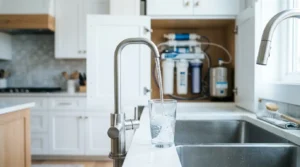
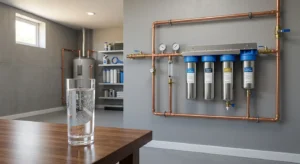
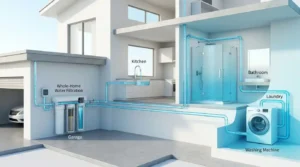
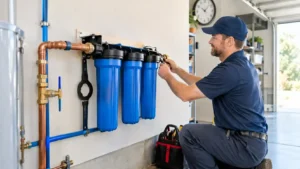
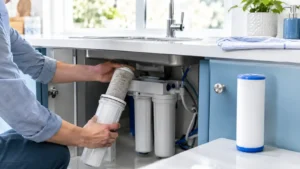
Emergency methods are essential during disasters, but installing an under-sink filtration system offers effortless daily protection. Multi-stage filtration units combine pre-sediment filters, activated carbon blocks, semi-permeable RO membranes, and post-carbon polishers.
Systems certified under NSF International and ANSI Standards (such as NSF 42, 53, and 58) guarantee tested reduction of lead, fluoride, nitrates, microplastics, and VOCs right from your kitchen faucet.
If you want reliable daily access to clean drinking supply without manual boiling or chemical dosing, exploring professionally engineered options makes sense. If you’re researching options like Water Filtration Installation Services in Tracy, CA, or evaluating What Is the Best Water Filtration System for Home, choosing a dedicated setup like an RO Water Filter System delivers peace of mind.
Final Thoughts
Learning how to purify water at home gives your household confidence during unexpected emergencies and peace of mind for daily drinking. Combine immediate thermal or chemical methods for short-term needs with reliable long-term filtration systems to keep your family healthy. If you have questions about custom household setups, feel free to Contact us anytime.
Frequently Asked Questions
Can you use unscented bleach to purify tap water at home?
Yes, you can use unscented household liquid bleach containing 8.25% sodium hypochlorite to treat tap water. Add 6 drops per gallon of clear water, stir thoroughly, and let it stand for 30 minutes. The treated water should have a faint chlorine scent.
Does boiling water remove chemical contaminants like lead or chlorine?
No, boiling water does not remove heavy metals, nitrates, or chemical pollutants like lead. In fact, boiling causes pure water to evaporate as steam, slightly increasing the concentration of dissolved heavy metals left behind in the pot.
How long does home-purified water remain safe to drink?
Purified water stored in clean, airtight, food-grade containers stays safe for up to six months. Store it in a cool, dark location away from direct light and household chemicals, and rotate your stock regularly.
How much bleach do you add to purify water?
For emergencies, add 8 drops of unscented household bleach with 5% to 9% sodium hypochlorite to one gallon of clear water. Use 16 drops if the water is cloudy. Stir well and wait 30 minutes before drinking. Always check the bleach label first, since strengths vary.
How do you purify tap water without a filter?
Boil it for one minute, let it cool, and store it in a clean, covered container. Boiling needs only a pot and a stove. If you can’t boil, use unscented household bleach at the CDC dose. Neither method removes lead or chemicals, so test your tap water if that’s a worry.