Many homeowners search “how long does it take to install a whole house water filter” before they call anyone. It’s a smart first question. The filter ties into your main line, so your water goes off while the work happens. A professional install usually takes 2 to 4 hours, and a first-time DIY job often runs 4 to 8 hours or longer.
I’ll show you what drives that range. You’ll get time estimates by system type, a step-by-step timeline, and the mistakes that add hours. By the end, you’ll know how to plan your day and keep the water off for as short a stretch as possible.
Whole House Water Filter Installation Time by System Type
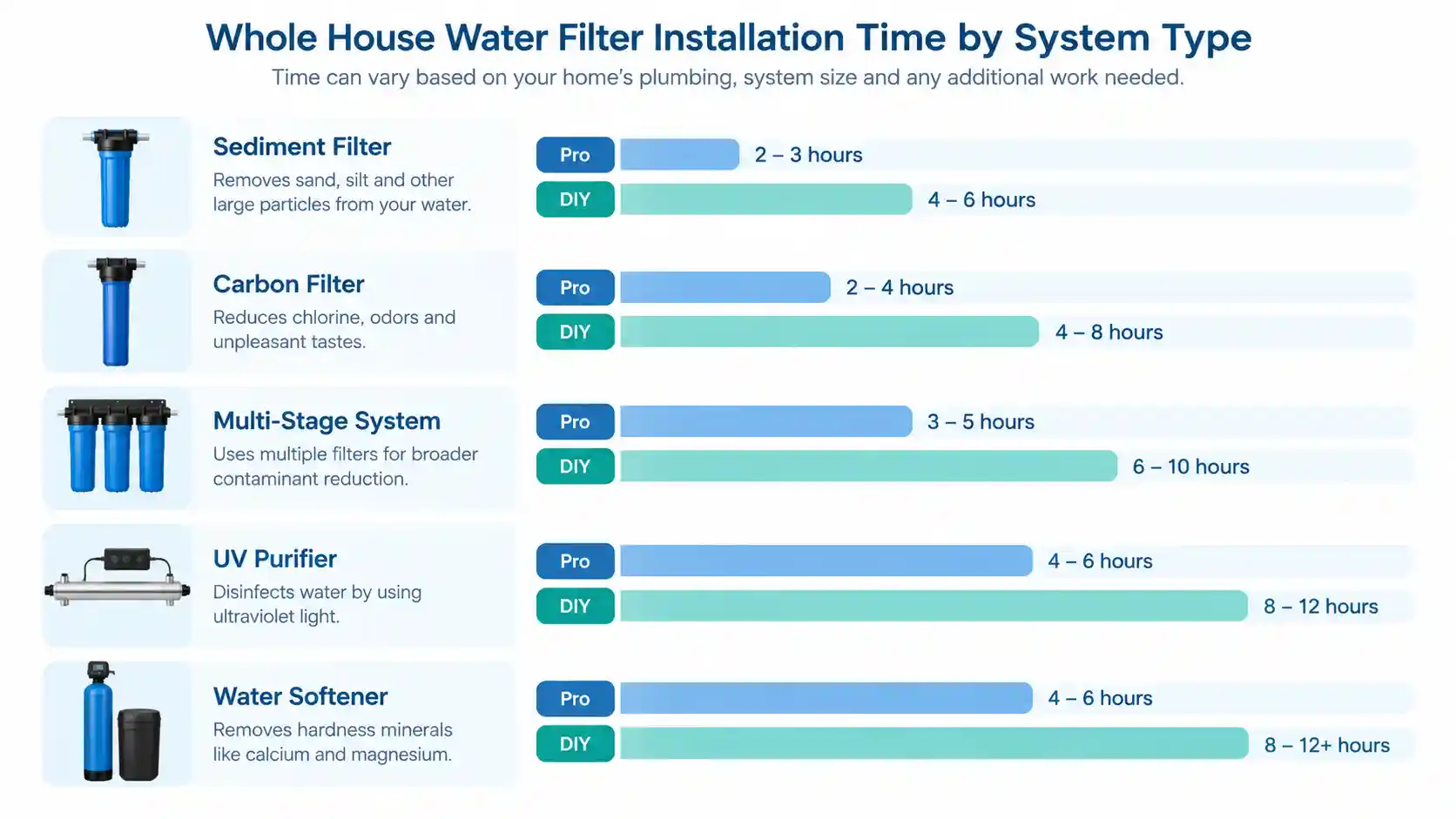
The complexity of your filtration setup plays the biggest role in your total whole house filtration installation time. Adding extra treatment stages, electrical connections, or drain lines increases the total plumbing steps required.
The table below breaks down typical professional and DIY water filter installation duration across common setups:
| System Type | Professional Time | DIY Time | Downtime (Water Off) |
| Single-Stage Sediment Filter | 1.5 – 2.5 hours | 3 – 5 hours | 30 – 40 minutes |
| Multi-Stage Carbon & KDF Filter | 2.5 – 4 hours | 5 – 7 hours | 60 – 90 minutes |
| UV Disinfection + Pre-Filter System | 3.5 – 5 hours | 6 – 8+ hours | 60 – 90 minutes |
| Whole House Filter + Water Softener Loop | 4 – 6 hours | Full Day (8+ hours) | 2 – 3 hours |
Simple single-stage sediment pre-filter housings take the least time because they involve basic mounting and two primary plumbing connections. Advanced multi-stage systems or combined UV light setups require bypass valve loops, mounting heavy dual-cartridge brackets, running backwash drain lines, and setting up electrical access.
What Factors Affect Water Filter Installation Time?
1. Existing Plumbing Pipe Material
PEX tubing and PVC pipes cut quickly using simple hand tools, allowing for fast press-fit or push-to-connect fitting setups. Older copper piping requires soldering or sweat fittings, which adds considerable labor time. Corroded galvanized steel pipes require threading or section replacement, which can add 1 to 2 hours to the job.
2. Main Water Supply Line Accessibility
Installing near a main water shutoff valve located in an open garage, utility closet, or basement goes smoothly. Working inside tight crawl spaces, low-clearance areas, or behind finished drywall delays pipe cutting, bracket mounting, and leak checks.
3. Main Line Diameter and Port Sizing
Standard residential plumbing runs on 3/4-inch or 1-inch main lines. If your water filter housing port size does not match your existing main line diameter, you must install brass or PVC reducer fittings, adding extra threaded connections that need sealing and testing.
4. Drain and Electrical Requirements
Basic carbon and sediment systems require no electricity or drain lines. Automatic backwashing systems and UV purifiers require a dedicated 120V electrical outlet within range and a secure discharge drain line for backwash cycles. Adding extra wiring or running PVC drain lines adds 1 to 2 hours to the plumbing setup.
Data & Source Suggestion: According to survey estimates from the National Association of Home Builders (NAHB) on utility upgrades, unexpected retrofitting in homes over 30 years old adds an average of 35% to total labor time due to pipe wall corrosion and tight working conditions.
DIY vs. Professional Installation Time
Deciding whether to tackle the job yourself or hire a professional plumber comes down to balancing labor costs against your available time and plumbing confidence.
Professional Plumber: [2-4 Hours] –> Fast, Warranted, Minimal Disruption
DIY Homeowner: [4-8 Hours] –> Cost Savings, Higher Risk of Leaks/Delays
Hiring a Licensed Plumber
A certified plumber finishes a standard water filtration system installation in 2 to 4 hours. They arrive with pipe cutters, thread tape, pressure gauges, and spare shutoff valves. Professionals handle unexpected pipe sizes quickly, guarantee leak-free connections, and protect your manufacturer warranty.
Tackling a DIY Installation
If you choose the DIY route, plan to set aside 4 to 8 hours. First-time installers spend extra time measuring pipe cuts, applying thread tape, double-checking flow direction, and making trips to the hardware store for forgotten adapters.
Where to Install a Whole House Water Filter
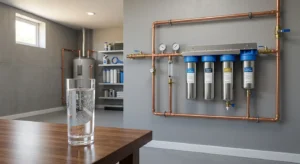
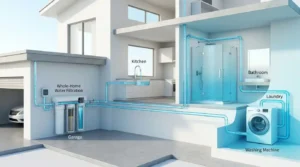
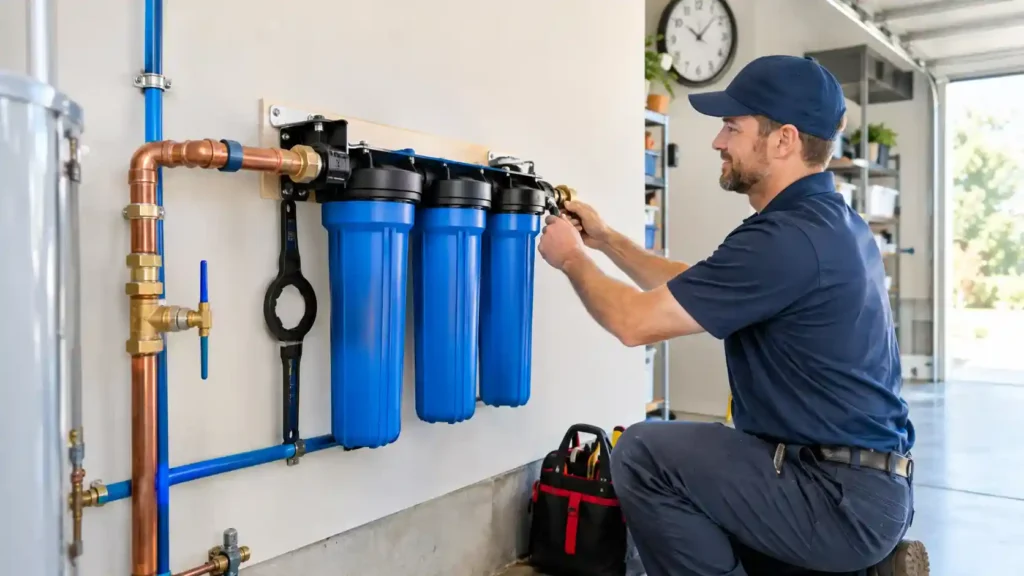
Install a whole house water filter on the main line, right after the main shutoff valve and before the water heater. That placement filters every fixture and protects the heater. Leave room below the housing to change cartridges and keep a drain nearby.
The main line is the right spot because every fixture draws from it. Placing the filter before the water heater protects the tank from sediment and gives you filtered hot and cold water. Put the bypass valve right beside it.
Think about outdoor spigots too. Some installers tee off the line before the filter so cartridges don’t treat lawn water. It adds one fitting, so ask about it before the work starts.
Pick a spot with real working space. You need clearance to unscrew the housing and a floor drain or hose bib close by for flushing. Basements, garages, utility rooms, and side walls near the entry point all work. In mild climates, a sheltered garage or side wall is fine. In freezing climates, keep the system indoors.
How to Prep and Cut Installation Time
Proper site preparation reduces overall water filtration system installation time and shortens household water downtime.
- Pre-Assemble Component Loops: Screw male adapters, bypass ball valves, and pressure gauges onto the filter head manifold at your workbench before cutting into your main water line.
- Pre-Measure and Mark Cuts: Hold the pre-assembled filter bracket against your main pipe, level it, and mark your cut lines carefully with a permanent marker.
- Stage Tools in Advance: Gather your pipe cutter, bucket, Teflon tape, adjustable wrenches, deburring tool, and silicone grease before shutting off your main water line.
- Dry Fit Fittings: Test your adapters and push-fit fittings on sample pipe sections to confirm exact measurements before making final cuts.
Step-by-Step Installation Process and Time Breakdown
Understanding the exact sequence helps you track progress during water filter installation duration.
Step 1: Main Line Shutoff and Depressurization (20 – 30 Minutes)
Turn off your main incoming water valve. Open the lowest faucet in your home to drain remaining pressure and standing water from the lines. Place a catch bucket directly beneath your planned cut area.
Step 2: Pipe Cutting and Mounting Bracket Setup (45 – 60 Minutes)
Use a pipe cutter to remove the marked section of main pipe. Smooth internal and external pipe edges with a deburring tool. Secure the wall mounting bracket into wall studs to hold the heavy filter housing securely.
Step 3: Plumbing Connections and Bypass Valve Assembly (1 – 2 Hours)
Wrap all male pipe threads clockwise with 3 to 4 wraps of Teflon tape. Connect your inlet, outlet, and 3-valve bypass loop assembly to the filter housing manifold. Tighten fittings hand-tight, followed by a quarter-turn with a wrench.
Step 4: System Flush, Leak Check, and Startup (45 – 60 Minutes)
Insert media cartridges into housings, ensuring O-rings are lubricated with clean silicone grease. Slowly open your main supply valve to pressurize the system while checking every joint for slow drips. Flush cold water through a downstream faucet for 10 to 15 minutes to clear air bubbles and carbon fines.
Common Mistakes That Add Time
Most delays come from small errors. These are the ones I’d watch:
- Skipping the bypass valve. Every future filter change then shuts off the whole house.
- Overtightening plastic fittings. Hand-tight plus a quarter turn is enough. Hairline cracks often show up weeks later.
- Wrong stage order. Sediment goes first, then carbon. Reverse them and the carbon clogs fast.
- Undersizing the system. A low flow rating means weak pressure when several fixtures run at once. That can force a second install.
- Installing after the water heater. Only part of the house gets filtered water, and the heater still sees sediment.
- Ignoring a worn shutoff valve. A valve that won’t close stops the job cold.
- Skipping the dry fit. Parts that don’t line up after the cut mean a second cut and more fittings.
- Rushing the leak check. A slow drip behind a wall panel grows quietly.
How Setup Location Affects Long-Term Replacement Time
Where you place your whole house system directly controls how quickly you can complete routine maintenance.
Installing your filter in an open garage or accessible utility room keeps routine filter cartridge swaps down to 15 to 20 minutes. If you install the system in a tight crawl space or behind laundry appliances, every 6-month filter change can turn into a 1-hour job involving awkward angles, heavy lifting, and spill cleanup.
Final Thoughts
Knowing how long does it take to install a whole house water filter allows you to plan your project smoothly. Whether you hire a professional for a 2-to-4-hour install or dedicate a Saturday to a DIY setup, taking time to measure pipes, pre-assemble fittings, and install a bypass valve guarantees long-term success.
If you need expert assistance in California, consider checking out Water Filtration Installation Services in Tracy, CA. Our team at RO Water Filter System helps you choose and install the right setup for your water quality needs. Feel free to contact us anytime to get your home’s water filtration running flawlessly!
Frequently Asked Questions
How long does it take to install a whole house water filter?
Installing a whole house water filter takes 2 to 4 hours for a professional plumber and 4 to 8 hours for a DIY installation. The exact duration depends on system complexity, plumbing accessibility, pipe material, and whether you install an optional bypass valve.
How long will my home water supply be turned off during installation?
Your household main water line will be turned off for roughly 1 to 3 hours during installation. Professional plumbers minimize downtime by pre-assembling bypass valves, mounting brackets, and pipe fittings before shutting off the main supply valve.
Can a beginner install a whole house water filter safely?
Beginners can install simple single-stage sediment filters on accessible PEX or PVC piping in 4 to 6 hours. Complex multi-stage systems involving copper pipe soldering, electrical wiring, or main line rerouting are best handled by a licensed plumber to prevent costly water leaks.
Does a whole house water filter reduce household water pressure?
Properly sized whole house water filters do not drop noticeable water pressure. Installing an undersized unit rated below your home’s peak gallons per minute (GPM) demand causes noticeable pressure drops across showerheads and faucets.