You’re right to be picky about this. Water that smells like a swimming pool or tastes like a coin is hard to enjoy. Here’s the quick answer: chill it, run it through a carbon filter, and match the fix to the cause of the taste. Most households solve the problem in one afternoon.
I’ll walk you through how to make tap water taste better with eight methods, from free tricks to permanent filtration. You’ll also learn which fix suits your home, which mistakes waste money, and how to improve the taste of RO water that feels flat. Let’s start with what’s actually in your glass.
Why Does Tap Water Taste Bad in the First Place?
Tap water tastes bad because of chlorine or chloramine from disinfection, dissolved minerals, metals from old pipes, or organic matter like algae. Each cause has a distinct flavor. Chlorine tastes like a pool, iron tastes metallic, hydrogen sulfide smells like rotten eggs, and high mineral content tastes bitter or salty.
Your utility adds chlorine or chloramine to keep bacteria out of the pipes. A light chemical taste usually means the system is doing its job. The trouble starts when the taste gets strong, or when minerals and plumbing add flavors of their own.
Your nose can often name the culprit:
- Pool smell: chlorine or chloramine
- Metallic taste: iron, copper, or manganese
- Rotten egg smell: hydrogen sulfide, common in well water
- Earthy or musty taste: algae or organic matter in the source water
- Salty or bitter taste: high total dissolved solids (TDS), sulfates, or chloride
- Plastic or stale taste: old filters, a dirty pitcher, or a neglected ice maker
The EPA sets secondary standards for taste, smell, and color. These are guidelines, not health rules. They list 500 mg/L for TDS, 250 mg/L for chloride and sulfate, 0.3 mg/L for iron, and 0.05 mg/L for manganese.
How Do You Make Well Water Taste Better?
Test the water first, then treat what the lab finds. Iron and manganese respond to oxidizing filters, hydrogen sulfide needs aeration or carbon, and hardness needs a softener. Add a sediment filter and carbon filter for general taste. Never rely on taste to judge bacterial safety.
Well owners carry the whole job. No utility treats or tests your water, so a lab test is step one. Test for bacteria, nitrates, iron, manganese, hardness, and pH at minimum.
Here’s how to make well water taste better once you have results. Iron leaves a rusty, metallic taste and orange stains. Hydrogen sulfide gives the rotten egg smell. Hard water leaves scale and a chalky feel.
Each problem has its own treatment. Guessing wastes money, so match the equipment to the lab report. Retest every year, and again after any flood or plumbing work.
8 Effective Methods to Make Tap Water Taste Better
1. Cold Aeration and Chilling
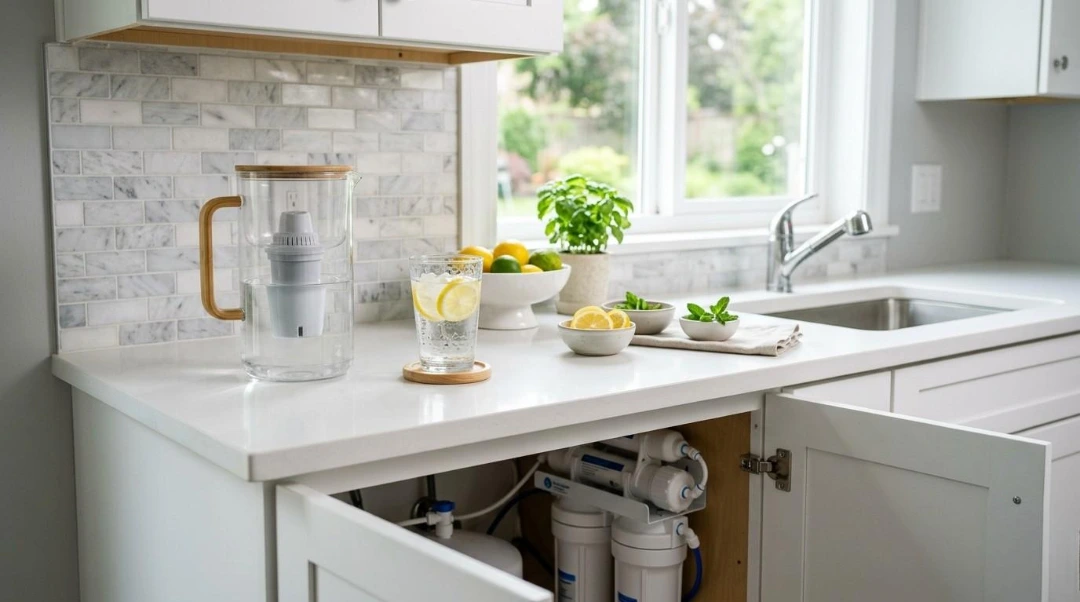
Cold temperatures mask off-flavors by dulling taste bud sensitivity, while simple aeration helps volatile gases escape. Pouring tap water into a glass pitcher and letting it sit uncovered in the refrigerator allows chlorine gas to dissipate naturally over 12 to 24 hours while bringing the fluid down to a refreshing temperature.
This method costs nothing and requires zero special equipment. For faster aeration, pour the water back and forth between two clean containers several times before chilling.
2. Activated Carbon Pitcher Filters
Activated carbon filters improve tap water taste by trapping organic compounds, chlorine, and unpleasant odors through adsorption. These low-cost filters utilize porous coconut shell charcoal to trap contaminants as gravity pulls water through the cartridge.
Pitcher filters serve as an accessible entry point for renters and budget-conscious households. To maintain optimal flavor, replace the filter cartridge strictly every 40 to 60 gallons, as saturated charcoal will leach trapped odors back into your supply.
3. Under-Sink Reverse Osmosis Systems
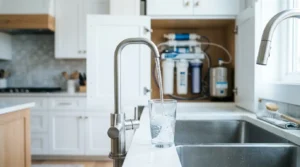
Reverse osmosis systems restore crisp flavor by forcing water through a semi-permeable membrane that strips away up to 99% of dissolved solids. This process removes chlorine, heavy metals, nitrates, fluoride, and microplastics that pitcher filters leave behind.
If you want to know how to make tap water taste better without daily manual filling, reverse osmosis offers the most thorough home solution. Modern systems include a final remineralization stage that adds balanced amounts of calcium and magnesium back into the fluid, preventing a flat profile.
4. Stainless Steel Countertop Distillers
Distillation purifies supply lines by boiling liquid into steam and condensing it back into clean liquid, leaving all impurities behind. This process separates pure H2O molecules from heavy metals, dissolved minerals, salts, and chemical residues.
While highly effective at removing impurities, distilled water tastes neutral or flat because it lacks all natural minerals. Storing distilled fluid in glass carafes and aerating it helps restore a fresh profile.
5. Natural Citrus and Herb Infusions
Adding fresh citrus slices, cucumber, or herbs masks unpleasant mineral notes by introducing natural fruit acids and aromatic oils. Citric acid naturally cuts through metallic tones while imparting a clean flavor to your daily hydration routine.
Keep a dedicated glass pitcher with sliced lemons, limes, or fresh mint leaves in your fridge. Replace the fresh ingredients every 48 hours to prevent bitterness from fruit rinds.
6. Boiling and Resting
Boiling tap water removes dissolved chlorine gas and temporary hardness minerals by driving off dissolved gases through heat. Bringing water to a rolling boil for one to three minutes forces dissolved chlorine to evaporate rapidly into the air.
Allow the boiled liquid to cool completely at room temperature, then pour it back and forth between two clean vessels to re-introduce oxygen lost during heating.
7. Whole-House Carbon Filtration
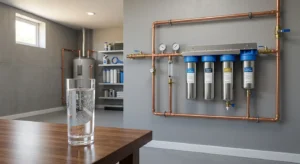
Whole-house filtration systems treat incoming main lines at the point of entry, eliminating chemical odors across every tap. These tanks utilize large beds of catalytic carbon to neutralize chlorine and chloramines before water enters indoor plumbing.
This solution protects fixtures, reduces chemical vapors in hot showers, and ensures every faucet in your residence delivers clean-tasting drinking supply.
8. Install a Reverse Osmosis System for Full Purification
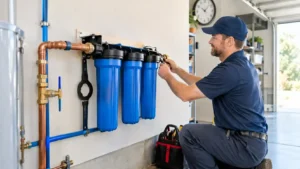
When the other methods are not enough, a reverse osmosis (RO) system is the most thorough solution available for home use. RO systems push water through a semi-permeable membrane that removes dissolved solids, heavy metals, nitrates, chlorine, chloramines, fluoride, and a wide range of other contaminants. The water that comes out is clean, neutral, and noticeably better-tasting than anything else on this list.
A 10-Stage Water Filtration System goes further than a basic 5-stage unit by adding remineralization and additional polishing stages. This restores a natural mineral balance to the filtered water, which is what gives filtered water its clean, slightly crisp taste that many people describe as similar to high-quality bottled water.
RO systems are installed under the kitchen sink and serve a dedicated drinking tap. If you already own an RO unit, professional RO System Installation ensures the system is correctly plumbed, pressure-tested, and performing at full capacity from day one.
Which Method Is Right for Your Situation?
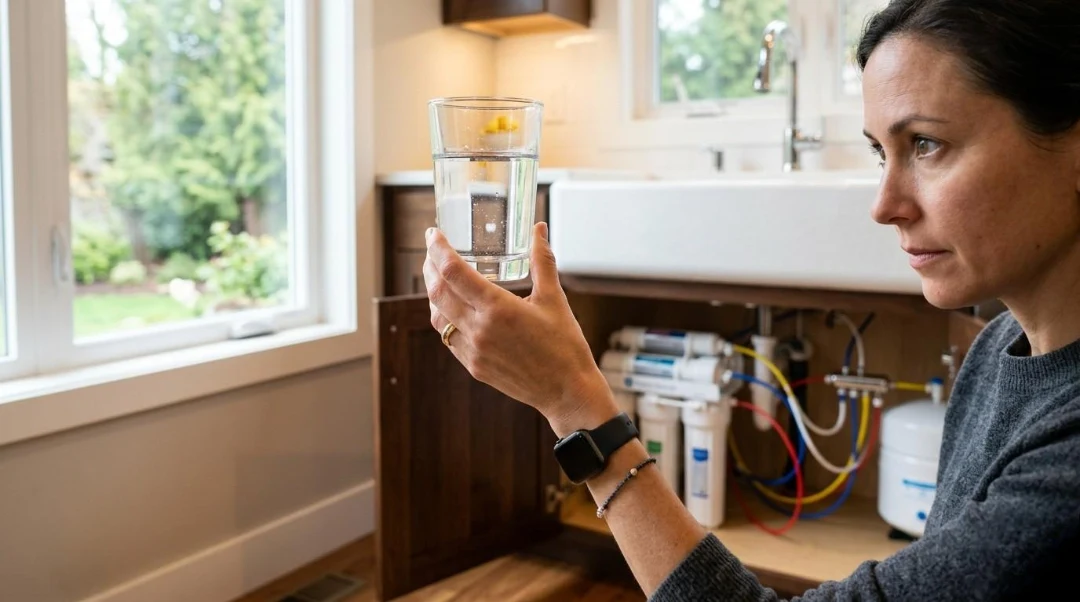
Match the method to the flavor. Chlorine taste responds to chilling, resting, or a carbon filter. Metallic, salty, or bitter taste points to minerals or metals, so choose reverse osmosis. Rotten egg smell or well water problems need testing first, then targeted treatment.
The table below gives a faster read. Start at the top row that sounds like your glass.
| What you notice | Likely cause | Best first fix |
|---|---|---|
| Pool or bleach smell | Chlorine | Chill, rest, or carbon filter |
| Chlorine that won’t fade | Chloramine | Catalytic carbon filter |
| Metallic taste | Iron, copper, manganese | RO or targeted filter |
| Salty or bitter taste | High TDS, sulfates | Reverse osmosis |
| Rotten egg smell | Hydrogen sulfide | Test, then aeration or carbon |
| Flat RO water | Missing minerals | Remineralization cartridge |
| Stale or plastic taste | Old filter or dirty tank | Replace filters, sanitize |
Budget matters too. Renters can use a pitcher or faucet filter and take it along when they move. Homeowners who plan to stay get better value from an under-sink or whole-house system.
Picture two neighbors on the same street. One hates the chlorine smell, and a carbon filter fixes it for good. The other has a bitter taste from dissolved minerals, and only RO solves it. Same city, different problems.
Exploring Household Water Filtration Systems designed for whole-home use is also worth considering if you want better-tasting water from every tap, not just the kitchen.
Common Mistakes Homeowners Make
Most wasted money comes from a handful of habits. Avoid these and you’ll save both cash and frustration.
Buying a filter before knowing the cause. A carbon pitcher won’t remove salty or bitter minerals. Read your water report first.
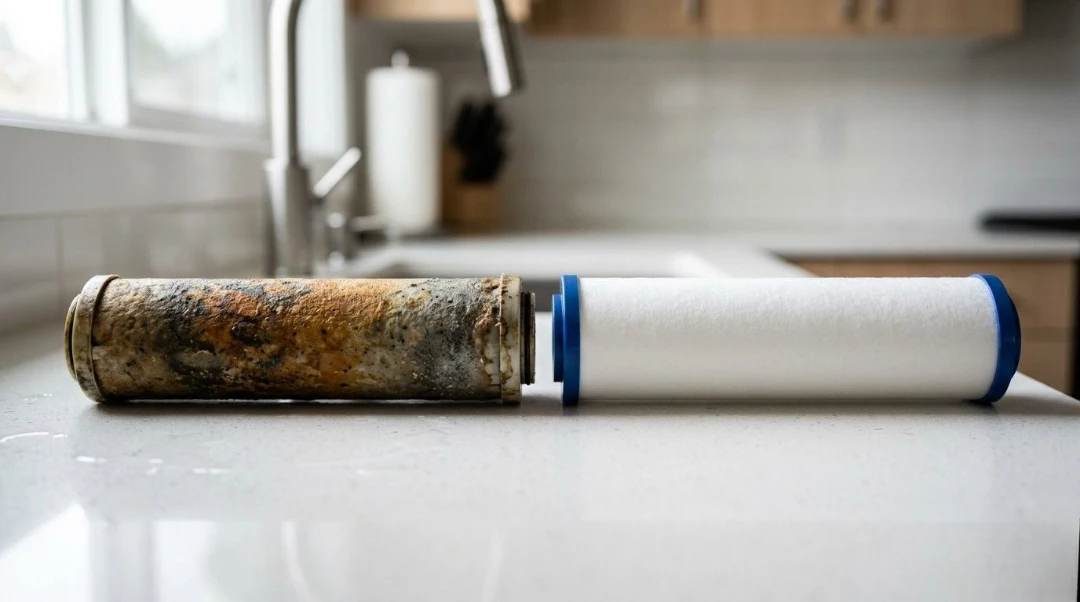
Skipping cartridge changes. An old filter is like a sponge that’s full. It stops working and can release what it caught. Set a reminder.
Trusting taste as a safety test. Lead has no reliable taste. If your home has older plumbing, get a lab test, since taste can’t tell you.
Judging RO water too fast. New RO systems can taste off for the first few days. Flush the tank and give it time before you decide.
Ignoring the fridge and ice maker. Many “bad tap water” complaints come from a stale fridge filter or a dirty ice bin. Clean those before you blame the pipes.
Boiling as a fix. Boiling drives off some chlorine, but it also concentrates minerals as water evaporates. It’s a short-term trick at best.
Conclusion
You can remedy the issue if the water tastes like chlorine, metal, or anything else you can’t quite put your finger on. How to make tap water taste better, you need to know what is generating the bad taste and then choose a solution that directly fixes it. For some homes, cooling and aerating is all they need. A reverse osmosis system is the best way for Tracy homes to deal with hard water, dissolved solids, and other impurities that can’t be tasted or smelled.
RO Water Filter System works with homeowners across Tracy and the surrounding area to identify the right filtration approach for each home. Whether you need a simple under-sink filter, a full multi-stage RO installation, or guidance on maintaining a system you already own, their team is ready to help. Contact us directly to discuss your water and find the right solution for your family.
FAQs
Is Tracy, CA tap water safe to drink?
Tracy’s municipal water meets federal EPA standards, which means it is legally safe to drink. However, independent water quality organizations have flagged certain contaminants in Tracy’s supply, including arsenic and PFOA, that exceed health-protective guidelines even while staying within legal limits
Why does my tap water taste like metal even after filtering?
If water still tastes like metal after basic carbon filtration, the issue may be coming from your home’s plumbing rather than the municipal supply. Older galvanized or copper pipes can leach metals into standing water, especially first thing in the morning.
What does sparkling water taste like like compared to tap?
Filtered water from a reverse osmosis system typically tastes clean, slightly neutral, and noticeably fresher than straight tap water. Some people describe it as similar to quality bottled water.
How to make city water better different from well water in terms of taste?
City water like Tracy’s municipal supply is chemically treated with chlorine or chloramine, which kills bacteria but leaves a noticeable taste. Well water is not treated this way but can carry naturally occurring minerals, iron, hydrogen sulfide, or agricultural chemicals depending on the local geology.
Do I need professional installation for an RO system, or can I do it myself?
Many RO systems can be installed by a capable DIYer with basic plumbing skills. However, professional installation is recommended if you want to be sure the system is plumbed correctly, operating at the right pressure, and producing water that meets the manufacturer’s performance specs.