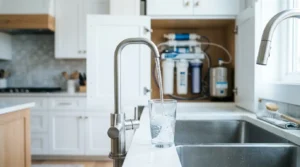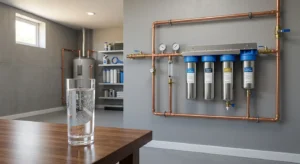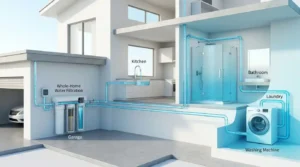
Installing a reverse osmosis system under your sink can feel like a daunting task, but it doesn’t have to be. You’re fully capable of setting up clean, pure drinking water right in your own home without paying hundreds for professional help.
Learning how to install reverse osmosis water filter equipment takes just a few tools, a couple of free hours, and a clear guide to follow. In this guide, we’ll walk step by step through every connection, saddle valve, and line hookup so you can get pure water on tap today.
What You Need Before You Start
Good prep decides how the job goes. Spend ten minutes here and you’ll save an hour later. Think of it as measure twice, drill once.
Gather these tools:
- Adjustable wrench and Phillips screwdriver
- Drill with 1/4-inch and 1/2-inch bits
- Tubing cutter or sharp utility knife
- PTFE (plumber’s) tape, bucket, towels, and a flashlight
Most reverse osmosis system installation kits include the faucet, feed adapter, drain saddle, tubing, tank, and filters. Lay everything out and check it against the parts list. A missing washer is easier to find on the floor than under the sink.
RO Water Filter System has helped hundreds of homeowners get this right, and this guide reflects that hands-on experience.
Essential Tools and Materials Checklist
-
Cordless Drill: Required for penetrating the sink top and drain pipe.
-
1/2-Inch and 1/4-Inch Drill Bits: For mounting the faucet and drain saddle.
-
Adjustable Wrench & Channel Lock Pliers: For tightening water line adaptors.
-
Utility Knife or Hose Cutter: Essential for making square, burr-free cuts on plastic tubing.
-
Teflon Tape (Plumber’s Tape): Ensures watertight seals on threaded fittings.
-
Flashlight or Headlamp: Brightens dark under-sink corners.
-
Towel and Catch Bucket: Collects residual water inside existing lines.
Step-by-Step: How to Install Reverse Osmosis Water Filter
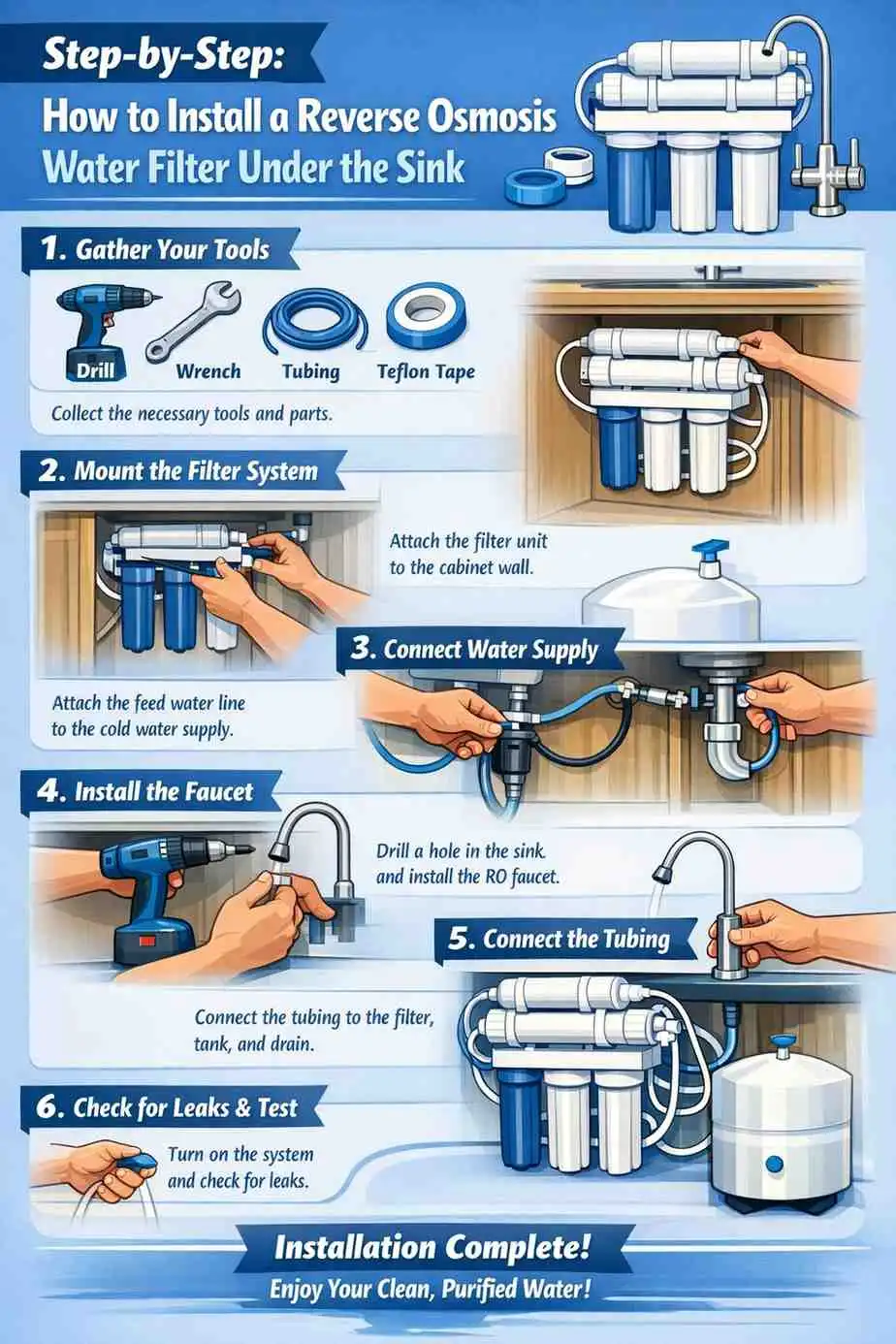
Here’s the full ro system installation process, in order. Fittings differ by brand, so keep your manual open.
Step 1: Shut Off the Water
Close the cold angle stop valve under the sink. Open the kitchen faucet to release pressure in the line. Clear the cabinet and lay down a towel. Clip a flashlight where you can see.
Step 2: Install the Feed Water Adapter
Disconnect the cold supply line from the angle stop valve. Thread the adapter onto the valve, then reconnect the supply line to the adapter. Tighten by hand, then add a quarter turn with the wrench. A tee-style adapter beats a clamp-on saddle valve, since saddle valves tend to leak over time and some codes restrict them.
Step 3: Mount the RO Faucet
Use a spare sink hole if you have one. If not, mark the spot, center-punch the metal, and drill a small pilot hole. Step up to the faucet size, usually about a half inch, at low speed. Seat the faucet, add the washers and nut from below, and snug it until it stops spinning. Check that the spout swings clear of the basin.
Step 4: Attach the Drain Saddle
The saddle carries wastewater from the membrane into your drain. Clamp it on the drain pipe above the P-trap, never below it. Drill a quarter-inch hole through one wall of the pipe, using the saddle opening as your guide. Line up the saddle with the hole, then tighten the clamp. Many codes require an air gap faucet, so check yours before you buy.
Step 5: Mount the RO Unit
Hold the unit against the cabinet wall and mark the screw spots. Leave a few inches of clearance below the filter housings so you can twist them off later. Level it, then screw it in. Place it close to the feed adapter and the drain to keep the tubing short.
Step 6: Connect the Tubing
Cut each tube square, since a slanted cut leaks. Push the tube into its fitting until it stops, then tug to confirm it’s locked. Most systems use quarter-inch push-fit lines, and many brands color-code them for feed, faucet, tank, and drain. Check your manual for the exact map. To release a tube, press the collar and pull. Avoid sharp bends.
Step 7: Connect the Storage Tank
Wrap the tank’s threaded port with two or three turns of PTFE tape, clockwise. Thread on the tank valve by hand and attach the tank line. Keep the valve closed for now. Set the tank where it won’t tip and where you can reach the valve.
Step 8: Install the Filters and Membrane
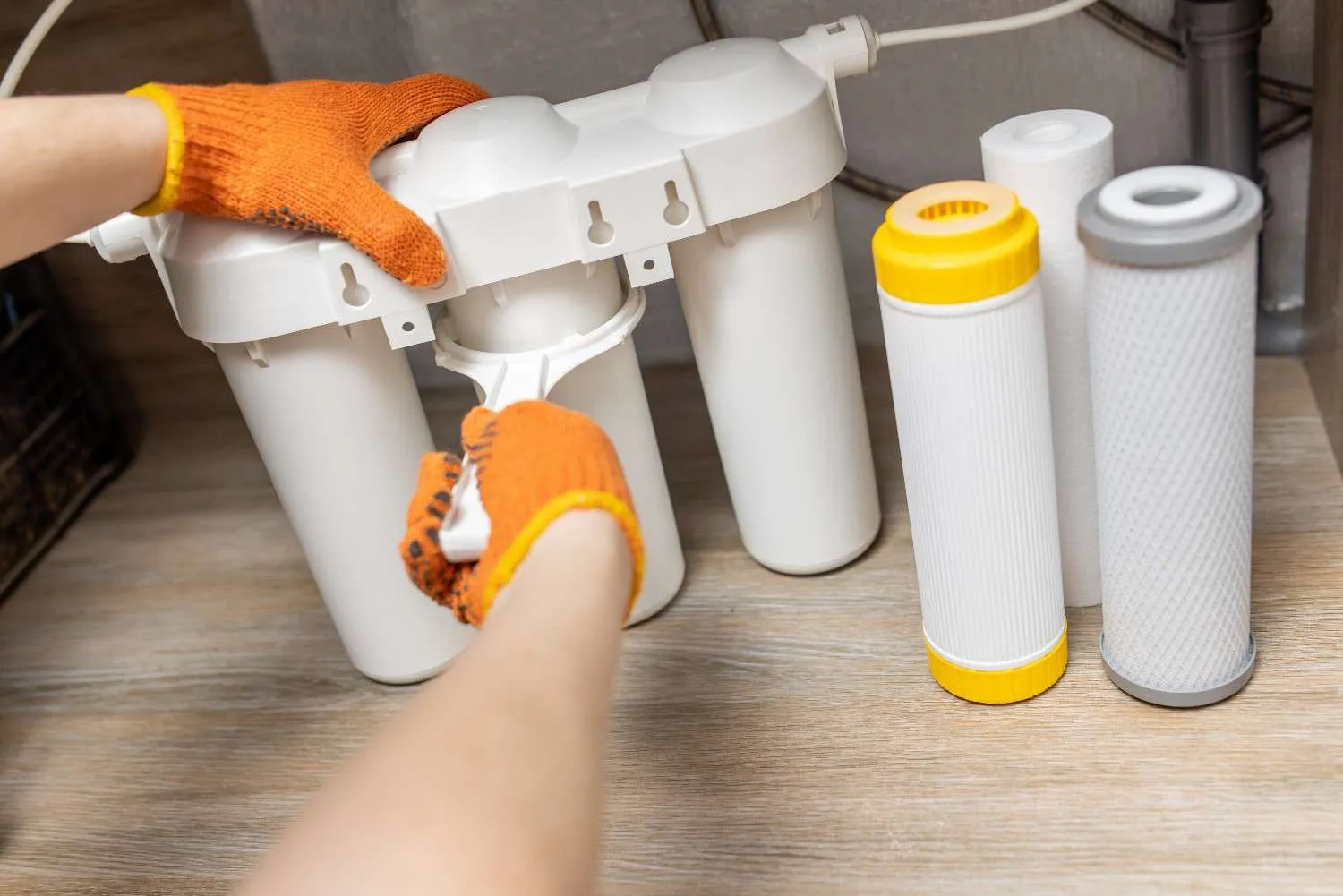
Follow the manual’s order. Seat the sediment and carbon cartridges in their housings and hand-tighten. Some kits ship the membrane separately, so a reverse osmosis system install often includes dropping it into its own housing. Hand-tight plus a small nudge with the housing wrench is plenty.
RO System Installation Diagram
A standard under-sink reverse osmosis system follows this flow path:
Each component in the flow path serves a specific role:
- Sediment pre-filter: Removes sand, silt, and sediment that would clog or shorten membrane life
- Carbon block pre-filter: Removes chlorine and chloramines (critical for Tracy, CA municipal water which uses chloramines)
- RO membrane: The core filter removes dissolved solids, heavy metals, PFAS, fluoride, nitrates
- Post-filter (polishing carbon): Final taste and odor polish before water reaches the faucet
- Storage tank: Holds filtered water under light air pressure for fast delivery on demand
How Long Does Installation Take?
A standard reverse osmosis system installation takes between 1.5 to 3 hours for a DIYer with basic hand tool skills. First-time installers working with tight cabinet spaces or drilling through solid granite countertops usually lean closer to the 3-hour mark.
| Experience Level | Estimated Time | Key Factors |
| Intermediate DIY | 1.5 – 2 Hours | Pre-existing faucet hole, accessible plumbing, standard quick-connect fittings. |
| Beginner DIY | 2.5 – 3.5 Hours | Drilling sink deck, tight under-sink clearance, installing drain saddle. |
| Professional Plumber | 45 – 90 Minutes | Familiarity with layout, specialized tools, direct replacement setup. |
When to Hire a Plumber to Install a Reverse Osmosis System
Self-installation may make more financial and logistical sense than calling a professional to complete under-sink installations in most instances. But in certain circumstances, hiring professional installers might be wiser.
Consider professional RO system installation if:
- Your under-sink shut-off valve is old, corroded, or will not turn
- You want to connect the RO system to your refrigerator or ice maker
- Your water pressure is below 40 psi and needs a booster pump
- You have a non-standard sink (farmhouse, cast iron) where drilling is risky
- You are a renter or property manager and want install reverse osmosis water filter done to a documented standard
A licensed installer typically completes the job in one to two hours and can handle code compliance for properties. If you would rather have it done right the first time without the stress, that is a completely reasonable choice.
What About Water Quality in Tracy, CA?
Tracy’s water supply comes from a combination of surface water from the Delta and groundwater. Municipal treatment typically uses chloramines rather than chlorine, which requires a specific carbon block filter for effective removal. A standard reverse osmosis water filter handles chloramines well, but only if the pre-filter cartridges are rated for chloramine removal.
If you are concerned about PFAS contamination, which is a growing issue in parts of California, a properly maintained RO system can address that too. Read more in our detailed guide, Does Reverse Osmosis Remove PFAS.
Maintenance: What to Expect After Installation
A reverse osmosis system is low-effort, but it isn’t no-effort. Filters wear out like tires. Ignore them, and performance drops before you notice. These schedules are typical, so follow your manufacturer’s numbers:
- Sediment and carbon pre-filters: every 6 to 12 months
- Post-filter: about once a year
- RO membrane: every 2 to 5 years, depending on your water
- Sanitizing the system: once a year, during a filter change
- Tank air charge: check yearly. Most tanks hold about 7 to 8 psi when empty.
Every ro filter installation after the first follows the same pattern. Shut off the feed, relieve pressure at the faucet, swap the cartridges, and flush. Keep a TDS meter near the sink and compare tap and RO water every few months. A narrowing gap means the membrane is tiring. Slow flow, a sputtering faucet, or water that runs constantly at the drain also call for a closer look.
Common DIY Mistakes to Avoid
Even experienced DIYers run into these:
- Not checking water pressure first. Low pressure means slow production. High pressure above 80 psi can shorten membrane life.
- Using Teflon tape on plastic push-fit fittings. This actually causes leaks, not prevents them.
- Skipping the flush cycles. The first two tankful should always go down the drain.
- Mounting the unit too high in the cabinet. Leave clearance for filter changes or you will be removing the whole unit every six months.
- Running the drain line with too many bends. Keep it as straight and downhill as possible.
Conclusion
That said, if anything in this guide gives you pause, or if your under-sink setup is older or unusual, having a professional handle the RO system installation removes all guesswork and usually costs less than you would expect. RO Water Filter System provides professional installation throughout Tracy, CA and nearby areas.
No matter if it is already installed and needs proper connection or you require help selecting and install reverse osmosis water filter, our team is on hand to get it done correctly. Reach out, today or schedule your installation or ask any quick questions before getting underway; fresh drinking water should never be hard to obtain!
FAQs
How long does it take to install reverse osmosis water filter?
For a first-time DIYer with a standard under-sink setup, expect two to three hours for the physical installation. After that, allow 4 to 10 hours for the storage tank to fill completely before you do your initial flush cycle.
Do I need to call a plumber to install a reverse osmosis system?
Not necessarily. Most homeowners with basic tool skills can handle the job themselves. However, if your cold water shut-off valve is corroded, your water pressure is very low, or you want the RO line extended to a refrigerator or ice maker, professional help is worth it and usually saves time.
How can I find a reliable plumber to install reverse osmosis system in my home?
To ensure your drinking water is clean and safe, hiring a professional plumber to install reverse osmosis system is crucial. A qualified plumber will correctly connect the system to your water supply, check for leaks, and ensure the filters and membrane are properly installed for optimal performance.
What is the right water pressure for a reverse osmosis system to work properly?
The ideal feed water pressure is between 50 and 80 psi. Systems will still function between 40 and 50 psi but produce water more slowly. Below 40 psi, you may need a permeate or booster pump to maintain adequate flow from the RO faucet and to fill the storage tank in a reasonable time.
How to get RO water at home easily?
To get RO water at home, you can install a reverse osmosis (RO) water filtration system under your kitchen sink or use a countertop RO unit. These systems push water through a semi-permeable membrane that removes impurities like dissolved salts, chemicals, and contaminants.