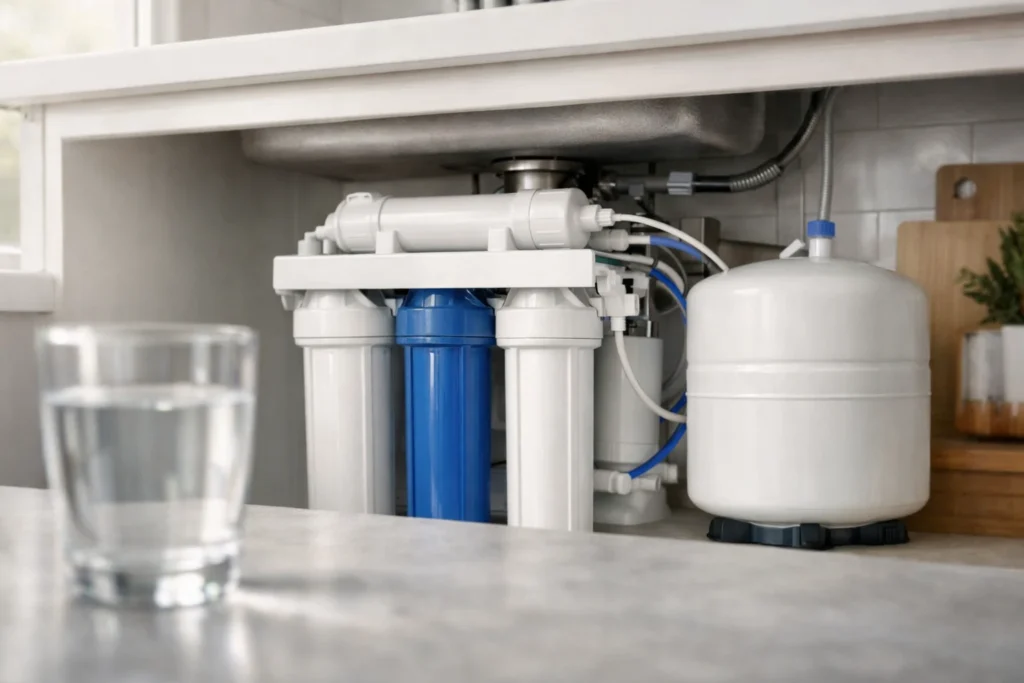
Have you been concerned about lead in your drinking water supply at home? Millions of residents, such as Tracy families, are all asking themselves the same question: does reverse osmosis remove lead effectively enough to protect my family? The short answer: Yes; reverse osmosis is one of the most efficient means available for eliminating lead from tap water sources, however full consideration should always be made depending on factors like older plumbing installations, wells or any individual family’s unique health requirements.
The majority of rival materials provide you with a technical overview without addressing the fundamental worries that homeowners have: How much lead does it really remove? Will it function in my home? What should I keep up? This guide delves further. In addition to discussing whether reverse osmosis eliminates lead, it also discusses how lead gets into your water in the first place, how to determine if you are in danger, and what sort of system is best for you.
Why Lead in Drinking Water Is Still a Real Problem
Lead does not come from your city’s treatment plant in most cases. It enters your water as it travels through older plumbing inside or outside your home. This process is called lead leaching, and it happens when water sits in or moves through pipes, solder joints, or faucet fixtures that contain lead.
Lead solder was the norm for residential plumbing in the US before 1986. Lead-containing plumbing components may still be present in homes constructed before that year and, in some situations, even until the early 1990s. This danger is extremely significant in some communities in Tracy, CA, where residences date from the 1950s to the 1980s.
How Reverse Osmosis Actually Removes Lead
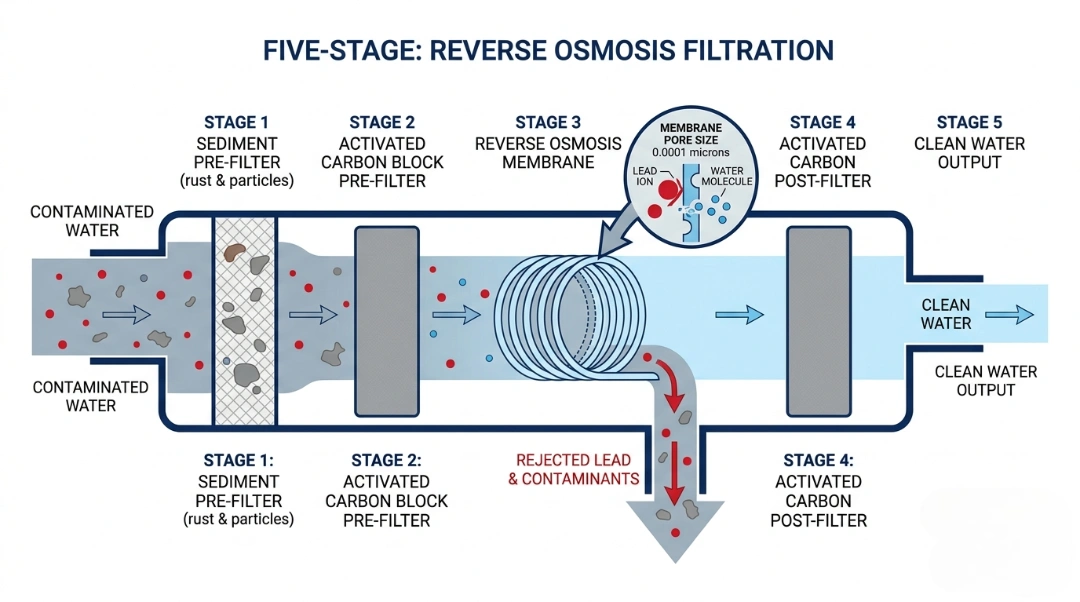
Does reverse osmosis remove lead works by pushing water through a semipermeable membrane under pressure. This membrane has pores rated as small as 0.0001 microns, which is far smaller than lead ions. Lead particles cannot pass through the membrane, so they are separated from the water and flushed away.
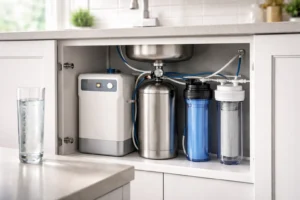
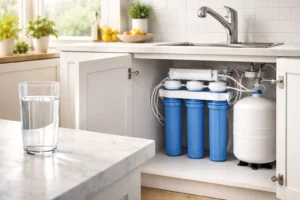
A quality RO system typically has multiple filtration stages working together:
- A sediment pre-filter that removes larger particles like rust and dirt
- A carbon pre-filter that removes chlorine, which can damage the membrane
- The RO membrane itself, which handles heavy metal ion filtration including lead
- A carbon post-filter that polishes the water before it reaches your glass
Does reverse osmosis remove lead when functioning efficiently have the capability of extracting up to 99% of lead from drinking water, earning recognition by both the Environmental Protection Agency (EPA) and National Sanitation Foundation (NSF) as an efficient point-of-use water purification method for lead removal.
Can Reverse Osmosis Remove Lead in Every Situation?
This is where homeowners might get perplexed. Yes, a RO system can remove lead from any source, including corroding fixtures, aged pipelines, and lead solder. To reliably provide such outcomes, however, the system must be appropriately scaled, installed, and maintained.
What Affects RO Performance for Lead Removal
Water pressure plays a key role. RO systems need adequate incoming water pressure to push water through the membrane effectively. If pressure is too low, the system produces less filtered water and may allow more contaminants through.
Membrane condition matters just as much. An aging or damaged RO membrane loses its rejection rate over time. A membrane that once removed 97% of lead may drop to 85% or lower if it is not replaced on schedule. Most membranes need replacement every two to three years depending on usage and water quality.
Filter saturation is a common cause of performance failure that homeowners miss. Pre-filters and post-filters have a finite capacity. When they are saturated, they no longer protect the membrane properly, which shortens its life and reduces lead removal efficiency.
Lead Contamination Signs Every Homeowner Should Know
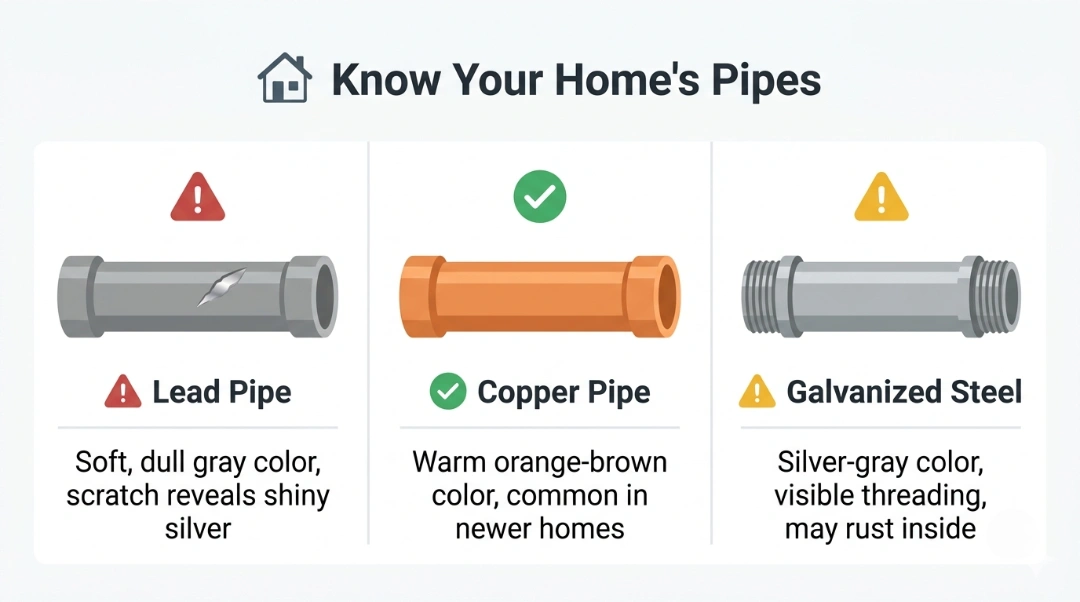
Lead has no taste, smell, or color. You cannot detect it through your senses. That is what makes it particularly dangerous. Here are practical ways to assess your risk at home:
- Check when your home was built. Pre-1986 construction carries the highest risk.
- Look at your pipes under the sink or in the basement. Lead pipes are dull gray and can be scratched to reveal a shiny surface. Copper pipes are orange-brown. Galvanized steel pipes are silver-gray and magnetic.
- Ask your city or municipality for a water quality report. Tracy CA residents can request a Consumer Confidence Report from Tracy or review it online through the California Water Boards.
- Get your water tested. A certified lab test is the only definitive way to know your lead levels. Test kits are available, but professional lab testing gives more accurate results.
Does an RO System Work Better Than Other Lead Filters?
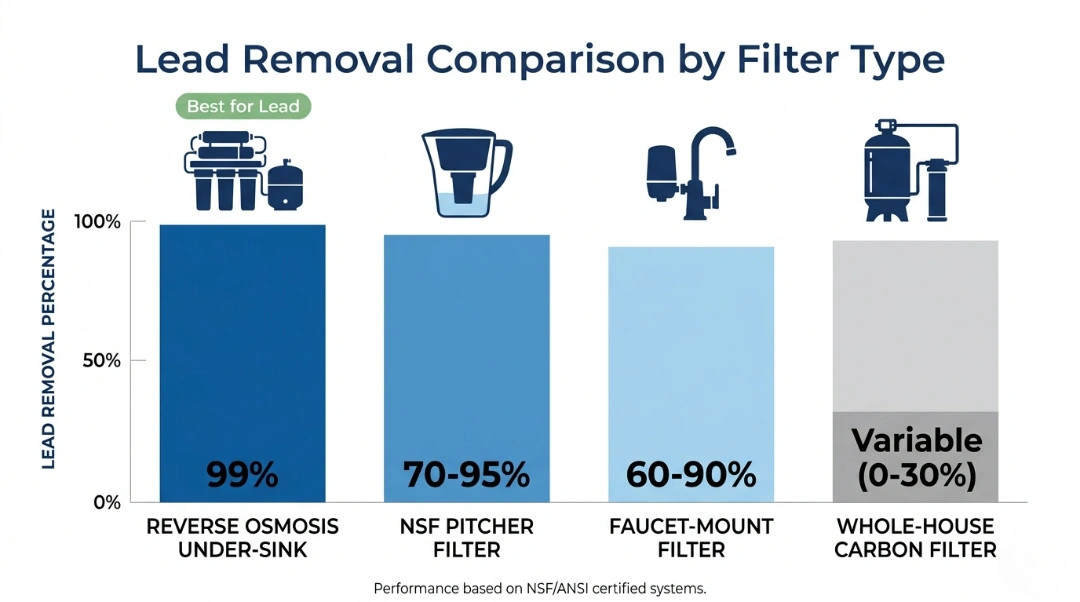
There are other options on the market. Pitcher filters, faucet-mount filters, and whole-house carbon filters all claim to reduce lead. Here is how they compare honestly:
|
Filter Type |
Lead Removal Rate | Coverage | Cost Range |
|
Reverse Osmosis (under-sink) |
Up to 99% | Point of use (kitchen sink) |
$200 to $600+ installed |
|
NSF-certified pitcher filter |
30% to 95% (varies by brand) | Single pitcher at a time |
$25 to $60 |
|
Faucet-mount filter |
50% to 85% | One faucet only |
$30 to $100 |
| Whole-house carbon filter | Variable, not always lead-rated | Whole house |
$500 to $2,000+ |
The most effective point-of-use remedy for lead-contaminated water is a RO system. Since lead is a dissolved heavy metal ion rather than merely a particle, it can handle particles that the majority of simple carbon filters cannot. Unless the filter is certified particularly for heavy metal ion filtration, carbon alone is not usually dependable for lead.
When a Whole House System Makes More Sense
If your water use goes beyond drinking to include bathing, cooking with hot water and washing produce then an RO system installed near your kitchen sink may still provide the appropriate level of consumption but a broader solution might also be appropriate.
A Water Purification System installed at the entry point of your home can reduce contaminants before they reach any faucet or appliance. This is especially useful in homes with widespread plumbing concerns or multiple sources of contamination. For drinking and cooking water, an under-sink RO system remains the gold standard for lead removal because of its membrane-level filtration accuracy.
UV Water Treatment and Lead: What You Need to Know
UV water treatment is an excellent technology for killing bacteria, viruses, and other biological threats in well water or municipal supplies. However, UV treatment does not remove lead. Lead is a heavy metal, not a living organism. UV light cannot filter it out.
When combined with a RO system, UV therapy for biological issues provides protection against both chemical and biological hazards. This combo is used by many well-watering houses in rural regions close to Tracy to provide complete protection.
RO System Installation Matters More Than Most People Realize
Even the best RO system will underperform if it is incorrectly installed. Common installation mistakes include improper tubing connections that cause slow leaks, skipping the flush cycle on a new membrane, failing to connect the drain line at the correct angle, and installing the system without checking incoming water pressure first.
A professional RO System Installation eliminates these risks. Proper installation ensures your system runs at full efficiency from day one and protects the warranty on your equipment. If you prefer to handle it yourself, Install Reverse Osmosis Water Filter guides are available to walk you through the process.
Common Buying Mistakes When Choosing a Lead Filter for Water
A lot of homeowners in Tracy CA overspend or underbuy because of these avoidable mistakes:
Buying an uncertified system. Not all RO systems are independently tested. Look for NSF/ANSI 58 certification specifically, which covers contaminant reduction including lead. This is the standard that actually means something.
Ignoring gallons-per-day output. A system rated at 50 gallons per day is more than enough for most families. Smaller tankless systems rated under 30 GPD may struggle to keep up with a household of four or more.
Skipping filter replacement. The biggest failure mode for RO systems is not mechanical. It is neglect. Filters left in place for two or three years beyond their rated life stop removing lead effectively.
Assuming the system handles hard water on its own. RO membranes do not remove hardness efficiently, and hard water accelerates membrane scaling. If your home has hard water (common in many parts of the Central Valley), pairing an RO system with a water softener protects the membrane and improves taste.
Conclusion
The answer to the question of whether does reverse osmosis remove lead is unquestionably yes, and it does so more consistently than almost any other point-of-use solution now accessible to householders. One of the most sensible investments you can make for long-term health is a properly built and maintained RO system for people in Tracy, CA, who live in older houses or who battle with deteriorating plumbing and lead-contaminated tap water.
For people who want to know precisely what is in their water and how to remedy it, RO Water Filter System offers local knowledge. Get in touch with us to find the best option for your house and your family, whether you need a system suggestion, expert installation, or advice on whole-home water treatment.
FAQs
Does reverse osmosis remove lead completely?
A properly functioning RO system with a certified membrane can remove up to 99% of lead from drinking water. This does not mean 100% in all cases, but the level of reduction is well below the EPA’s action level of 15 parts per billion. Regular maintenance keeps the system performing at that standard.
How do I know if my home has lead in the water?
The only reliable way to confirm lead contamination is through water testing from a certified laboratory. Visual inspection of your pipes can point to risk, but dissolved lead has no taste, smell, or color. Homes built before 1986 have the highest probability of lead-containing plumbing materials.
Can I use a reverse osmosis system if I already have a water softener?
Yes, and it is often a smart combination. A water softener treats hardness, which protects the RO membrane from scaling. The RO system then handles dissolved heavy metals like lead. The two systems work well together and serve different purposes.
How often do I need to replace filters in an RO system?
Pre-filters and post-filters typically need replacement every 6 to 12 months depending on water quality and household usage. The RO membrane usually lasts two to three years. Following the manufacturer’s schedule is essential for maintaining consistent lead removal performance.
Is a uv water treatment system enough to remove lead?
No. UV treatment is designed to neutralize biological contaminants such as bacteria and viruses. It has no effect on lead or other heavy metals. If your water has both biological contamination and lead, a combined approach using UV treatment alongside reverse osmosis provides comprehensive protection.