
The good news is that knowing how to make tap water taste better does not require a chemistry degree or a big budget. Some fixes cost nothing. Others are a one-time investment that pays off for years. This guide walks you through eight real methods, explains why each one works, and helps you figure out which solution fits your home and your situation.
If you turn on the faucet and are horrified by what comes out, you are being told something true. Something in your water supply is the reason why your tap water tastes flat and odd, smells like a swimming pool, or has a metallic flavor. Additionally, if you reside in Tracy, California, you are well aware that the water there isn’t the greatest in the state. It originates from a combination of local groundwater wells, transporting minerals, agricultural runoff residue, and disinfection chemicals that all have an impact on the daily flavor of your water.
How to Make Tap Water Taste Better for Bad Taste in the First Place?
Before jumping to solutions, it helps to understand what is actually causing the bad taste. Different problems call for different fixes.
Chlorine or chemical taste: City water is treated with chlorine or chloramine to kill bacteria. This is necessary, but it leaves behind a noticeable chemical flavor, especially in warmer weather when treatment levels rise.
Metallic taste: A water taste like metal usually points to iron, manganese, zinc, or copper in your water. This can come from your water source or from aging pipes in your home. In older California homes, corroded pipes are a frequent and overlooked cause.
Rotten egg smell or taste: This comes from hydrogen sulfide gas, which forms naturally in groundwater. It is harmless in small amounts but completely unpleasant to drink.
Earthy or musty flavor: Organic matter such as algae or sediment can give water a stale, swampy quality. This is more common with surface water sources like the Delta and Aqueduct systems that serve parts of the San Joaquin Valley.
Flat or “empty” taste: Heavily treated water or water that has been sitting in pipes can taste lifeless. This is not a safety issue, but it makes drinking enough water much harder.
Once you know what is behind the bad taste, you can choose a method that actually solves the right problem.
8 Effective Methods to Make Tap Water Taste Better

1. Chill Your Water Before Drinking
Cold water always tastes better than warm water. Temperature makes it harder for you to taste small off-flavors, like chlorine. Put water in a glass pitcher and put it in the fridge. Within a few hours, the chill alone can make a noticeable difference. This is the simplest and cheapest method you can try today.
This works best when the chlorine taste isn’t too strong. It won’t solve a strong Sulphur or metal issue on its own.
2. Let Water Sit and Aerate Before Drinking
Chlorine is a volatile compound, meaning it escapes into the air when water is left uncovered. Pour your tap water into an open pitcher and let it sit on the counter for 30 to 60 minutes. The chlorine will off-gas naturally, reducing that chemical taste without any equipment.
For faster results, pour the water back and forth between two containers a few times. This adds oxygen and speeds up the process. It is a practical method for renters or anyone not ready to invest in a filtration system yet.
3. Use a Pitcher Filter with Activated Carbon
An activated carbon pitcher filter is one of the most affordable and widely available options for improving tap water taste. Carbon filters work by adsorbing chlorine, chloramines, and some volatile organic compounds as water passes through. The result is noticeably cleaner-tasting water in minutes.
These are ideal for mild taste issues and small households. They are affordable upfront but require regular filter cartridge replacements, typically every 2 months. They will not remove heavy metals, dissolved solids, or harder contaminants. If your water tastes strongly metallic or comes from an older home with aging pipes, a pitcher filter alone may not be enough.
4. Add Natural Flavor Enhancers
Natural fruit and herb infusions are a clean way to hide a bad taste while you work on a longer-term remedy. Adding sliced cucumber, lemon, lime, or fresh mint to a pitcher of cooled water may make it a lot more drinkable. These don’t filter anything out, but they help you keep hydrated until you figure out a permanent solution.
Don’t buy drink packs or powders that already have flavor in them. A lot of them include fake sugars, preservatives, and salt that make it pointless to drink pure water.
5. Flush Your Pipes Before Drinking
If your water develops a metallic taste early in the morning or after long periods of non-use, your pipes may be the source. Water sitting in pipes absorbs trace amounts of metals from the pipe material itself.
Run your cold tap for 30 to 60 seconds before drinking or cooking. This clears the standing water from your home’s internal pipes and pulls in fresher water from the main supply line. In homes with older galvanized or copper plumbing, this simple habit can reduce metallic taste meaningfully. It costs nothing and takes less than a minute.
6. Boil Your Water for Temporary Chlorine Removal
Boiling drives chlorine out of water fairly quickly. Bring water to a full boil, then let it cool uncovered. The open boil allows chlorine to escape as steam. This method is effective for chlorine but has limitations: it does not remove dissolved minerals, heavy metals, or other contaminants. It also concentrates whatever minerals are left behind once the water cools.
Use boiling as a temporary solution or in combination with refrigeration, not as a standalone long-term fix.
7. Install a Faucet-Mount or Under-Sink Carbon Filter
A step above the pitcher filter, faucet-mount and under-sink carbon filters provide on-demand filtered water with much higher capacity. Under-sink systems are particularly effective because they use larger filter blocks that can process thousands of gallons before needing replacement.
For Tracy homeowners dealing with chlorine taste and light mineral issues, a quality under-sink carbon block filter is a solid mid-range option. It connects directly to your cold water line and typically uses a separate drinking water tap. Installation is straightforward and usually takes under an hour.
These filters make the flavor of filtered water much better than raw tap water, and they are much easier to use than filling pitchers.
8. Install a Reverse Osmosis System for Full Purification
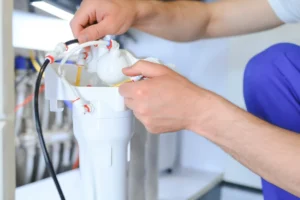
When the other methods are not enough, a reverse osmosis (RO) system is the most thorough solution available for home use. RO systems push water through a semi-permeable membrane that removes dissolved solids, heavy metals, nitrates, chlorine, chloramines, fluoride, and a wide range of other contaminants. The water that comes out is clean, neutral, and noticeably better-tasting than anything else on this list.
A 10-Stage Water Filtration System goes further than a basic 5-stage unit by adding remineralization and additional polishing stages. This restores a natural mineral balance to the filtered water, which is what gives filtered water its clean, slightly crisp taste that many people describe as similar to high-quality bottled water.
RO systems are installed under the kitchen sink and serve a dedicated drinking tap. If you already own an RO unit, professional RO System Installation ensures the system is correctly plumbed, pressure-tested, and performing at full capacity from day one.
RO Water Filter System has installed water filtration and reverse osmosis systems across Tracy and neighboring communities for over 15 years. Their team understands local water conditions and can help you match the right system to your home’s actual needs.
Which Method Is Right for Your Situation?

Not every home has the same problem, and not every budget allows for the same solution. Here is a quick guide to help you choose:
| Your Situation | Best Starting Point |
| Chlorine taste, mild issues | Pitcher filter or let water aerate |
| Metallic taste, older home | Flush pipes + under-sink carbon filter |
| Strong rotten egg smell | Whole house carbon or RO system |
| Hard water + taste problems | RO with remineralization |
| Whole family, daily use | Under-sink RO or multi-stage system |
| Want to upgrade existing RO | Professional installation check |
If you are unsure what is in your water, Tracy’s annual Consumer Confidence Report is a good first reference. It shows what the city tests for and what levels are present. From there, an in-home water quality check can identify anything the report does not cover, such as what is happening inside your own plumbing.
Exploring Household Water Filtration Systems designed for whole-home use is also worth considering if you want better-tasting water from every tap, not just the kitchen.
Common Mistakes Homeowners Make

A few things consistently trip people up when trying to improve how their tap water tastes:
Ignoring the source of the problem. Adding lemon to water that has a strong metallic taste is a band-aid. If you have heavy metals or lead in your water, flavor masking does nothing to make it safer.
Skipping filter maintenance. A carbon filter that has exceeded its rated capacity does not just stop working; it can actually release trapped contaminants back into your water. Replace filter cartridges on schedule.
Buying a filter rated for a different problem. A basic pitcher filter does not remove nitrates or heavy metals. An RO system removes almost everything but requires a remineralization stage if you want balanced-tasting water. Match the filter to the problem.
Forgetting about water pressure. RO systems require adequate water pressure to work correctly. A professional installation confirms your home’s pressure is in the right range and that the system is set up for peak performance.
Conclusion
You can remedy the issue if the water tastes like chlorine, metal, or anything else you can’t quite put your finger on. How to make tap water taste better, you need to know what is generating the bad taste and then choose a solution that directly fixes it. For some homes, cooling and aerating is all they need. A reverse osmosis system is the best way for Tracy homes to deal with hard water, dissolved solids, and other impurities that can’t be tasted or smelled.
RO Water Filter System works with homeowners across Tracy and the surrounding area to identify the right filtration approach for each home. Whether you need a simple under-sink filter, a full multi-stage RO installation, or guidance on maintaining a system you already own, their team is ready to help. Contact us directly to discuss your water and find the right solution for your family.
FAQs
Is Tracy, CA tap water safe to drink?
Tracy’s municipal water meets federal EPA standards, which means it is legally safe to drink. However, independent water quality organizations have flagged certain contaminants in Tracy’s supply, including arsenic and PFOA, that exceed health-protective guidelines even while staying within legal limits
Why does my tap water taste like metal even after filtering?
If water still tastes like metal after basic carbon filtration, the issue may be coming from your home’s plumbing rather than the municipal supply. Older galvanized or copper pipes can leach metals into standing water, especially first thing in the morning.
What does sparkling water taste like like compared to tap?
Filtered water from a reverse osmosis system typically tastes clean, slightly neutral, and noticeably fresher than straight tap water. Some people describe it as similar to quality bottled water.
How to make city water better different from well water in terms of taste?
City water like Tracy’s municipal supply is chemically treated with chlorine or chloramine, which kills bacteria but leaves a noticeable taste. Well water is not treated this way but can carry naturally occurring minerals, iron, hydrogen sulfide, or agricultural chemicals depending on the local geology.
Do I need professional installation for an RO system, or can I do it myself?
Many RO systems can be installed by a capable DIYer with basic plumbing skills. However, professional installation is recommended if you want to be sure the system is plumbed correctly, operating at the right pressure, and producing water that meets the manufacturer’s performance specs.