Choosing a water filter feels harder than it should. The aisle is packed with jugs, faucet gadgets, and under-sink boxes, and every label promises clean water. Asking what filter is best for drinking water is the right first move, because the answer depends on what’s in your tap.
Quick answer: a certified reverse osmosis system under the sink is the best all-round pick. If your tap water is already safe and you just want better taste, a certified carbon block filter does the job for less. In this guide, we match filters to contaminants, compare costs and upkeep, and explain when to call a pro. You’ll know exactly what to buy by the end.
Quick Answer: The Best Drinking Water Filter by Need
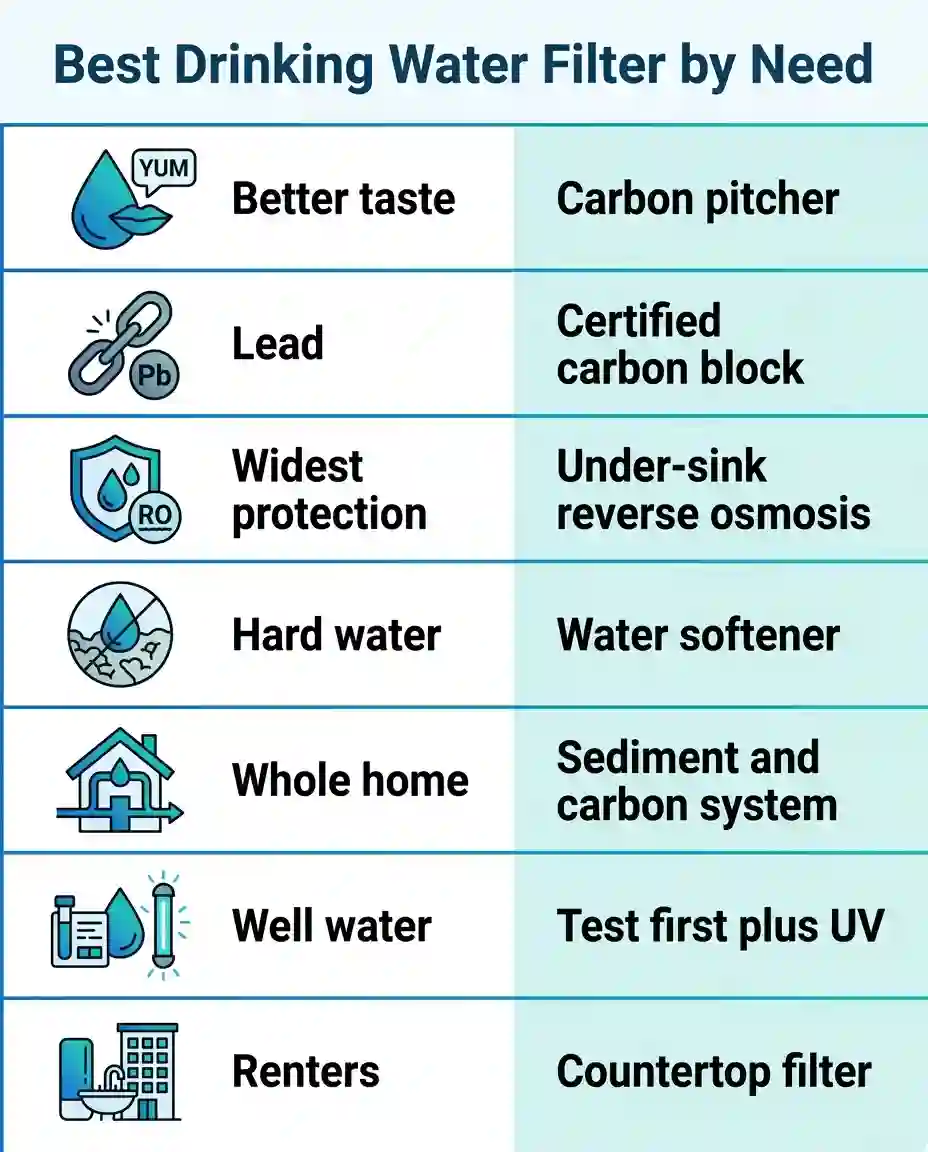
No single filter fits every home. Here’s the short version.
- Better taste and less chlorine: an activated carbon pitcher or faucet filter.
- Lead reduction: a carbon block or reverse osmosis filter certified to NSF/ANSI 53.
- Widest protection at the sink: under-sink reverse osmosis.
- Hard water: a water softener, plus a drinking water filter.
- Whole-home coverage: sediment filtration and carbon at the main line.
- Private well water: test first, then sediment filtration, carbon, and often UV.
- Renters: countertop or faucet-mount filters with no plumbing changes.
Test Your Water Before You Buy
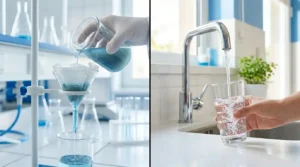
Buying a filter without testing your water is like buying glasses without an eye exam. You may pick something that looks right and still misses the problem.
So what filter is best for drinking water in your home? Your water report decides. Start with your Consumer Confidence Report, or CCR. Every public water utility publishes one each year under the Safe Drinking Water Act. It lists what’s in your supply and how it compares with EPA limits. Search your utility’s name plus “CCR” to find it.
A CCR has limits, though. It reports water at the treatment plant, not at your tap. Old pipes and fixtures can add lead on the way. A state-certified lab test shows what actually pours into your glass.
Private wells come with no utility report. The CDC suggests testing wells at least once a year for bacteria and nitrates. Test again after floods or nearby construction.
Comparing the Best Drinking Water Filter Types
Each type solves a different problem. Think of them as tools in a drawer. A hammer won’t fix a leaky pipe.
Pitcher Filters
Pitchers are cheap and need no installation. Most use activated carbon to cut chlorine, taste, and odor. Some certified models also reduce lead. They filter slowly, hold little water, and need frequent cartridge swaps. They suit renters and single drinkers.
Faucet-Mount and Countertop Filters
A faucet-mount filter clips onto your tap. A countertop unit sits beside the sink and holds more filter media. Both are a solid pick for the best tap water filter on a budget. Faucet models can slow flow and don’t fit every spout.
Under-Sink Carbon Block Filters
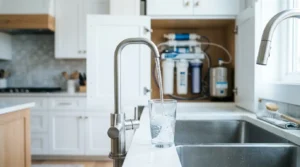
A certified carbon block model is the best under sink water filter for homes with safe city water that need better taste and lead reduction. It connects to your cold line and keeps healthy minerals. Flow is fast, and no water goes to drain.
Reverse Osmosis Systems
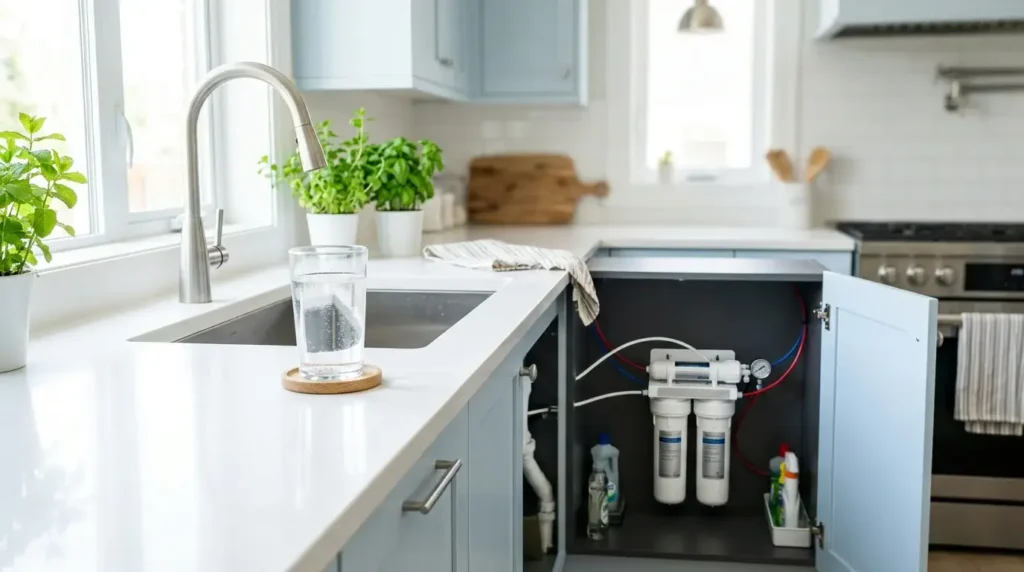
Reverse osmosis pushes water through an RO membrane with pores so small they block dissolved salts, nitrates, and arsenic. Most systems add a sediment filter and carbon stage before the membrane. That makes RO the best drinking water filtration system for broad protection.
There are trade-offs. RO sends some water to drain, strips minerals, and costs more upfront. Tankless models save cabinet space, and remineralizing cartridges improve taste.
Whole-House Filters
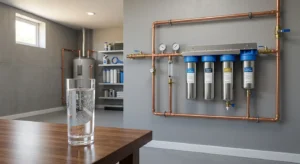
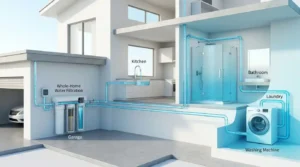
Whole-house systems treat water at the main line, called point-of-entry. They use sediment filtration and carbon to cut chlorine and particles at every tap, shower, and appliance. For many families, that’s the best water filter for home protection of plumbing and appliances. They rarely give drinking-grade results alone, so many homes add a point-of-use filter in the kitchen.
UV Purifiers and Water Softeners
UV lamps inactivate bacteria, viruses, and cysts, which suits well water. They don’t remove chemicals. Softeners use ion exchange to swap hardness minerals for sodium or potassium. They protect pipes, but they don’t make drinking water safe.
Reverse Osmosis vs Carbon Filter: Which Is Better?
Reverse osmosis removes more contaminants than a carbon filter, including nitrates, arsenic, and dissolved salts. A carbon filter keeps healthy minerals, wastes no water, and costs less. Choose reverse osmosis for the broadest protection. Choose carbon for good-tasting water that’s already safe.
Many RO systems already include carbon stages, so it isn’t always either/or. The real question is your water. Chlorine taste on city water? Carbon is enough. Nitrates or high TDS in your report? Go with RO.
What Is the Best Water Filter for Different Contaminants?
The best water filter depends on the contaminant. Activated carbon removes chlorine and bad taste. Carbon block filters reduce lead and some VOCs. Reverse osmosis handles the widest range, including nitrates and dissolved solids. Always check NSF/ANSI certification for the specific contaminant you want removed.
Chlorine and Chloramine
Standard activated carbon handles chlorine well. Chloramine is tougher. Catalytic carbon works better against it. Your CCR says which disinfectant your utility uses.
Lead
Lead usually comes from old pipes and fixtures, not the treatment plant. Pick a filter certified to NSF/ANSI 53 for lead reduction. Don’t trust a box that only says “removes heavy metals.”
PFAS
PFAS are long-lasting chemicals found in some water supplies. Carbon block and reverse osmosis are the usual technologies. Look for third-party verification for PFOA and PFOS reduction. Skip unverified “removes PFAS” marketing.
Nitrates, Arsenic, and Dissolved Solids
Reverse osmosis is the reliable answer here. Carbon alone won’t remove nitrates. NSF/ANSI 58 covers RO systems, so look for it.
Sediment and Rust
Mechanical filtration traps sand, silt, and rust. Think of a colander for pasta, only much finer. Filters carry a micron rating, and a lower number means a finer catch. Place sediment filtration ahead of carbon to protect it.
Bacteria and Viruses
Municipal water is disinfected. Private wells often aren’t. UV or ultrafiltration handles microbes best. Choose a product certified for microbiological reduction, not just taste.
Hard Water
Calcium and magnesium aren’t a health risk. They leave scale on fixtures and spots on dishes. A softener fixes that. A drinking water filter won’t.
How to Choose the Best Drinking Water Filter
Choose a drinking water filter in four steps. Check your local water report or test your water. Match the filter to the contaminants found. Confirm NSF/ANSI certification for those contaminants. Then compare cost, space, and cartridge replacement. A certified filter that fits your water beats an expensive one that doesn’t.
Don’t put the cart before the horse. Read your results first, then shop. If you’re still wondering what filter is best for drinking water after that, match your top contaminant to the table below.
Key Factors to Consider Before Buying
Certifications
Certification is the closest thing to a guarantee. NSF/ANSI 42 covers taste and odor, like chlorine. Standard 53 covers health contaminants, like lead and cysts. Standard 58 covers RO systems. Standard 401 covers emerging contaminants, and 372 covers lead-free materials. Check the NSF database listing, not only the box.
Flow Rate and Water Pressure
Flow rate is measured in gallons per minute (GPM). A whole-house system needs enough GPM for showers and laundry running together. RO systems list gallons per day, and their tanks refill slowly. Check that number if your household cooks a lot.
Upfront and Ongoing Costs
The sticker price is half the story. Cartridges, membranes, and installation add up. Compare cost per gallon over several years, not the price on day one. Pitchers cost least upfront. RO costs the most upfront and in upkeep.
Space and Installation
Measure your cabinet first. Carbon block systems are slim. Tank-style RO needs more room, while tankless models fit tight spaces. Renters should stick with countertop or faucet-mount units.
Replacement Schedule
A stitch in time saves nine. Sediment and carbon cartridges typically need changing every 6 to 12 months. RO membranes often last 2 to 5 years. Follow the manufacturer’s schedule, and set a phone reminder the day you install.
Side-by-Side Comparison: Filter Type vs. Contaminants Removed
Results depend on each model’s certification. Use this as a starting map.
| Filter Type | Chlorine and Taste | Lead | PFAS | Nitrates | Bacteria and Viruses | Hardness |
| Pitcher (carbon) | Yes | Certified models only | Certified models only | No | No | No |
| Faucet-mount or countertop | Yes | Certified models only | Certified models only | No | No | No |
| Under-sink carbon block | Yes | Yes, if certified | Certified models only | No | No | No |
| Under-sink reverse osmosis | Yes | Yes | Yes, if certified | Yes | Not a disinfection method | Reduces dissolved minerals |
| Whole-house carbon and sediment | Yes | Not designed for it | Limited | No | No | No |
| UV purifier | No | No | No | No | Yes | No |
| Water softener | No | No | No | No | No | Yes |
Do Alkaline, Ionized, and Structured Water Filters Work?
Alkaline and ionized filters can raise pH slightly, but strong evidence for health benefits is lacking. Structured water claims have no scientific support. Spend your money on certified contaminant removal first. Add mineral or pH features only if you like the taste.
RO strips minerals, so a remineralizing cartridge can make water taste fuller. That’s a taste choice, not a health fix.
When to Call a Professional Installer
Some jobs are easy. Dropping a cartridge into a pitcher takes 30 seconds. An under-sink RO system takes a lot more. Call a pro when:
- The install needs a hole drilled in a sink or countertop for a new faucet.
- You’re tying into the main line for a whole-house system.
- A softener needs a drain, power, and a bypass valve.
- Well water needs multi-stage treatment.
- You’re unsure about plumbing code or warranty terms.
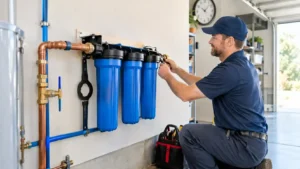
A bad install leaks. A slow drip under the sink can wreck a cabinet before you notice. A pro also checks your pressure, sets up the drain connection, and tests the finished water. That costs less than repairing water damage.
What Is the Best Water Filtration System for Home?
The best water filtration system for home use pairs sediment filtration with carbon at the main line and a reverse osmosis system at the kitchen sink. This setup protects pipes and appliances, improves every tap, and gives the cleanest water where you drink and cook.
Your own water report still sets the final plan. Homes in Tracy and nearby Central Valley towns often deal with hard water, so a softener may belong in the mix. Check your CCR to confirm. Our team at RO Water Filter System designs and installs these setups for local households. Read about our Water Filtration Installation Services in Tracy, CA to match a system to your water.
Final Thoughts
There’s no single winner for every house. What filter is best for drinking water comes down to your tap, your budget, and your space. Read your CCR, test if you’re unsure, and buy certified. Start with the contaminant, not the brand. If you’d like help sorting through your results, Contact us and we’ll walk through them with you.
Frequently Asked Questions
Is reverse osmosis the best filter for drinking water?
Reverse osmosis is the best filter for drinking water when you want the widest contaminant removal. It reduces lead, nitrates, arsenic, and dissolved solids. It also uses more water and costs more than carbon. For safe municipal water, a certified carbon block filter often does the job.
Do water filters remove lead and PFAS?
Some do. Carbon block and reverse osmosis filters can reduce lead and PFAS, but only models certified for those contaminants. Check the NSF/ANSI listing for lead reduction under Standard 53 and for PFOA and PFOS claims. Pitcher filters vary widely, so read the certification sheet before buying.
How often should you change a water filter?
Change filters on the schedule the manufacturer lists, which is usually every 2 to 12 months depending on the type. Reverse osmosis membranes last about 2 to 5 years. Replace sooner if water slows, tastes off, or smells. An overdue cartridge stops removing contaminants.
Is filtered water better than bottled water?
Filtered water is often a better value than bottled water. A home filter costs a fraction of bottled water per gallon, creates less plastic waste, and can remove specific contaminants. Bottled water isn’t automatically safer. Quality varies by brand, so certified home filtration gives you more control.