The best water filtration system for home use depends on your water source, the contaminants you need to reduce, and whether you want cleaner drinking water or treatment for the entire house. Reverse osmosis is often a strong choice for drinking water, while whole-house carbon, sediment, softening, or UV treatment may make more sense for specific water problems.
If you’re comparing water filters, don’t choose a system just because it has more stages or a higher price. Start with your water quality report, water testing, and contaminant profile. Then match the treatment method to the problem. This guide compares the main home water filtration systems, explains where each one fits, and shows what to check before buying.
Finding the Right Water Filtration System for Your Home
Start with your water, not the product page. Water in a Tracy kitchen is not the same as water in a farmhouse with a private well. Municipal water arrives treated, usually with chlorine or chloramine. Well water comes straight from groundwater, so nobody treats it for you.
Buying a filter without testing is like buying glasses without an eye exam. You might get lucky. Most people don’t.
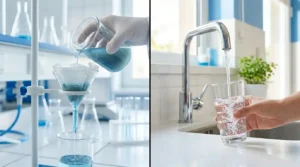
Two documents replace the guesswork. Your utility publishes an annual water quality report, called a Consumer Confidence Report, that lists what’s in municipal water. A home water testing kit or a lab test shows what’s in your own tap, including lead that comes from old plumbing. Together they give you a contaminant profile, and that profile picks the system.
Types of Home Water Filtration Systems Compared
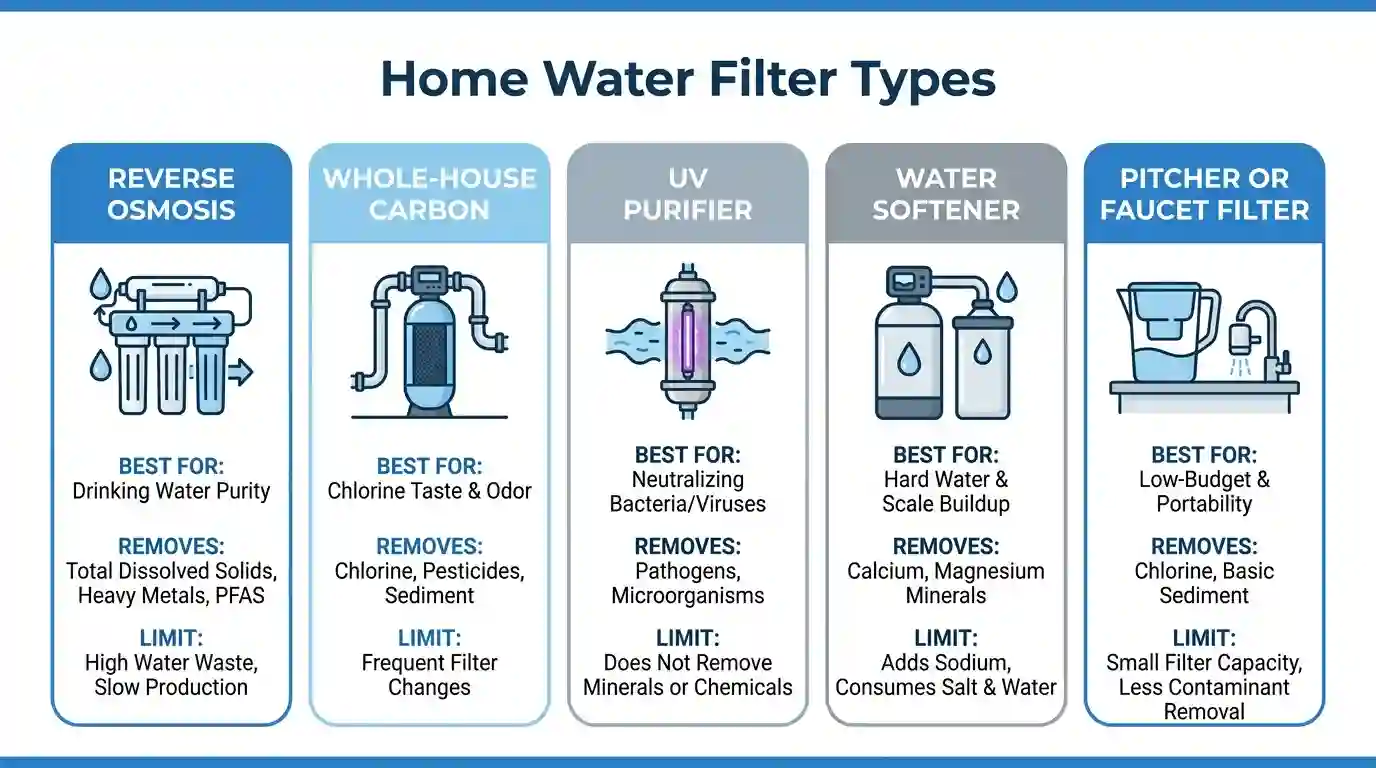
Reverse osmosis (under-sink)
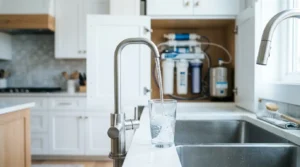
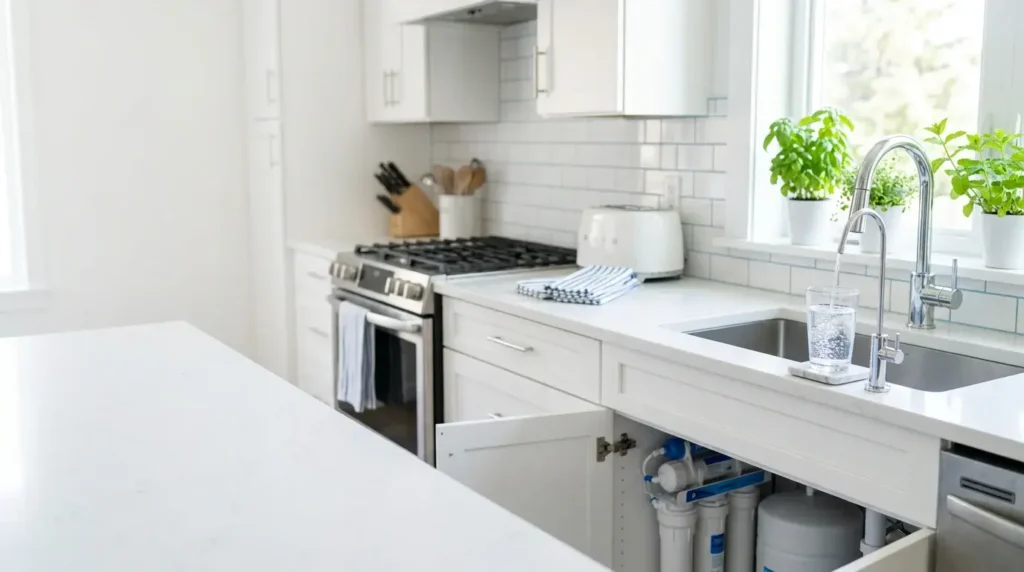
A reverse osmosis (RO) unit sits under your sink and feeds its own small faucet. Water passes through a sediment filter, carbon filters, and then the membrane. A storage tank holds the finished water.
The tradeoff is wastewater. RO sends some water down the drain to carry contaminants away, and newer units waste less than older ones. If you like the taste of mineral water, look for a remineralization stage.
Whole-house carbon and sediment filters
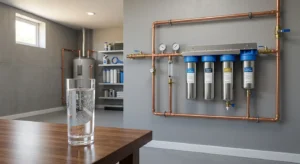
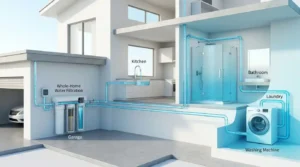
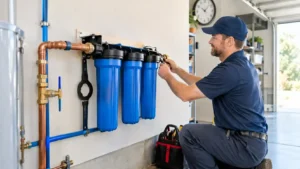
A whole-house filter treats water where it enters your home. Installers call it a point-of-entry (POE) system. Sediment and carbon stages protect pipes and appliances, and showers stop smelling like a swimming pool.
Flow rate matters here. Average homes often run fine on 8 to 12 gallons per minute (GPM). Large homes with several bathrooms need 15 or more, or you’ll feel the pressure drop.
UV purification
A UV purifier uses ultraviolet light to inactivate bacteria, viruses, and cysts. It doesn’t remove chemicals, lead, or sediment. That makes it a final stage, not a stand-alone filter.
It makes the most sense for well water, where microbial contamination is a real risk. Treat it as a water purification system, and pair it with filtration.
Water softeners vs water filters
A softener swaps calcium and magnesium for sodium or potassium through ion exchange. It fights scale, spotted dishes, and dry skin. It doesn’t remove chlorine or lead.
Think of a softener as a mechanic and a filter as a cleaner. They don’t do each other’s jobs. Many homes need both.
Countertop, pitcher, and faucet filters
These cost little and need no plumber. They suit renters and anyone testing the waters. The drawbacks are slow filtering, small capacity, and frequent cartridge swaps. Check the certification before you trust the claim on the box.
The Best Water Filtration Systems at a Glance
Best Overall Whole-House: SpringWell CF1
Price Range: ~$1,050 | Best For: Municipal water treatment across every faucet
The SpringWell CF1 uses a multi-stage catalytic carbon block system designed to target chlorine, chloramines, pesticides, and organic compounds. It handles high flow rates easily without causing pressure drops across multiple bathrooms.
- Pros: Massive 1,000,000-gallon capacity, zero waste water, lifetime warranty.
- Cons: Higher upfront cost, requires basic plumbing knowledge for DIY installation.
Best Under-Sink Reverse Osmosis: Waterdrop G3P600
Price Range: ~$539 | Best For: Space-saving, high-efficiency drinking water purification
This tankless reverse osmosis system purifies water on demand, eliminating the bulky storage tanks that take up under-sink space. It provides a fast 600 GPD flow rate with a low 2:1 drain ratio, making it an efficient choice for modern kitchens.
- Pros: Modern design, smart monitoring faucet, simple twist-and-pull filter changes.
- Cons: Requires an electrical outlet under the sink.
Best Countertop RO (No Installation): AquaTru Carafe
Price Range: ~$359 | Best For: Renters seeking certified purification without plumbing modifications
The AquaTru Carafe uses a four-stage reverse osmosis system scaled into a sleek countertop footprint. It holds independent certifications against strict NSF standards to reduce PFAS, lead, fluoride, and nitrates.
- Pros: Plug-and-play simplicity, glass carafe storage, tested for 80+ contaminants.
- Cons: Requires manual reservoir refills at the sink.
How We Evaluated and Tested These Systems
To identify top-tier options, we reviewed independent lab testing data, verified certification databases (NSF/ANSI standards), and evaluated real-world maintenance requirements.
Data & Verification Note:
Look for independent certifications when shopping. NSF/ANSI Standard 42 covers aesthetic improvements like taste and chlorine odor. Standard 53 evaluates health-related contaminant removal like lead. Standard 58 specifically covers reverse osmosis performance metrics.
Four key criteria guided our ratings:
- Contaminant Reduction Efficiency: Verified removal percentages for heavy metals, microplastics, and VOCs.
- Flow Rate (GPM): Gallons-per-minute throughput to ensure household water pressure remains steady.
- Total Cost of Ownership: Long-term cartridge expenses and filter longevity versus initial setup cost.
- Build & Certification Integrity: Solid housing materials and third-party laboratory verification (NSF, WQA, or IAPMO).
What Is the Best Water Filter for Different Water Problems?
The best system depends entirely on your specific water issue; carbon filters target taste and chemicals, reverse osmosis removes heavy metals and PFAS, and UV purifiers neutralize bacteria.
For City Water (Chlorine, Chloramines, & Byproducts)
If your tap smells like a swimming pool, an activated carbon or catalytic carbon block system works best. It adsorbs dissolved chlorine gas and synthetic additives quickly without stripping away harmless basic minerals.
For Well Water (Sediment, Bacteria, & Heavy Iron)
Private groundwater isn’t monitored by public utilities. The best setup uses a sediment pre-filter, an iron/manganese removal tank, and a UV sterilization stage to destroy microorganisms without chemicals.
For Hard Water Scale
Filtering water isn’t the same as softening it. While carbon filters remove taste contaminants, hard minerals like calcium and magnesium require an ion-exchange water softener or a salt-free conditioner to protect fixtures from scale.
Whole House vs Under-Sink Water Filtration
Whole-house systems protect your home’s entire plumbing infrastructure by filtering water at the entry point, while under-sink systems provide higher-level purification exclusively for cooking and drinking at one faucet.
A point-of-entry system treats every gallon that fills your washing machine, shower, and hot water heater. This prevents skin irritation from chlorine steam and stops pipe corrosion. However, treating an entire home with ultra-fine reverse osmosis membranes isn’t cost-effective for most properties.
Under-sink reverse osmosis units focus their filtration power on the small fraction of daily water you consume. Combining a whole-house carbon filter with a specialized under-sink RO system gives you the ideal balance: treated water at every shower and ultra-pure drinking water at your kitchen sink.
Professional Local Support
Setting up custom filtration setups occasionally benefits from expert hands-on analysis. If you need dedicated equipment advice or professional Water Filtration Installation Services in Tracy, CA, working directly with verified local specialists guarantees your unit operates at peak efficiency from day one. At RO Water Filter System, we help homeowners select, install, and maintain high-efficiency systems engineered for long-term purity and performance.
Final Thoughts
Choosing the best water filter system for home comes down to matching your household’s water quality profile with a reliable, certified system. Review your water report, decide between whole-house or point-of-use coverage, and select a system that delivers reliable results for years to come. Have specific questions about sizing or system compatibility? Feel free to Contact us today to speak with a specialist!
Frequently Asked Questions
Can I install a whole-house water filter myself?
Yes, you can install a whole-house system yourself if you have basic pipe-cutting skills and comfort with push-connect fittings. Most setups require basic plumbing work on your main line. If you’re uncomfortable cutting into main supply lines, hiring a licensed plumber ensures clean execution without leak risks.
How often do whole-house filters need to be replaced?
Sediment pre-filters require replacement every 3 to 6 months, while primary carbon cartridges typically last 6 to 12 months. Heavy-duty tank-based systems feature media beds that function for up to 1,000,000 gallons, lasting up to 5 to 10 years depending on household usage.
What are the most common contaminants found in tap water?
Chlorine, heavy metals (like lead and copper), microplastics, pesticides, and industrial PFAS chemicals represent the most frequent tap water contaminants. Municipal lines contain treatment chemicals, while aging home plumbing can leach heavy metals into tap water.
Does reverse osmosis remove good minerals?
Yes. Reverse osmosis removes most dissolved minerals, including calcium and magnesium, along with contaminants. Drinking water supplies only a small share of your daily minerals, so most people don’t miss them. A remineralization filter adds some back if you prefer the taste.
Can I install a water filtration system myself?
You can set up a faucet-mount or countertop filter yourself. Whole-house systems and RO units need plumbing cuts, correct fittings, and leak testing, so a licensed professional is the safer choice. Improper installation can void warranties and cause water damage.