Not every water filter works the same way: sediment filters capture sediment such as rust and sand, while activated carbon removes chlorine and odors, and reverse osmosis removes salts, heavy metals, and bacteria not removed by other types. Each type of filtration solves its own particular set of issues. Choosing incorrectly can leave you still drinking what was meant to be removed!
Whatever brought you here, you’re asking the right question. Understanding the different types of filtration helps you stop guessing and start choosing based on what your water actually needs. At RO Water Filter System, we work with homeowners every day who are sorting through exactly this decision.
What Is Filtration and Why Does It Matter?
Different types of filtration is the process of passing water through a material or membrane to remove unwanted particles, contaminants, or dissolved substances. But not every filtration method removes the same things.
That’s the part most guides skip over.
A basic sediment filter catches sand and rust. A reverse osmosis membrane removes bacteria, dissolved salts, and heavy metals. An activated carbon filter handles chlorine and odor. These aren’t interchangeable and picking the wrong one means you’re still drinking what you were trying to remove.
Why is it necessary to filter the solution? Because tap water, even treated municipal water can carry chlorine byproducts, trace pharmaceuticals, nitrates, and hard minerals that affect taste, safety, and your home’s plumbing over time. Well water adds a whole other layer: iron, sulfur, bacteria, and sediment.
The Different Types of Filtration Explained
Each filtration method works differently, and removes different things from your water.
Mechanical Filtration
This is the most straightforward method. Water passes through a physical barrier; a mesh, a foam pad, a sediment cartridge and particles too large to fit through the pores get trapped.
The key variable here is pore size, measured in microns. A 5-micron filter catches visible sediment like sand, rust, and silt. A 1-micron filter catches finer particles that you’d never see with the naked eye.
Common uses:
- Pre-filters in whole-house systems
- Sediment filters before an RO unit
- Pre-treatment for well water
Mechanical filtration doesn’t remove dissolved substances, bacteria, or chemicals. It’s almost always a first stage, not a complete solution on its own.
Activated Carbon Filtration
Activated carbon works through adsorption, not absorption. Contaminants stick to the surface of the carbon material as water flows through. The more surface area the carbon has, the more it can trap.
This method is excellent for:
- Chlorine and chloramines
- Volatile organic compounds (VOCs)
- Bad taste and odor
- Some pesticides and herbicides
It does not remove nitrates, heavy metals like lead, fluoride, or dissolved salts. If your main concern is taste and smell from municipal water, a good carbon block filter goes a long way. But if you’re on well water or dealing with hard water, carbon alone won’t cut it.
Carbon filters come in two main forms: granular activated carbon (GAC) and carbon block. Carbon block is denser and more effective at removing smaller particles and microorganisms compared to GAC.
Reverse Osmosis (RO)
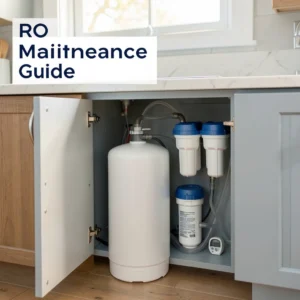
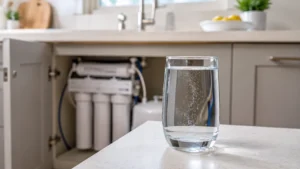
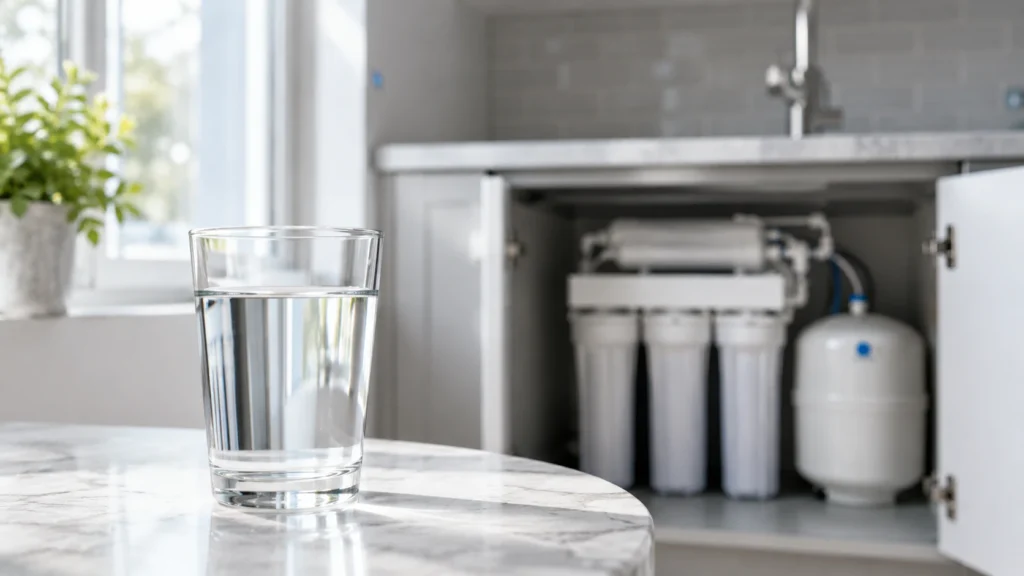
Reverse osmosis is the most thorough point-of-use filtration method available for residential homes. Water is pushed under pressure through a semi-permeable membrane with pores small enough to block dissolved salts, heavy metals, bacteria, and most organic compounds. What passes through is clean water. What doesn’t get flushed away as wastewater.
A standard residential RO system includes multiple stages:
|
Stage |
Filter Type |
What It Removes |
|
1 |
Sediment pre-filter | Sand, silt, rust |
| 2 | Carbon pre-filter |
Chlorine, VOCs |
|
3 |
RO membrane | TDS, lead, fluoride, bacteria |
| 4 | Post-carbon filter |
Residual taste and odor |
Some systems add a remineralization or alkaline stage to add beneficial minerals back into the permeate (the filtered water).
You can check your filtered water quality using a TDS meter, a quick way to confirm your RO membrane is doing its job. Anything under 50 ppm is generally considered clean for drinking.
If you’re looking at options for your home, the Reverse Osmosis Water Filter Tracy, CA page covers what a properly installed RO system looks like for local water conditions.
Ultrafiltration (UF)
Ultrafiltration uses a hollow fiber membrane with slightly larger pores than an RO membrane typically in the range of 0.01 to 0.1 microns. It removes bacteria, viruses, colloids, and some larger organic molecules. It does not remove dissolved salts, heavy metals, or fluoride.
UF is a good fit when:
- Your water source is microbiologically questionable
- You want to avoid wastewater (UF doesn’t produce reject water like RO does)
- Your TDS is already low but microbial risk is present
For most California homeowners on municipal water, UF is rarely the first choice. It fills a niche particularly for rural well water users who test clean on minerals but face microbial concerns.
Microfiltration (MF)
Microfiltration sits just above ultrafiltration in terms of pore size (0.1 to 10 microns). It’s effective at removing suspended solids, algae, and larger bacteria. It’s commonly used in industrial processes and municipal water treatment as a pre-treatment step before more advanced membrane filtration.
At the residential level, MF shows up mostly as sediment pre-filters or in whole-house systems designed to protect plumbing and appliances from particulate buildup.
Biological Filtration
Biological filtration uses living microorganisms, specifically beneficial bacteria to break down organic waste and dissolved compounds. You see this most often in:
- Aquarium and pond systems
- Slow sand filter systems
- Some constructed wetland water treatment setups
For residential drinking water, biological filtration isn’t a standalone method. It’s most relevant for well water or pond water pre-treatment in combination with other stages.
Chemical Filtration
Chemical filtration removes contaminants through a chemical reaction or binding process. Activated carbon is the most common example. Others include:
- Ion exchange resins; used in water softeners to swap calcium and magnesium ions for sodium, reducing hardness
- Catalytic carbon; a modified form of activated carbon that removes chloramines (a disinfectant that regular carbon handles poorly)
- KDF media; a zinc-copper alloy that reduces heavy metals and inhibits bacterial growth
Chemical filtration is often paired with mechanical and membrane stages in multi-stage systems. Knowing which chemical contaminants your water contains helps determine which media makes sense.
HEPA Filtration
HEPA (High-Efficiency Particulate Air) filters are primarily an air filtration technology. They capture 99.97% of airborne particles 0.3 microns or larger dust, pollen, mold spores, and some bacteria.
HEPA isn’t used in drinking water systems. It comes up in this context because people sometimes conflate air and water filtration terminology. If someone is comparing HEPA filters to RO membranes, those are two different filtration environments and shouldn’t be compared directly.
How These Methods Work Together in a Home System
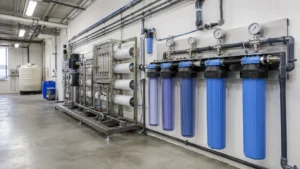
The honest truth is that no single filtration method handles everything. Real-world water treatment whether at the tap or whole-house level stacks multiple techniques.
A well-designed home system typically looks like this:
- Whole-house sediment pre-filter; removes particles before water reaches your pipes and appliances
- Whole-house carbon filter; strips chlorine and chemicals throughout the house
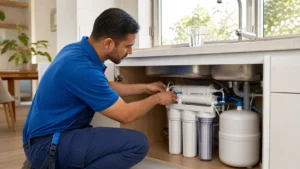
- Under-sink RO system; delivers purified drinking water at the kitchen tap
- Water softener; if hardness is an issue, protects water heaters and fixtures
The 6-Stage Water Filtration System in Tracy, CA is a good example of how layering these different filtration techniques produces genuinely clean water rather than just treating one problem.
Choosing the Right Filtration Method for Your Home
Here’s where most buyers go wrong. They pick a filter based on price or marketing, not based on a water test.
Before you buy anything, know what’s in your water. A basic water quality test from a certified lab gives you a TDS reading, hardness level, pH, and flags for common contaminants like nitrates, iron, and bacteria. Without that, you’re guessing.
Once you have your test results:
- High TDS or dissolved minerals: RO is the right call
- Hard water (calcium/magnesium): Water softener or whole-house system with ion exchange
- Iron or sulfur smell: Oxidizing filter or catalytic carbon
- Municipal water taste/odor issues: Under-sink carbon or RO system
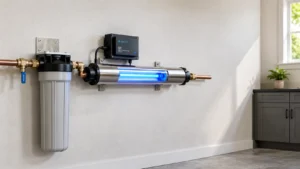
- Well water with bacterial risk: UV purification combined with membrane filtration
- Sediment or rust: Whole-house mechanical pre-filter
You don’t need a 10-stage system if a 4-stage RO unit solves your actual problem. Overselling complexity doesn’t help you; it just costs more money.
For more on how water management decisions connect to long-term home health, What Is Sustainable Water Management gives useful background on making smart, long-term choices.
Conclusion
The different types of filtration each serve a specific purpose. Mechanical filtration removes particles while carbon removes chemicals and odors. Reverse osmosis strips away contaminants to produce near pure water while biological and chemical methods supplement these primary methods in more complex systems.
Finding a solution comes down to knowing your water and finding an appropriate filtration method that matches what’s actually present. RO Water Filter System assists homeowners in Tracy and nearby cities in doing exactly this: we assess their water, recommend an ideal system, and install it correctly so it works properly for their homes. Are you ready to stop guessing and start drinking clean water instead? Reach out and let’s find an appropriate solution together.
FAQs
What are the main different types of filtration used in homes?
The most common types of filtration include mechanical filtration, activated carbon filtration, ultrafiltration, and reverse osmosis. Each filtration method targets different contaminants, so many systems combine multiple stages together.
Why is reverse osmosis considered one of the best filtration methods?
Reverse osmosis uses a semi-permeable membrane that removes very small contaminants from drinking water. It can help reduce dissolved solids, heavy metals, fluoride, and other impurities many standard filters cannot catch.
Why is it necessary to filter the solution if tap water looks clean?
Clear water can still contain chlorine, dissolved minerals, bacteria, or chemical contaminants that are invisible to the eye. Filtration improves water quality, taste, and long-term appliance protection.
What’s the difference between water softening and filtration?
Water softeners reduce hardness minerals like calcium and magnesium. Filtration systems focus on removing particles, chemicals, odors, or contaminants from the water supply.
How do I know which types of water filters are right for my home?
The best approach is to start with a water test. Your results will show whether you need sediment filtration, carbon filtration, reverse osmosis RO, UV treatment, or a combination system.