You spent $40 on a gallon of distilled water for your CPAP machine, then looked at your under-sink RO system and wondered, is reverse osmosis the same as distilled water? It’s a fair question. Both look crystal clear, both remove contaminants, and both cost more than tap water.
The differences in how each process works and what each one misses, directly affect which one belongs in your home. At RO Water Filter System, we walk customers through this comparison every week, especially in areas like Tracy, CA, where local water quality makes the choice even more consequential. This guide gives you the full picture, including a contamination blind spot that almost no comparison article mentions.
Is Reverse Osmosis the Same as Distilled Water?
Reverse osmosis does not produce identically purified water to that produced through distillation.
Both processes utilize separate processes and produce distinct tastes, costs and efficiency outcomes that differ drastically in taste, efficiency and use ability.
- Reverse Osmosis uses a semi permeable membrane to filter contaminants.
- Distillation uses heat and evaporation to separate out impurities from water.
Both can serve different functions when applied in real world situations. Although they appear similar on paper, in everyday household usage each serves its own specific function.
How Reverse Osmosis and Distilled Water Work

To understand why these options differ, it helps to look at the physical mechanics behind each technology.
What Is Reverse Osmosis?
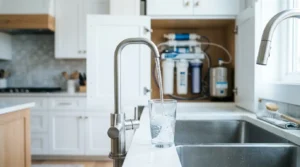
Reverse osmosis is a pressure-driven filtration process that forces tap water through a semi-permeable membrane with tiny microscopic pores. This membrane features openings around 0.0001 microns.
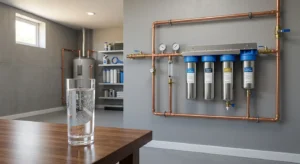
As line pressure pushes water through the system, the membrane traps heavy metals, dissolved minerals, microplastics, and chemical compounds. Clean water passes into a storage tank, while concentrated impurities rinse down the drain. Multi-stage setups usually pair the membrane with sediment pre-filters and activated carbon blocks to capture chlorine, sediment, and volatile organic compounds (VOCs).
What Is Distilled Water?
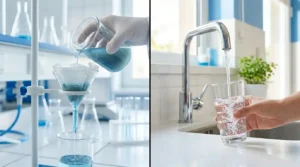
Distilled water is produced by a thermal process that boils tap water into steam and condenses that vapor back into a pure liquid. This technique replicates nature’s hydrological rainfall cycle inside an enclosed chamber.
When water boils at 212°F (100°C), pure H₂O turns to steam, leaving heavy minerals, sediment, and biological pathogens behind in the boiling reservoir. The steam moves into a cooling coil, condenses back into liquid form, and drips into a clean glass or stainless-steel carafe. Because heat destroys living organisms, distillation acts as a reliable thermal barrier against microbes.
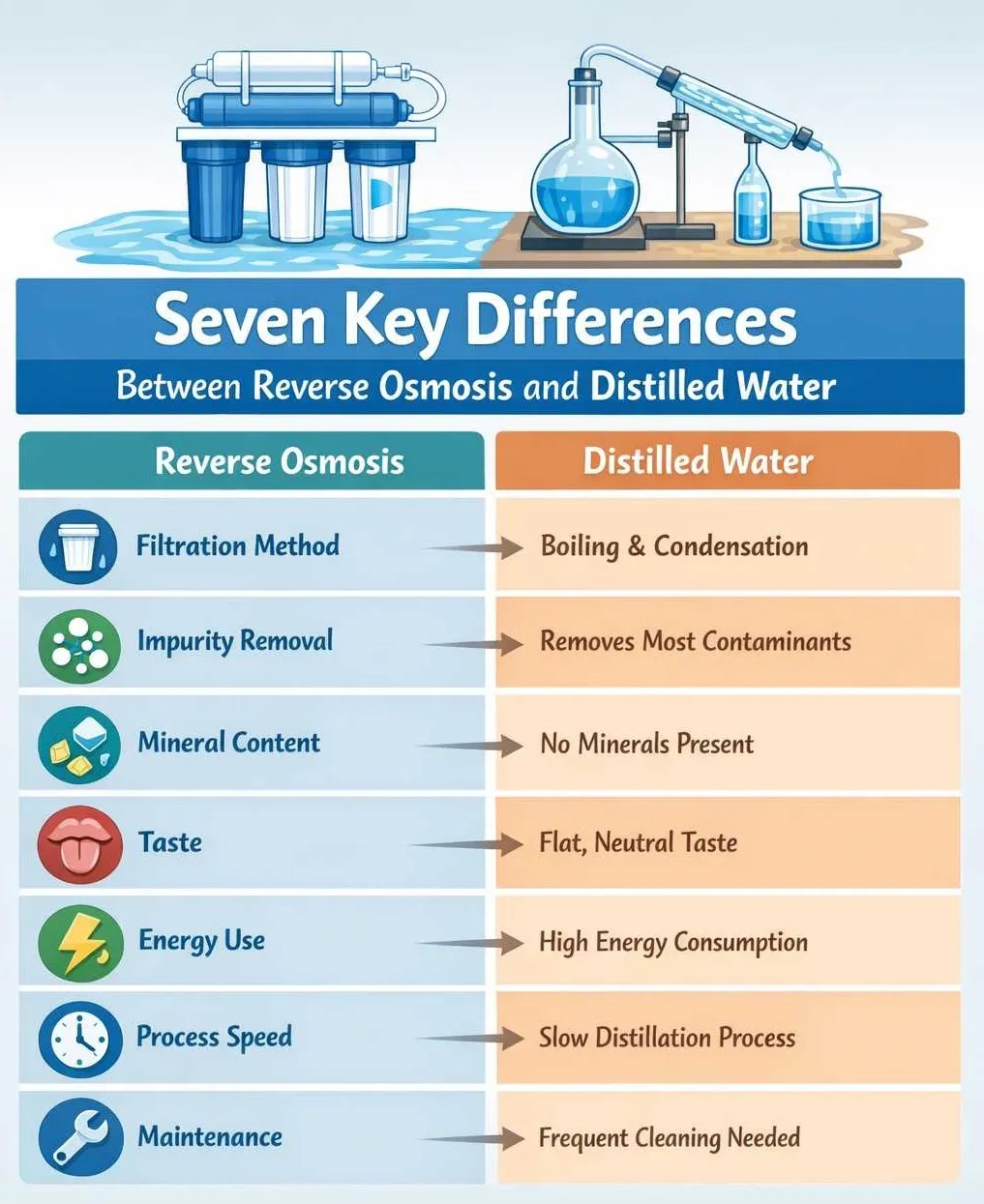
Seven Key Differences Between Reverse Osmosis and Distilled Water
1. The Process
RO is filtration. Distillation is evaporation and condensation. Think of straining pasta versus catching the steam above the pot. One blocks particles, the other leaves them behind.
2. Purity Level
Distilled water usually has the lower TDS. Home RO water often lands anywhere from a few ppm to the low 20s, depending on your tap water. If your tap reads 400 ppm and your membrane rejects 95 percent, you’ll still see about 20 ppm. For drinking, that gap rarely matters. For lab work or sensitive equipment, it can.
3. Mineral Content and Taste
RO water keeps a trace of minerals, and many systems add a remineralization stage. Distilled water has almost none. That’s why distilled water tastes flat, while RO water tastes crisp and clean. Taste is personal, but many people find RO more pleasant for everyday sipping.
4. What Each Method Misses
No method catches everything. RO can let dissolved gases and some tiny uncharged molecules slip by, which is why carbon filters sit around the membrane. Distillation can carry over volatile organic compounds (VOCs). Each method has a blind spot, and carbon filtering helps close it in both.
5. pH Level
Both produce slightly acidic water. Without minerals to buffer it, the water absorbs carbon dioxide from the air and forms weak carbonic acid. Distilled water often sits near pH 5.5 to 7 after air exposure. RO water usually lands around 6 to 7. The effect on drinking is minor.
6. Cost and Resource Use
A home distiller runs on electricity, often around three kilowatt hours per gallon. RO runs on household pressure but sends some water to the drain. Older systems wasted several gallons per gallon produced, while newer efficient models cut that ratio a lot. Buying jugs of distilled water adds up too, since you pay for it every week.
7. Speed and Convenience
RO delivers water on demand at a dedicated faucet. A distiller makes about a gallon over several hours and heats up your kitchen. It also needs regular cleaning, because scale builds up in the boiling chamber. Nobody enjoys scrubbing that out.
Reverse Osmosis vs Distilled Water Comparison Table
Here’s distilled water vs reverse osmosis water side by side. Use it as a quick reference.
| Feature | Reverse Osmosis Water | Distilled Water |
|---|---|---|
| Method | Pressure pushes water through a membrane | Boiling, then condensing steam |
| Typical TDS | Often 5 to 25 ppm, depends on tap water | Usually 0 to 5 ppm |
| Minerals | Trace amounts, can be added back | Almost none |
| Taste | Clean and crisp | Flat |
| Typical pH | About 6 to 7 | About 5.5 to 7 |
| Possible weak spot | Dissolved gases, tiny uncharged molecules | Volatile chemicals carried by steam |
| Home cost | Filter and membrane replacements, some drain water | Electricity, or ongoing jug purchases |
| Speed | On demand | Hours per gallon |
| Best for | Daily drinking, cooking, coffee, ice | CPAP, humidifiers, lab-style needs |
Is RO Water the Same as Distilled Water for Drinking?
No, RO water and distilled water are not the same for drinking, though both are safe in most homes. RO water keeps some minerals and tastes cleaner than tap. Distilled water has almost none, so it tastes flat. Both suit daily drinking when a balanced diet covers your mineral needs.
Safety isn’t the real question here. Taste and minerals are. The World Health Organization has discussed the lack of calcium and magnesium in demineralized water and suggests adding minerals back when that water is your main source. Food still supplies most of what your body needs.
That’s why I lean toward RO for daily use. You get the cleaner taste, and a remineralization filter can restore a light mineral profile. Coffee, tea, soup, and ice cubes all come out better with it. Distilled water works fine, but most people stop enjoying it after a few glasses.
Is Boiled Water the Same as Distilled Water?
No, simple boiled water is not distilled water. Boiling water simply heats it in an open vessel to kill bacteria, viruses, and parasites.
When you boil water on the stove, steam escapes into the kitchen air while the total volume of liquid decreases. This action actually concentrates dissolved minerals, heavy metals, and sediment in the remaining water. Distillation traps that steam, cools it down, and collects it in a secondary container to separate pure liquid from impurities.
When Reverse Osmosis Is the Better Choice
Reverse osmosis can provide exactly the clean water source you require if that’s what’s desired:
- Safe, clean daily drinking water
- Better taste compared to bottled water
- Low-maintenance filtration
- Continuous supply
It is especially useful in areas where tap water may contaminants including chlorine, lead, or high TDS levels.
When Distilled Water Makes More Sense
While reverse osmosis is great at the kitchen sink, distilled water excels in technical, medical, and specialized appliance environments:
-
Medical Devices: CPAP machines, sleep apnea humidifiers, and nasal rinses require mineral-free distilled water to prevent bacterial growth and scale build-up.
-
Household Appliances: Steam irons, garment steamers, and facial steamers run cleaner on distilled water without clogging steam vents.
-
Aquariums and Hydroponics: Sensitive aquatic environments and precise indoor garden nutrient mixes benefit from starting with absolute zero-TDS water.
-
Automotive Maintenance: Lead-acid car batteries and engine cooling flushes require mineral-free water to avoid mineral corrosion.
Common Mistakes Homeowners Make
The biggest mistake is assuming the answer to “Is Reverse Osmosis the Same as Distilled Water” is yes. It isn’t, and that assumption causes real problems. Here are the ones I see most.
Using RO water in a medical device without checking. Manuals usually name distilled water. Follow them to protect your warranty.
Skipping filter changes. Sediment and carbon filters usually need replacing every 6 to 12 months. Membranes often last 2 to 5 years, depending on your water. An old filter can let chlorine reach the membrane and damage it.
Trusting a TDS meter too much. A TDS meter reads dissolved solids only. It can’t tell you whether lead, bacteria, or a specific chemical is present. Use a lab test for that.
Storing distilled water carelessly. An open container absorbs carbon dioxide and picks up odors. Keep it sealed and away from heat.
Ignoring the drain line. A poorly installed RO system can waste more water than needed or leak. Good installation protects your cabinet and your water bill.
How to Choose the Right System for Your Home
Ask yourself:
- Consider whether water is necessary for daily drinking purposes?
- Do you want convenience or occasional use?
- Are you concerned about energy costs?
- Is taste important to you?
If your answer leans toward daily use and convenience, reverse osmosis is the better option.
If you are still exploring options, this guide on building a How to Make a Water Purification System can help.
Conclusion
Is reverse osmosis the same as distilled water and most homeowners fail to recognize its differences. Reverse Osmosis provides you with an economical and practical method of purified drinking water daily without incurring excessive costs for purification systems. Distilled water has its place, but may not meet typical household demands. RO may offer safe tasting, great-tasting drinking water without hassle for every day use.
RO Water Filter System in Tracy, California can assist with improving the water quality in your home by helping select and install an ideal filtering solution tailored specifically for you. Reach out now and receive expert guidance tailored specifically towards meeting the unique requirements of your water conditions and daily life!
FAQs
Is reverse osmosis water safer than distilled water?
Both are very safe and remove harmful contaminants. Reverse osmosis is more suitable for daily drinking due to taste and convenience.
Does reverse osmosis remove bacteria and viruses?
Yes, RO systems remove bacteria and viruses through membrane filtration and additional filter stages.
Why does distilled water taste different?
Distilled water lacks minerals, which gives it a flat taste compared to reverse osmosis water.
Is distilled water reverse osmosis when it comes to purity?
Distilled water is not reverse osmosis, but both produce very pure water. Distilled water is typically slightly purer, while reverse osmosis water still removes most contaminants effectively.
Which is cheaper: reverse osmosis or distilled water?
Reverse osmosis is usually cheaper over time because it uses less energy and provides continuous water.