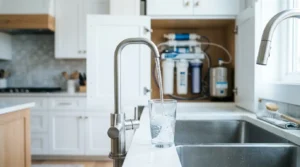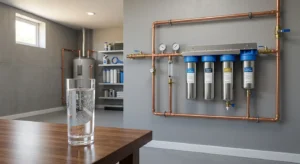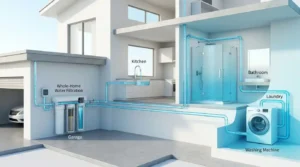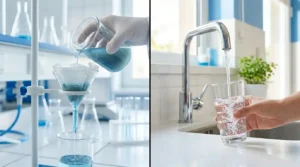
You’ve probably seen “activated carbon” on a pitcher, a fridge filter, or a bottle label and asked yourself, what is activated carbon, and why does every filter seem to use it? Here’s the quick answer. It’s a charcoal-like material full of tiny pores that grab chlorine, odors, and many chemicals as water flows past. Think of it as a sponge for contaminants, with one catch: it only holds what fits.
I’ll show you how it’s made, how it cleans water, and where it falls short, so you can judge any filter by what it does. You’ll get eight clear benefits, the main carbon types, a list of what carbon can’t remove, and a realistic replacement schedule. By the end, you’ll read a filter label with confidence.
What Is Activated Carbon, Really?
Activated carbon is a form of carbon processed to create millions of microscopic pores between its atoms. This massive internal network gives it an extraordinarily large surface area. A single gram of high-grade activated carbon contains a surface area exceeding 1,000 square meters. That equals the surface area of roughly four full-sized tennis courts packed into a single teaspoon of material.
Manufacturers derive activated carbon from carbon-rich organic materials like coconut shells, wood, peat, or bituminous coal. Coconut shells serve as the premier choice for residential drinking water systems because they produce dense, hard media with high proportions of tiny micropores ideal for trapping chemical contaminants.
How the Activation Process Works
Raw carbonaceous material cannot adsorb contaminants efficiently without thermal treatment. Turning raw carbon source material into a high-capacity filter media requires a two-step process:
-
Carbonization: Raw materials like coconut shells undergo heating in an oxygen-deprived environment at temperatures up to 800°C (1,472°F). Thermal decomposition burns off non-carbon elements like hydrogen, nitrogen, and oxygen, leaving behind a carbon-dense skeleton.
-
Activation: The carbonized material undergoes controlled oxidation at extreme temperatures ranging between 800°C and 1,000°C using steam, hot air, or carbon dioxide. Steam carves out a vast network of internal channels, pores, and micro-cavities.
The size and distribution of these pores determine how well the carbon traps specific molecules. Micropores handle smaller molecules like chlorine and dissolved solvents, while mesopores handle larger organic molecules and color-causing compounds.
How Activated Carbon Removes Contaminants From Water
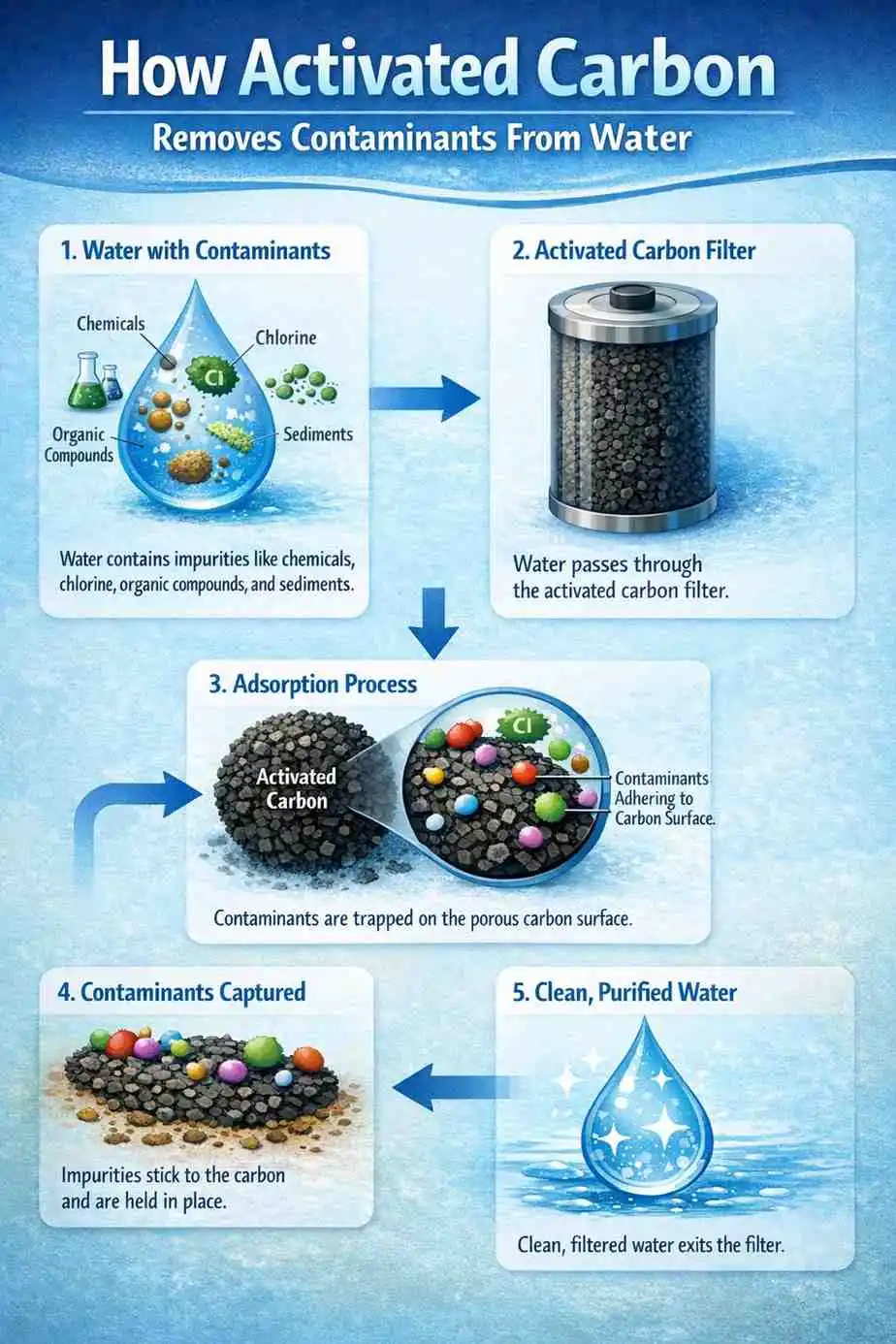
Activated carbon filtration works through adsorption, not absorption. The spelling differs by one letter, but the meaning differs a lot. Absorption soaks a substance into a material, like a towel drinking up a spill. Adsorption makes molecules stick to a surface, like lint on a sweater.
As water moves through an activated carbon water filter, dissolved organic molecules cling to the carbon surface through weak physical forces. They stay put until the surface fills up. After that, contaminants pass through, which is why replacement matters.
Chlorine works differently. Carbon triggers a chemical reaction that converts chlorine into harmless chloride. This is called catalytic reduction, and it’s why carbon-filtered tap water tastes fresher.
Three factors control the results. Contact time comes first, since slower flow gives contaminants longer to stick. Pore size comes second. Contaminant type comes third. A large, carbon-loving molecule like a pesticide sticks easily. A small, water-loving one like fluoride slips right by.
8 Reasons Activated Carbon Is Important for Clean Water
Carbon has earned its place in nearly every home filter. Here’s why it matters.
1. Better Taste
Chlorine and organic compounds create that swimming pool flavor. Carbon cuts both, and many people notice the difference with the first glass.
2. Less Odor
Earthy, musty smells often trace back to compounds such as geosmin. Carbon traps them well.
3. Lower Chlorine
Utilities add chlorine to disinfect water on its way to your home. It does its job in the pipes, but you don’t need it in your glass.
4. Reduced Volatile Organic Compounds
Solvents and fuel-related chemicals can reach water supplies. Carbon is one of the best-established tools for reducing them.
5. Pesticide and Herbicide Reduction
Agricultural runoff can carry these chemicals into source water. Carbon adsorbs many of them.
6. Fewer Disinfection Byproducts
Chlorine reacts with natural organic matter and forms byproducts such as trihalomethanes. Carbon reduces many of them.
7. Some PFAS Reduction
Certain carbon filters tested to NSF/ANSI standards reduce PFOA and PFOS. Results depend on the carbon type and contact time, so check the claim.
8. Low Running Cost
Carbon needs no electricity and sends no water down the drain. You replace a cartridge, and that’s about it.
Types of Activated Carbon Used in Home Water Filters
Residential filtration systems rely on two distinct physical formats. Choosing the right format depends on your flow requirements and water target.
| Feature / Metric | Granular Activated Carbon (GAC) | Solid Carbon Block |
| Physical Form | Loose granules similar to black sand | Rigid, compressed solid cylinder |
| Pore Size / Rating | 20–50 microns typical | 0.5–10 microns |
| Flow Rate Capacity | High flow rate, minimal pressure drop | Moderate flow rate, higher resistance |
| Primary Risk | Water channeling over time | Surface clogging from sediment |
| Best Application | Whole-house point-of-entry systems | Under-sink point-of-use drinking systems |
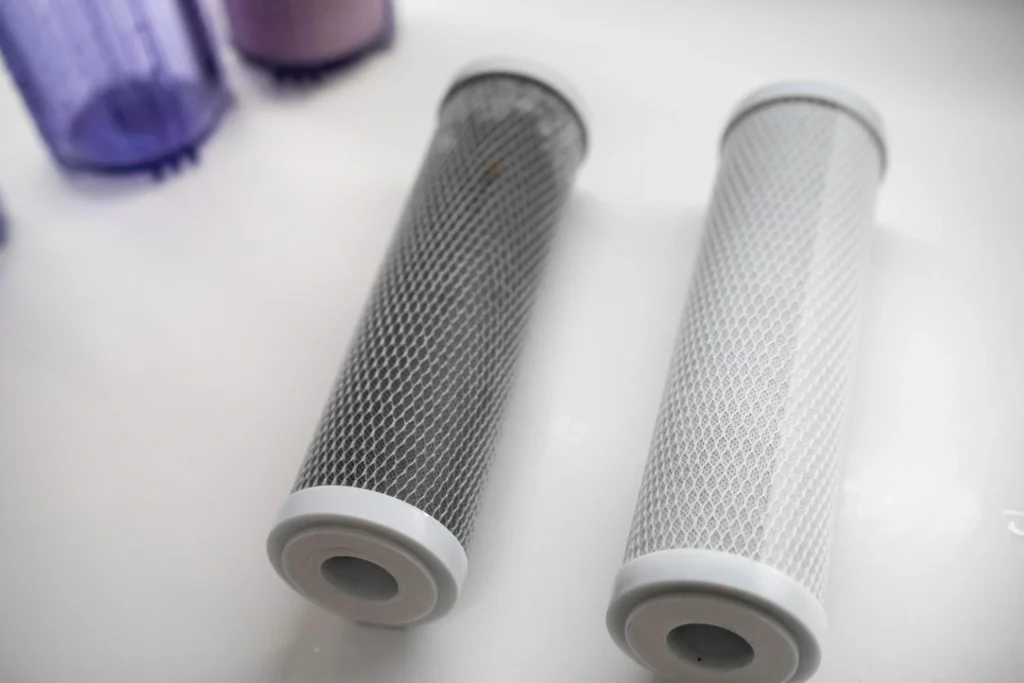
An activated carbon water filter using loose granular media handles high volumes of water smoothly. However, solid block media forces water through a dense matrix, extending contact time and trapping significantly finer contaminants.
What Activated Carbon Does Not Remove
While an activated carbon filter for drinking water excels at capturing organic compounds and chemicals, it is not a complete purification system on its own. Carbon media cannot target inorganic minerals or micro-organisms effectively:
-
Dissolved Minerals & Hardness: Carbon does not remove calcium, magnesium, or sodium ions. It will not soften hard water.
-
Heavy Metals (In Standard Form): Standard carbon filters let lead, mercury, and chromium-6 pass through unless specially modified with specialized cation exchange resins.
-
Nitrates and Fluoride: These inorganic ions bypass carbon structures without clinging to adsorption sites.
-
Microbiological Pathogens: Standard carbon does not destroy bacteria, viruses, or parasites. In fact, saturated static carbon beds can host bacterial growth if left unchanged too long.
-
Total Dissolved Solids (TDS): Carbon has no effect on overall mineral salts or TDS levels in water.
If you reside in Tracy and require water from wells that contain hardness, bacteria risk, iron and organics for various uses, then RO Water Filter System combining carbon filter, RO filtering and UV treatment solutions would likely provide more comprehensive solution than one alone could.
How Long Does Activated Carbon Last in a Filter?
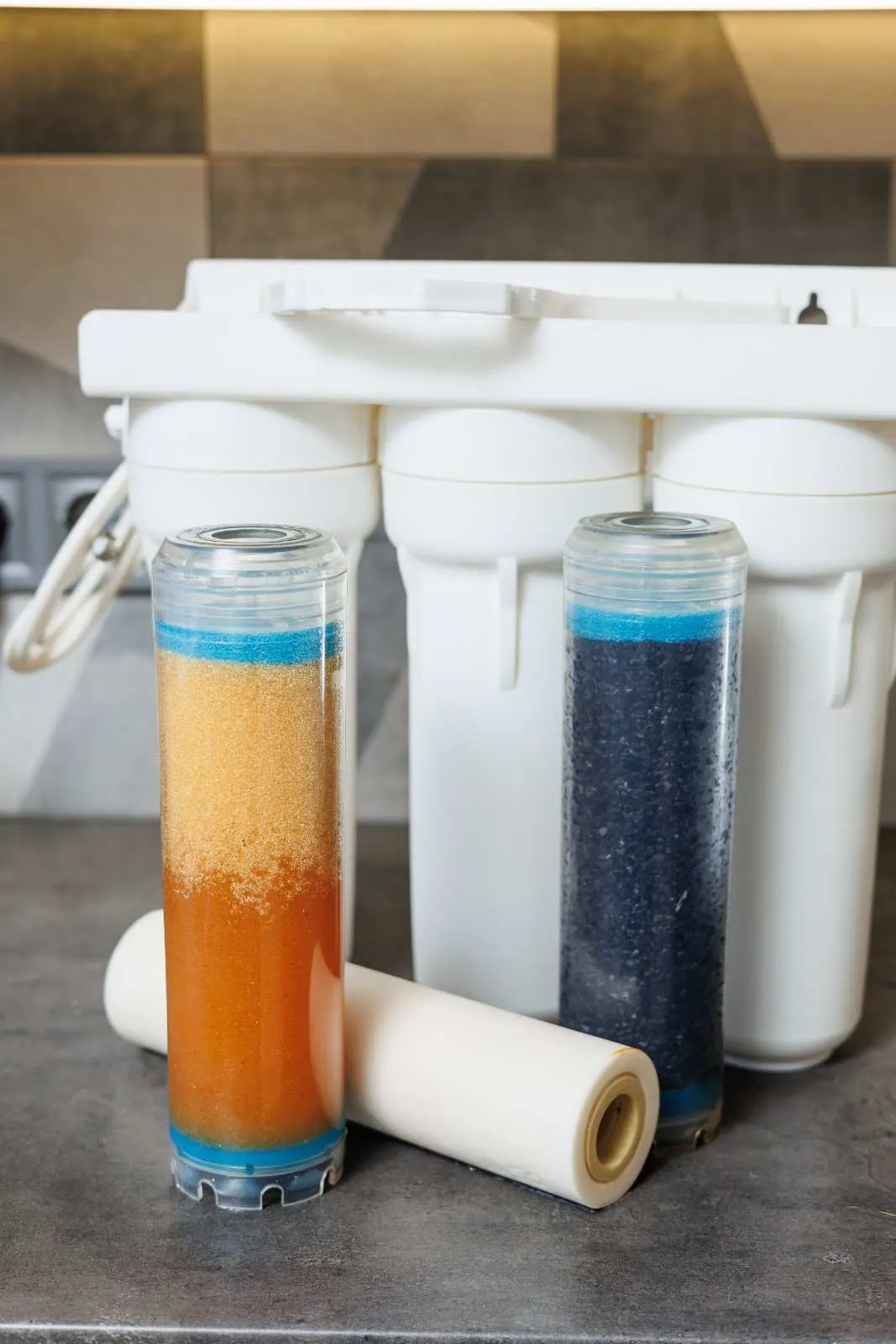
Most carbon cartridges last two to six months, depending on size and use, while large whole-house tanks can last several years. Water volume, contaminant levels, and flow rate set the real limit. Your cartridge’s gallon rating is the number to follow.
Carbon doesn’t expire on a calendar. It runs out of surface. Once the pores fill, contaminants pass through, and you stop getting the protection you paid for.
Watch for warning signs. Returning chlorine taste or odor is the clearest one. Dropping flow often points to sediment clogging the filter instead, so check both.
I often hear from homeowners who say their tap water tastes like a swimming pool again, and the filter turns out to be a year old. Set a reminder and replace the cartridge on the earlier of the date or the gallon rating. Flush a new cartridge as directed, and don’t let a filter sit unused for weeks, since stagnant water can grow bacteria.
Building Your Own System? Start With Carbon First
If you are learning how water filtration works and exploring DIY options, activated carbon is the right starting point. It is the most universal filtration medium and appears in nearly every credible home system. You can learn more about how to make a water purification system if you are exploring building a custom or temporary setup for home or outdoor use.
Conclusion
Understanding what is activated carbon means understanding the foundation of nearly every home water filtration system that actually works. It removes what you can smell and taste, protects the components downstream, and forms the backbone of systems that handle serious contaminants.
For homeowners in Tracy, CA, water quality is not abstract. It shows up in your morning coffee, in what your kids drink, and in how long your appliances last. If you are ready to move forward with a system that uses activated carbon correctly as part of a complete filtration setup, Water Filtration Installation Services in Tracy, CA is here to help. Contact us to find the right solution for your home, your water, and your budget.
FAQs
What is activated carbon used for in home water filters?
Activated carbon is used to remove chlorine, chloramines, volatile organic compounds, and compounds that cause taste and odor problems in tap water. In home systems, it usually appears as a pre-filter before the RO membrane and as a post-filter to polish water before it reaches the faucet. It works through adsorption, not simple mechanical filtration.
What is the difference between a carbon block water filter and a granular activated carbon filter?
A granular activated carbon filter uses loose granules that water flows through, making it good for high-flow applications with lower pressure drop. A carbon block water filter is made from compressed powdered carbon, giving water more contact time and finer filtration. Carbon blocks generally remove a broader range of contaminants, including some that granular filters miss at typical flow rates.
What is a CTO filter and when do you need one?
CTO stands for Chlorine, Taste, and Odor. It is a type of carbon block filter specifically designed for RO pre-filter applications. If your water has noticeable chlorine smell or flat taste, a CTO filter as the first stage in your system handles those issues before water reaches the membrane or your glass.
How often should activated carbon filters be replaced?
Most carbon filters in residential systems need replacement every six to twelve months. Homes with higher water usage or higher incoming chlorine levels may need replacement sooner. If you notice taste or odor returning to your filtered water, that is a reliable signal the filter is exhausted. Following a consistent maintenance schedule keeps your system performing correctly.
Can activated carbon remove lead or bacteria from drinking water?
Standard activated carbon does not reliably remove lead, bacteria, or viruses. For lead and other heavy metals, reverse osmosis is a much more effective option. For bacteria and pathogens, UV purification is typically added. A complete home water system usually combines carbon filtration with RO and sometimes UV treatment for full protection across all contaminant categories.