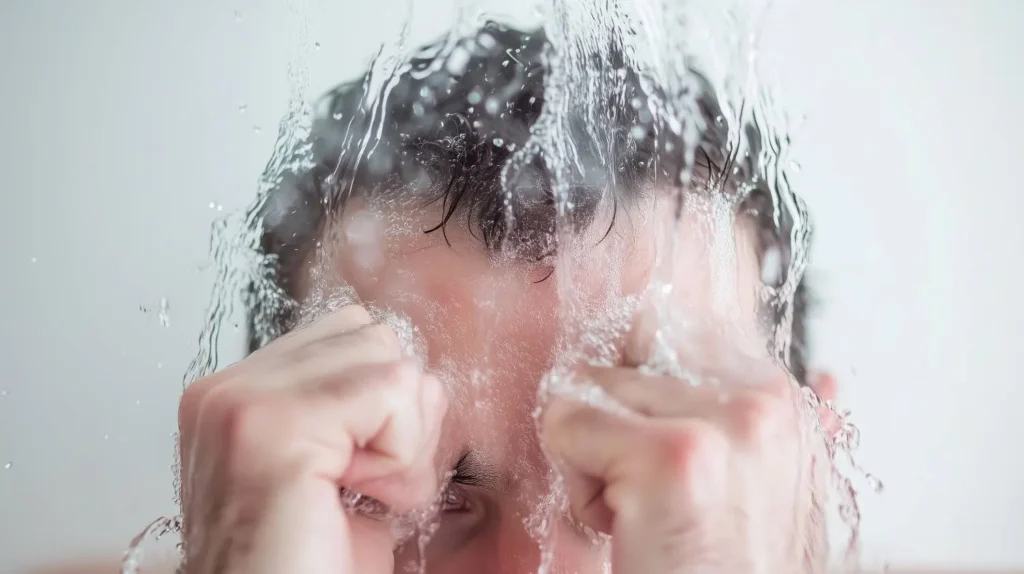
You’re noticing more hair strands in your shower drain lately, and it’s starting to make you worry. It’s completely understandable to feel frustrated when your hair suddenly feels brittle, lifeless, or noticeably thinner every time you wash it.
While hard water doesn’t directly destroy hair follicles from the root, the heavy concentration of calcium and magnesium forms a stubborn mineral coating over your hair strands. This buildup blocks essential moisture, weakens the hair shaft, and leads to severe breakage that looks and feels just like hair loss.
What Is Hard Water and Why It Matters for Hair
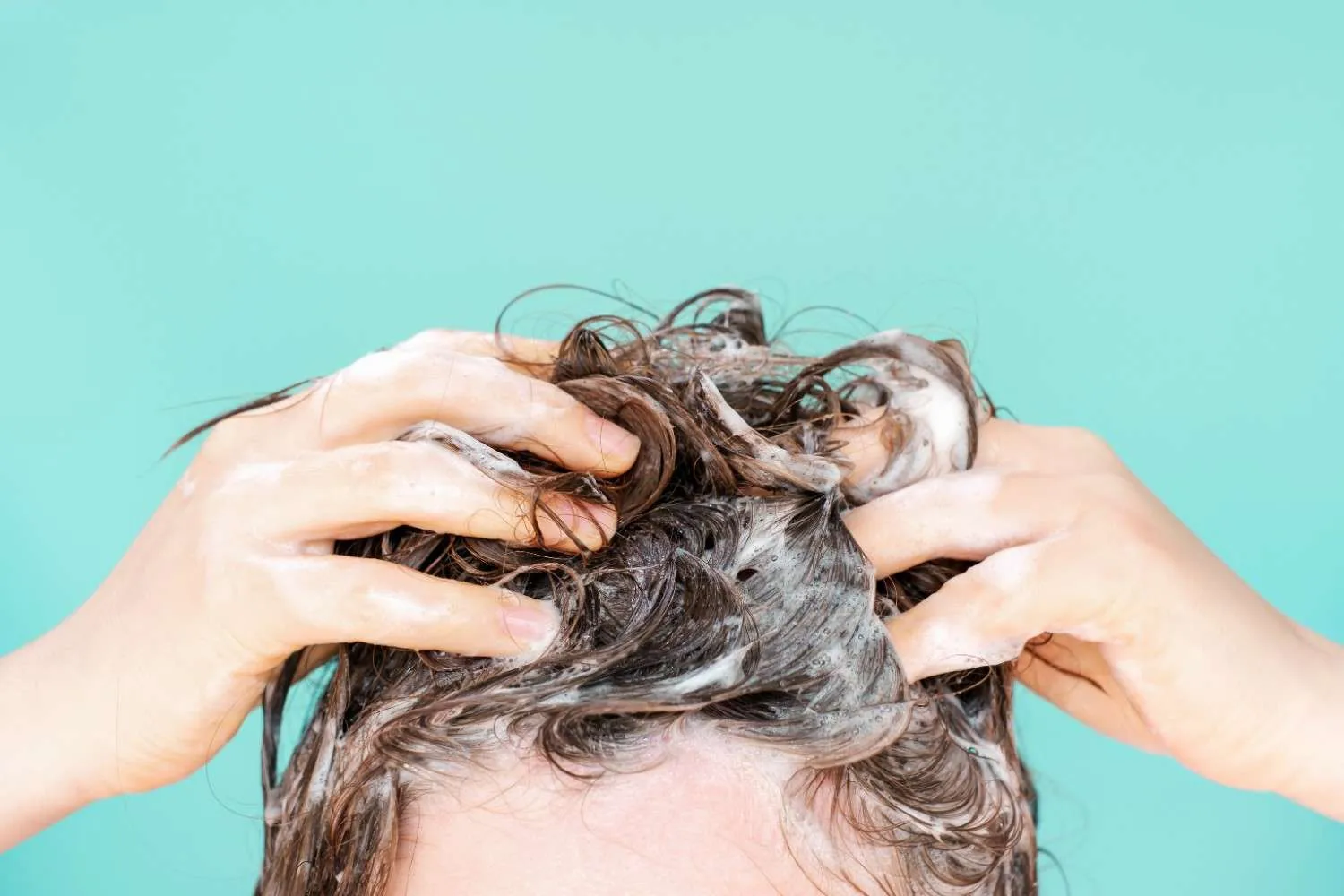
Hard water is tap water containing elevated levels of dissolved minerals, primarily calcium, magnesium, and trace metals like iron. When you wash your hair with hard water, these dissolved minerals react with your shampoo, creating a sticky film known as soap scum that coats both your hair shaft and scalp.
Understanding Water Hardness Levels
Water hardness is measured in grains per gallon (GPG) or parts per million (PPM) of calcium carbonate. Knowing where your water falls on this scale helps you understand the potential severity of hair damaged by hard water:
| Hardness Category | Grains per Gallon (GPG) | Parts per Million (PPM) | Impact on Hair & Scalp |
| Soft Water | 0.0 – 1.0 GPG | 0 – 17.1 PPM | Rinses clean, leaves no mineral residue. |
| Slightly Hard | 1.0 – 3.5 GPG | 17.1 – 60 PPM | Minimal mineral buildup; rarely causes severe dryness. |
| Moderately Hard | 3.5 – 7.0 GPG | 60 – 120 PPM | Noticeable dullness; requires occasional clarifying washes. |
| Hard Water | 7.0 – 10.5 GPG | 120 – 180 PPM | Causes visible buildup, severe dryness, and strand breakage. |
| Very Hard Water | Over 10.5 GPG | Over 180 PPM | Heavy mineral crusting, severe scalp irritation, and hair thinning. |
Can Hard Water Cause Hair Loss or Just Damage?
Hard water does not directly destroy hair follicles, so it rarely causes true hair loss on its own. It does cause dryness, breakage, and scalp irritation. Those problems can thin your hair and increase shedding, especially when buildup stays on the scalp for months.
The key is telling hair loss from hair breakage. Hair loss means strands fall out from the root because the follicle lets go. Breakage means strands snap along the shaft, usually mid-length or near the ends. Hard water hair damage falls mostly in the second group.
So does hard water cause hair loss at the root? Evidence says it’s unlikely. Genetics, hormones, stress, and nutrition drive most root-level shedding. But can hard water cause hair thinning? Yes, in a practical sense. When enough strands break, your ponytail feels smaller and your part looks wider. It looks like loss even when your follicles are fine.
What Does Hard Water Do to Your Hair?
Hard water leaves calcium and magnesium deposits on hair and scalp. These minerals roughen the cuticle, block moisture, and weaken shampoo lather. Hair turns dry, dull, tangled, and brittle over time, and strands snap more easily during brushing, towel drying, and styling.
Your hair wears a protective coat of overlapping scales called the cuticle, like roof shingles. Minerals roughen those shingles, so they lift instead of lying flat. Lifted cuticles let moisture escape and make strands catch on each other, which is why hair tangles and frizzes.
Minerals also fight your shampoo. Calcium reacts with cleansers and leaves a sticky film behind. That film dulls shine, weighs hair down, and blocks conditioner from reaching the strand. Color-treated hair fades faster, and blonde tones can turn brassy. These hard water effects on hair build slowly, which is why many people miss them.
Five Signs of Hard Water on Hair You Should Not Ignore
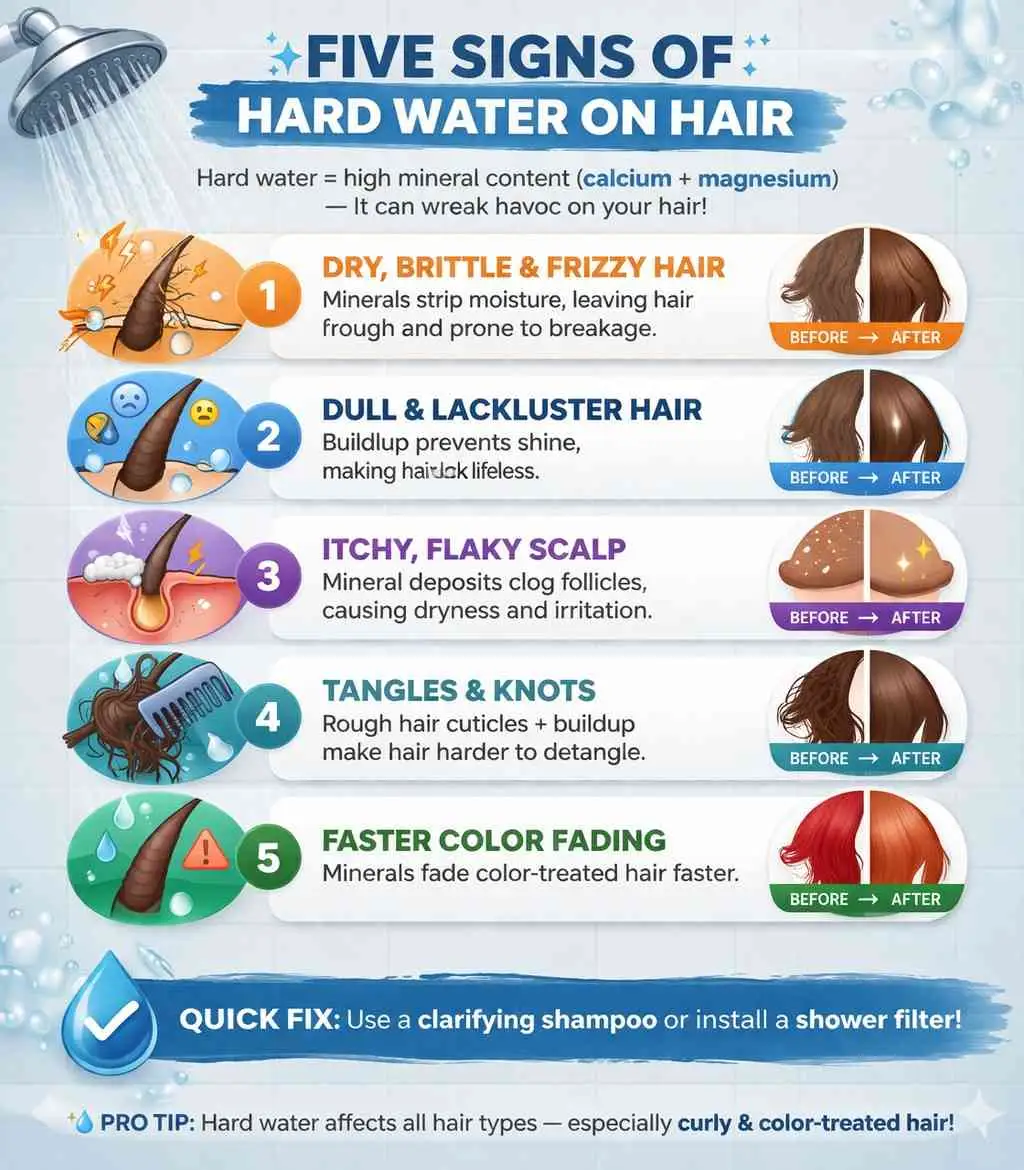
Recognizing early signs of hard water on hair allows you to take action before structural breakage worsens:
-
Persistent Dryness and Frizz: Hair feels like straw even immediately after applying heavy deep conditioners.
-
Lack of Lathering: Your usual shampoo refuses to foam up, leaving your hair feeling unclean after washing.
-
Scalp Flaking and Irritation: Mineral deposits trap dead skin cells and excess sebum, causing an itchy, inflamed scalp.
-
Fading Hair Color: High mineral concentrations cause color-treated hair to turn brassy or wash out rapidly.
-
Loss of Natural Elasticity: Individual hair strands snap instantly when stretched gently instead of bouncing back.
Why Hard Water Issues Are Common in Tracy, CA
Water hardness varies by region, and Tracy has a known mix of mineral-rich groundwater sources.
This means:
- Higher mineral content in tap water
- More buildup in plumbing and shower systems
- Increased exposure during daily washing
If you notice scale on faucets or showerheads, it is often the same issue affecting your hair.
How Hard Water Impacts Hair Growth and Long-Term Hair Health
Can hard water affect your hair growth itself? The research is thin, so I’ll stick to what’s reasonable. Hard water can influence long-term hair health in three ways.
First, breakage. Brittle strands never reach their full length, so hair looks stuck at the same point for years. Second, scalp irritation. Residue can dry out skin, trigger itching, and worsen flaking, and constant scratching can loosen hairs. Third, habits. Rough, tangled hair tempts people into harsher products and hotter tools, which add more damage.
So can hard water cause hair loss over the long run? It can add to hairfall due to hard water when scalp problems pile up, but it rarely acts alone. Think of it as a slow drip in the roof. It won’t bring the house down, but it makes every other problem worse.
Simple Ways to Test If Hard Water Is Affecting Your Hair
You can test for hard water by performing a simple clear bottle soap test at home or by using chemical test strips. These quick methods confirm whether mineral deposits are the hidden cause behind your daily hair struggles.
The Home Bottle Test
-
Fill a clear, empty plastic water bottle halfway with tap water.
-
Add 10 drops of pure liquid soap (avoid detergents with added synthetic cleansers).
-
Cap the bottle securely and shake it vigorously for 10 seconds.
-
Evaluate results: If the water forms a thick layer of suds and remains clear below, your water is soft. If the water turns milky gray with very few suds, you have hard water.
Chemical Test Strips
Purchasing basic GPG test strips from a home improvement store gives you an exact numerical measurement of your household water hardness.
Solutions That Actually Work for Hard Water Hair Problems
Reversing hard water hair damage requires a two-step strategy: removing existing mineral buildup from your strands and preventing new deposits from accumulating.
Chelating and Clarifying Shampoos
Use a specialized chelating shampoo once every one to two weeks. Ingredients like disodium EDTA or trisodium ethylenediamine disuccinate bind specifically to heavy mineral ions, dissolving the tough coating so it rinses away cleanly.
Apple Cider Vinegar Rinses
An apple cider vinegar rinse helps lower the pH of your hair, smoothing down raised cuticles and gently breaking down mild mineral film. Mix 2 tablespoons of raw apple cider vinegar with 2 cups of filtered water and pour it over your hair after washing.
Install a Whole House Water Softener
This is the most effective long-term solution.
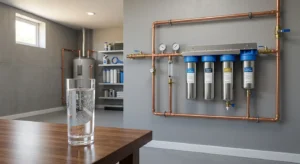
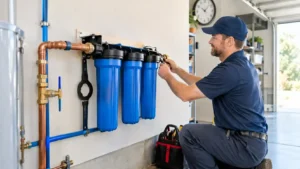
A Whole House Water Softener for Hard Water replaces calcium and magnesium with softer minerals.
Benefits:
- Prevents buildup on hair and scalp
- Enhancing hair texture and shine are the two major goals in improving its health and condition.
- Protects plumbing and appliances
Upgrade to a Complete Water Filtration Systems
If your concern goes beyond hardness and includes chlorine, sediment, or other water quality issues, a Water Filtration System addresses a broader range of contaminants.
If you want better overall water quality, a filtration system adds another layer of protection. These systems help reduce impurities that affect both hair care and overall health.
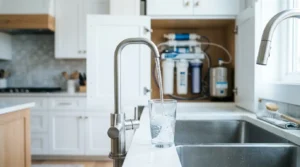
For drinking water purity alongside hair and skin benefits, some homeowners pair a whole house softener with a 6-Stage Water Filtration System at the kitchen sink for clean, filtered drinking water throughout the home.
Water Softener for Hair Fall: Is It Worth It?
A water softener is worth it if hard water causes your dry, brittle hair. It removes calcium and magnesium before water reaches your shower, so hair feels softer and breaks less. It won’t fix hair loss from genetics, stress, or health conditions.
Softened water lathers better, rinses cleaner, and stops scale from coating hair and fixtures. Many people notice softer hair within a few weeks. Your skin, appliances, and plumbing benefit too, so the cost covers more than your hair.
Common Mistakes People Make
Avoid these if you want real results:
- Only switching shampoos without fixing water
- Ignoring buildup on fixtures
- Using harsh treatments that worsen dryness
- Waiting too long before addressing the issue
Water quality is often overlooked, but it plays a key role in daily exposure.
When You Should Take Action
You should act if:
- Hair condition has worsened over time
- Multiple family members notice the same issue
- Hard water signs are visible at home
Addressing water early helps protect long term hair health.
Conclusion
Are you wondering can hard water cause hair loss? The answer is clear. While hard water does not directly harm hair follicles, over time it may lead to breakage, thinning and poor scalp health and should therefore not be ignored as an element affecting homeowner water quality and overall home wellness.
Contact us RO Water Filter System, we help homeowners choose the right solution based on their actual water conditions. If you are dealing with ongoing hair issues and suspect hard water, it may be time to take the next step and explore a proper filtration or softening system.
FAQ Section
Will my hair grow back after I fix hard water?
Yes, in most cases. If breakage caused the thinning, hair stops snapping once minerals stop coating it, and healthy strands retain length again. Hair grows about half an inch a month, so give it a few months. Shedding from other causes needs a doctor’s input.
Does hard water cause dandruff?
Hard water doesn’t cause true dandruff, which comes from yeast and oil on the scalp. It can leave residue that looks like flakes and dries skin, making itching worse. If flakes persist after clarifying your hair, try a medicated shampoo or see a dermatologist.
Is soft water better for hair than hard water?
Soft water is generally better for hair. It lathers easily, rinses clean, and leaves no mineral film, so hair feels smoother and tangles less. Some people find very soft water makes hair feel slippery or limp, so adjust your conditioner use and rinse thoroughly.
How long until hair improves after installing a softener?
Many people notice softer, less tangled hair within a few weeks. Mineral buildup needs time to wash out, so a clarifying shampoo in the first week speeds things up. Breakage and thickness take longer, since new growth must replace damaged lengths over several months.
Can a shower filter fix hard water hair?
A shower filter helps with chlorine, but most don’t remove enough calcium and magnesium to fix hard water hair. Some reduce scale a little. For reliable results, treat the water at the source with a softener or whole-house system, and use a shower filter as an extra layer.