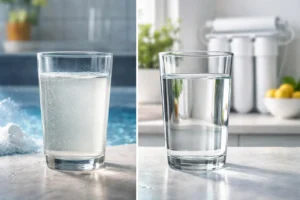
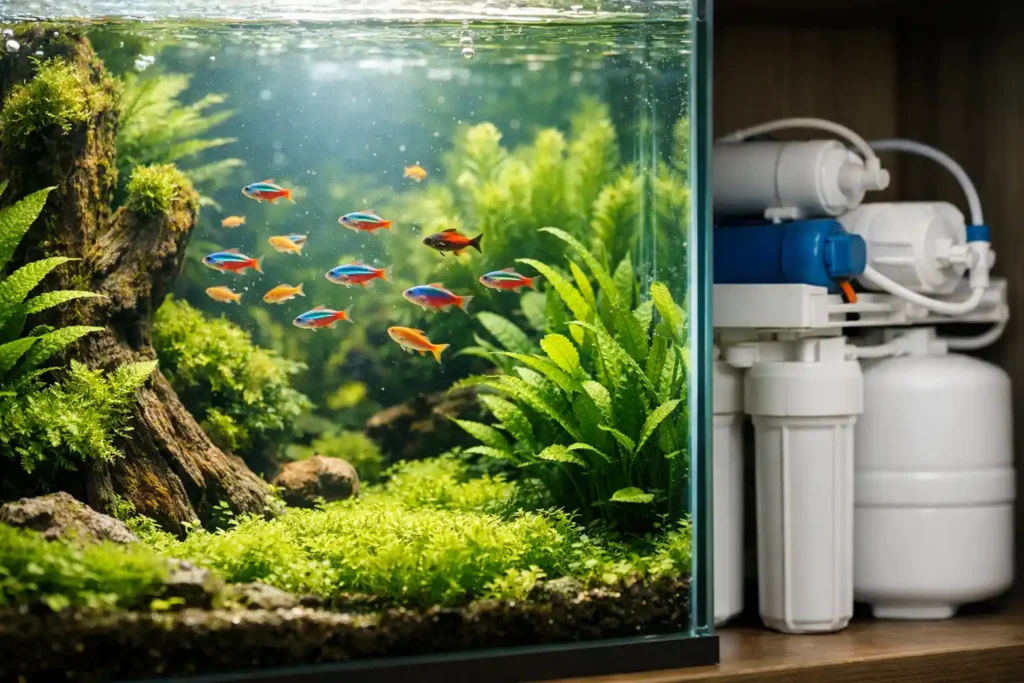
Your tank was properly cycled, the appropriate substrate added, and regular water changes completed; yet still your fish appear stressed, shrimp continue to die or your coral refuses to open its crowns. The problem is often not what you are adding to the tank. It is what was already in your tap water before you even started.
These levels meet the standards for human drinking water, but fish are far more sensitive than we are to what is dissolved in their water. Reverse osmosis water for fish tank setups strips those contaminants out completely, giving you a clean, neutral baseline you can build on. At RO Water Filter System, we work with homeowners and aquarium hobbyists in Tracy and the surrounding areas to find the right filtration solution for exactly this kind of situation.
What Is Wrong with Tap Water for Aquariums
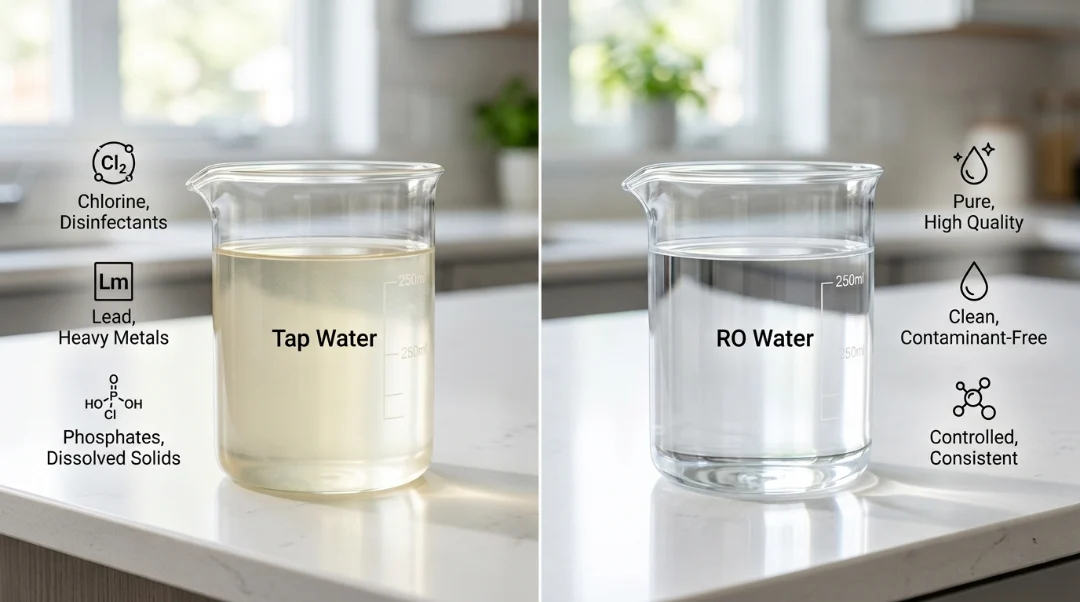
Most people assume that water safe for humans is safe for fish. That is not quite right.
The water that comes from the city is treated to remove germs and make sure it meets public health requirements. Chlorine or chloramines are used in such treatment. These chemicals are meant to kill germs, and they do the same thing to fish gills when they are in tank water. Chloramines don’t off-gas as free chlorine does, even when you let tap water soak overnight. You need a dechlorinate, but even then, the water still has everything else in it.
Here is what else Tracy tap water is likely carrying:
- Dissolved minerals (calcium, magnesium, sodium) that push general hardness (GH) and carbonate hardness (KH) well above what many tropical species can tolerate
- Heavy metals like copper and lead, which can leach from older plumbing and are lethal to invertebrates even in tiny amounts
- Phosphates, sometimes added by municipalities as corrosion inhibitors, which fuel algae blooms almost immediately
- Silicates, which cause brown diatom algae to coat glass, equipment, and substrate
- Nitrates, already present in some tap water before your tank even produces any biological waste
Central Valley tap water contains total dissolved solids (TDS) at levels well over 300 parts per million, which is harmful for discus fish such as discus, wild-type bettas and soft water tetras; for shrimp and reef corals however it could prove fatal.
How Reverse Osmosis Water For Fish Tank Works and Why It Is the Right Starting Point
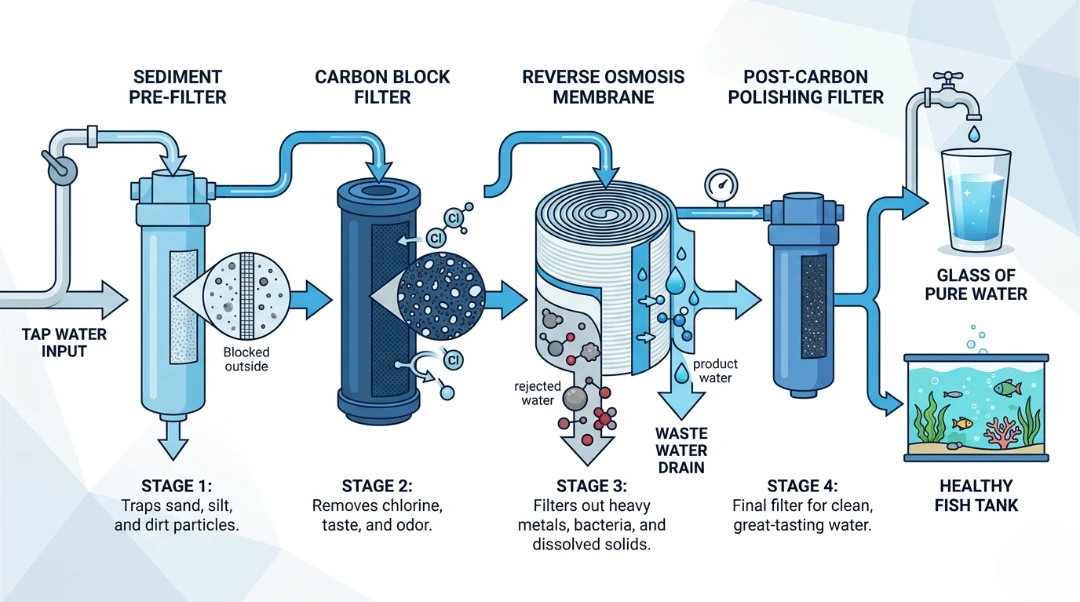
Reverse osmosis uses pressure to force tap water through a semi-permeable membrane with pores small enough to filter out almost everything except water molecules.
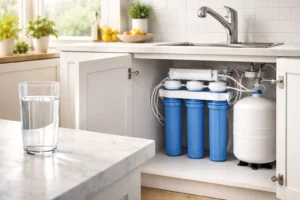
Most ro systems designed for home use include several stages:
- Sediment pre-filter to catch sand, rust, and particulate
- Carbon block filter to remove chlorine and chloramines that would otherwise damage the RO membrane
- The RO membrane itself, which handles the heavy lifting and removes 90 to 99 percent of dissolved contaminants
- Post-carbon polishing filter for final cleanup before the water reaches your collection container
A 5-Stage Water Filtration System adds an additional stage that provides even greater protection, making it a better long-term choice for aquarists who do regular water changes or have a larger tank setup.
The result is what aquarists call a blank slate. Pure water that carries no assumptions. You decide what goes back in based on what your fish actually need.
Why Aquarium Owners Specifically Benefit from RO Water
Freshwater Aquariums
For most freshwater tanks, the biggest win with RO water is control over pH and hardness. Tropical fish from South American river systems, like discus, cardinal tetras, and most dwarf cichlids, come from naturally soft, acidic blackwater environments.
Their wild-type water has a TDS often below 50 ppm and a pH between 5.5 and 6.5. Tracy tap water is the opposite of that. With reverse osmosis water, you start at near-zero TDS and add back only what your fish need using a demineralizing product.
Saltwater and Reef Aquariums
In a reef tank, tap water is not a workable starting point at all. Marine salt mixes are formulated to dissolve in pure water and produce a specific elemental balance. When you mix salt into tap water that already contains calcium, magnesium, phosphates, and nitrates, the chemistry becomes unpredictable. You end up with levels you did not intend and cannot trace back to their source.
Reverse osmosis water for aquarium salt mixing gives you a controlled foundation. Phosphates, which trigger aggressive algae at levels as low as 0.2 ppm, are absent. Silicates that smother coral and create diatom blooms are gone.
Breeders and Sensitive Species
Fish breeders working with species that only spawn in specific water conditions depend on RO water to trigger breeding behavior. Many cichlids, killifish, and soft-water tetras will not successfully reproduce unless the pH, GH, and KH are within a narrow band. You cannot reliably hit that band with untreated tap water because the mineral content of municipal water shifts with the seasons, rainfall, and treatment changes. With an ro system for fish tank breeding setups, those parameters stay consistent every time.
The One Thing You Must Do After Using RO Water
RO water is not plug-and-play for fish. Because it removes everything, including beneficial minerals, you must remineralize it before adding fish.
Pure RO water lacks any buffering capacity to tame its pH fluctuations quickly and stabilize your biological filter in your tank, potentially stressing fish and disrupting biological filter performance. For freshwater tanks, dedicated GH and KH additives may help bring mineral levels up to what your species requires.
TDS meters provide a simple means of verifying whether or not an RO system is producing water of sufficient purity for use, with readings under 10ppm before remineralization being the ideal goal. After reconstitution and reconsolidation have occurred, test again using an appropriate liquid test kit to make sure GH, KH and pH levels match.
How RO Water Compares with Tap Water and Other Options
|
Water Source |
Removes Contaminants | Suitable for Sensitive Species |
Control Over Chemistry |
|
Tap Water |
Partial (depends on treatment) | Limited |
Low |
|
Filtered Tap (Carbon only) |
Removes chlorine, some organics | Limited |
Low-Medium |
|
RO Water |
High | Excellent |
High |
|
Distilled Water |
High | Good |
Moderate (no remineralization options) |
|
Deionized Water |
High | Good |
Moderate (needs remineralization) |
RO vs Tap Water: RO gives predictable baseline water. Tap water varies by source and treatment plant changes.
RO vs Distilled: Both remove most contaminants. RO systems tend to waste less water over time and are easier to maintain regularly for aquarium use.
Tracy, CA Tap Water and Why Local Aquarists Should Pay Attention
This area has long been known for its hard, mineral-rich water. On the other hand, farming in the CA, may raise nitrate levels in city water supplies. This water is safe to drink every day, but discus tanks and reef installations are different and need special attention from the start.
People who have reverse osmosis water for fish tank in Tracy, Mountain House, and Lathrop often say that they need to do more for their fish when they use tap water. Using point-of-use filtration in an RO aquarium system is the best long-term option. It also makes the drinking water in the rest of the home better at the same time.
If you are planning an RO System Installation for your home, getting a system that serves both your aquarium and your drinking water needs makes the investment go further.
Common Mistakes Aquarium Owners Make with RO Water
Using RO water without remineralizing. This is the most common error. Pure RO water has no buffering capacity, pH can crash, and fish will suffer. Always add a GH/KH product suited to your tank type before use.
Skipping water changes consistency. The benefit of RO water is consistency. If you switch back and forth between RO and tap water for water changes, you introduce the same mineral instability you were trying to avoid.
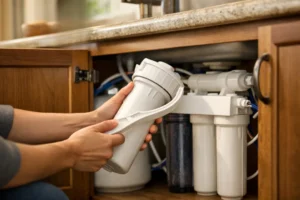
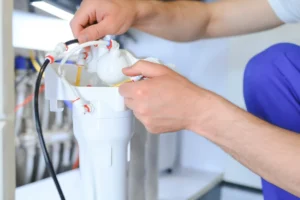
Neglecting filter maintenance. RO membranes last two to three years under normal conditions, but carbon pre-filters need replacement every six to twelve months. If your pre-filters are exhausted, chloramines from Tracy’s municipal supply will damage the membrane and reduce water quality. Learning How to Install Reverse Osmosis Water Filter components correctly from the start protects your investment and keeps your tank water clean.
Buying undersized systems. A small countertop unit may be fine for a 20-gallon tank. If you run a 125-gallon reef system and do 20 percent water changes weekly, you need a system with adequate daily output and a storage tank. Plan for your actual water volume needs before purchasing.
Conclusion
If your fish are stressed, your algae is out of control, or your shrimp keep disappearing, the fix may be simpler than you think. Reverse osmosis water for fish tank use removes the variables that tap water introduces and puts you in full control of your aquarium’s chemistry. That control is what separates aquarists who struggle with repeated problems from those whose tanks thrive long-term.
People who live in Tracy, CA and the nearby region may use the RO Water Filter System for their homes and aquariums. Our expertise can help you choose the ideal aquarium RO unit or whole-home system that can manage both your drinking water and tank water in one installation. Call us now to chat about your setup and get the best system for you.
FAQs
Is reverse osmosis water for fish tank safe for all types of fish?
RO water is safe for fish when it is properly remineralizer before use. On its own, pure RO water lacks the minerals fish need for gill function and osmoregulation.
Does RO water help with algae problems in aquariums?
Yes, and this is one of the clearest benefits of using ro water for fish tanks. Phosphates and silicates in tap water are primary fuel sources for algae.
Can I use reverse osmosis water for a saltwater aquarium?
Reverse osmosis water is the standard starting point for all saltwater and reef aquariums. Marine salt mixes are designed to dissolve in pure water and produce a specific chemical balance.
How often do I need to change RO filters for an aquarium setup?
Sediment and carbon pre-filters typically need replacement every six to twelve months, depending on your water usage and local tap water quality. The RO membrane itself usually lasts two to three years.
Is buying RO water from a fish store the same as having a home system?
Store-bought RO water is a good short-term option for smaller tanks, but it is less practical and more expensive over time.