
Many homeowners assume purified water is all the same. If it looks clear and tastes clean, it must be equal. But when you compare reverse osmosis and distilled water closely, the differences matter more than most people realize.
At RO Water Filter System, we often hear the same question: is reverse osmosis the same as distilled water? Online articles typically offer superficial comparisons without discussing how these options affect daily drinking water use, cost and long-term usage in your home. This guide breaks it all down in an accessible fashion so that you can make informed choices based on your specific requirements, particularly if you live somewhere like Tracy CA, where water quality varies significantly.
Is Reverse Osmosis the Same as Distilled Water?
Reverse osmosis does not produce identically purified water to that produced through distillation.
Both processes utilize separate processes and produce distinct tastes, costs and efficiency outcomes that differ drastically in taste, efficiency and use ability.
- Reverse Osmosis uses a semi permeable membrane to filter contaminants.
- Distillation uses heat and evaporation to separate out impurities from water.
Both can serve different functions when applied in real world situations. Although they appear similar on paper, in everyday household usage each serves its own specific function.
How Reverse Osmosis and Distilled Water Work

Reverse Osmosis Process
Reverse osmosis systems push water through multiple filtration stages, including:
- Sediment filter
- Carbon filter
- RO membrane
- Post-filter polishing
This system removes:
- Heavy metals
- Chlorine
- Bacteria and viruses
- Dissolved solids
Water passes through the membrane under pressure, leaving contaminants behind.
For homeowners, this is the most common point-of-use drinking water solution.
If you want to explore system options, see Reverse Osmosis Water Filter.
Distilled Water Process
Distillation works by:
- Boiling water into steam
- Leaving contaminants behind
- Condensing steam back into liquid form
This removes:
- Minerals
- Bacteria
- Most contaminants including heavy metals
It produces very pure water, but the process is slow and energy-intensive.
Seven Key Differences Between Reverse Osmosis and Distilled Water

1. Filtration Method
- Reverse osmosis uses pressure and a membrane
- Distillation uses heat and evaporation
This affects energy use and convenience at home.
2. Speed and Daily Use
- RO systems produce water continuously
- Distillation is slow and batch-based
For daily drinking, RO is far more practical.
3. Taste and Mineral Content
RO water:
- Removes most contaminants
- Retains slight mineral balance depending on system
Distilled water:
- Removes almost everything
- Often tastes flat or empty
This is why many people ask, is distilled water better than reverse osmosis water. For drinking, most prefer RO taste.
4. Energy Consumption
- RO systems use minimal electricity
- Distillers require constant heating
Over time, distillation costs more to run.
5. Installation and Convenience
RO systems:
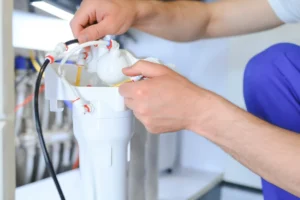
- Installed under sink
- Provide on-demand water
Distillers:
- Countertop units
- Require manual operation
If convenience matters, RO wins clearly.
For homeowners in Tracy, CA, professional setup also ensures better performance. Learn more about RO System Installation.
6. Contaminant Removal Range
Both methods remove:
- Heavy metals
- Bacteria and viruses
- Dissolved contaminants
But RO systems also include carbon filtration, which helps with:
- Taste
- Odor
- Chlorine removal
This makes RO better for everyday drinking water quality.
7. Cost Over Time
- RO systems: higher upfront cost, low maintenance
- Distillers: lower upfront, higher energy costs
Budget-conscious buyers often find RO more cost-effective long term.
Reverse Osmosis vs Distilled Water Comparison Table
The difference between distilled water and reverse osmosis comparison given below:
| Feature | Reverse Osmosis | Distilled Water |
| Process | Membrane filtration | Boiling and condensation |
| Speed | Continuous | Slow batch process |
| Taste | Clean, slightly natural | Flat, neutral |
| Energy Use | Low | High |
| Installation | Under sink system | Countertop unit |
| Daily Use | Very convenient | Limited |
| Cost Over Time | Lower | Higher |
Is RO Water the Same as Distilled Water for Drinking?
No, is RO water the same as distilled is a common question, but they are not identical in real use.
For drinking:
- RO water is more practical and better tasting
- Distilled water is often used for medical or lab purposes
Most homeowners choose RO because it balances purity and usability.
Is Boiled Water the Same as Distilled Water?
Another frequent misperception is boiled water the same as distilled water are equivalent.
Answer is no.
Boiling water:
- Kills bacteria
- Does not remove heavy metals or dissolved solids
Distillation:
- Removes contaminants by separating steam
So boiling is not a replacement for either RO or distilled water.
When Reverse Osmosis Is the Better Choice
Reverse osmosis can provide exactly the clean water source you require if that’s what’s desired:
- Safe, clean daily drinking water
- Better taste compared to bottled water
- Low-maintenance filtration
- Continuous supply
It is especially useful in areas where tap water may contaminants including chlorine, lead, or high TDS levels.
When Distilled Water Makes More Sense
Distilled water is better for:
- Medical devices like CPAP machines
- Laboratory use
- Appliances like steam irons
It is not designed for daily household drinking due to cost and inconvenience.
Common Mistakes Homeowners Make
Choosing Based on “Purity” Alone
Many assume more purification is always better. But over-purified water can lack taste and practicality.
Ignoring Installation Quality
Even the best system fails if installed poorly. A professional setup ensures:
- Proper pressure
- Leak-free connections
- Maximum filtration performance
Not Considering Long-Term Costs
Distillers may seem cheaper upfront, but electricity costs add up fast.
Overlooking Water Usage Needs
A family needs consistent water supply, not small batches. This is where RO systems fit better.
How to Choose the Right System for Your Home
Ask yourself:
- Consider whether water is necessary for daily drinking purposes?
- Do you want convenience or occasional use?
- Are you concerned about energy costs?
- Is taste important to you?
If your answer leans toward daily use and convenience, reverse osmosis is the better option.
If you are still exploring options, this guide on building a How to Make a Water Purification System can help.
Conclusion
Is reverse osmosis the same as distilled water and most homeowners fail to recognize its differences. Reverse Osmosis provides you with an economical and practical method of purified drinking water daily without incurring excessive costs for purification systems. Distilled water has its place, but may not meet typical household demands. RO may offer safe tasting, great-tasting drinking water without hassle for every day use.
RO Water Filter System in Tracy, California can assist with improving the water quality in your home by helping select and install an ideal filtering solution tailored specifically for you. Reach out now and receive expert guidance tailored specifically towards meeting the unique requirements of your water conditions and daily life!
FAQs
Is reverse osmosis water safer than distilled water?
Both are very safe and remove harmful contaminants. Reverse osmosis is more suitable for daily drinking due to taste and convenience.
Does reverse osmosis remove bacteria and viruses?
Yes, RO systems remove bacteria and viruses through membrane filtration and additional filter stages.
Why does distilled water taste different?
Distilled water lacks minerals, which gives it a flat taste compared to reverse osmosis water.
Is distilled water reverse osmosis when it comes to purity?
Distilled water is not reverse osmosis, but both produce very pure water. Distilled water is typically slightly purer, while reverse osmosis water still removes most contaminants effectively.
Which is cheaper: reverse osmosis or distilled water?
Reverse osmosis is usually cheaper over time because it uses less energy and provides continuous water.