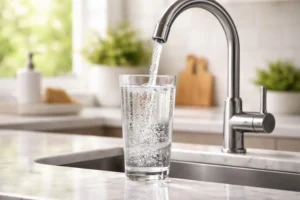

If your tap water tastes off, leaves white residue on your dishes, or you just want to know what your family is actually drinking, an under-sink reverse osmosis system is one of the most effective solutions available. The good news is that most people can install reverse osmosis water filter themselves in two to three hours with basic tools. For homeowners in Tracy, CA, where water quality can carry dissolved minerals, chloramines, and other contaminants from municipal treatment, getting clean water at the tap is a real and practical concern.
You do not need a plumbing license. You do not need to tear apart your kitchen. This guide will walk you through every step, including what competitors often skip, like how to check tank pressure, handle water supply variations, and avoid the small mistakes that cause slow flow or leaks months later.
What You Need Before You Start
Before touching any fitting, take five minutes to assess your setup. Open up the cabinet under your kitchen sink and examine three aspects:
- Available space: Most standard under-sink RO systems need roughly 15 to 18 inches of width and about 14 inches of height. Measure before you buy.
- Cold water shut-off valve: This is the valve on the cold water supply line under your sink. It needs to be functional. If it has not been turned in years, test it before installation day.
- Drain pipe access: You will attach a drain saddle to this pipe to carry wastewater out. Make sure you can reach it comfortably.
Your water pressure at home needs to be checked regularly as an RO system operates best between 40-80 psi, otherwise it will produce water slowly and the storage tank may take much longer to fill up with it. A simple gauge from any hardware store should help identify where you stand.
RO Water Filter System has helped hundreds of homeowners get this right, and this guide reflects that hands-on experience.
Tools You Will Need
- Adjustable wrench
- Phillips and flathead screwdrivers
- Electric drill with drill bits (including one rated for your sink or countertop material)
- Teflon tape (for metal threaded joints only)
- Tubing cutter or sharp utility knife
- Small bucket or towel
- Low-pressure tire gauge (to check tank pressure)
Step-by-Step: How to Install Reverse Osmosis Water Filter Under the Sink

Step 1: Shut Off Cold Water Supply
Once your cold water shut-off valve is off, open your kitchen faucet briefly so as to release pressure in your line and prevent an expensive mess during disconnections of supply lines.
Step 2: Install the RO Faucet (Rooter-Only Faucet).
Step one is often the longest and most time-consuming step, for instance, if a new hole needs drilling.
Most kitchen sinks already include an unoccupied soap dispenser hole or knockout, but if yours does not, a 7/16-inch hole must be drilled to accommodate it. When drilling stainless steel surfaces, use either a hole-saw, step drill bit, or step bit slowly, while for granite/composite surfaces, use a carbide-tipped bit and keep the area wet as you work, or both to minimize scratching as much as possible during this step!
RO faucet installation steps:
- Feed the faucet base through the hole from the top
- Place the rubber gasket, then the flat washer, then the mounting nut from underneath
- Tighten the nut until the faucet does not rotate, but do not overtighten on porcelain or granite
- Attach the faucet adapter to the faucet stem threads and hand-tighten, then add a half-turn with a wrench
Do not use Teflon tape on the faucet adapter fitting unless the manufacturer specifically says to. On plastic compression fittings and push-to-connect ports, tape can prevent a proper seal.
Step 3: Mount the RO Filter System
Position the RO unit on one of the side walls within its cabinet, typically the right side unless another wall offers clear access for filter maintenance purposes.
Leave at least 3-4 inches below filter housings so canisters can be dropped for cartridge changes without dismantling the whole unit.
Use the included bracket and screws to mount it securely to the wall, being sure that it’s level; tilted manifolds create uneven flow patterns, which strain fittings over time. Place your storage tank towards the back of the cabinet; it doesn’t necessarily need to be upright, as space may limit this option.
Step 4: Connect to the Cold Water Supply Line
Pay special attention when following DIY guides; most may leave important steps out.
There are two primary options for connecting the cold water line:
Option A: Angle Stop Adapter (recommended) An angle stop adapter threads directly onto your existing cold water shut-off valve for easy and secure installation of an RO system. Disconnect existing supply line from shut off valve, thread angle stop adapter onto valve then reconnect supply line at top port before connecting RO feed water tubing at bottom port.
Option B: Saddle valve A saddle valve clamps onto the cold water pipe and self-pierces it. It works but is considered less reliable long-term. In California, some local codes restrict saddle valves on copper lines. If you are unsure, the angle stop adapter is the better choice.
Once connected, cut the feed water tubing to length, leaving a few inches of slack. Push the tubing firmly into the inlet port on your RO system until you feel it seat fully, then give it a gentle tug to confirm it will not pull out.
Step 5: Install the Drain Saddle
A drain saddle connects directly to your sink drainpipe and removes RO system wastewater from underneath your sink, typically plumber to install reverse osmosis system above and beneath where an RO system connects, such as with dishwasher or garbage disposal connections.
Mark your pipe, drill a 7/32-inch hole on one side only of it and tighten with an even pressure. Next, connect the wastewater tube from your RO system’s drain port directly to the saddle clamp, without abrupt turns that could potentially create backflow issues.
Step 6: Connect the Storage Tank
Your storage tank ships from the factory at 5 to 7 psi of air pressure; use a low-pressure tire gauge on its Schrader valve at the bottom to check its air pressure before connecting any items to it.
Most manufacturers recommend 5 to 7 psi pressure for optimal tank fill. Too high of a pressure can prevent full drainage while too little will fill it slowly, both compromising tank efficacy.
After connecting the tank tube to its intended port on the RO manifold labeled “TANK,” make sure that when initial starting up takes place you ensure the ball valve on its fitting is in its closed state, before opening it once your system has started up and functioning normally.
Step 7: Connect All Color-Coded Tubing
Your RO system’s tubing is color-coded. The specific colors vary by brand, but the general connections are:
| Tube | Connection |
| Feed water (often orange or blue) | Cold water supply to RO inlet |
| Filtered water (often blue) | RO system to RO faucet |
| Tank tube | Storage tank to RO manifold |
| Drain/wastewater tube | RO drain port to drain saddle |
Cut all tubes at a clean 90-degree angle before inserting them into push-to-connect fittings. A diagonal cut is the most common cause of slow leaks. After inserting, pull back gently on each tube to confirm it is locked in.
Step 8: Flush the System Before Drinking Any Water
This step is skipped more often than any other, and it matters.
When your RO filter setup is first pressurized, the storage tank and filters contain carbon fines and preservatives from manufacturing. These are harmless but affect taste and appearance.
Here is the correct startup process:
- Slowly turn on the cold water supply valve
- Open the RO faucet and let water run until it flows steadily (10 to 15 minutes)
- Close the RO faucet and allow the storage tank to fill completely (this takes 4 to 10 hours on a new system)
- Once full, open the faucet again and drain the tank completely
- Repeat this fill-and-drain cycle a second time
- After the second full drain, your water is ready to drink
Check every connection and fitting for leaks during the first fill cycle. Even a slow drip can cause cabinet damage over time.
When to Hire a Plumber to Install a Reverse Osmosis System

Self-installation may make more financial and logistical sense than calling a professional to complete under-sink installations in most instances. But in certain circumstances, hiring professional installers might be wiser.
Consider professional RO system installation if:
- Your under-sink shut-off valve is old, corroded, or will not turn
- You want to connect the RO system to your refrigerator or ice maker
- Your water pressure is below 40 psi and needs a booster pump
- You have a non-standard sink (farmhouse, cast iron) where drilling is risky
- You are a renter or property manager and want install reverse osmosis water filter done to a documented standard
A licensed installer typically completes the job in one to two hours and can handle code compliance for properties. If you would rather have it done right the first time without the stress, that is a completely reasonable choice.
What About Water Quality in Tracy, CA?
Tracy’s water supply comes from a combination of surface water from the Delta and groundwater. Municipal treatment typically uses chloramines rather than chlorine, which requires a specific carbon block filter for effective removal. A standard reverse osmosis water filter handles chloramines well, but only if the pre-filter cartridges are rated for chloramine removal.
If you are concerned about PFAS contamination, which is a growing issue in parts of California, a properly maintained RO system can address that too. Read more in our detailed guide, Does Reverse Osmosis Remove PFAS.
Maintenance: What to Expect After Installation
Installing your RO filter setup is only step one in keeping water clean; to maintain clean drinking water quality follow this general schedule:
- Sediment pre-filter: Replace every 6 to 12 months
- Carbon block pre-filter: Replace every 6 to 12 months
- RO membrane: Replace every 1 to 2 years depending on water quality
- Post-filter (polishing carbon): Replace every 12 months
- Tank air pressure: Check annually and adjust to 5 to 7 psi if needed
If your flow rate drops significantly and filters have been recently changed, check the tank pressure first. It is the most overlooked cause of poor RO performance and takes less than two minutes to diagnose.
Common DIY Mistakes to Avoid
Even experienced DIYers run into these:
- Not checking water pressure first. Low pressure means slow production. High pressure above 80 psi can shorten membrane life.
- Using Teflon tape on plastic push-fit fittings. This actually causes leaks, not prevents them.
- Skipping the flush cycles. The first two tankful should always go down the drain.
- Mounting the unit too high in the cabinet. Leave clearance for filter changes or you will be removing the whole unit every six months.
- Running the drain line with too many bends. Keep it as straight and downhill as possible.
Should You DIY or Get Help?
That said, if anything in this guide gives you pause, or if your under-sink setup is older or unusual, having a professional handle the RO system installation removes all guesswork and usually costs less than you would expect. RO Water Filter System provides professional installation throughout Tracy, CA and nearby areas.
No matter if it is already installed and needs proper connection or you require help selecting and install reverse osmosis water filter, our team is on hand to get it done correctly. Reach out, today or schedule your installation or ask any quick questions before getting underway; fresh drinking water should never be hard to obtain!
FAQs
How long does it take to install reverse osmosis water filter?
For a first-time DIYer with a standard under-sink setup, expect two to three hours for the physical installation. After that, allow 4 to 10 hours for the storage tank to fill completely before you do your initial flush cycle.
Do I need to call a plumber to install a reverse osmosis system?
Not necessarily. Most homeowners with basic tool skills can handle the job themselves. However, if your cold water shut-off valve is corroded, your water pressure is very low, or you want the RO line extended to a refrigerator or ice maker, professional help is worth it and usually saves time.
How can I find a reliable plumber to install reverse osmosis system in my home?
To ensure your drinking water is clean and safe, hiring a professional plumber to install reverse osmosis system is crucial. A qualified plumber will correctly connect the system to your water supply, check for leaks, and ensure the filters and membrane are properly installed for optimal performance.
What is the right water pressure for a reverse osmosis system to work properly?
The ideal feed water pressure is between 50 and 80 psi. Systems will still function between 40 and 50 psi but produce water more slowly. Below 40 psi, you may need a permeate or booster pump to maintain adequate flow from the RO faucet and to fill the storage tank in a reasonable time.
How to get RO water at home easily?
To get RO water at home, you can install a reverse osmosis (RO) water filtration system under your kitchen sink or use a countertop RO unit. These systems push water through a semi-permeable membrane that removes impurities like dissolved salts, chemicals, and contaminants.