If your tap water tastes off, smells like chlorine, or you have young kids at home and just want to be sure what they are drinking is safe, you have probably started looking into reverse osmosis. The term gets thrown around a lot, but most guides either oversimplify it or bury you in technical language that does not help you make a real decision.
At RO Water Filter System, one of the most common questions we hear is simple: how does reverse osmosis work? In a way that is easy to follow, covers what actually happens at each stage, and helps you figure out whether an RO system makes sense for your home in Tracy, CA.
What Is Reverse Osmosis, Really?
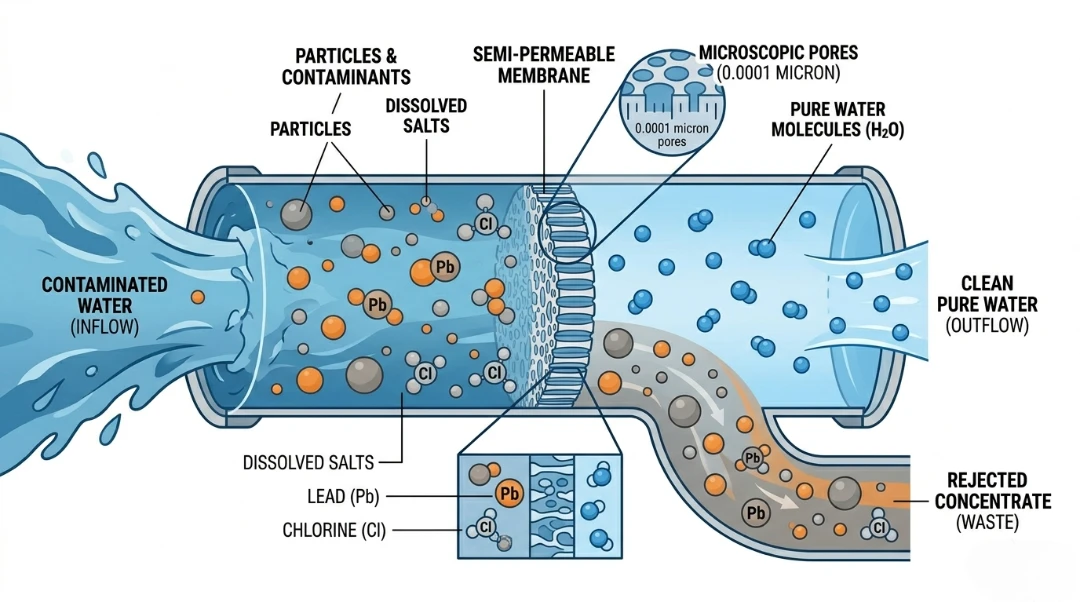
Reverse osmosis is a water purification process that uses pressure to push water through a semi-permeable membrane with pores as small as 0.0001 microns. That is small enough to block dissolved salts, heavy metals, bacteria, and most chemical contaminants while allowing clean water molecules to pass through.
The word “reverse” matters here. In natural osmosis, water moves from a lower concentration area to a higher one on its own. In reverse osmosis, applied water pressure works against that natural direction, forcing water through the membrane and leaving contaminants behind. What comes out on the clean side is called permeate. What gets flushed away with the contaminants is called concentrate or reject water.
This process was originally developed for desalination of ocean water. Today it is used in homes, small businesses, aquariums, and even coffee shops because of how does reverse osmosis work it removes a wide range of contaminants.
Why Tracy, CA Homeowners Pay Attention to Water Quality
Water in the CA, including Tracy and surrounding areas, comes from both surface water and groundwater sources. These sources can carry sediment, agricultural runoff, chlorine from municipal treatment, nitrates, and varying levels of total dissolved solids (TDS). Hard water with high calcium and magnesium concentrations is also common in this region, which affects taste, leaves scale on fixtures, and reduces appliance lifespan.
A properly installed Reverse Osmosis Water Filter addresses most of these issues at the point of use, meaning right where you drink and cook.
The 7-Stage Reverse Osmosis Process Steps Explained
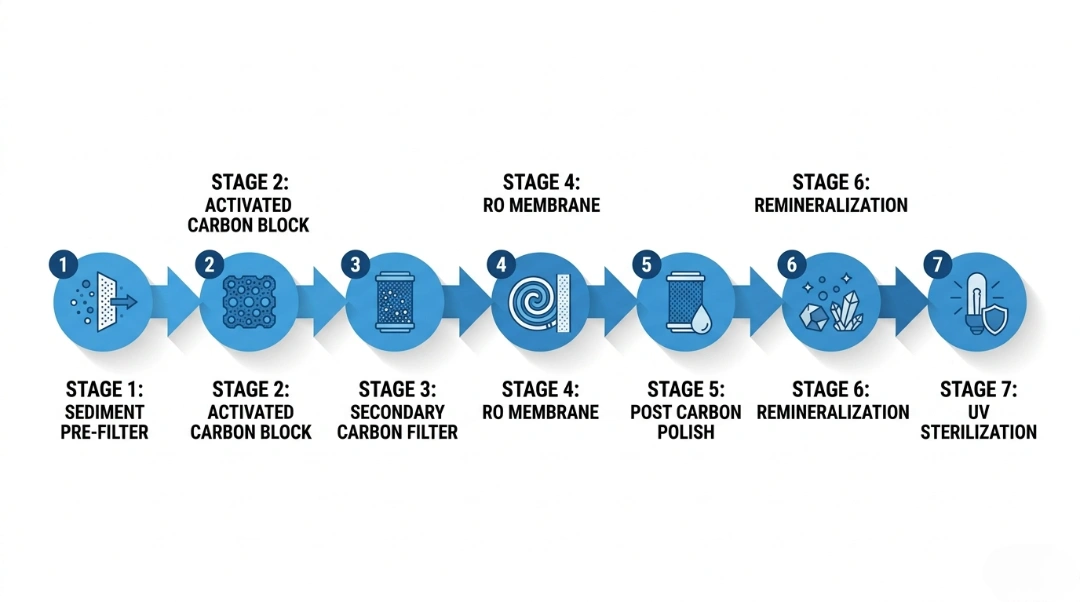
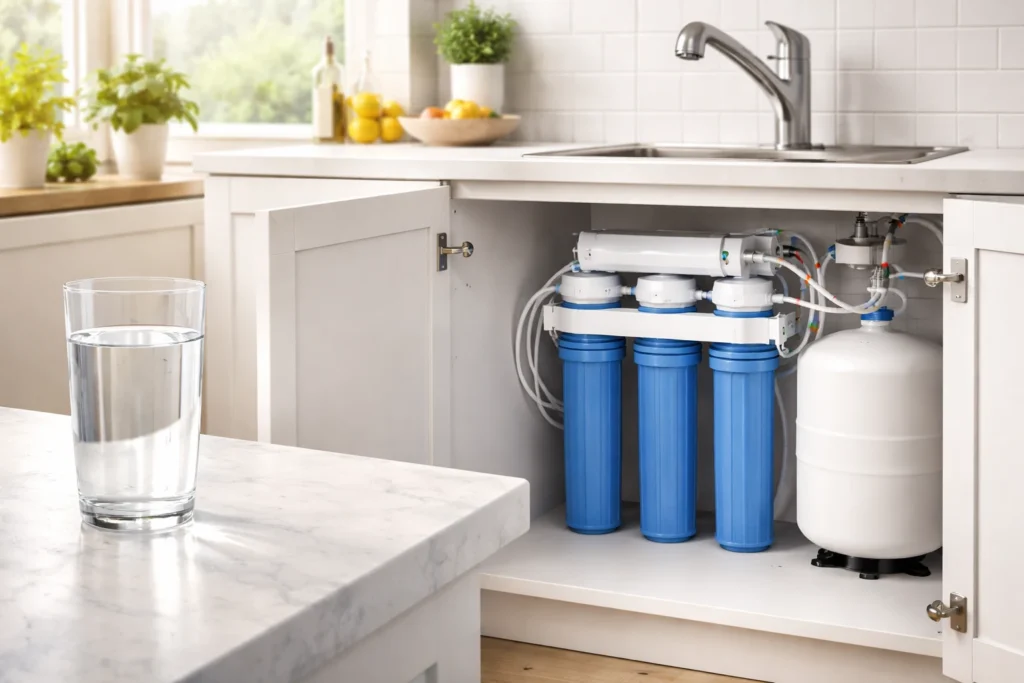
Most home RO systems sold today use between 5 and 7 stages. Each stage handles a different type of contaminant. Here is what happens as water moves through a 7-stage system.
Stage 1: Sediment Pre-Filter
Water enters the system and first passes through a sediment filter, typically rated at 5 microns. This stage removes visible particles like sand, rust, silt, and dirt. Catching these early protects the delicate RO membrane from clogging or being damaged.
Stage 2: Activated Carbon Block Filter
Water then moves through an activated carbon block filter. This stage is critical for removing chlorine, chloramines, and volatile organic compounds (VOCs) that affect taste and odor. Chlorine is especially important to remove here because it can degrade the thin-film composite (TFC) membrane in the next stage if it gets through.
Stage 3: Second Carbon or Fine Sediment Filter
Some systems add a second pre-filter here, either another carbon stage or a finer sediment block. This acts as a safety buffer before the water reaches the membrane, catching anything the first two stages may have missed.
Stage 4: The RO Membrane
This is the core of the entire system. Water is pushed under hydrostatic pressure through a thin-film composite (TFC) semi-permeable membrane. The membrane pore size is around 0.0001 microns, which is smaller than most viruses, bacteria, dissolved salts, fluoride, lead, arsenic, nitrates, and hundreds of other chemical species.
This is where cross-flow filtration happens. Rather than trapping contaminants in a filter medium, water flows across the surface of the membrane. Clean water molecules pass through to the permeate side. The concentrated reject water, carrying the removed contaminants, is flushed away to the drain. This continuous cross-flow is why the membrane stays cleaner longer compared to standard filter cartridges. Contaminant rejection rates on quality TFC membranes typically exceed 95 percent for most dissolved solids, and they can reach 99 percent for heavy metals like lead.
Stage 5: Post-Carbon Polishing Filter
After the membrane, water is stored in a small pressurized tank. Before it reaches your faucet, it passes through a post-carbon polishing filter. This removes any residual taste or odor that might have been picked up from the storage tank, giving you clean and neutral-tasting water.
Stage 6: Alkaline or Mineral Enhancement Filter
At this stage in a 7-stage system, minerals like calcium and magnesium are added back into the water through a remineralization cartridge. Pure RO water, while very clean, is slightly acidic because the membrane removes nearly everything including natural minerals. Remineralizing restores a healthier pH and improves taste. If you want to go deeper on this step, the guide on how to remineralize reverse osmosis water explains your options clearly.
Stage 7: UV Sterilization or Infrared Filter
The final stage in many 7-stage systems uses ultraviolet light or an infrared filter for an extra layer of protection. UV sterilization destroys any residual bacteria or viruses that somehow made it through earlier stages. This is particularly useful in areas where water quality is inconsistent or for households with very young children, elderly family members, or anyone immunocompromised.
RO Membrane Filtration: How the Core Stage Really Works
The RO membrane is not just a filter. It is a selective barrier that separates water molecules from dissolved solids based on molecular weight cutoff and ionic charge. Most contaminants that are dissolved in water carry an electrical charge. The membrane’s surface repels many of these charged particles, adding a second layer of rejection on top of simple size-based filtration.
Water pressure drives this whole process. Residential systems typically use between 40 and 80 psi. If your home has low water pressure, a booster pump can be added to maintain consistent performance. Temperature also plays a role. Warmer water passes through the membrane slightly faster, while cold water slows production rate.
Understanding the Reverse Osmosis Wastewater Ratio
One of the most common questions homeowners ask before buying a system is about waste water. Traditional RO systems produce reject water as part of the cross-flow filtration process. Older systems had a reverse osmosis wastewater ratio as high as 4:1, meaning four gallons of reject water per gallon of purified water.
Modern high-efficiency RO systems have significantly improved this. Many current systems run at a 1:1 or 2:1 ratio. Some permeate pump-assisted systems push it even lower. The reject water is not always wasted either. Some homeowners redirect it to outdoor plants or other non-drinking uses. If water conservation matters to you, ask specifically about the waste ratio when choosing a system.
Real Benefits of RO Water for Home Use
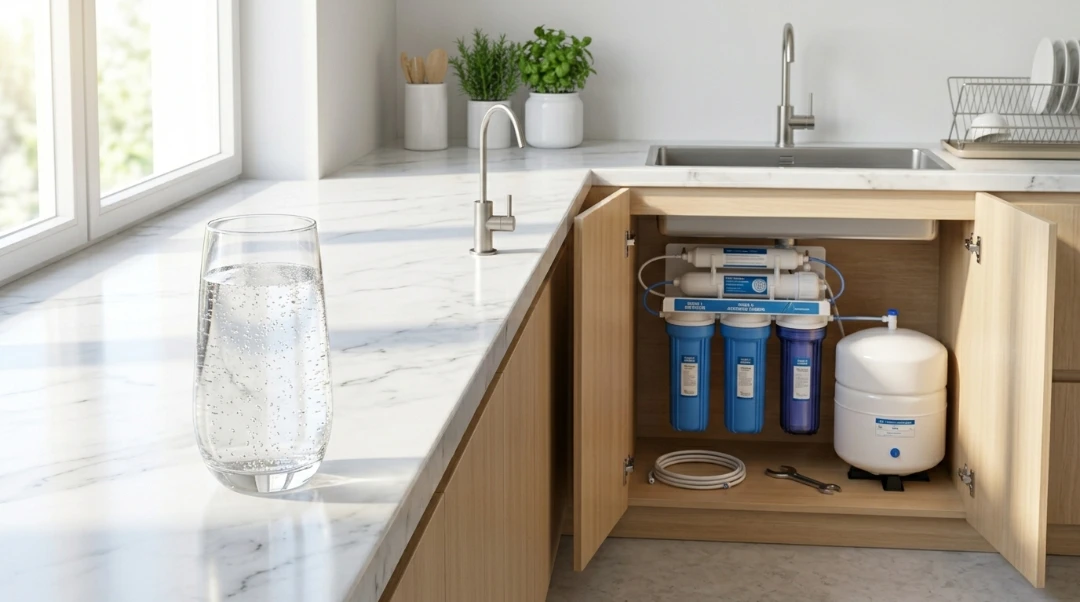
Installing a point-of-use RO system under your kitchen sink delivers practical day-to-day benefits that go beyond taste.
- Removes a wide range of contaminants: Lead, chlorine, fluoride, nitrates, arsenic, dissolved salts, and many pesticides are removed at rejection rates that no standard pitcher filter can match.
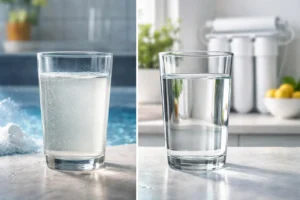
- Reduces TDS significantly: Water with high total dissolved solids tastes flat, salty, or metallic. RO water typically registers below 20 ppm on a TDS meter, compared to 200 to 500 ppm in many municipal supplies.
- Better for cooking: Pasta, soups, rice, and coffee all taste noticeably different when made with RO water versus unfiltered tap water.
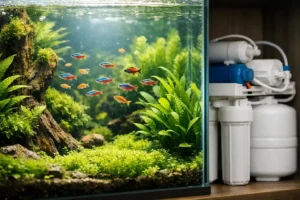
- Aquarium use: Hobbyists often use RO water for sensitive fish species because it gives them precise control over water chemistry without starting from an unpredictable tap water baseline.
- Cost savings over bottled water: A family spending $50 to $100 per month on bottled water typically saves that amount within the first few months of switching to a home RO system.
- Hard water relief at the drinking faucet: While RO is a point-of-use solution and does not replace a whole-home softener, it eliminates hardness minerals from your drinking and cooking water specifically.
RO Water Filter System serves homeowners throughout Tracy and the surrounding area. A professionally installed system through RO System Installation ensures proper pressure, correct staging, and leak-free fittings from day one.
When RO Is the Right Fit and When It Is Not
A how does reverse osmosis work, system is the right choice when:
- Your water test shows elevated TDS, lead, nitrates, fluoride, or other dissolved contaminants
- You want the highest available reduction in drinking water contaminants
- You are comparing costs against long-term bottled water spending
- You want clean water for cooking, baby formula, or infant use
It may not be the complete solution when:
- You need whole-home protection against scale buildup (a water softener handles this better)
- You have very low water pressure and do not want to add a booster pump
- You need filtered water at every tap and fixture (a whole-house system makes more sense)
For many Tracy homeowners, an under-sink RO system handles drinking and cooking, while a separate water softener addresses hard water scale in the rest of the home. The two systems work well together.
What to Expect from Maintenance
RO systems are low-maintenance compared to other appliances, but they do require periodic attention.
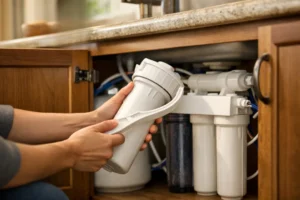
- Pre-filters and post-carbon filters: Replace every 6 to 12 months depending on your water quality and usage
- RO membrane: Typically lasts 2 to 5 years with proper pre-filtration
- Storage tank: Sanitize annually
- TDS meter check: Testing your output water with a TDS meter every few months tells you if membrane performance is declining before you can taste the difference
Skipping filter replacements is the most common reason RO systems underperform. When pre-filters are exhausted, sediment and chlorine reach the membrane and shorten its life significantly.
Conclusion
Understanding how does reverse osmosis work makes it much easier to choose the right system and maintain it properly. The process is logical: pre-filters protect the membrane, the membrane does the heavy lifting, and post-filters and remineralization finish the water before it reaches your glass. Each stage earns its place.
If you are in Tracy, CA or nearby and ready to stop guessing about what is in your water, the team at RO Water Filter System can walk you through your options, test your current water quality, and install a system that fits your home and budget. Contact us today to get started with clean, safe drinking water.
FAQs
Does reverse osmosis remove beneficial minerals from water?
Yes, the RO membrane removes most dissolved minerals along with contaminants, including calcium and magnesium. This is why many 7-stage systems include a remineralization stage that adds these minerals back in healthy amounts.
What is a good TDS reading for RO water?
Most well-performing RO systems produce water with a total dissolved solids reading below 20 to 50 ppm. If your TDS meter shows readings climbing above 100 ppm on a system that once tested lower, that is usually a sign the RO membrane needs replacement.
How much water does a reverse osmosis system waste each day?
It depends on the system. Older models had high reverse osmosis wastewater ratios, sometimes 3:1 to 4:1. Modern efficient systems are much closer to 1:1 or 2:1. For a family of four using around 3 to 4 gallons of filtered water daily, total reject water is typically manageable and far less than most people expect.
Can I install a reverse osmosis system myself?
Many under-sink RO systems are sold as DIY kits and can be installed by someone comfortable with basic plumbing. That said, professional RO system installation ensures correct pressure, proper fitting torque, and no slow leaks that can go unnoticed under a cabinet for months.
Is reverse osmosis water safe for children and infants?
RO water is generally considered safe and is often recommended precisely because it removes lead, nitrates, and other contaminants that are more harmful to young children. The one consideration is mineral content.