What is the best filter to remove microplastics? Reverse osmosis (RO) is the best filter for removing microplastics from tap water. RO membranes have pores as small as 0.0001 microns, which block 99%+ of microplastics and nanoplastics. No other common home filter comes close to that level.
This article breaks down exactly what the best filter to remove microplastics from tap water looks like, and what to avoid wasting money on. RO Water Filter System helps homeowners in California make this decision every day.
What Are Microplastics and Why Should You Care?
Microplastics are tiny plastic particles smaller than 5 millimeters. Many are invisible to the naked eye. They come from plastic packaging, synthetic fabrics, car tire dust, and the breakdown of larger plastic waste. Nanoplastics are even smaller, under 1 micron, and they’re the ones that pass most easily through standard filters.
Studies showing microplastics in tap water aren’t rare anymore. Research from the State University of New York found microplastics in 94% of U.S. tap water samples tested. California municipal water systems are no exception.
Why does this matter for your family?
- Microplastics can carry chemical additives and pollutants
- Nano plastics are small enough to cross cell membranes
- Long-term health effects are still being studied, but early findings are not reassuring
- Infants and young children may be more vulnerable due to developing immune systems
The concern isn’t panic-worthy. But it’s real. And it’s solvable.
What Water Filters Remove Microplastics?
Not every filter on the market is built to tackle microplastic particles. Here’s a practical breakdown of the most common filtration methods.
Reverse Osmosis Systems
This is the clear winner. A reverse osmosis system forces water through a semi-permeable membrane with pores as small as 0.0001 microns. That’s small enough to block not only microplastics but also nanoplastics, heavy metals, chlorine byproducts, fluoride, and hundreds of other contaminants including dissolved solids.
Multiple independent studies and NSF/ANSI certifications confirm that RO membranes achieve 99%+ microplastics reduction. No other consumer filtration method consistently reaches that level.
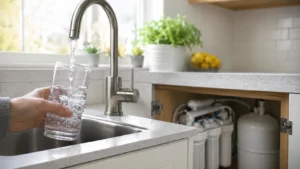
An RO system installed under the sink or as part of a 7-stage water filtration system provides filtered water at the point of use, typically at your kitchen tap and refrigerator line.
Activated Carbon Filters
Activated carbon filters do a solid job on chlorine, taste, odor, and some VOCs. But their pore size is typically 0.5 to 10 microns. That’s enough to catch larger microplastic particles, but not enough to reliably stop nanoplastics or the smaller end of the microplastic range.
If carbon is your only filter stage, you’re leaving a gap. It’s better than nothing. But it’s not a complete answer for microplastics removal.
Countertop Filters and Pitcher Filters
Countertop water filters and pitchers with activated carbon or hollow fiber membranes can reduce some microplastic particles. But performance varies widely by brand and filter type. Few are independently tested specifically for microplastics removal at the nanoplastic scale.
They work fine as a first step or for travel. For a family concerned about long-term water quality, they’re not the permanent solution.
Ultrafiltration (UF) Membranes
Ultrafiltration uses membranes with pores around 0.01 to 0.1 microns. That’s much better than carbon alone and can catch a significant portion of microplastics. But it still doesn’t reach the sub-micron performance of RO membranes. And UF doesn’t remove dissolved contaminants like heavy metals or PFAS.
What About Bottled Water?
Here’s what most people don’t realize. Studies have found more microplastics in bottled water than in tap water. The plastic bottle itself is part of the contamination source. Switching to bottled water to avoid microplastics is not just ineffective, it may actually make things worse.
What Is the Best Filter to Remove Microplastics from Tap Water?
The short answer: a reverse osmosis system with a quality pre-filter and post-carbon stage.
Here’s why this combination works so well:
|
Filter Type |
Microplastics Removal | Nano plastics Removal | Other Contaminants |
| Reverse Osmosis | 99%+ | Yes (sub-0.001 micron) |
Heavy metals, PFAS, fluoride, chlorine |
|
Activated Carbon |
Partial (larger particles) | No | Chlorine, VOCs, taste/odor |
| Ultrafiltration | Good | Partial |
Bacteria, cysts, some particles |
|
Pitcher Filter |
Limited | No | Chlorine, basic taste improvement |
| Bottled Water | Unreliable | No |
Often worse than tap |
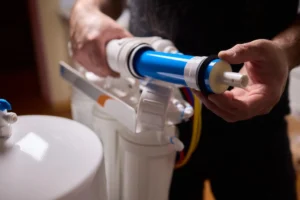
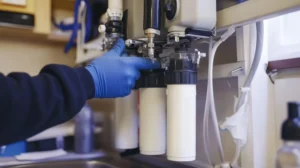
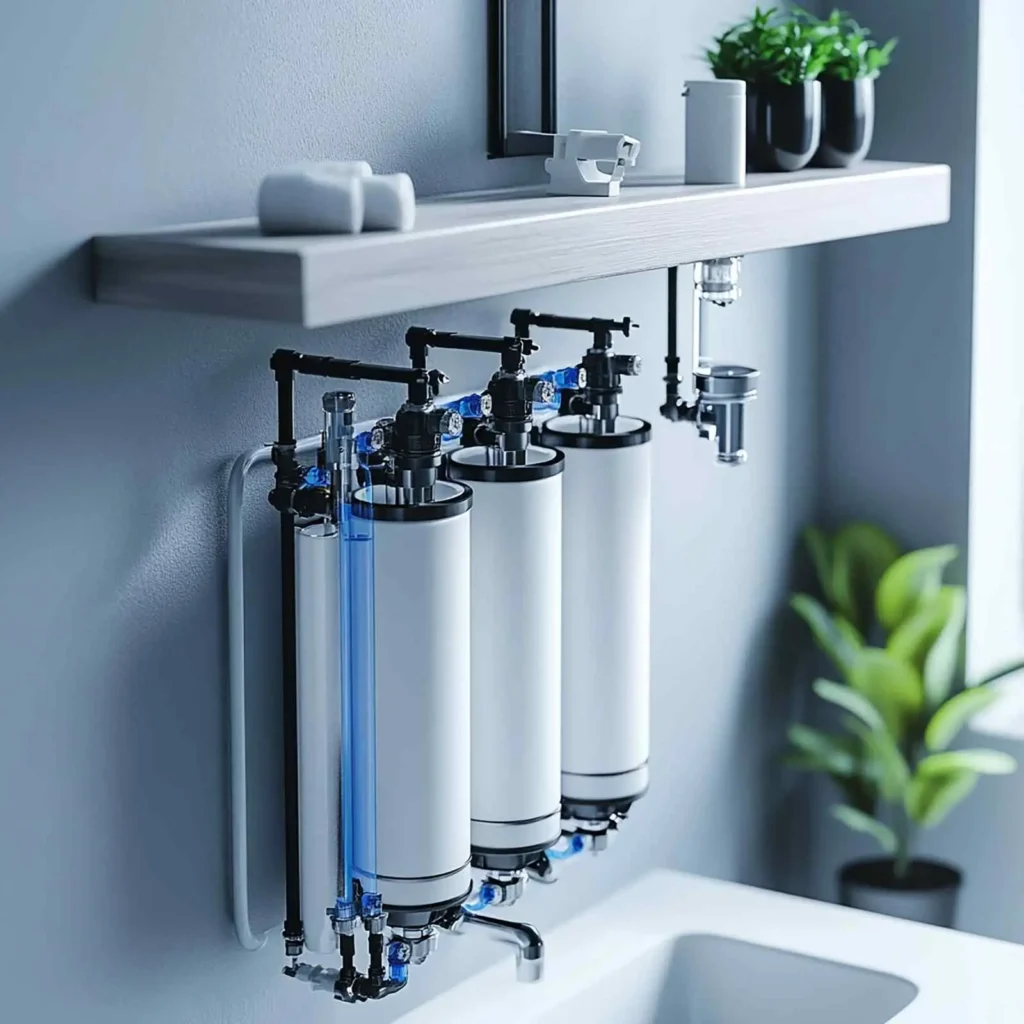
A complete RO system includes:
- Sediment pre-filter to protect the RO membrane from large particles
- Carbon block pre-filter to remove chlorine before it damages the membrane
- RO membrane (the core stage, where microplastics removal happens)
- Post-carbon filter to improve final taste and polish the water
- Remineralization stage (optional) to add back beneficial minerals
This is the standard multi-stage setup you’ll find in a professional Water Purification System installation.
Does the Filter Need NSF Certification?
Yes. Always look for NSF/ANSI Standard 58 certification for RO systems. This certification covers performance testing for a wide range of contaminants. NSF/ANSI Standard 401 specifically addresses emerging contaminants including microplastics reduction.
A certified system has been independently tested. A system without certification is asking you to take the manufacturer’s word for it.
Choosing the Right RO System for Your Home
Not every household needs the same setup. Here’s how to think about it.
Under-Sink RO for Drinking Water
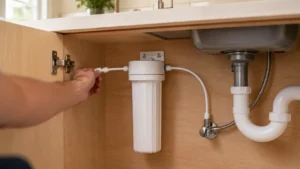
This is the most common setup for families focused on drinking and cooking water. It installs under the kitchen sink, filters water to a dedicated tap, and typically connects to your refrigerator ice and water line. Compact, effective, and out of sight.
Our Reverse Osmosis Water Filter for Microplastics page covers what to look for in a system designed specifically for this purpose.
Whole House Filtration
If you want microplastics removal at every tap in the home, including showers and laundry, a whole house system makes sense. This is a larger investment but provides complete coverage. Most whole house setups combine sediment, carbon, and UF stages. For drinking-level filtration, many homeowners combine a whole house pre-filter system with a dedicated under-sink RO at the kitchen tap.
How Often Do RO Filters Need Replacing?
This is one of the most common questions we hear. General guidance:
- Sediment and carbon pre-filters: every 6 to 12 months
- RO membrane: every 2 to 3 years depending on water quality and usage
- Post-carbon filter: every 12 months
Skipping maintenance reduces performance. If your TDS meter readings start climbing after a period of clean results, it’s usually a sign the membrane needs attention. A permeate pump can also extend membrane life by maintaining consistent pressure.
Common Buying Mistakes to Avoid
We’ve seen homeowners in the Tracy, California area make the same few mistakes. These are worth knowing before you buy.
- Choosing a system based on stage count alone. A 10-stage system isn’t automatically better than a 5-stage one. What matters is what each stage does and the quality of the RO membrane.
- Skipping NSF certification. Generic, uncertified systems are cheaper for a reason. Certification matters.
- Relying on a pitcher filter as a long-term microplastics solution. It’s not designed for that.
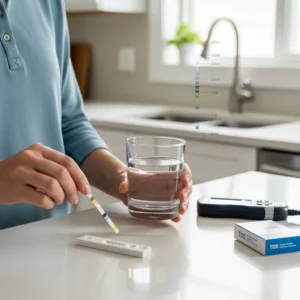
- Not testing your water first. A TDS meter gives you a baseline. Knowing your starting water quality helps you choose the right system and verify it’s working.
- Ignoring installation quality. A well-designed system installed incorrectly will underperform. Professional installation matters for pressure, leak prevention, and long-term reliability.
Conclusion
The question of what is the best filter to remove microplastics from tap water has a clear, evidence-backed answer: a properly installed reverse osmosis system with certified stages is the most effective filtration method available to homeowners today. Nothing else consistently reaches 99%+ microplastics removal across both microplastic and nanoplastic particle sizes.
Pitcher filters, carbon-only systems, and bottled water all fall short. An RO system doesn’t. If protecting your family from microplastics in drinking water is your goal, it’s the right investment. The team at RO Water Filter System can help you choose and install the right system for your home. Reach out today and let’s get your water to where it should be.
FAQs
Can boiling water remove microplastics?
No. Boiling water may kill microorganisms, but it does not effectively remove microplastic particles. Filtration is generally required to reduce these contaminants.
Are microplastics found in bottled water too?
Yes. Studies have detected microplastics in bottled water as well as tap water. The source can include packaging materials, manufacturing processes, and environmental exposure.
Do activated carbon filters remove microplastics?
Activated carbon filters can help reduce larger plastic particles and improve taste and odor. They are usually less effective than reverse osmosis systems for very small particles and nanoplastics.
How often should microplastic filters be replaced?
Replacement schedules depend on the filter type, water usage, and water quality. Following manufacturer guidelines helps maintain filtration performance.
Is reverse osmosis worth it for microplastics removal?
For homeowners seeking strong microplastics removal along with broader contaminant reduction, reverse osmosis is often one of the most effective residential filtration options available.